
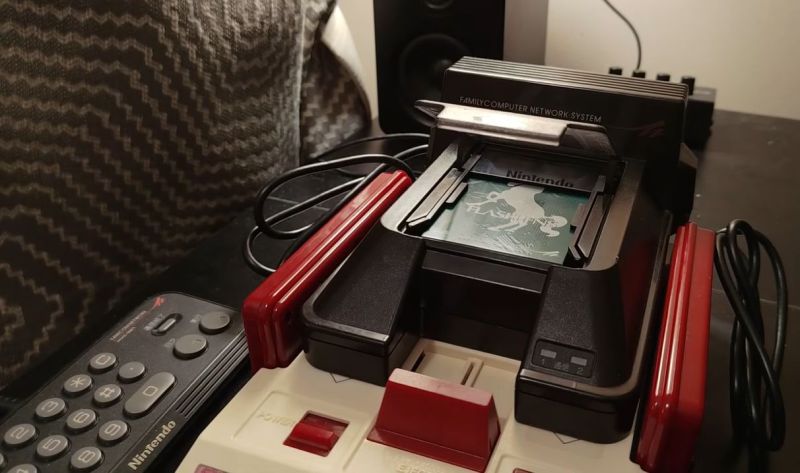
Usually, the name ‘Famicom’ and the associated Nintendo Entertainment System (NES) don’t exactly bring to mind downloadable content and online services. However, at least in Japan, a modem add-on for the Famicom offered those features. Released in 1988, the Family Computer Network System (FCNS) offered all that using its modem to dial into Nintendo’s servers. Recently, [Throaty Mumbo] got his mitts on one of these units to try and see what you can still do with it in 2026.
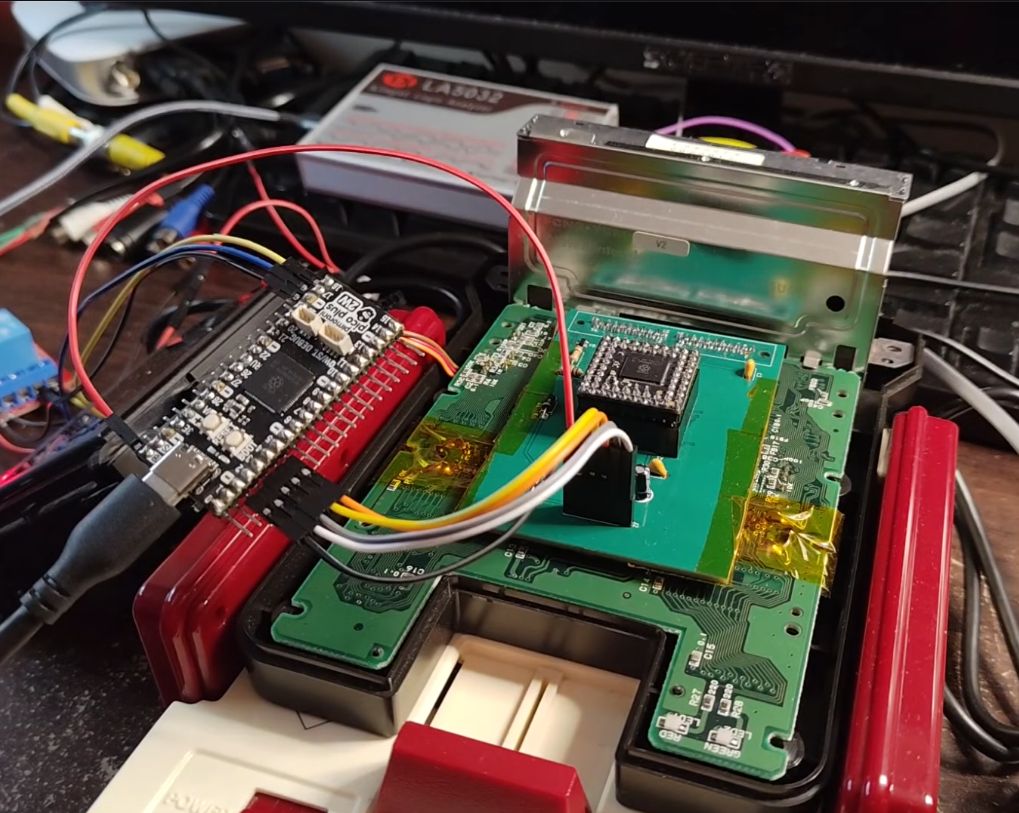
Voiding that Nintendo warranty. (Credit: Throaty Mumbo, YouTube)
Although only mildly successful in the Japanese market, Nintendo still sold 130,000 of these modem add-ons, with tens of thousands of users for the stock brokering, banking, and Super Mario Club services offered. The experiences with the FCNS would form the foundation for Nintendo’s Satellaview for the Super Famicom and from there into today’s Nintendo Online offerings.
Of course, the main challenge with reviving the FCNS in 2026 is that the remote servers were turned off decades ago, along with the minor detail that to do anything with it you need to insert a special card. This was missing in the used version that [Throaty Mumbo] bought, but fortunately he got a workable Super Mario Club card. The next struggle? He doesn’t speak Japanese, so it took a while to eke out the details.
With a phone line simulator, it’s at least possible to try to have the FCNS try to dial, but that only throws another error. Ultimately it turned out that the FCNS uses NTT’s proprietary DDX-TP (in Japanese) protocol, which isn’t really documented outside of some Japanese sources. This is where the NES Dev site and its forum thread full of FCNS enthusiasts proved essential, as they had already done all the reverse-engineering.
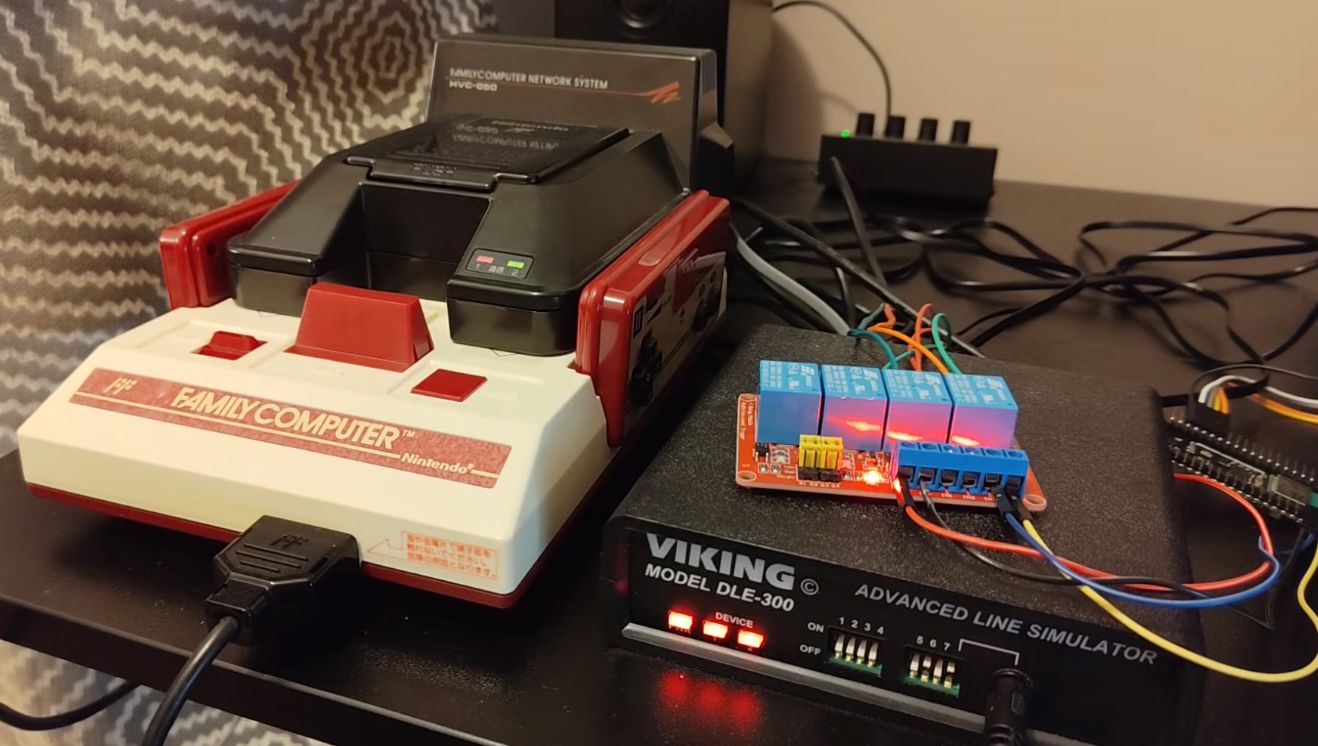
All it took to make the Famicom go online again. (Credit: Throaty Mumbo, YouTube)
NES Dev user [Ben Boldt], for example, made a DIY version of the FCNS access (tsuushin) card that lets you configure its details. For development, the PLCC-based CPLD was a bit of an annoyance, so the FCNS got somewhat modified along the way for more direct access.
After five months of work, he was finally able to connect the Famicom via the FCNS and a telephone line simulator for some Super Mario Club action. This connects to the SMC Server simulator on the PC, with the detailed manual that comes with the access card helping a lot.
After all this, the Super Mario Brothers game was graced with a game patch that allows for network-based SMB two-player action. This adds a ‘dial’ and ‘answer’ option so that the two Famicoms can connect and commence the two-player session. Although one can question the latency this would entail without a direct POTS connection as here, it is definitely a nifty demonstration of what ultimately would become the multiplayer gaming on Nintendo consoles today.
You can still do Famicom programming. There were even clones.