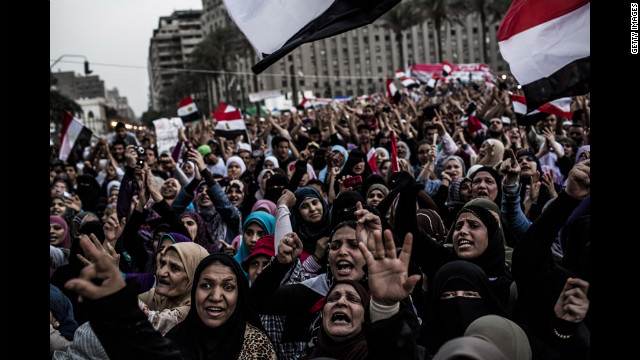
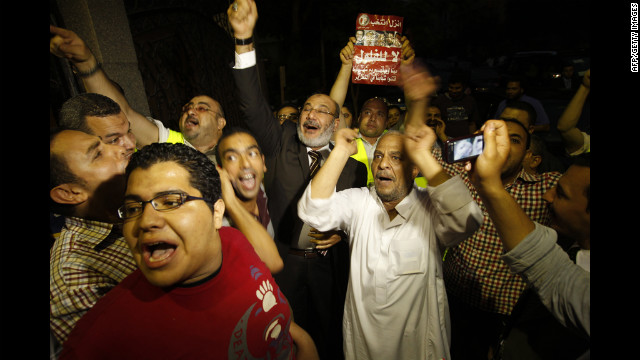
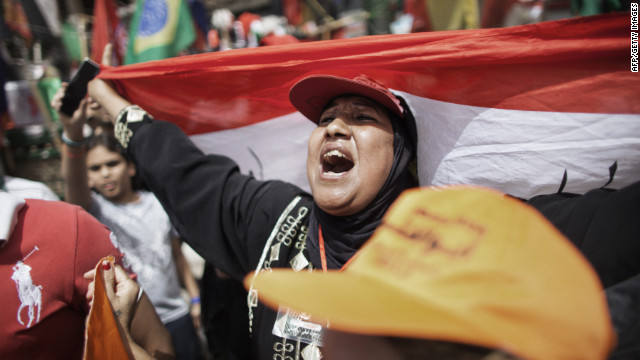
Female supporters of Mohamed Morsi, the Muslim Brotherhoo's candidate, protest against Egypt's military rulers in Tahrir Square on Saturday, June 23, in Cairo. Egyptian election officials have postponed the announcement of a winner in last weekend's presidential runoff, stating they needed more time to evaluate charges of electoral abuse that could affect who becomes the country's next president.
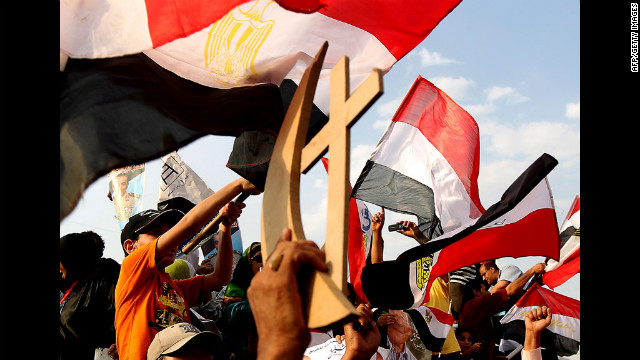
A supporter of presidential candidate Ahmed Shafiq, the last prime minister of ousted leader Hosni Mubarak, holds up a wooden Christian cross and Muslim crescent as he and others demonstrate in Nasr city on the outskirts of Cairo, on Saturday, June 23.
The official elections results are expected on June 24th.
Protesters against Egypt's military rulers.
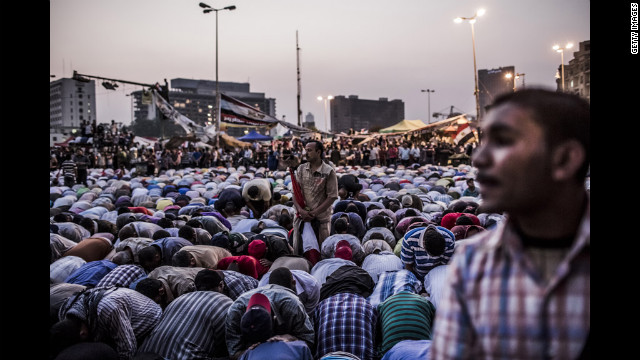
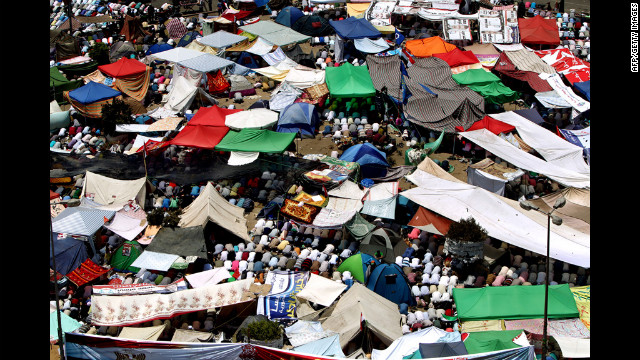
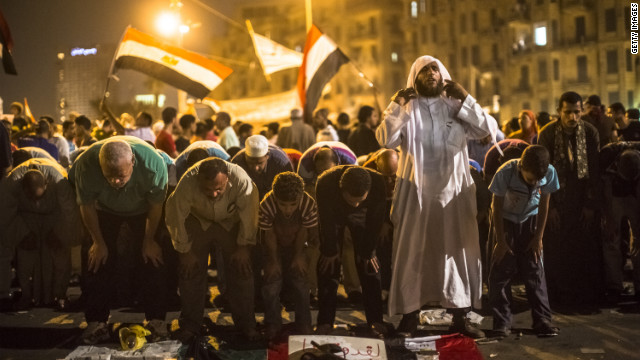
Protesters take a break from shouting slogans to pray in Tahrir Square.
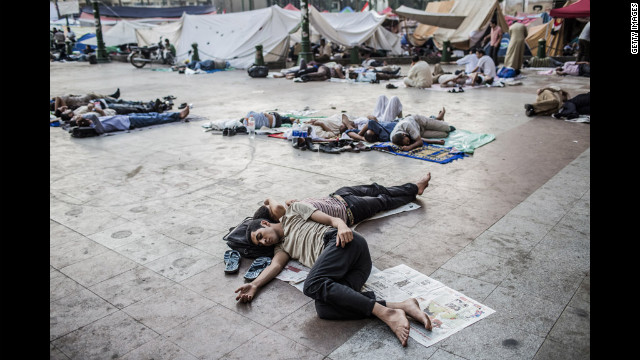
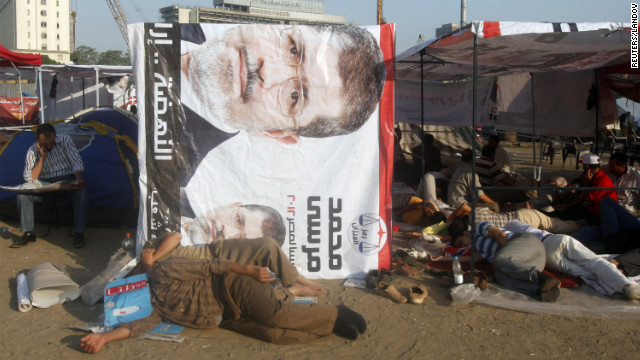
Protesters sleep as they camp overnight in Tahrir Square.
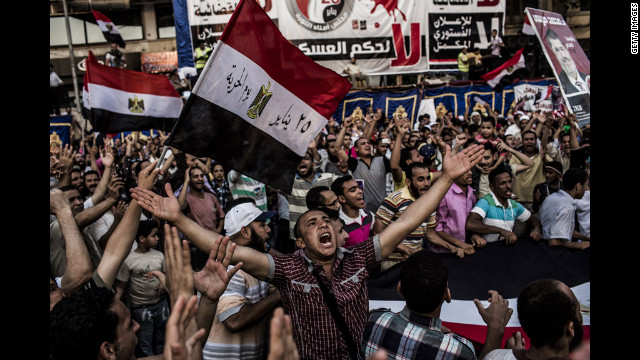
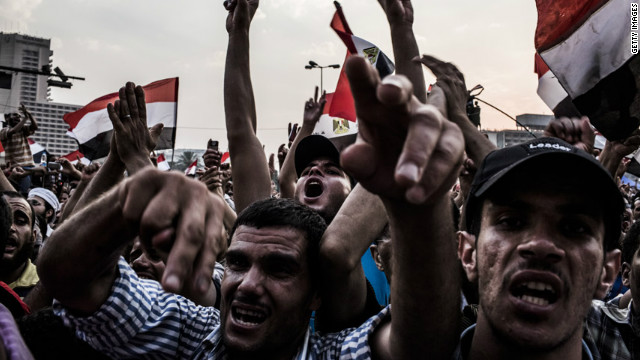
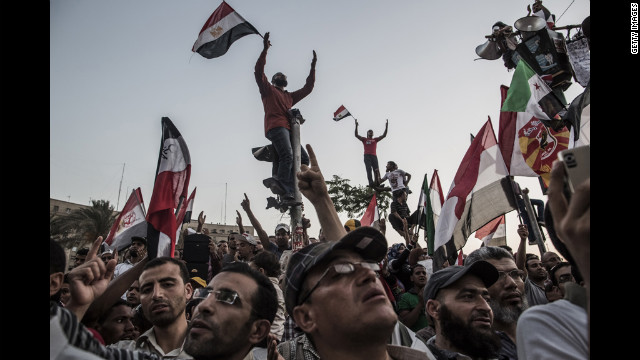
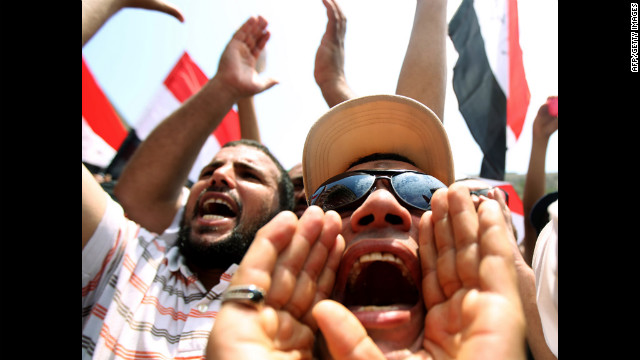
protesters wave flags and shout slogans in Tahrir square on Friday, june 22, in Cairo, Egypt.
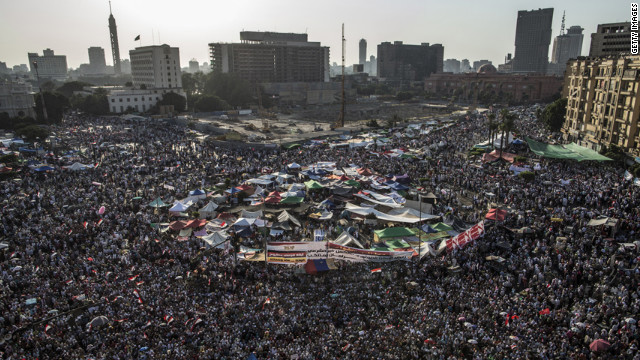
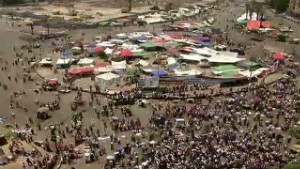
Crowds gather in Tahrir Square to protest against Egypt's military rulers.
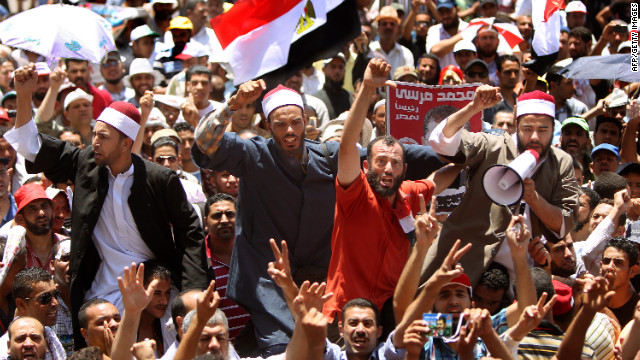
Protesters shout slogans to denounce what they claim is a power grab by the ruling military, as the nation nervously awaited the results of the first post-Mubarak presidential election.
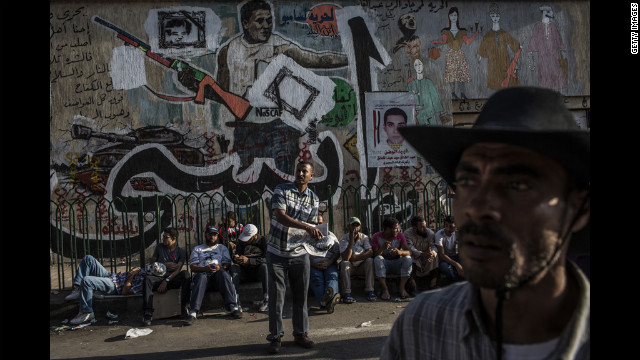
Protesters gather in front of wall art in Tahrir Square.
Protesters perfrom Friday noon prayer underneath tents erected in Cairo's landmark Tahrir Square.
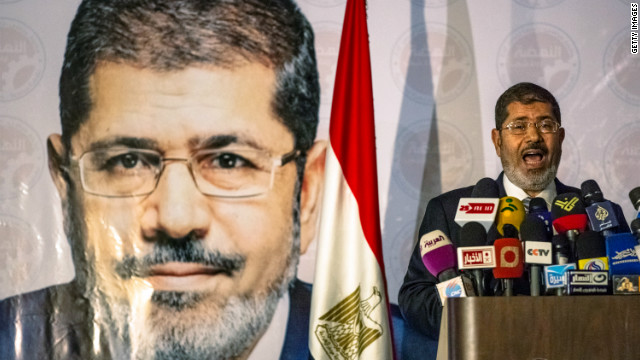
Egyptian activists rest at the foot of a banner of presidential candidate Mohamed Morsi in Cairo's Tahrir Square on Thursday, June 21.
Muslim clerics join demonstrators in Cairo's Tahrir Square on Thursday to protest the delay of the presidential election. The Presidential Election Commission postponed the release of the presidential election results, and both candidates have declared themselves winners.
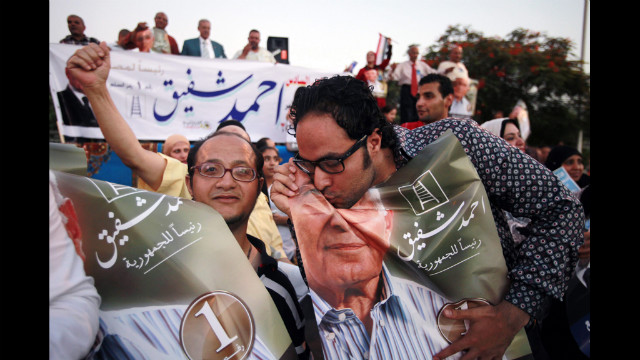
A supporter of Egyptian presidential candidate Ahmed Shafik kisses a portrait of him during a Cairo rally Wednesday, June 20. Shafik was the last prime minister to serve under Hosni Mubarak
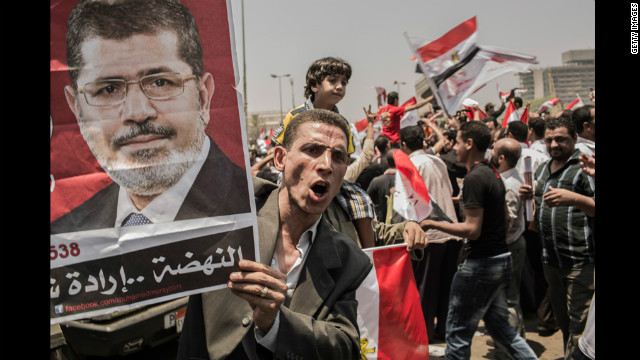
Morsi supporters rally in Cairo's Tahrir Square on Monday, June 18. Morsi declared victory as Egypt's first democratically elected president even as military rulers issued a decree that virtually stripped the position of power.
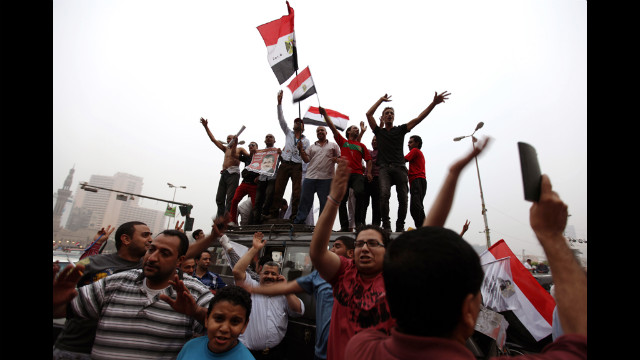
Morsi supporters wave flags Monday in Cairo's Tahrir Square after the Islamists claimed victory. The square was considered the heart of the February 2011 uprising that led to Hosni Mubarak's downfall.
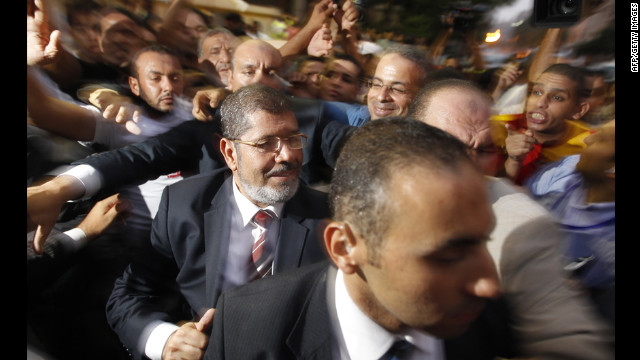
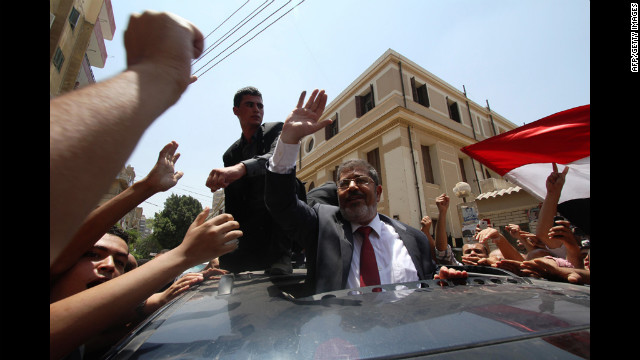
The Muslim Brotherhood's Mohamed Morsi makes his way through supporters at electoral headquarters early Monday in Cairo. In a victory speech, Morsi did not address the military council's move but tried to allay fears he would impose an Islamist state.
Morsi supporters celebrate Monday in Cairo. Votes in the Egyptian capital, the largest population center, continued to be tallied, but unofficial results by a state-run news website showed Morsi leading elsewhere with 11.2 million votes, compared with 10.3 million for Ahmed Shafik, the last prime minister in the waning days of Mubarak's regime.
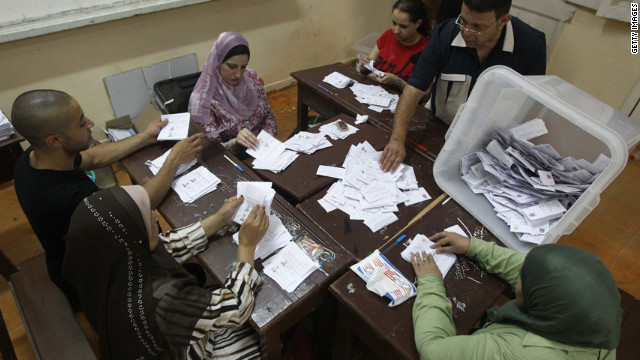
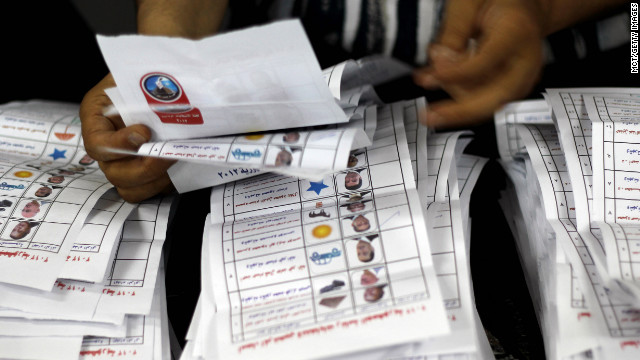
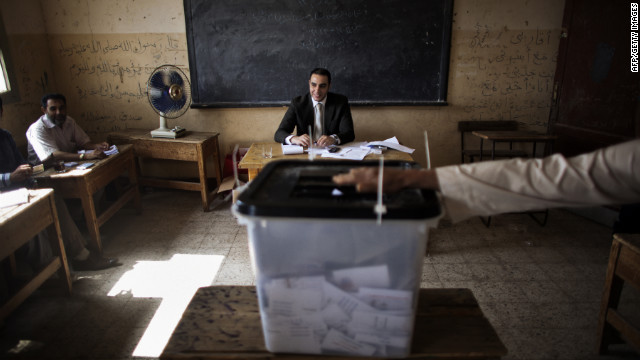
Egyptian election officials count ballots at a polling station in Cairo on Sunday, June 17. The official vote count was scheduled to be finished Monday.
The Muslim Brotherhood on Sunday claims its candidate, Mohamed Morsi, has defeated foe Ahmed Shafik to become Egypt's president.
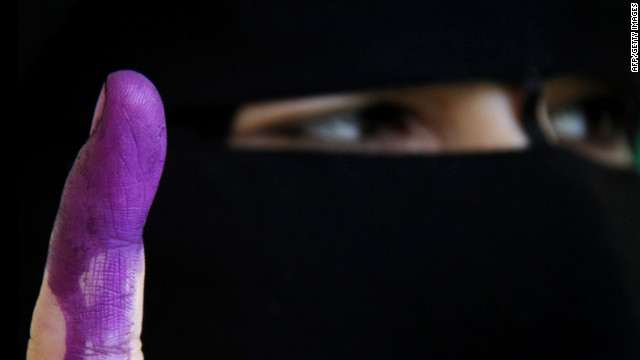
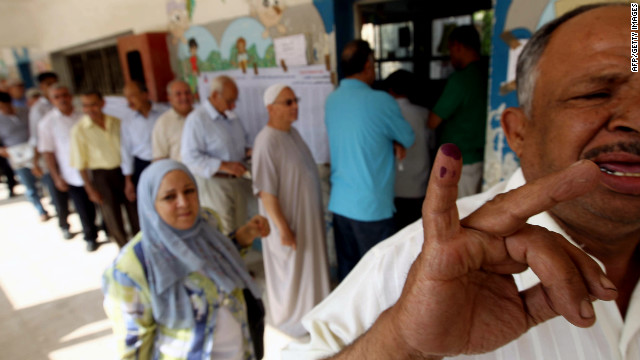
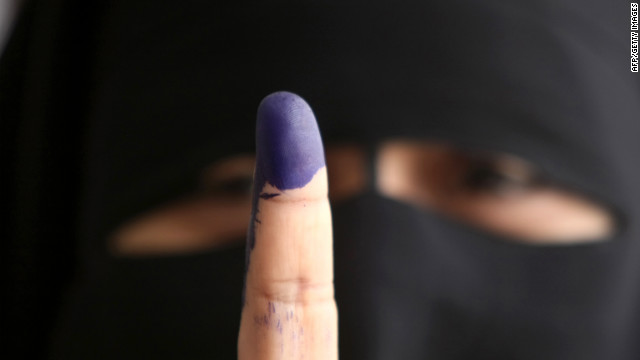
An Egyptian woman shows her ink-stained finger, marking that she voted in Cairo on Sunday.
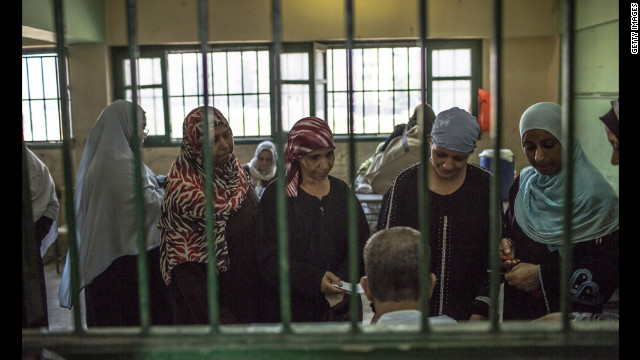
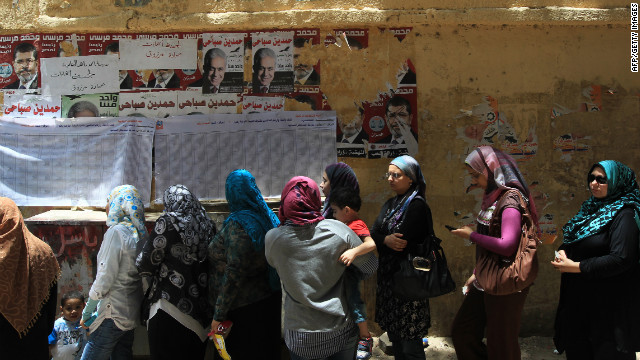
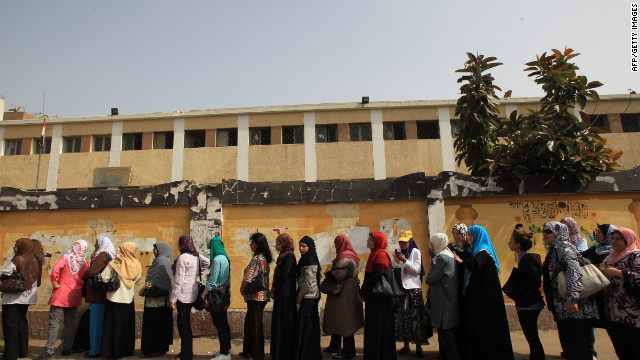
Women line up to vote at a polling station in Cairo, Egypt, on the second and final day of the run-off presidential election.
Women line-up to cast their vote at a polling station in Cairo on Sunday.
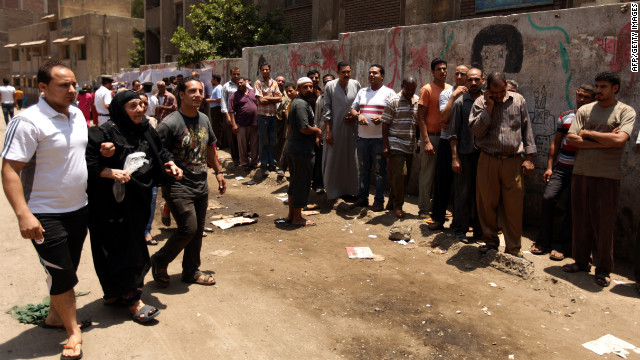
Egyptian Christian Coptic men help a woman reach a polling station in the Cairo Coptic Shubra neighborhood on Saturday, June 16. Voters returned to the polls after Egypt's Supreme Constitutional Court ruled Thursday that the Islamist-led Parliament must be immediately dissolved.
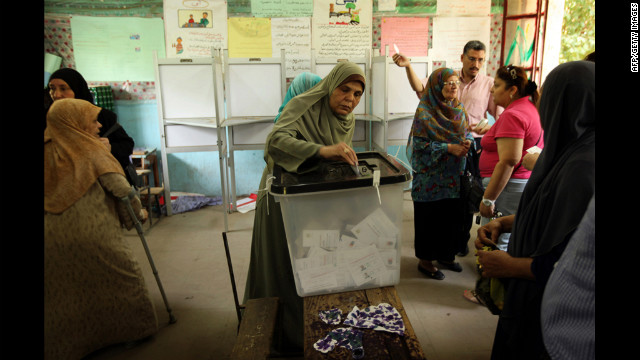
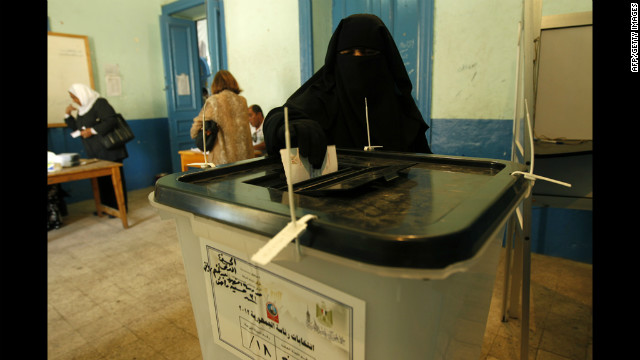
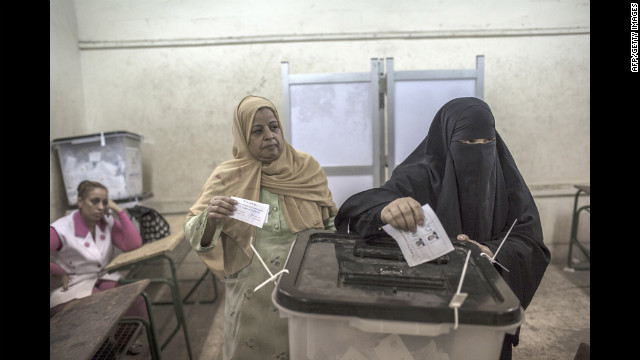
A full-veiled Egyptian woman casts her vote at a polling station in Cairo on June 16.
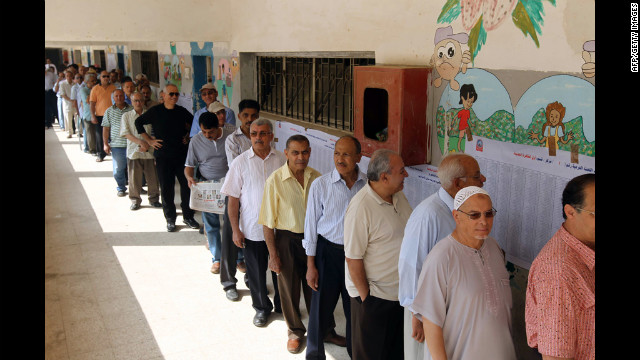
Egyptians queue outside a polling station in Cairo.
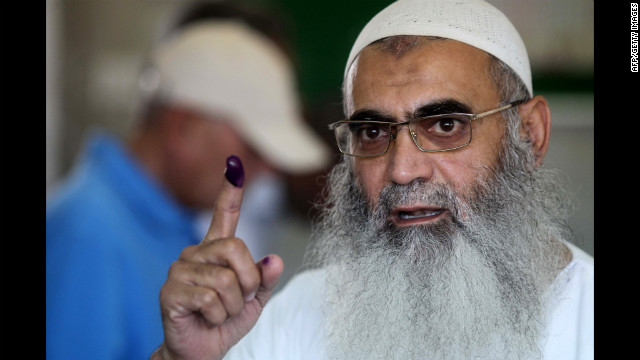
An Egyptian Muslim Salafist shows his ink-stained finger after voting at a polling station.
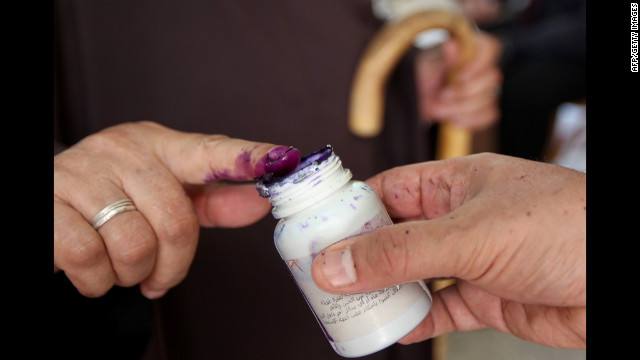
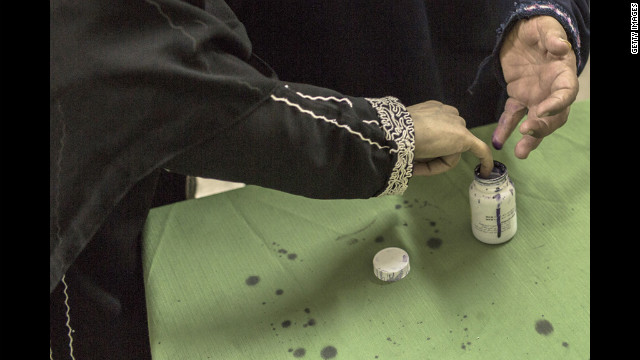
An Egyptian woman dips her finger in indelible ink after casting her ballot.
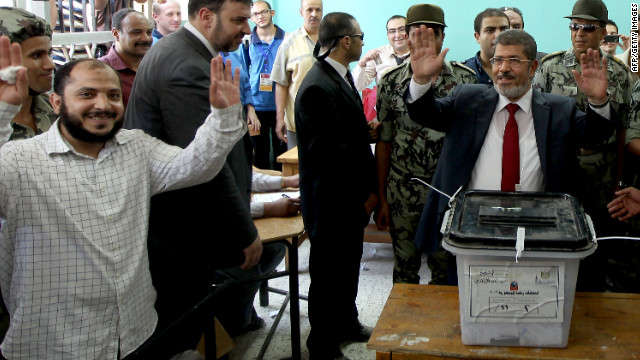
Egyptian Muslim Brotherhood candidate Mohammed Morsi, center, waves to his supporters as he arrives at a polling station to vote in the city of Zagazig.
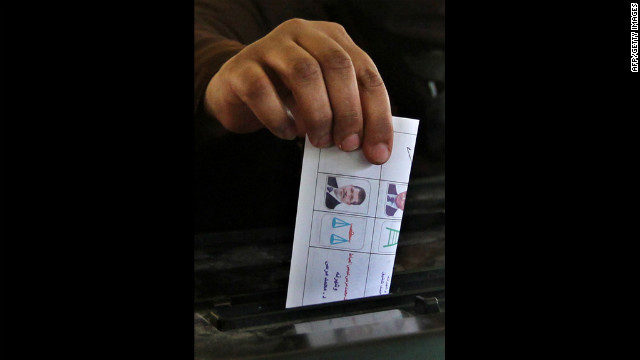
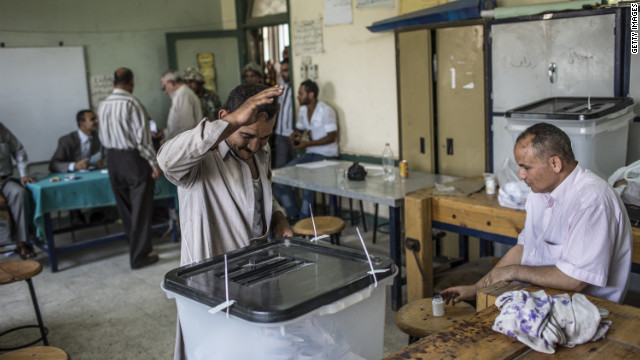
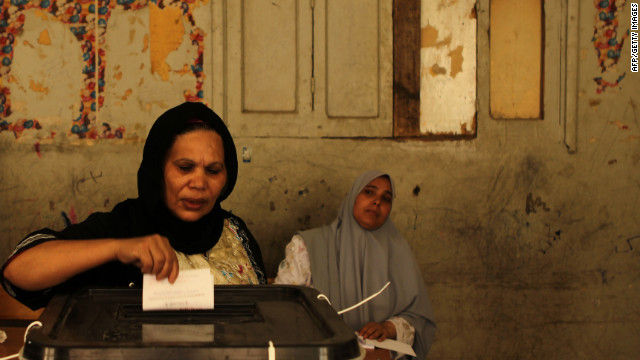
An Egyptian woman casts her ballot in Cairo.
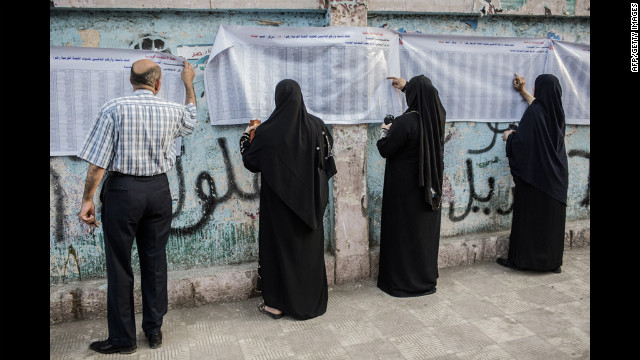
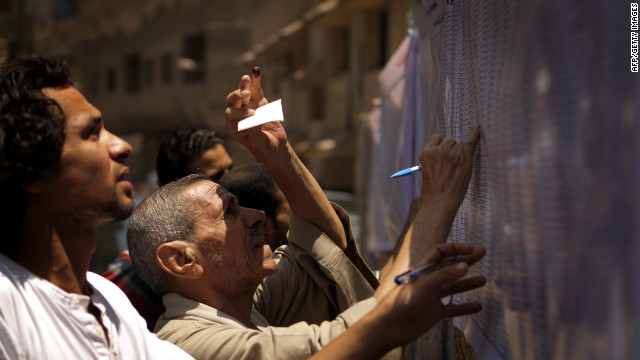
Egyptians check to see their names are listed before casting their votes at a polling station.
Egyptian women dip their fingers in ink after voting at a polling station.
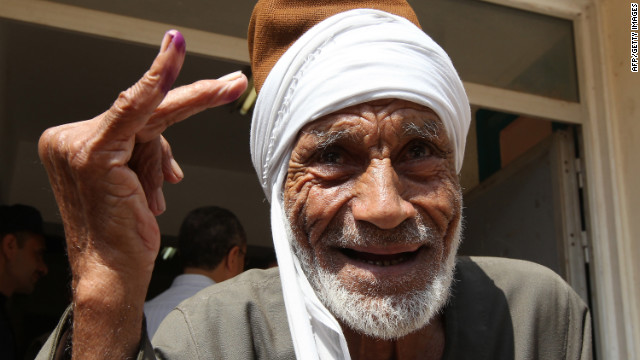
An elderly Egyptian man shows the indelible ink stain on his finger after voting on the first day of the second round of the historical presidential election at a polling station in the city of Zagazig.
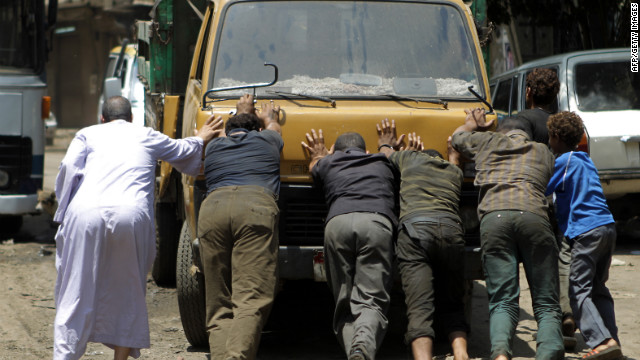
Egyptians push a truck that was blocking the entrance of a polling station.
An Egyptian man smiles after casting his vote in Giza.
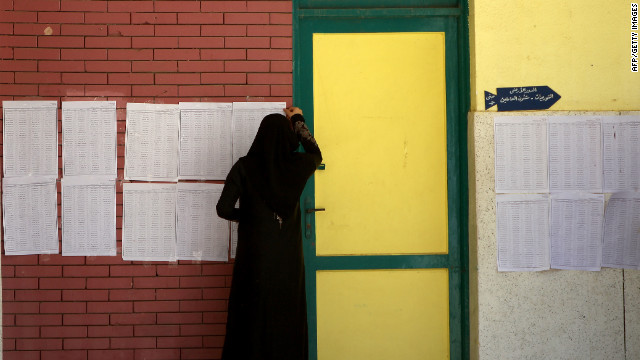
A veiled Egyptian woman looks for her name on the registered voters' list in the city of Zagazig.
An Egyptian Coptic Christian woman casts her vote in the Cairo Coptic neighborhood of Shubra.
Egyptian women cast their votes at a polling station.
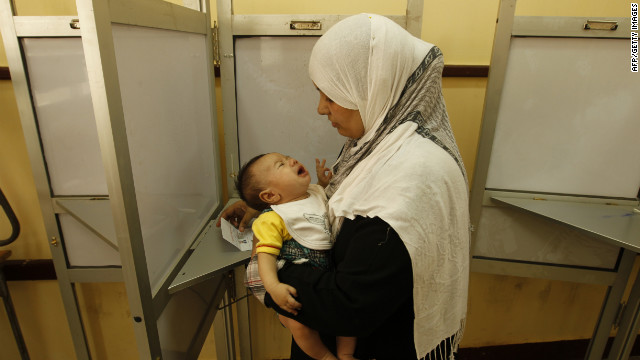
An Egyptian woman holds her baby as she prepares to vote at a polling station in Cairo.
An Egyptian man shows off his little finger covered in indelible ink after casting his vote at a polling station in Cairo.
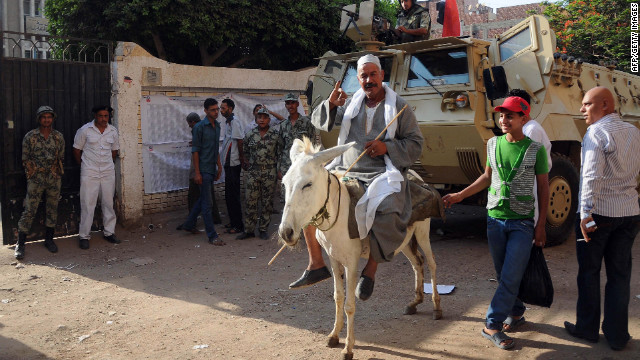
An Egyptian man on his donkey shows his ink-stained finger after casting his ballot.
Muslim Brotherhood candidate Mohammed Mursi casts his ballot at a polling station in the city of Zagazig.
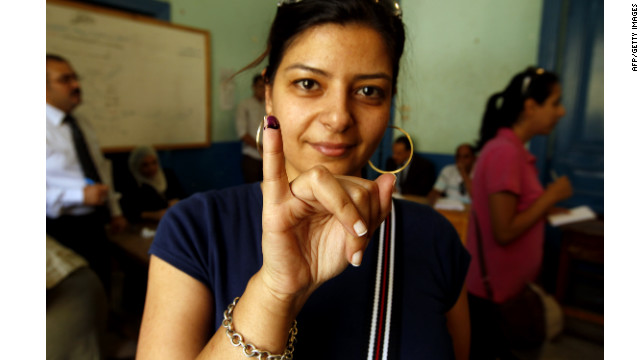
An Egyptian woman holds up an ink-stained finger after casting her vote at a polling station in Cairo.
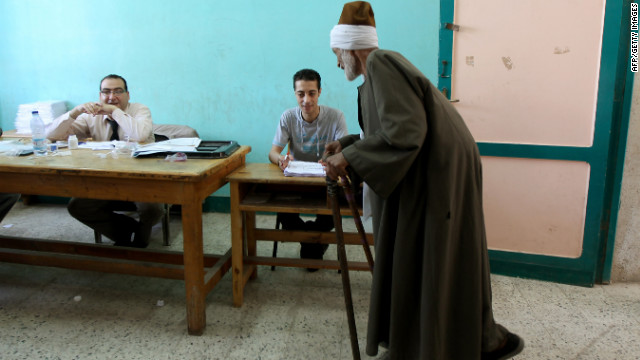
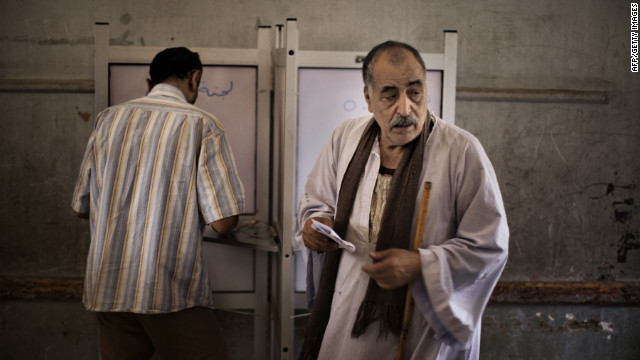
An elderly Egyptian man registers Saturday before voting in the city of Zagazig in an election that pits Ahmed Shafik, the last premier of ousted President Hosni Mubarak, against Muslim Brotherhood candidate Mohammed Morsi.
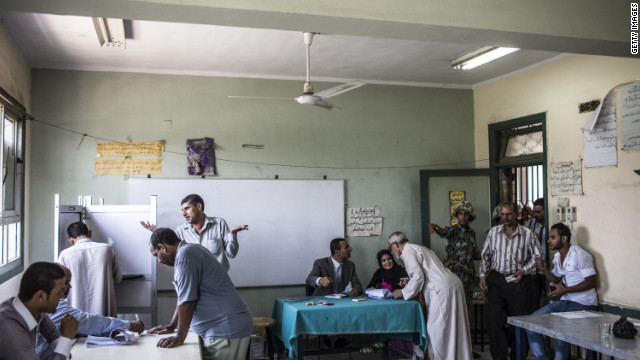
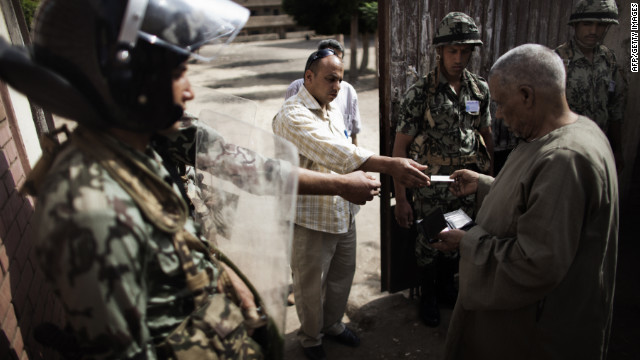
Election officials and an Egyptian soldier direct voters during the second stage of runoff presidential elections at a polling station in Giza.
Egyptian Christian Coptic men check the voters' list Saturday outside a polling station in the Cairo Coptic neighborhood of Shubra.
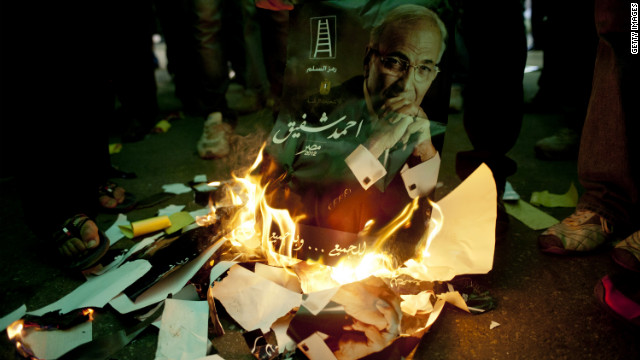
Egyptians burn the likeness of presidential candidate and former Prime Minister Ahmed Shafik in Cairo on Friday, the eve of the nation's presidential election.
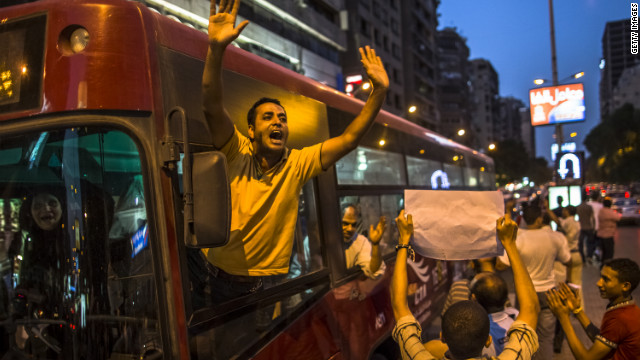
A bus driver stops to wave in support of Egyptian protesters making their way to Tahrir Square on Thursday.
Egyptians pray in Tahrir Square on Thursday during a protest against presidential candidate Ahmed Shafik.
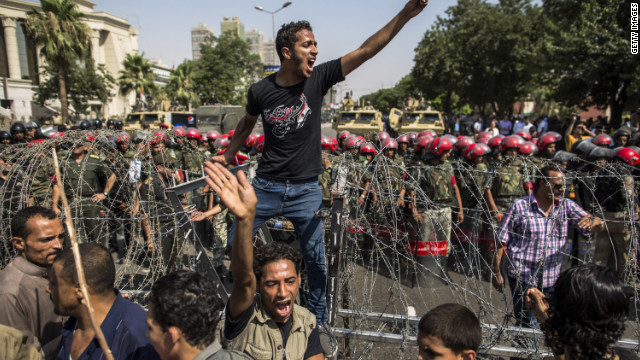
A protester stands on a barricade of barbed wire as Egyptian military police stand guard. Egypt's Supreme Constitutional Court ruled that the Islamist-led parliament must be immediately dissolved.
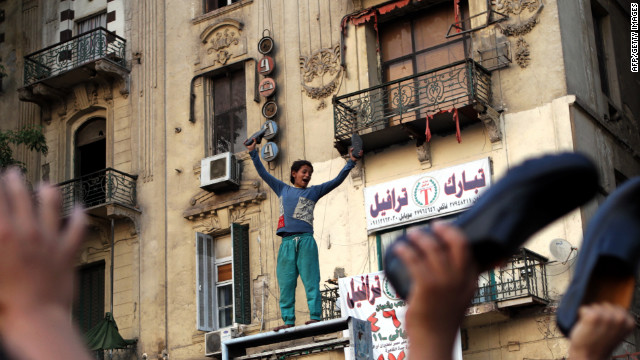
An Egyptian boy waves his shoes as he joins supporters of the Muslim Brotherhood in a protest in Cairo's Tahrir Square against Mubarak-era prime minister and presidential candidate Ahmed Shafik after Egypt's top court rejected on Thursday a law barring him from standing in a tense presidential poll runoff.
Protestors gesture towards military police through a barricade of barbed wire during a protest against presidential candidate Ahmed Shafik outside the Supreme Constitutional Court on Thursday.
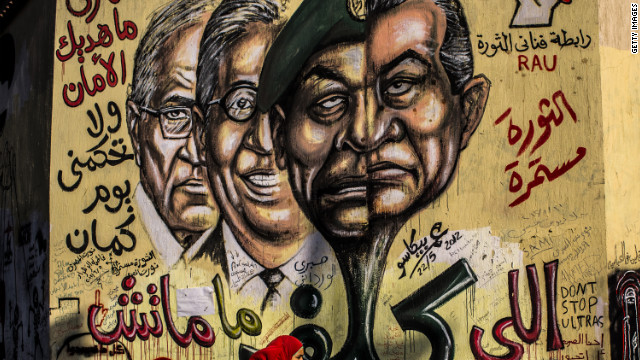
People walk past graffiti showing faces of ousted Egyptian president Hosni Mubarak, right; Field Marshal Hussein Tantawi, second right; former Secretary General of the Arab League Amr Mussa, second left, and former prime minister and presidential candidate Ahmed Shafiq, left, at Tahrir square.
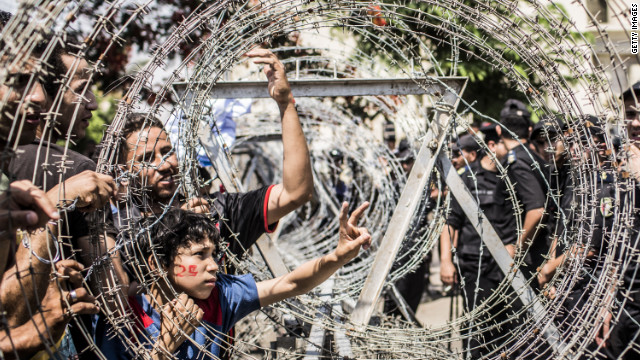
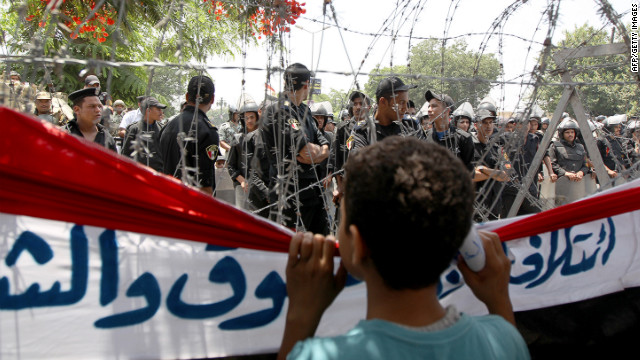
A boy peers through barbed wire at Egyptian military police standing guard outside the Constitutional Court in Cairo on Thursday, June 14.
Egyptian women line up to cast their vote Saturday.
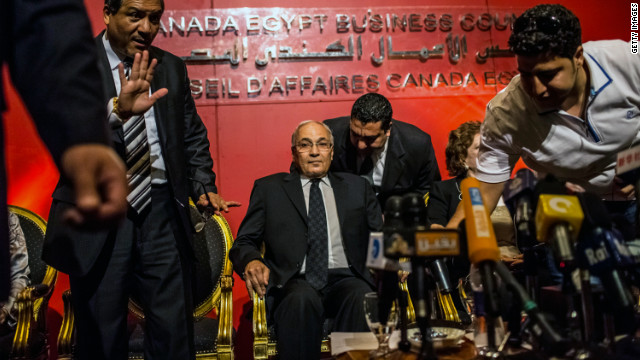
Former Prime Minister Ahmed Shafiq, center, is seated before addressing a business conference in Cairo on Wednesday.
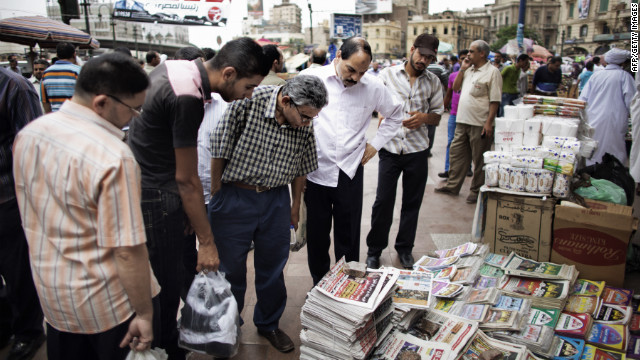
Egyptians read the front page of newspapers for sale outside of Al-Fatah Mosque in Cairo on Friday, May 25.
Ballots are counted by election officials in Alexandria as the country eagerly awaits the outcome Friday.
A supporter of presidential candidate Abdelmonen Abol Fotoh voices her opinions at Tahrir Square on Friday.
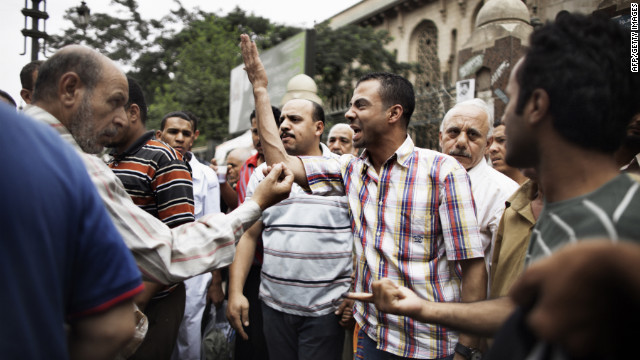
Supporters of various candidates debate outside Al-Fatah Mosque in Cairo on Friday.
Electoral officials monitor voting in Namul, a village north of Cairo, on Thursday, May 24, the second and final day of voting in Egypt's historic presidential election. Egypt is holding its first presidential election since last year's toppling of Hosni Mubarak, part of the wave of Arab Spring uprisings.
Egyptian women wait in line Thursday to cast their vote outside a polling station in Cairo. If no candidate gets a majority of the vote in the first round of voting, a second round will be held June 16-17.
An election worker checks the identification of a voter at a polling place Thursday in Namul as Egyptian soldiers stand guard.
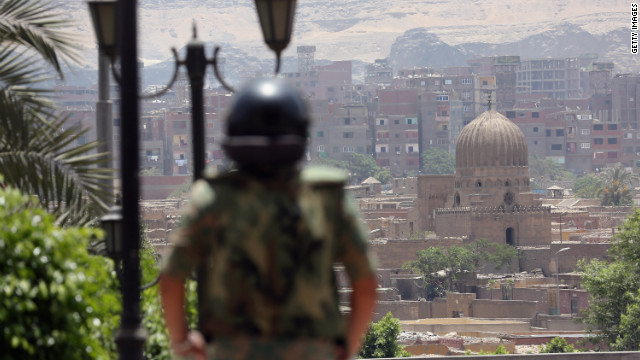
A soldier stands watch in the Egyptian capital on the second day of voting. A pervasive fear exists that the powerful military, which has run the country since Mubarak's fall 16 months ago, could try to hijack the election.
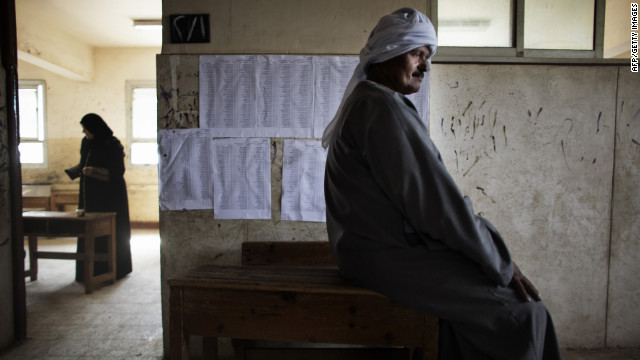
An Egyptian man waits to cast his ballot Thursday north of Cairo. The vote is considered Egypt's first free and fair presidential election in modern history.
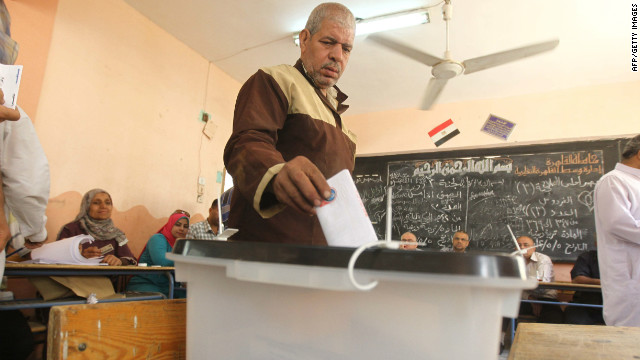
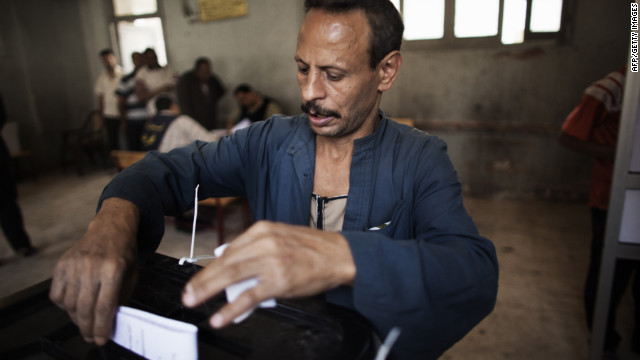
An Egyptian man drops off his ballot at a polling station Thursday in Cairo. The voting marks the first time Egypt has held a presidential election in which the results aren't known beforehand.
An Egyptian woman holds up an ink-stained finger after casting her ballot in Cairo on Wednesday, May 23, the first day of voting in the historic election.
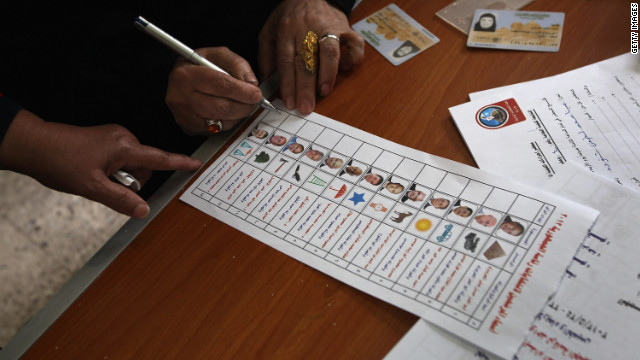
A voter studies her ballot Wednesday in Cairo. Thirteen candidates are competing in the wide-open race, but two withdrew after ballots were printed.
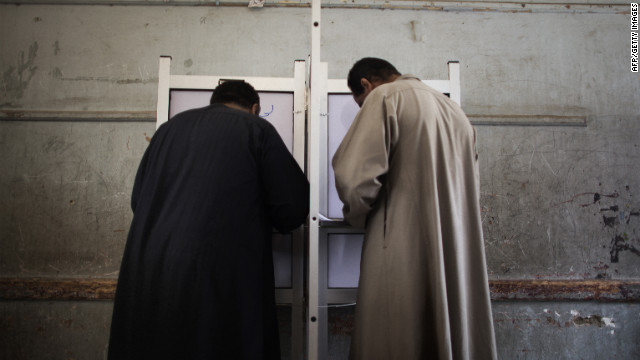
Egyptian men fill out their ballots Wednesday in Cairo. Results of the first round of voting are not expected before the weekend.
An Egyptian man casts his ballot at a Cairo polling station. Some Egyptians told CNN that they waited up to four hours Wednesday to vote.
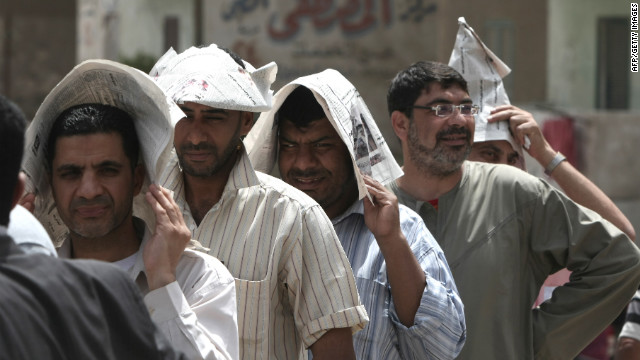
Egyptian men shield themselves from the hot sun outside a Cairo polling station Wednesday.
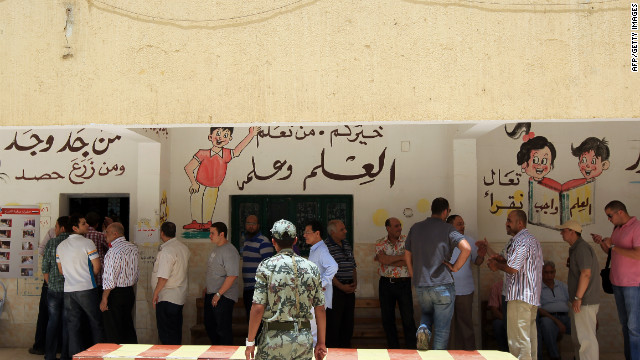
Egyptian men line up to cast their vote Wednesday in Cairo. Some 30,000 volunteers fanned out to ensure voting is fair, said organizers with the April 6 youth movement, which has campaigned for greater democracy in Egypt.
Egyptian men fill out their ballots at a Cairo polling place.
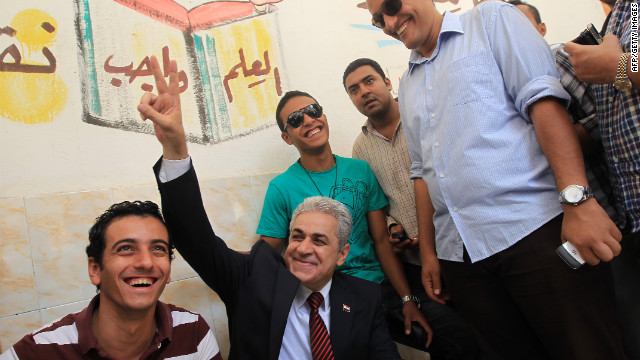
Presidential candidate Hamdeen Sabahy, a leftist dark-horse contender, flashes a sign of victory as he waits to vote at a Cairo school.
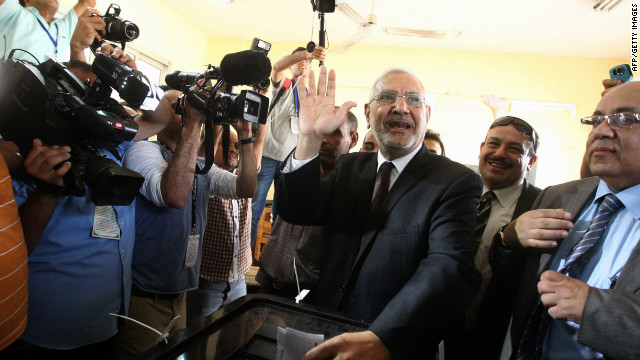
Presidential candidate Abdelmonen Abol Fotoh, a moderate Islamist, casts his ballot Wednesday in Cairo.
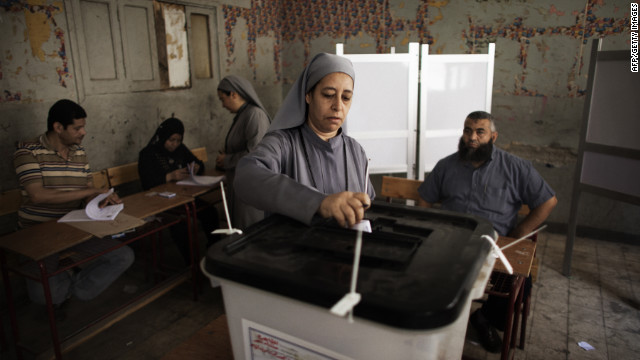
An Egyptian Coptic nun drops her ballot at a Cairo polling station Wednesday.
Egyptian women wait outside a polling station in Cairo. Many Egyptians seem uncertain of their loyalties to any particular candidate.
1
2
3
4
5
6
7
8
9
10
11
12
13
14
15
16
17
18
19
20
21
22
23
24
25
26
27
28
29
30
31
32
33
34
35
36
37
38
39
40
41
42
43
44
45
46
47
48
49
50
51
52
53
54
55
56
57
58
59
60
61
62
63
64
65
66
67
68
69
70
71
72
73
74
75
76
77
- The election council is still reviewing discrepancies, it says
- Official results will be announced at 3 p.m. Sunday
- Egyptians are growing impatient and angry
- Crowds are amassing again in Tahrir Square
Cairo (CNN) -- Tensions soared in Egypt as an entire nation awaited presidential election results that are now expected to be announced Sunday afternoon.
"We are still going thru the complaints of electoral violations and so far we haven't determined the date of when the results will be announced," said Farouq Sultan, head of the Supreme Presidential Elections Commission, in a banner flashed on Nile TV.
Authorities are reviewing about 400 electoral violation reports submitted by the two candidates, the Muslim Brotherhood's
Mohamed Morsi and former air force officer
Ahmed Shafik.
What is the Muslim Brotherhood?
Official results will be announced Sunday at 3 p.m. (9 a.m. ET), said Tarek Shibl of the election commission.
Ahead of the highly anticipated results, Egypt's all-powerful military leaders warned of potential chaos but said they won't reverse their widely deplored constitutional and judicial changes. They also warned politicians to keep a lid on election-related unrest.
Egypt announcing election results Sunday
Egypt remains on edge
Egyptians protest ahead of poll result
Nawaz: Egypt looking more like Pakistan
"We will face anyone who will pose a challenge to the public and private sectors with an iron fist," the Supreme Council of the Armed Forces (SCAF) said.
Egypt's constitutional court dissolved the lower house of parliament last week, extending the military's power and sparking accusations of a coup d'etat.
Crowds began amassing again Saturday at Tahrir Square, jam-packed Friday night with Egyptians grown weary, impatient and angry over the election process and the military's grip on power.
They began voting in a run-off election last Saturday. A week later, with no official results announced, Cairo was awash with rumor and speculation.
Both Morsi and opponent Shafik claimed victory by small margins.
Both presidential candidates claim victory in Egypt
The online news site Ahram published conflicting reports on a winner.
Shafik, the last prime minister under deposed leader Hosni Mubarak, will be named the country's new president Sunday, Ahram reported on its English version Friday, citing several unnamed government sources.
But the site's Arabic version quoted election commission officials saying that Morsi remained in the lead.
"If you monitor the coverage on television and on some of the private and state on newspapers it's doomsday," said journalist Rania Al Malky, editor-in-chief of the English-language Egypt Monocle. "It's going to be a doomsday scenario if Morsi loses this election."
Al Malky said Egypt's generals are trying to paint the Muslim Brotherhood, once banned in Egypt, as cultivating instability and the side that won't respect the outcome of a democratic election.
But the Brotherhood is not staying quiet, Al Malky said, and the influential Islamic party has a lot of friends in the people who fomented Egypt's revolution last year and are willing to stand with the Islamists in an unite front against the army.
Egyptian rulers reject minister's resignation
Adding to the electoral tension is the question of how much power the new president will actually wield now that the military council has full legislative authority.
Under an interim constitutional declaration, the military council retains the power to make laws and budget decisions until a new constitution is written and a new parliament elected.
The declaration said Supreme Council members "shall decide all matters related to military affairs, including the appointment of its leaders." The president has the power to declare war, it says, but only "after the approval" of the Supreme Council.
In its statement, read on state TV by a military official, the Supreme Council said the judiciary is a pillar of Egyptian society.
"All decrees issued by the judiciary system must be respected and implemented because they represent the people. It will be considered a crime if anyone objects to the ruling or attempts to block its implementation," the military said.
It said the constitutional declaration was a "necessity that the current situation posed in administrating the affairs of the nation during the critical current phase of our nation's history. Whatever is issued from SCAF is based on the high interests of the nation, nothing else."
The military council said it does not favor one political entity over another and respects the rights of Egyptians to protest but stressed the importance of self-restraint and respect for authority.
It said announcements of unofficial presidential results are "inexcusable" and sow political divisions.
The Supreme Council urged political entities to respect democracy and "abstain from all possible acts that may descend the country into a full chaos."
Egyptian reform leader Mohamed ElBaradei -- the former head of the United Nations nuclear watchdog agency and a Nobel Peace Prize laureate -- said he's been in close contact with the military council and the intelligence services on the one hand and Morsi on the other and has urged them to avoid a showdown.
He said that if Shafik, seen as a candidate of the pro-Mubarak old guard, is declared the winner, "we are in for a lot of instability and violence ... a major uprising." He isn't as worried about a Morsi victory because Shafik supporters are unlikely to take their anger to the streets, he said.
He described the current situation as "a total, complete 100% mess."
Why Mubarak's death wouldn't change Egypt's future
CNN's Ben Wedeman and journalists Mohamed Fadel Fahmy and Ian Lee contributed to this report.