
Detail of the nanopore chip. (Credit: mikeselectricstuff, YouTube)
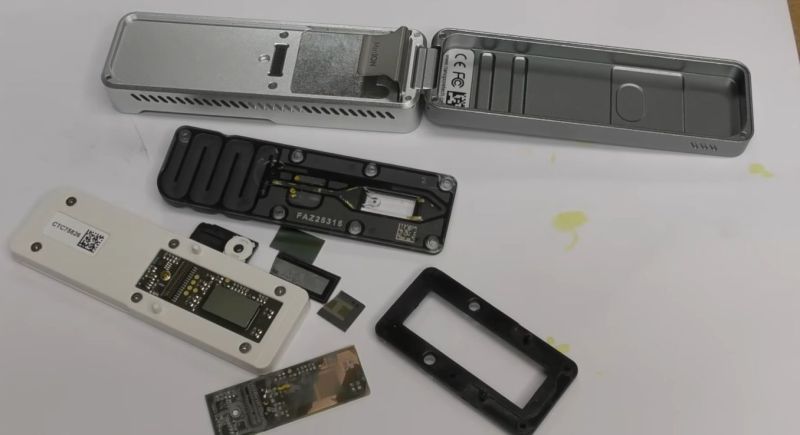
For most people the term ‘DNA sequencing’ probably brings to mind large, expensive laboratory equipment in sterile rooms, but over the past decades technological progress really has had its way with it, to the point where it’s now just another small portable device. Something like the Oxford Nanopore MinION unit that [Mike] recently took to bits to ogle at the intricate insides.
This device was trialed in 2014 in a limited release before its commercial release in 2015, with this paper by [Miten Jain] et al. in Genome Biology detailing the workings of this nanopore sequencer. At a mere $2,000 it’s rather remarkable how affordable it is, though this comes with the caveat of the consumables, which are also shown in the video. These come in at a cool £690 per unit, can sequence either RNA or DNA and can be used at most a few times before they need to be replaced.
The main unit is fairly simple, featuring a Xilinx Spartan 6 FPGA and a rather nice slim fan-based cooling solution. For the nanopore unit you get the typical microfluidics system, to guide the deposited fluid containing the genetic material to sequence over the nanopore system. In here we see the actual magic as well, in the form of the high-density pitch ICs on both sides of the PCB inside the consumable sequencer unit.
Although this particular unit got discontinued already, the consumables are still available for it if you are feeling the sequencing itch. Of course, we’re likely to see the costs for DNA and RNA sequencing to keep plummeting, as what were once complex chips get overtaken once again by the progress of technology.