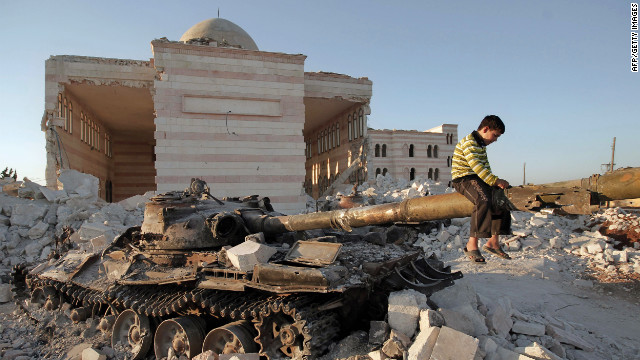
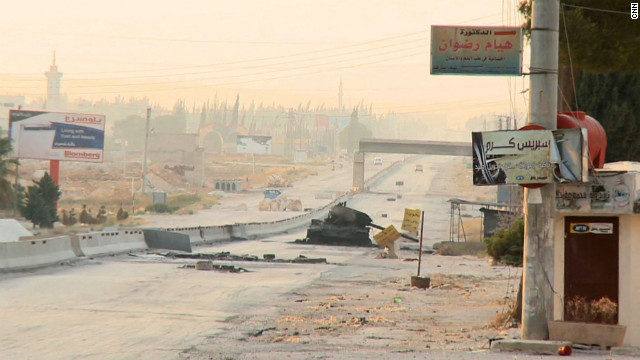
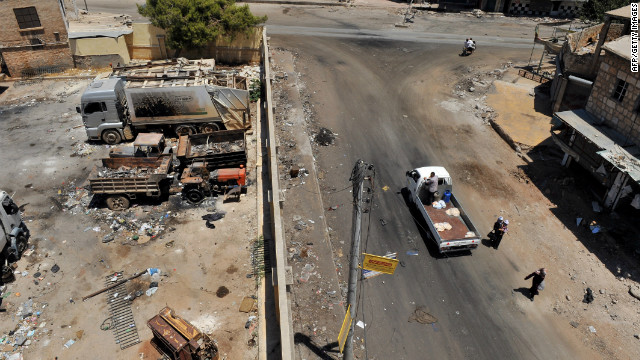
A boy plays on the gun of a destroyed Syrian army tank partially covered in the rubble of the destroyed Azaz mosques, north of the restive city of Aleppo, on Thursday, August 2.
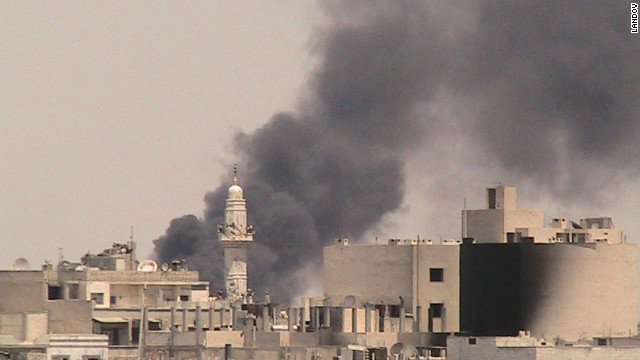
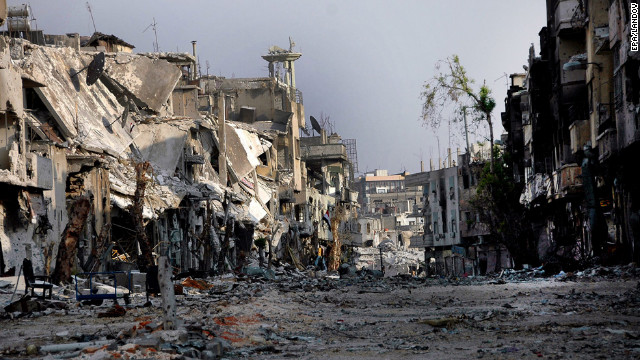
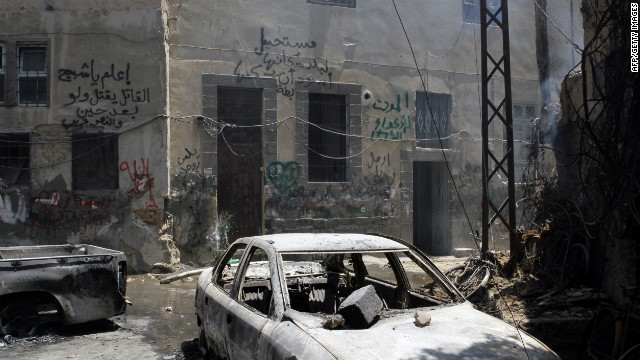
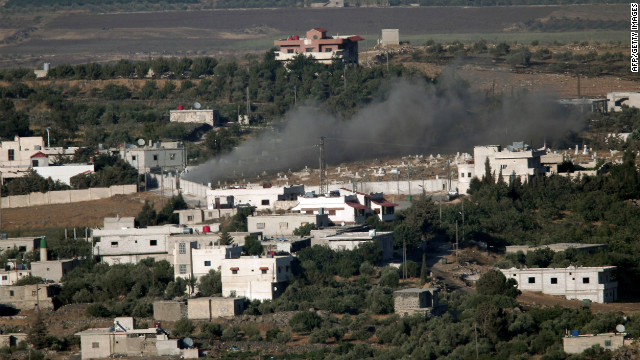
Smoke rises from Al-Safsaf in Homs on Friday, August 3.
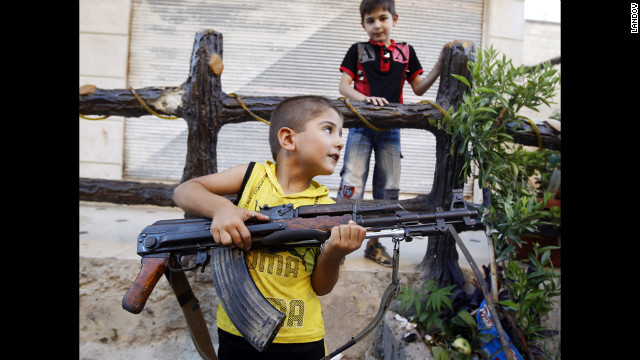
A boy plays with an AK-47 rifle owned by his father in Azaz, some 29 miles north of Aleppo on Friday, August 3.
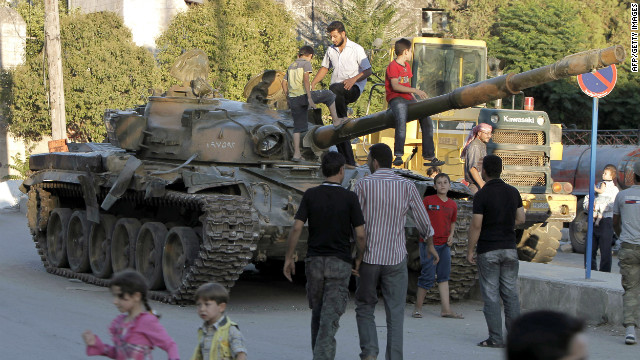
Syrians climb on an abandoned Syrian army tank north of Aleppo on Thursday, August 2.
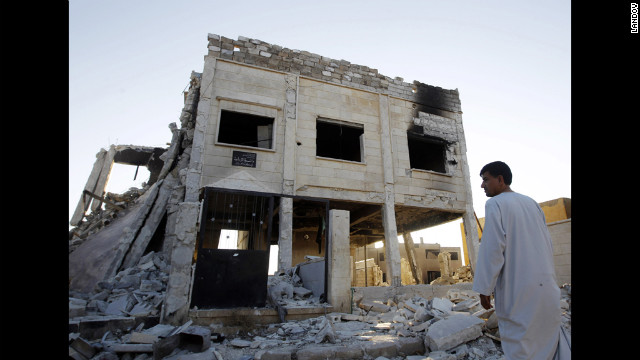
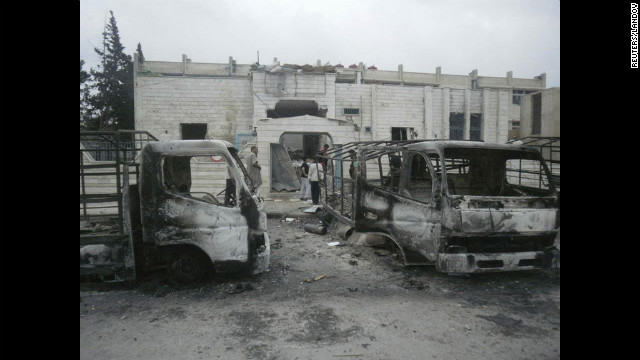
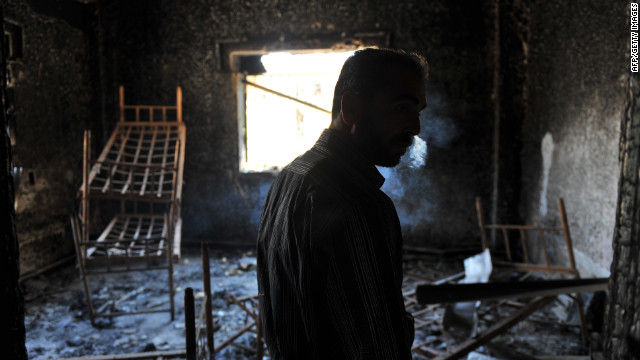
A man looks at a destroyed Syrian army compound in Azaz, 29 miles north of Aleppo on Friday, August 3.
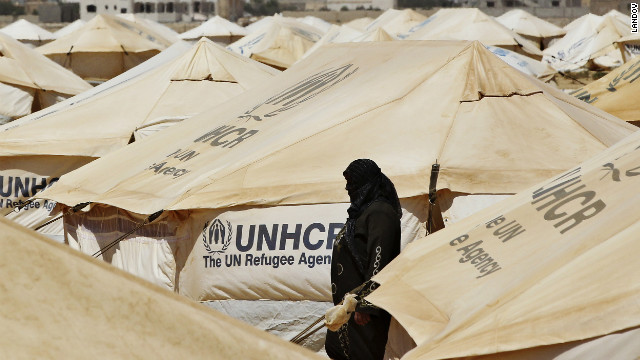
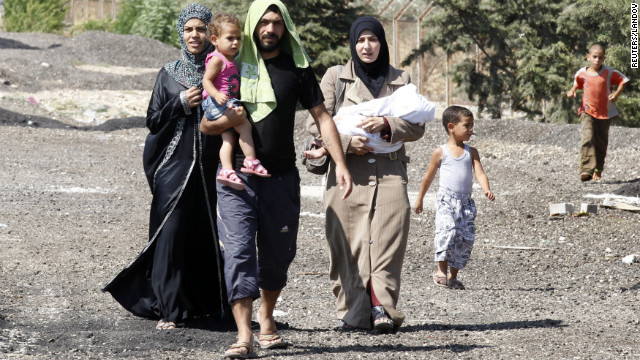
A Syrian refugee walks at the Al Zaatri refugee camp in the Jordanian city of Mafraq, near the border with Syria, on Friday, August 3.
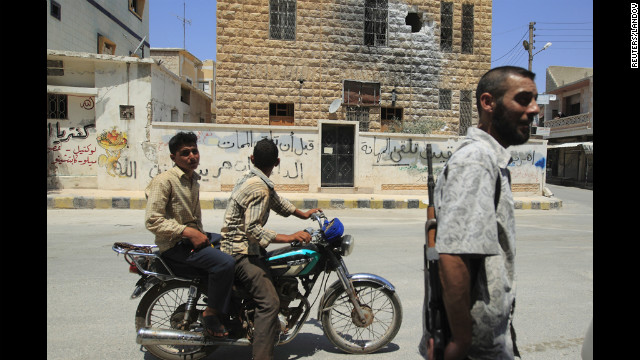
People and a member of the Free Syrian Army commute on Wednesday, August 1, past a building on the outskirts of Idlib that was hit by rocket fire Tuesday night by forces loyal to President Bashar al-Assad. Unrest spread across other volatile regions of the country as al-Assad's forces shelled targets and launched raids in and around Damascus, Homs, Daraa and Deir Ezzor.
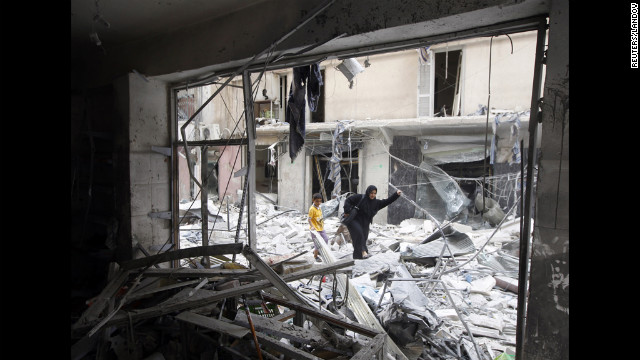
A woman and child on Wednesday walk through rubble of a building destroyed by shelling from forces loyal to Syrian President Bashar al-Assad in Aleppo.
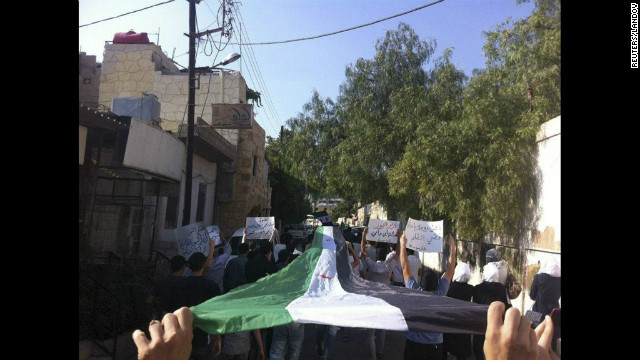
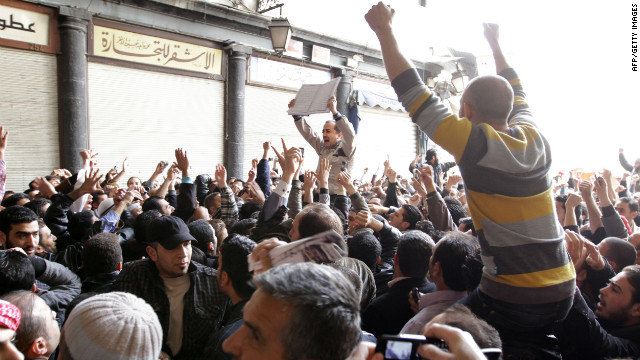
Demonstrators hold an opposition flag during a protest Wednesday against Syria's President Bashar al-Assad in Damascus.
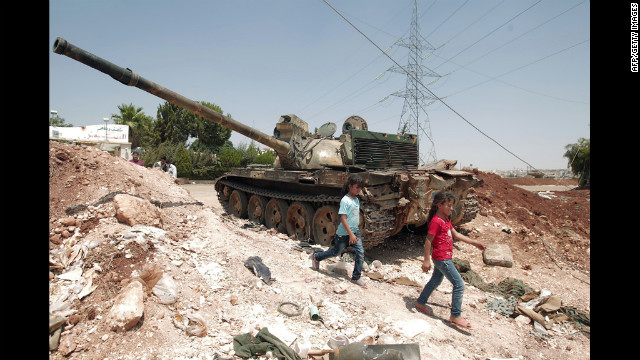
Syrian girls on Wednesday walk past a Syrian army tank captured two days earlier by rebel fighters at a checkpoint in the village of Anadan. The strategic checkpoint secures the rebel fighters free movement between the northern city of Aleppo and Turkey.
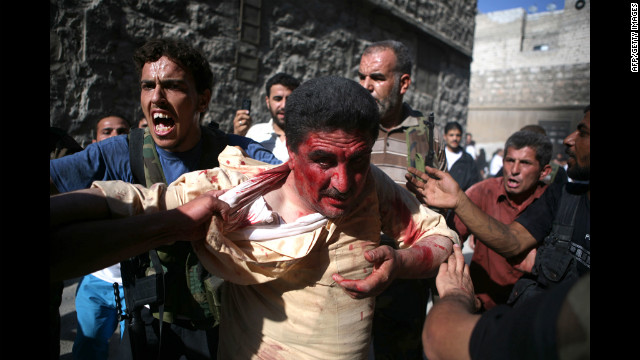
Rebel Free Syrian Army fighters capture a policeman who they allege is a "Shabiha" or pro-regime militiaman, on Tuesday, July 31, as the rebels overrun a police station in Aleppo.
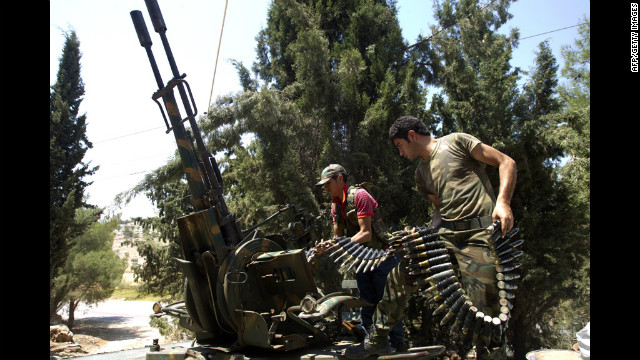
Rebel fighters load an anti-aircraft machine gun on an armored vehicle in Atareb, east of Syria's second-largest city, Aleppo, on Tuesday, July 31.
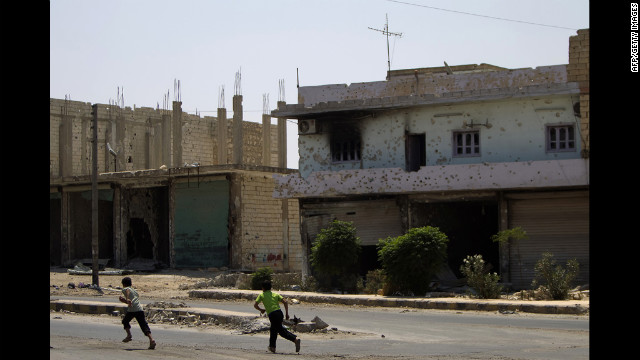
Syrian boys run near a building hit by bullets and fire in Atareb.
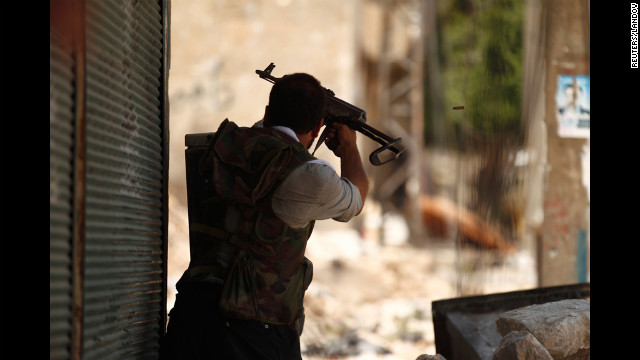
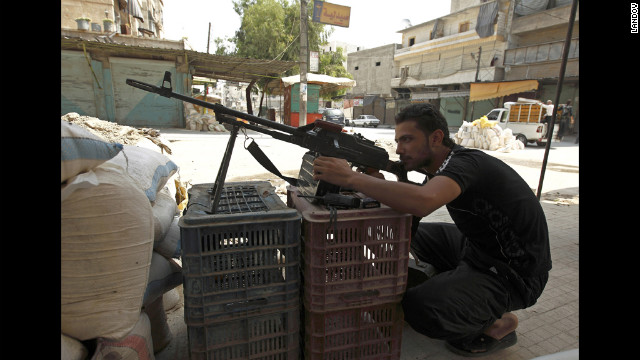
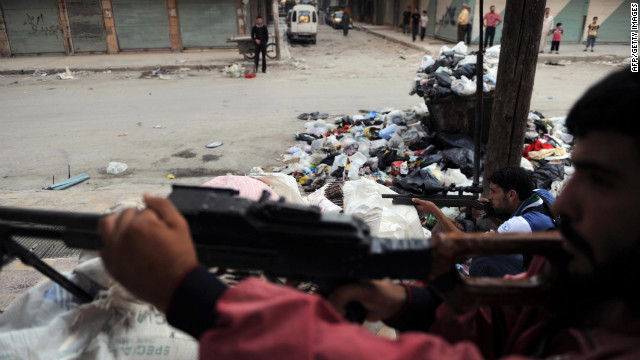
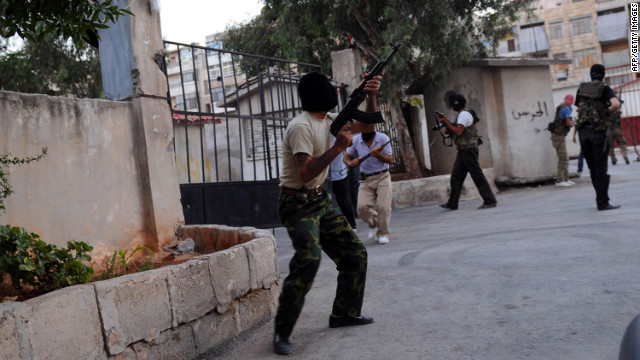
A member of the Free Syrian Army fires at forces loyal to President Bashar Al-Assad in a district of Aleppo called Salah Edinne on Tuesday.
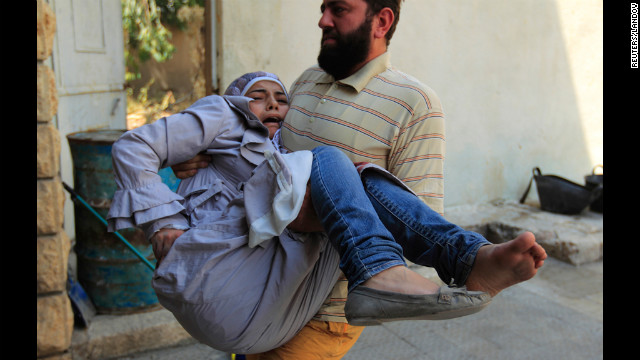
A member of the Free Syrian Army carries an injured civilian to safety in Aleppo's district of Salah Edinne on Tuesday.
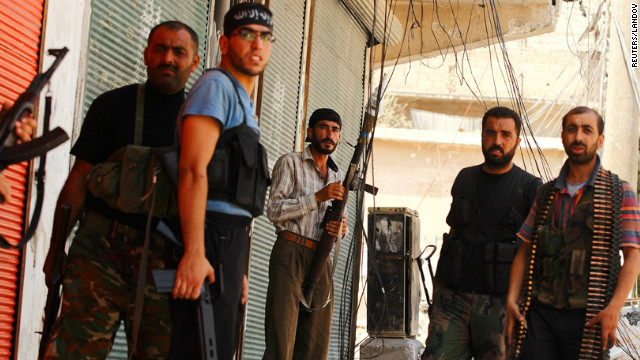
Members of the Free Syrian Army learn that a tank belonging to forces loyal to President Bashar Al-Assad is heading to the area.
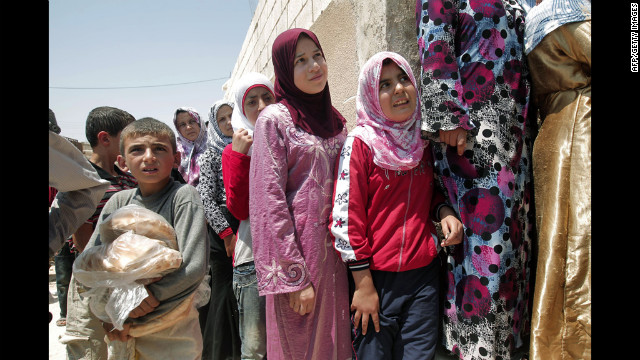
A Syrian boy carries bags of bread as people wait outside a bakery near Syria's second-largest city, Aleppo.
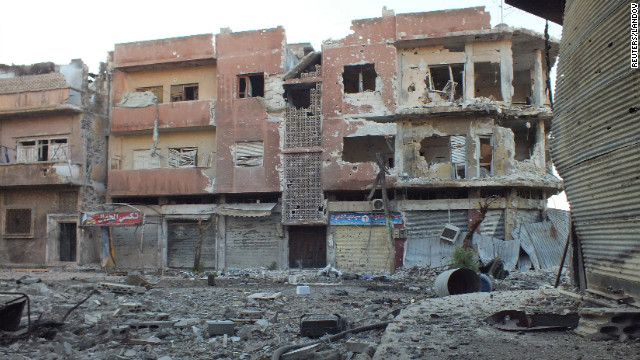
A photo released by Syrian Arab News Agency depicts damaged buildings in Homs on Monday, July 30.
A Free Syrian Army fighter takes position Sunday, July 29, in Aleppo as people flee shelling. Intense clashes have been under way for more than a week between the regime and rebels in Aleppo, Syria's commercial and cultural center.
Parts of Syria's largest city saw the fiercest clashes yet in the country's 16-month crisis on Saturday, July 28. About 200,000 people have fled fighting in Aleppo and surrounding areas in the past two days, a U.N. official says.
Fighting leaves vehicles damaged Saturday in the southwestern city of Daraa.
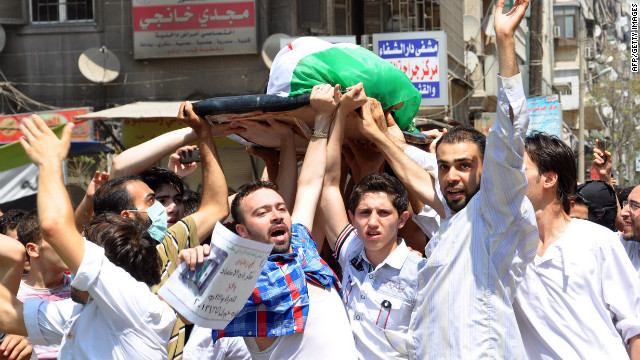
Syrians carry the body of a man allegedly killed in the bombardment of Sukari, southwest of Aleppo, by Syrian regime forces on July 27.
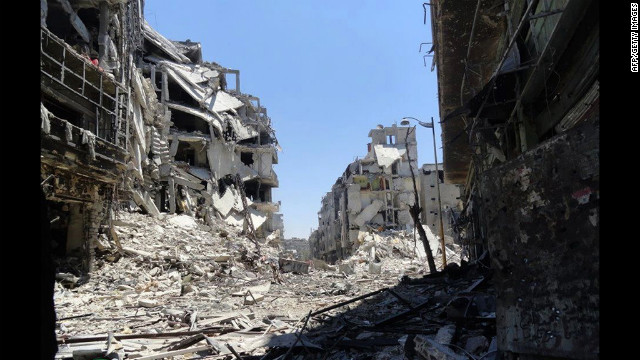
Destruction appears widespread in Homs on Friday, July 27, in a handout photo from the Syrian opposition Shaam News Network.
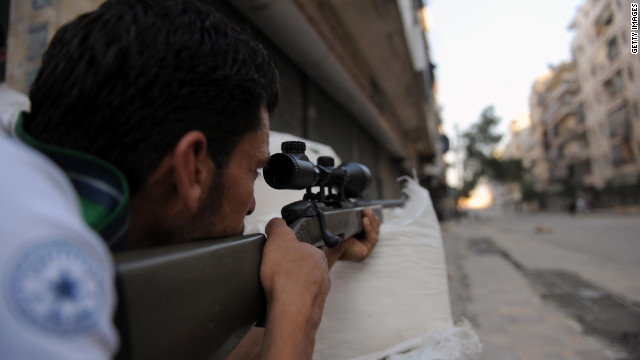
A Syrian opposition fighter takes aim during clashes with forces loyal to President Bashar al-Assad in Aleppo on Wednesday, July 25.
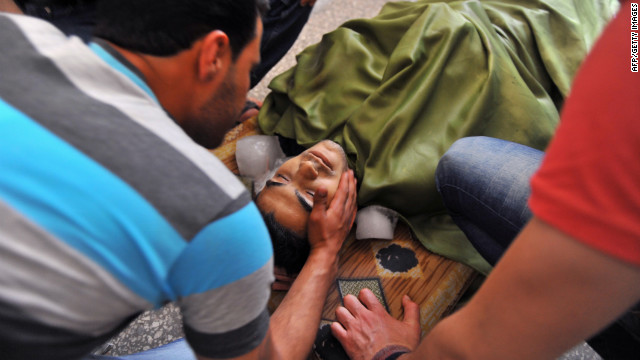
Family and friends mourn over the body of Usame Mircan, who they say was killed by a Syrian government sniper in Aleppo on Wednesday.
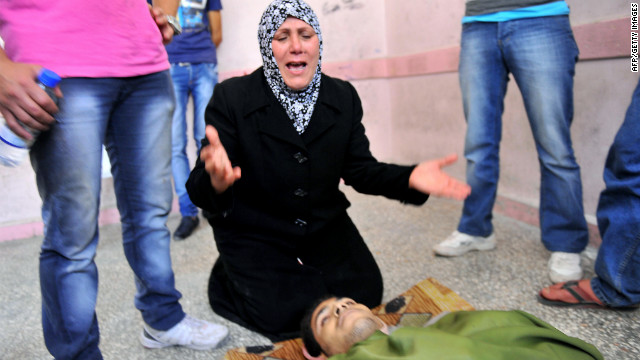
Usame Mircan's mother grieves after he was killed during fighting in Aleppo.
The bodies of men killed during clashes between Syrian rebel fighters and goverment forces lie on the Aleppo street on Thursday, July 26.
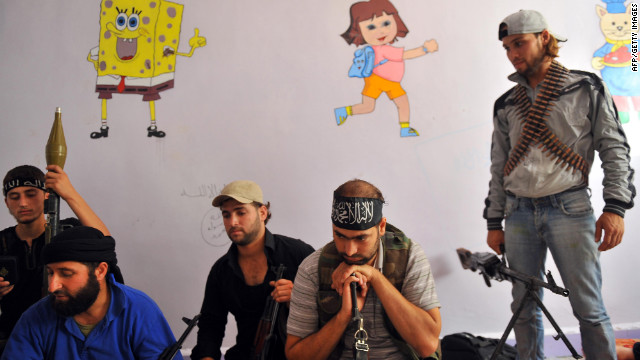
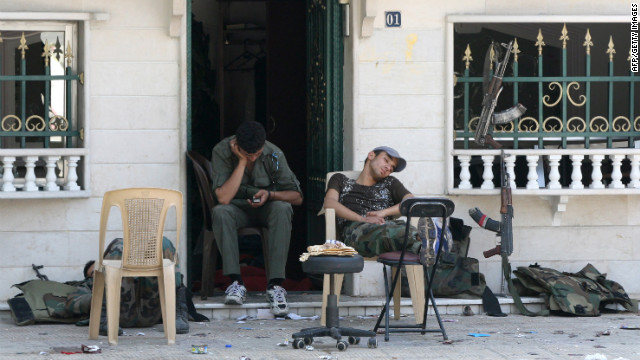
Fighters from the Syrian opposition rest at a former primary school in Aleppo on Wednesday.
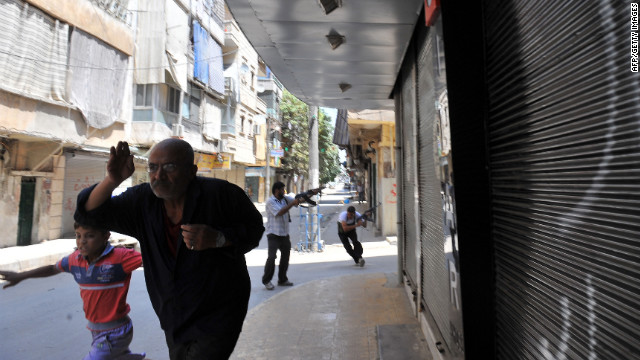
Residents take cover as fighters from the Syrian opposition clash with forces loyal to President Bashar al-Assad in Aleppo on Wednesday.
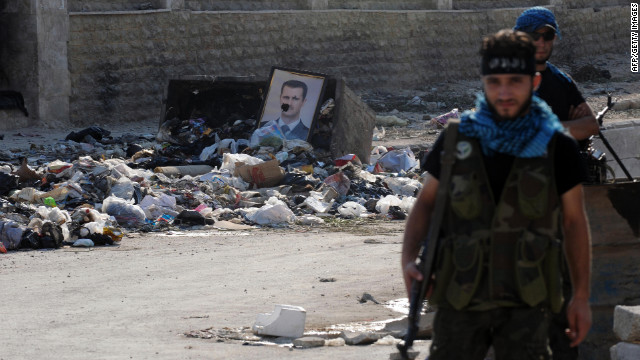
Syrian rebels guard a checkpoint in Aleppo on Wednesday.
A damaged portrait of President Bashar al-Assad sits among piles of debris at a checkpoint manned by Syrian rebels in Aleppo on Wednesday.
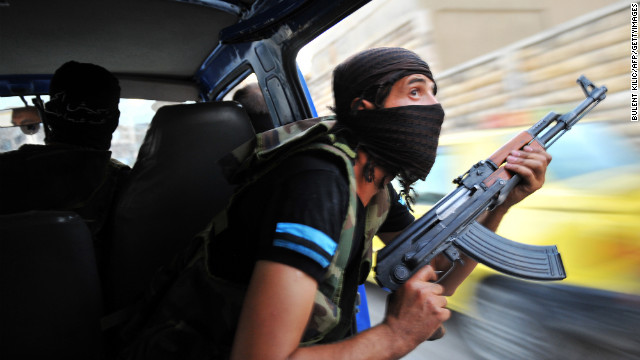
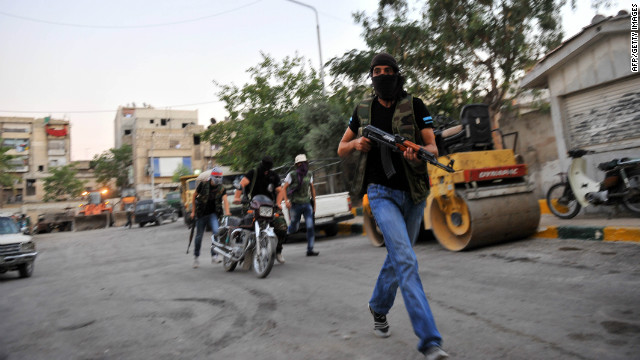
Syrian rebels drive through Selehattin near Aleppo during clashes with government forces on Monday, July 23.
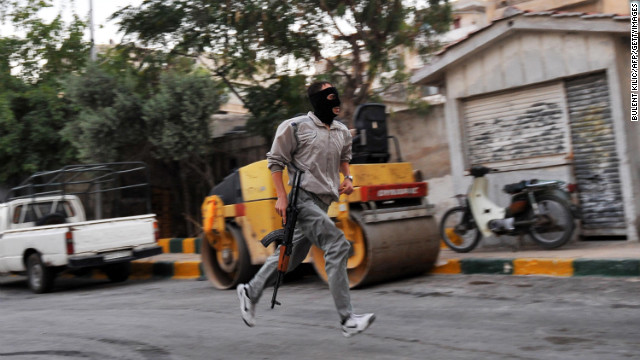
A Syrian rebel runs through the streets of Selehattin during an attack on a municipal building. The rebel Free Syrian Army says it is attempting to "liberate" several districts of Aleppo.
Syrian rebels work to find snipers during clashes Monday between the opposition and government forces in Selehattin.
Syrian rebels make their way down a street Monday in Selehattin near Aleppo. If they gain control of Aleppo, it would mark a pivotal point in the Syrian crisis.
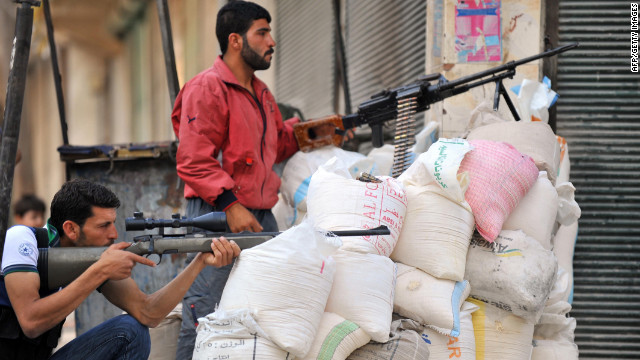
Syrian rebels take cover behind sandbags during fighting Monday at the entrance to the city of Selehattin.
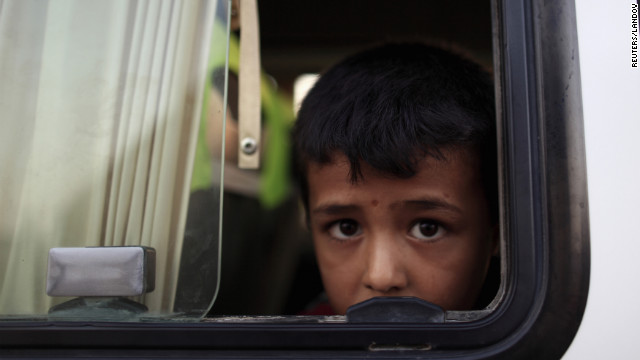
On Sunday, July 22, a Syrian refugee looks out from a bus as he arrives at a refugee camp in Turkey opposite the Syrian commercial crossing point Bab al-Hawa.
Syrian refugees flee from a refugee camp nicknamed "Container City" on the Turkish-Syrian border in Kilis province, southern Turkey, on Sunday.
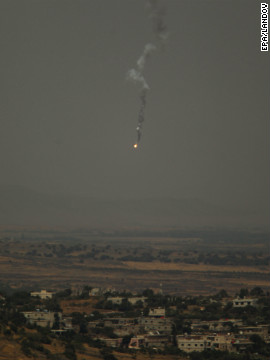
A mortar shell falls toward the Syrian village of Jbatha Al-khashab, about 45 kilometers (28 miles) south of Damascus. It's seen from the Israeli side of the border, in the Golan Heights.
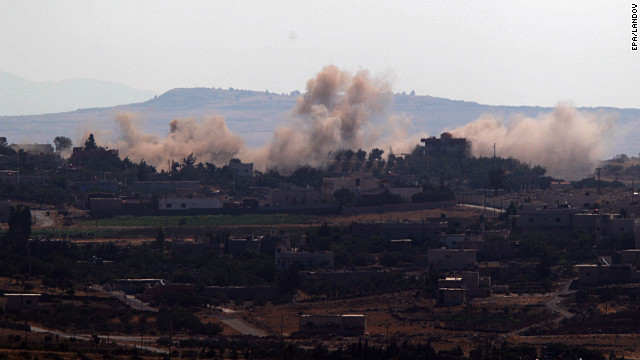
Smoke from artillery shelling rises above Jbatha Al-khashab.
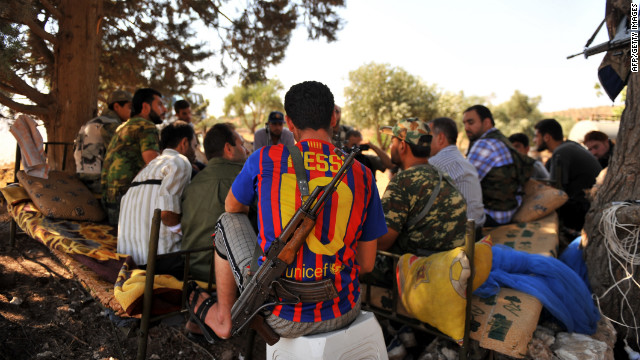
An armed Syrian rebel wearing the jersey of FC Barcelona rests with comrades near the northern city of Aleppo on Sunday. The rebel Free Syrian Army announced the start of the battle to "liberate" Aleppo, Syria's commercial hub and a traditional bastion of President Bashar al-Assad's regime.
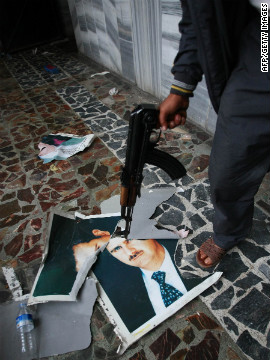
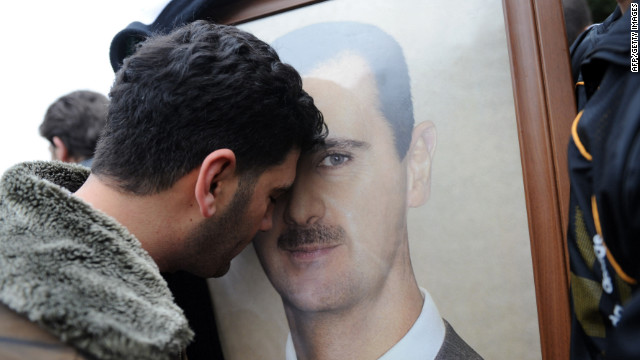
A Free Syrian Army soldier rips a portrait of President Bashar al-Assad at the Bab Al-Salam border crossing to Turkey on Sunday.
Dozens of Turkish truck drivers on Saturday, July 21, accused Free Syrian Army rebels of having burned and looted their lorries as they captured Syria's Bab al-Hawa post, near Aleppo, from government troops.
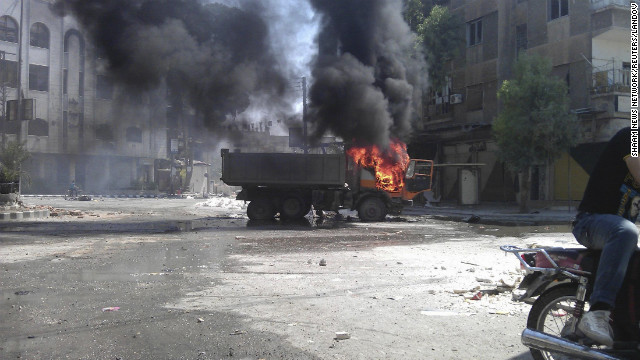
In this photo released by the Shaam News Network, a truck burns after shelling in the Erbeen suburb of Damascus on Saturday, July 21.
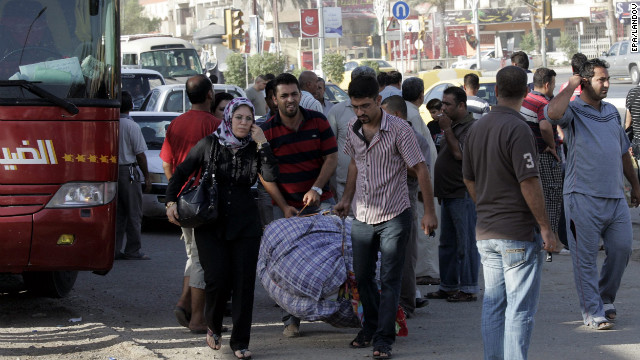
Refugees fleeing the violence in Syria arrive by bus in Baghdad, Iraq, on Saturday.
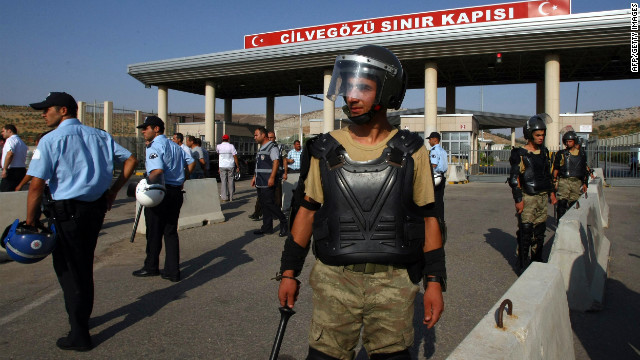
Turkish soldiers stand guard at the Cilvegozu border gate in Reyhanly that connects to Syria's Bab al-Hawa post. An estimated 120,000 people have fled Syria to Turkey, Iraq, Lebanon and Jordan.
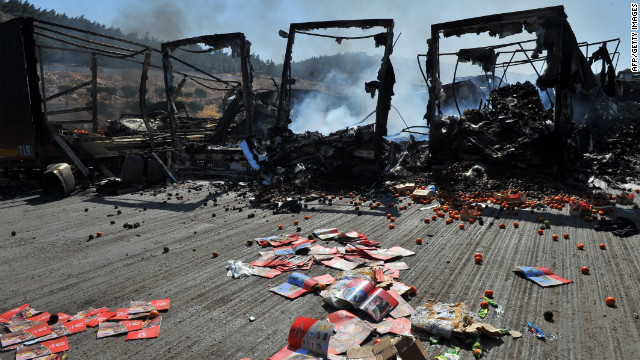
Burned-out trucks at the Bab al-Hawa Syrian border post with Turkey on Friday, July 20. Syrian rebels seized control of the post after a fierce battle with Syrian troops, an AFP photographer at the scene reported.
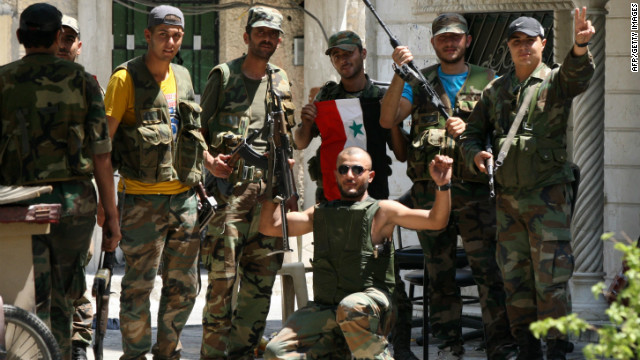
Syrian soldiers celebrate in the al-Midan area in Damascus on Friday. Syrian regime forces routed rebel fighters from the Damascus neighbourhood of Midan, Syrian state television reported, saying troops had "cleaned" the district of "terrorists."
Journalists are shown a dead body on a government tour of the al-Midan area in Damascus on Friday.
Members of Syria security forces rest in the al-Midan area in Damascus on Friday.
Syrian army soldiers hang their national flag in a partially destroyed neighborhood in the al-Midan area in Damascus.
Smoke hangs in the air in a partially destroyed neighborhood in the al-Midan area in Damascus.
Members of Syria security forces pose for photographers in the al-Midan area in Damascus after driving out the rebel fighters.
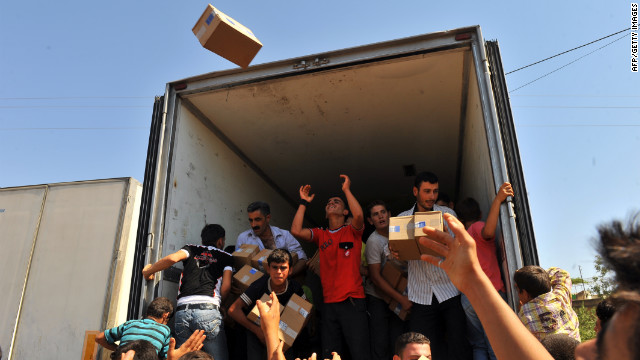
Syrian residents take goods from a truck that rebels captured at the Bab al-Hawa border crossing with Turkey on Friday.
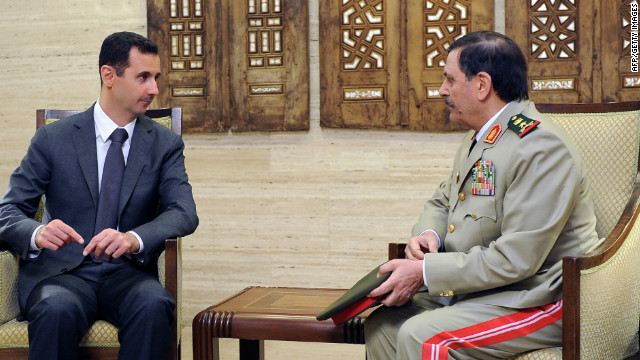
A picture released by the official Syrian Arab News Agency on July 19 shows Syrian General Fahd al-Freij meeting with President Bashar al-Assad in Damascus after his swearing-in ceremony as defense minister.
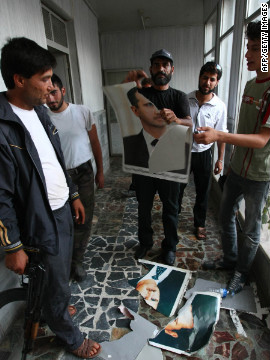
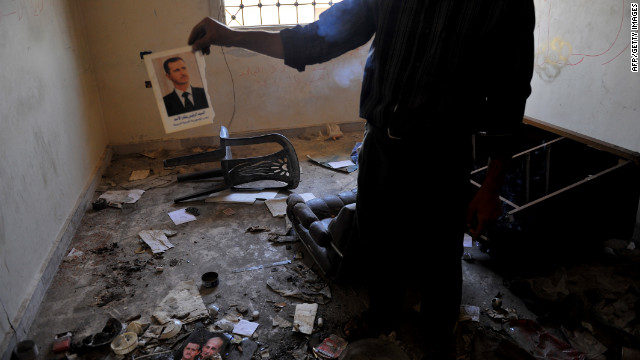
A man holds up a picture of President Bashar al-Assad at a former police station in Atareb after clashes between Syrian soldiers and Free Syrain Army near Aleppo on Thursday, July 19. Rebels seized control of border crossings with Iraq on Thursday, dealing a new blow to al-Assad, as China and Russia dismayed the West by blocking U.N. action against his regime.
People walk along the street in Atareb amidst damage caused by clashed between Syrian soldiers and the Free Syrian Army.
A Syrian man checks the former police station of Syrian regime after a clash at Atareb on Thursday.
Smoke ascends from from alleged shelling of the Syrian village of Jebata al-Khashab as seen from the hill village of Buqaata in the Israeli-annexed Golan Heights on Thursday.
The death toll in Syria on July 12 reached 287, making it the bloodiest day in Syria since the uprising began. As it has done consistently, Syrian state television blamed "armed terrorist groups" for the killings.
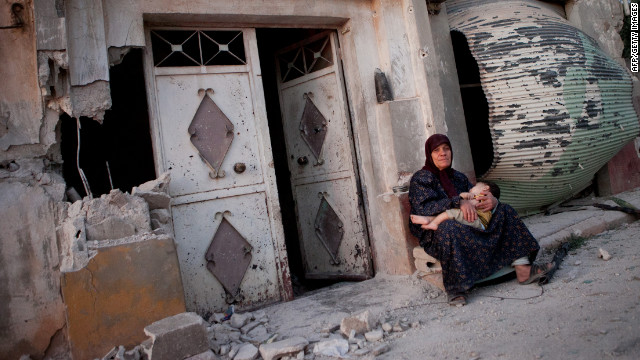
A Syrian woman sits with her grandson outside a damaged building after attacks in the Syrian village of Treimsa on July 13, 2012. More than 200 people were massacred in the town, according to activists.
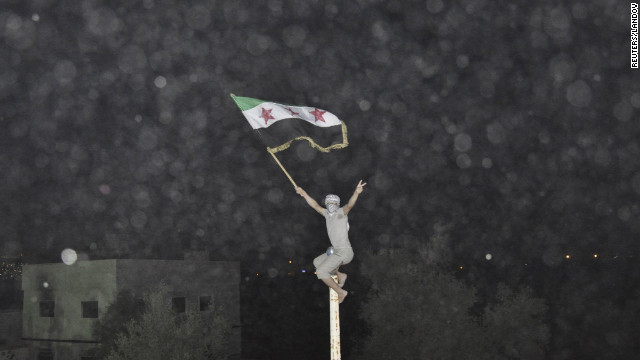
A Syrian demonstrator holds an opposition flag during a protest in Damascus on July 2, 2012. There have been increasing reports of violence in the Syrian capital.
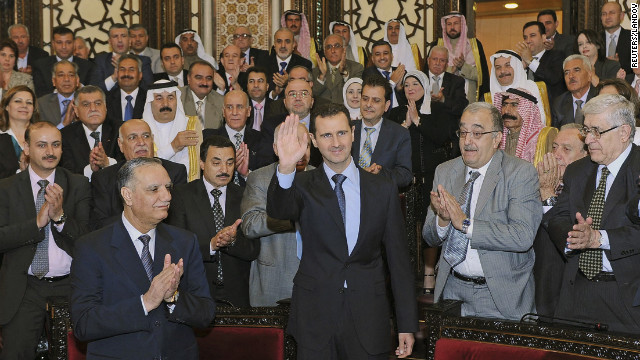
Syria's President Bashar al-Assad waves as he arrives for a speech to Syria's parliament in Damascus on June 3, 2012. The embattled president denied that government forces were behind the "outrageous" massacre in Houla.
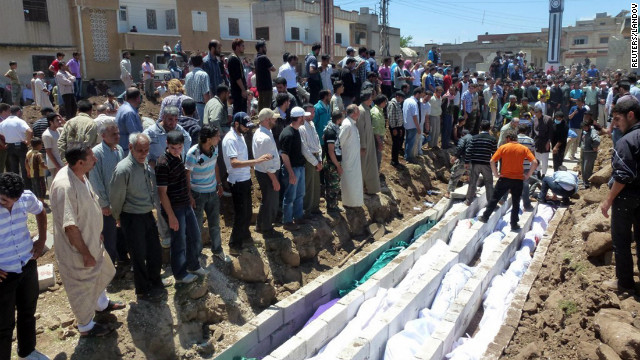
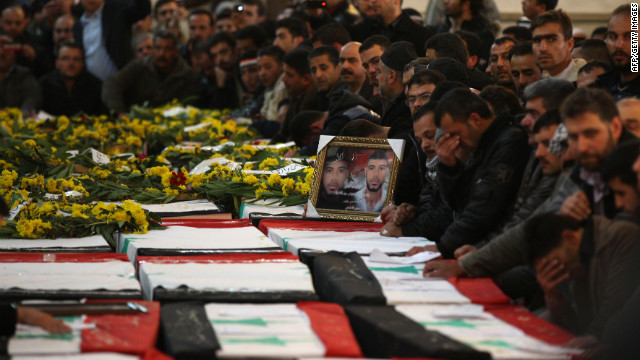
People gather at a mass burial on May 26, 2012 for victims reportedly killed during an artillery barrage from Syrian forces in Houla. The attack left at least 108 people dead, including nearly 50 children, according to the United Nations.
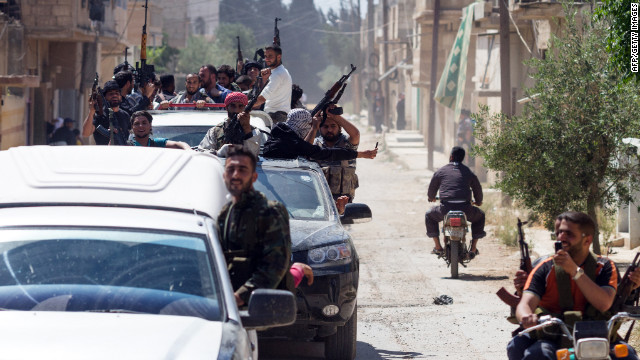
Members of the Free Syrian Army return to Qusayr on May 12, 2012 after an attack on Syrian regime forces in the village of Nizareer, near the Lebanese border in Homs.
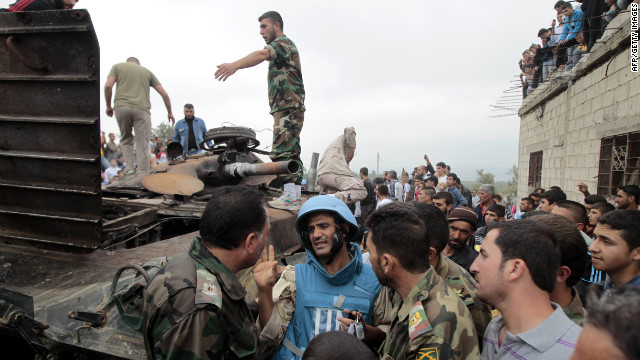
A U.N. observer speaks with Syrian rebels and civilians in the village of Azzara on May 4, 2012, days before the country's parlianemtary polls were held against a backdrop of unrest.
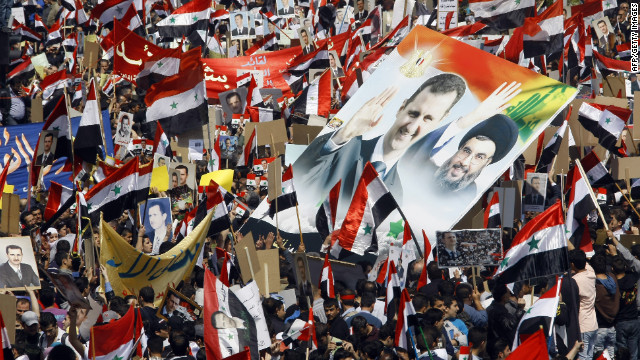
Thousands of Syrians wave their national flag and hold portraits of President Bashar al-Assad and Lebanon's Hezbollah chief Hassan Nasrallah, right, during a rally to show support for their leader on March 29, 2012 in Damascus.
Syrian rebel fighters man a checkpoint leading into the town of Taftanaz in the rebel stronghold province of Idlib on March 20, 2012.
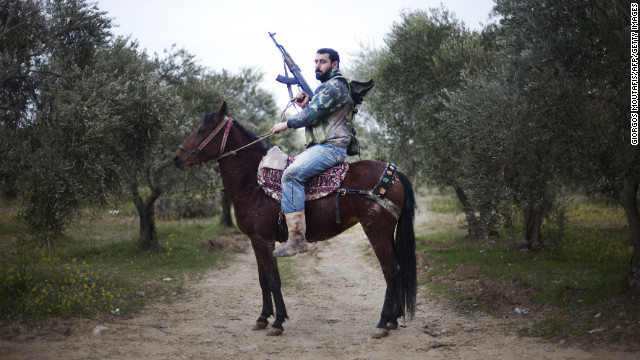
A Free Syrian Army rebel mounts his steed in the Al-Shatouria village near the Turkish border in northwestern Syria on March 16, 2012, a year after the uprising began. The Free Syrian Army is an armed opposition group made up largely of military defectors.
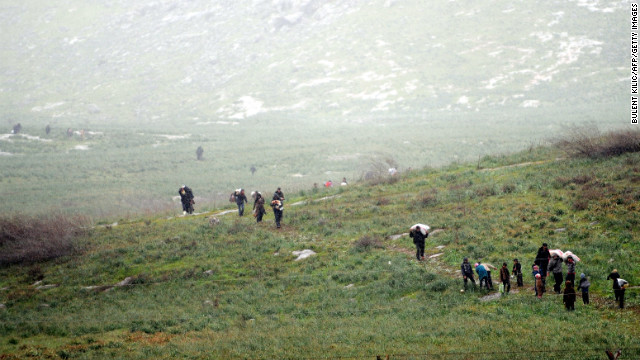
Syrian refugees walk across a field before crossing into Turkey on March 14, 2012. International mediator Kofi Annan called for an immediate halt to the killing of civilians in Syria as he arrived in Turkey for talks on the crisis.
A day after the twin suicide bombings, Syrian mourners pray over the coffins of the 44 people killed during a mass funeral in Damascus.
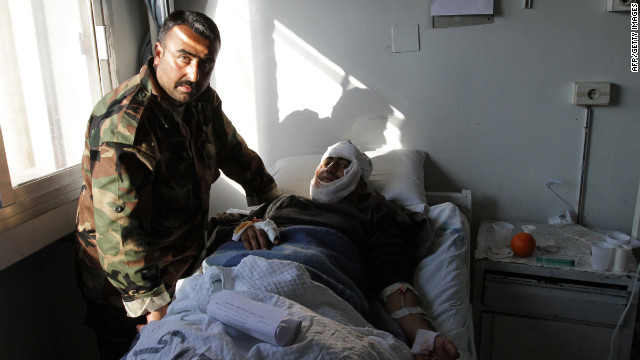
A Syrian man who was wounded in a suicide attack rests at a hospital in Damascus on December 23, 2011. Suicide bombers hit two security service bases in the Syrian capital, killing dozens of people.
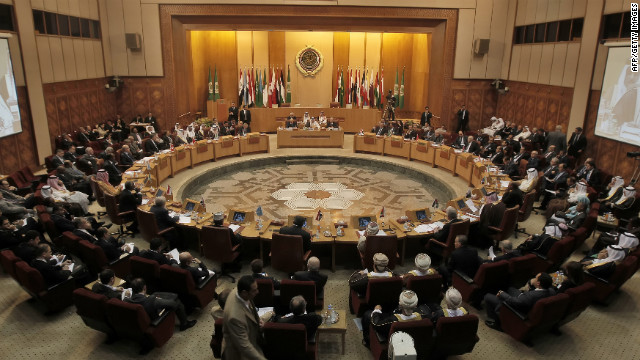
Arab foreign ministers attend an emergency meeting at the Arab League headquarters in Cairo on October 16, 2011, to discuss the crisis in Syria.
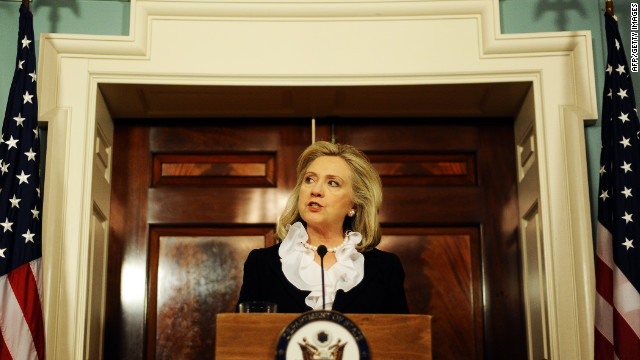
U.S. Secretary of State Hillary Clinton speaks to the media in Washington on August 18, 2011. Clinton said U.S. sanctions on Syrian oil "strike at the heart of the Syrian regime."
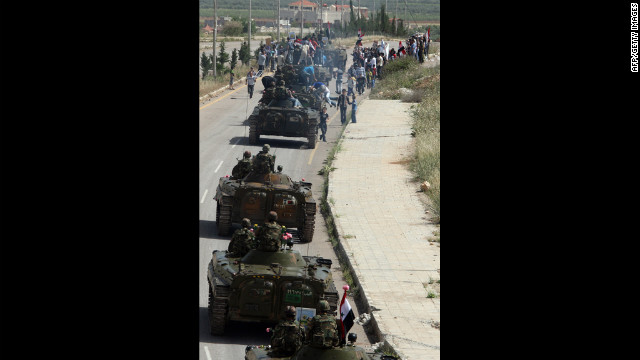
Syrian youths wave national flags while army troops drive out of Daraa on May 5, 2011. During a week-long military lockdown of the town, dozens of people were reportedly killed in what activists described as "indiscriminate" shelling on the city.
Syrians in Damascus protest in the street on March 25, 2011, after clashes with government forces in Daraa left several dead.
Supporters of Syrian President Bashar al-Assad rally on April 1 in Istanbul, Turkey, as delegates from dozens of countries gather to push for ways to end the deadly violence in Syria. The United Nations estimates more than 10,000 people have been killed since the beginning of the crisis in March 2011. The conflict is now being labeled a civil war by the International Committee of the Red Cross.
1
2
3
4
5
6
7
8
9
10
11
12
13
14
15
16
17
18
19
20
21
22
23
24
25
26
27
28
29
30
31
32
33
34
35
36
37
38
39
40
41
42
43
44
45
46
47
48
49
50
51
52
53
54
55
56
57
58
59
60
61
62
63
64
65
66
67
68
69
70
71
72
73
74
75
76
77
78
- NEW: Iranian pilgrims kidnapped in Damascus
- More than three dozen deaths were reported on Saturday, the opposition says
- Unrest is also reported in Damascus, Deir Ezzor, Homs and Hama
- The fighting has caused widespread displacement, death and destruction
(CNN) -- Anti-government rebels brazenly tried to seize a state-run broadcasting building on Saturday as the bloody battle for Syria's largest city persisted.
The rebel Free Syrian Army pushed into the radio and TV complex in Aleppo, where the government broadcasts, and seized some control. But the fighters eventually had to withdraw because of snipers and military shelling, the opposition Local Coordination Committees of Syria said.
FSA commanders said the site is no longer able to broadcast because of bombardment in the area from Syrian aircraft.
Commanders say a rebel flag has been planted on top of the building, a symbolic stride for the rebels. They are reporting large columns of military vehicles heading to Aleppo from Latakia on the Mediterranean coast and Damascus.
The regime reported "a large number of terrorists killed and injured during their attempt to storm the state-run TV and radio building in Aleppo."
But the rebel thrust reflects the confidence and growing clout of the armed resistance, which intends to wrest control of the sprawling metropolis from the much larger and better equipped forces of Syrian President Bashar al-Assad.
The fighting across Aleppo has raged for days in the city, causing widespread destruction and casualties and forcing civilians to flee.
Across the country, at least 45 people were killed Saturday, the LCC said, including 29 in Deir Ezzor, 14 in Damascus and its suburbs and six in Aleppo.
The Syrian government also acknowledged widespread deaths Saturday in other places, saying security forces clashed with "armed terrorist groups" in the Deir Ezzor countryside, the Arbaeen neighborhood in Hama and Homs province, "killing and injuring a large number of these terrorists' elements and arresting others."
In Damascus,"armed terrorists" attacked a bus carrying 48 Iranian pilgrims and kidnapped them, Iranian state media said. The people were returning from a Shiite pilgrimage.
It is not known if the hijacking is linked to the resistance against the Syrian government. The Iranian government is an ally of the al-Assad regime, which has been fighting a rebel movement dominated by Sunnis.
The latest reports of bloodshed came as the Syrian regime turned to Russia for financial aid, saying the economic squeeze of international sanctions has taken its toll.
Syrian Deputy Prime Minister Qadri Jamil told reporters in Moscow on Friday that Syria is facing an unfair Western economic blockade and that Western sanctions target the Syrian people's livelihood, the state-run Syrian Arab News Agency reported. Jamil made the comments after meeting with Russian officials.
Syrian Finance Minister Mohammad al-Jleilati mentioned the possibility of Russia providing loans to help Syria, SANA said. Al-Jleilati added that while Syria has sufficient reserves, the current situation requires extra reserves.
"We ask for some hard currency. Russia promised to consider the request," al-Jleilati said, according to Russia's official Itar-Tass news agency. "That would help Syria to recover from the crisis."
Syria has not determined how much money it wants to borrow from Russia, but a decision will be made within weeks, Jamil said, according to Itar-Tass.
While Syria bemoaned Western sanctions against the country, a myriad of world ambassadors rebuked the regime at the U.N. General Assembly on Friday in a resolution on Friday.
The resolution slammed the Syrian government for its crackdown and the U.N. Security Council for its failure to counter the crisis. It adopted the Saudi-sponsored resolution 133-12, with 31 abstentions.
But China, one of the nations to vote against the resolution, defended its stance on Saturday.
Wang Kejian, deputy director general at the Chinese Foreign Ministry, said China "is opposed to any action forcing a regime change in Syria and sanctions can only make the situation more complicated."
"Solutions imposed from outside do not help solve the crisis," he said.
The resolution notes "human rights abuses by armed opposition groups" and condemns "all violence, irrespective of where it comes from, including terrorist acts."
But most of its ire is reserved for al-Assad's regime. It strongly condemns "the continued widespread and systematic gross violations of human rights and fundamental freedoms by the Syrian authorities and pro-governmental militias."
It also reiterated its "call for an inclusive Syrian-led political transition to a democratic, pluralistic political system."
General Assembly resolutions are legally non-binding, unlike Security Council resolutions. Diplomats hope the action will put pressure on the Security Council to take tough action on Syria. So far, Russia and China have blocked tough council resolutions against the regime.
The Syrian conflict has claimed roughly 17,000 lives, U.N. Secretary-General Ban Ki-moon said last month. Opposition activists put the toll at more than 20,000.
CNN's Amir Ahmed, Saad Abedine, Ben Wedeman, Kareem, Khadder, Hamdi Alkhshali, Holly Yan Jaime FlorCruz and Joe Sterling contributed to this report.