
One of the reasons why [Dmitri] got interested in the second-generation Pixter Color originally was as a potential PalmOS porting target, which gives somewhat of an idea of how these devices were meant to be used.
With absolutely no remaining known official documentation on how to develop software for the hardware reverse-engineering posed somewhat of a challenge. Fortunately this was made somewhat easier by the Pixter Color using the ARM-based LH7541, but worse by just how much of a minimal ARM7 implementation the SoC is. This was meant to go into a cheap-ish kid’s toy after all.
Where things got wild was that the firmware implements a 16-bit stack-based virtual machine, possibly due to initially having selected a completely different SoC. From here things get even crazier with how audio output is implemented, with [Dmitry] descending into a long-winded rant on this and all the weird things encountered during reverse-engineering.
After the Color Pixter its Multimedia sibling with slightly better SoC was also reverse-engineered, as well as the Classic device that started it all. This particular device uses an 8-bit VM, but a black-blob 6502 processor, which is rather astounding for a 2000-era device, but then again it was meant to be a toy.
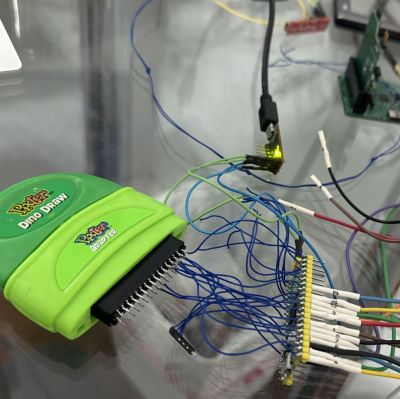
In addition to getting a lot of reverse-engineering woes off his chest, [Dmitri] also details how he reverse-engineered and dumped the cartridges, as well as writing emulators to ensure that the Pixter legacy will endure, for better or worse.
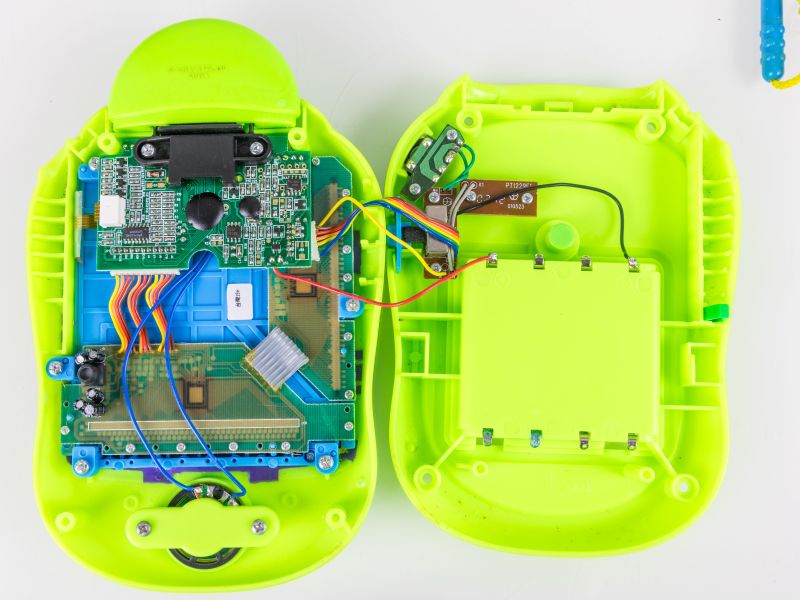
Top image: Pixter with opened case. (Credit: Raimond Spekking, Wikimedia)