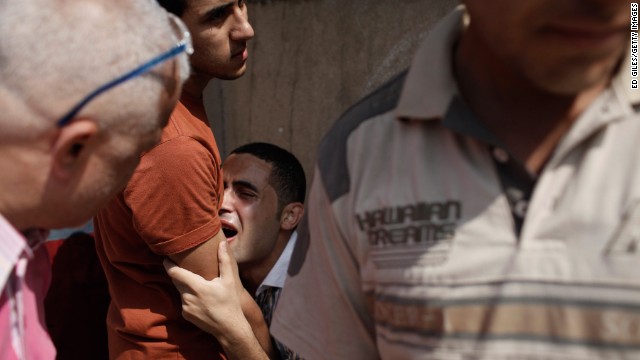
See photos of protests that erupted before Morsy was ousted." border="0" height="360" id="articleGalleryPhoto001" width="640"/>A man reacts after seeing the body of a family member at the Liltaqmeen al-Sahy Hospital in Cairo, Egypt, allegedly killed during a sit-in supporting deposed president Mohamed Morsy in front of the Republican Guard on Monday, July 8.
See photos of protests that erupted before Morsy was ousted.
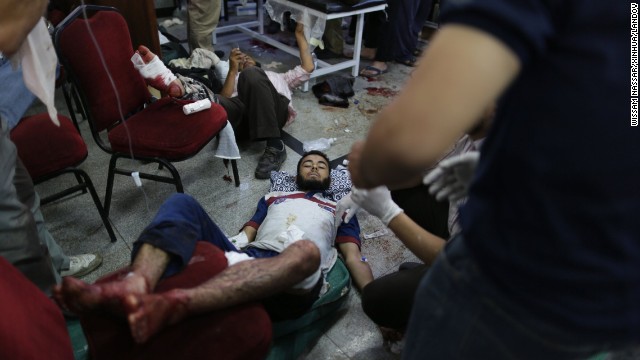
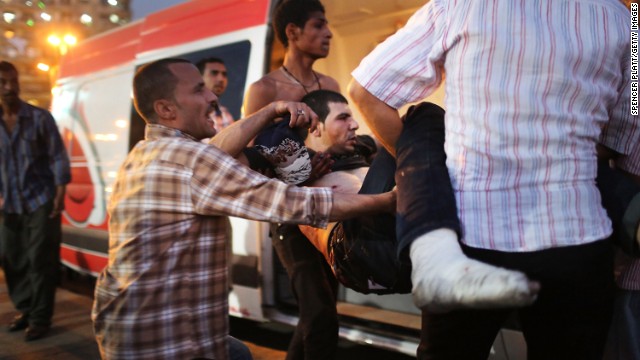
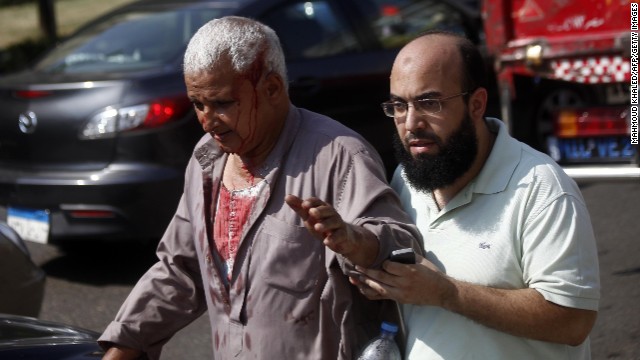
Injured men receive medical attention after clashes between supporters of Morsy and security forces in Cairo on July 8.
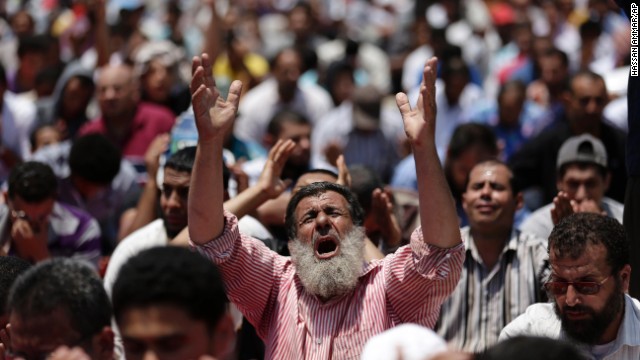
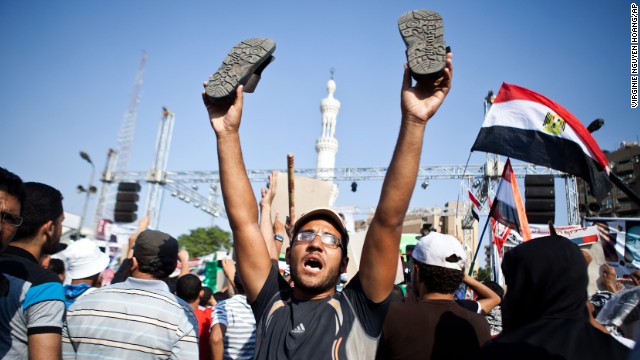
Supporters of the Muslim Brotherhood rally outside Cairo's Rabaa al-Adawiya mosque late Sunday, July 7.
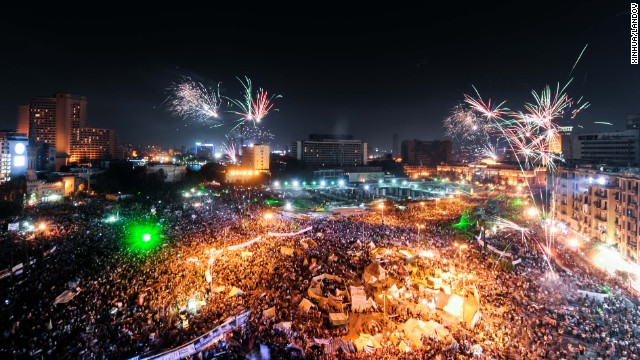
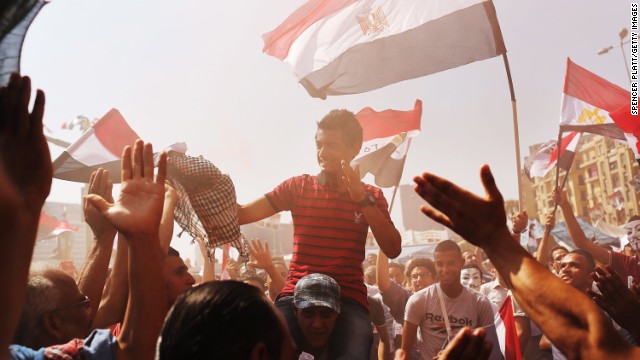
Opponents of Mohamed Morsy gather at Tahrir Square during a protest in Cairo on Sunday, July 7.
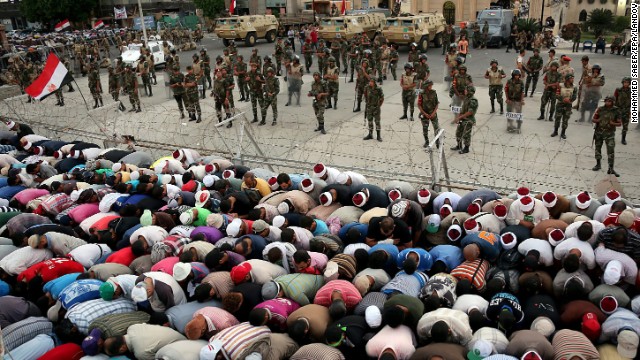
Supporters of Morsy pray next to the headquarters of the Republican Guards in Cairo on Saturday, July 6, during the funeral of seven people killed during clashes.
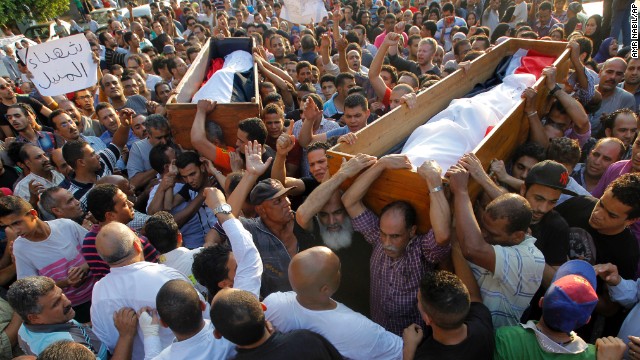
People carry coffins on July 6 of two Morsy opponents who were killed during clashes in Cairo.
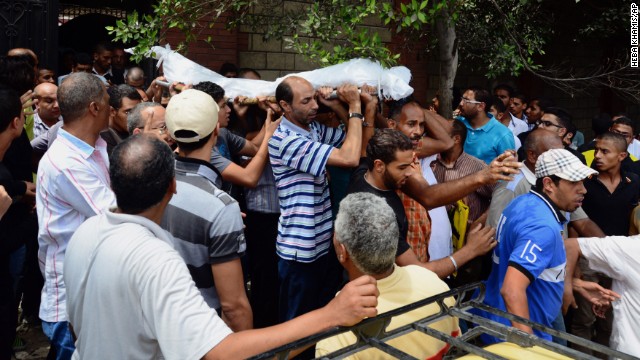
On July 6 in Alexandria, people carry a body of a man killed the day before during clashes between supporters and opponents of Morsy.
A Morsy supporter joins protests near the University of Cairo in Giza on July 6.
Supporters and opponents of Morsy clash in Cairo on Friday, July 5.
A protester is attended to in Cairo's Tahrir Square during fighting between the pro- and anti-Morsy crowds on July 5.
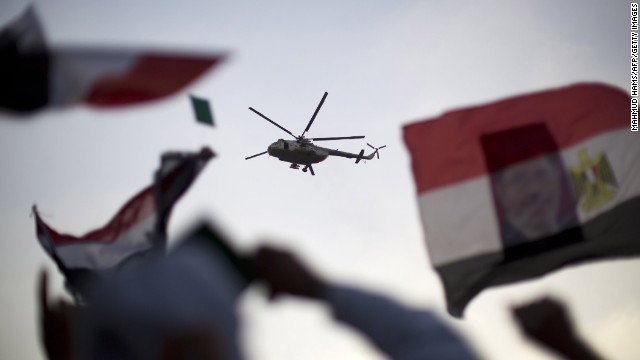
An Egyptian military helicopter hovers over supporters of the Muslim Brotherhood and deposed President Mohamed Morsy in Cairo on July 5.
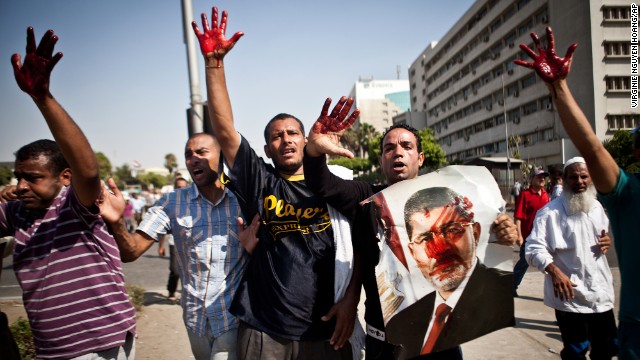
Morsy supporters hold up their bloodstained hands after Egypt's armed forces opened fire on rally in front of the Republican Guard headquarters in Cairo on July 5.
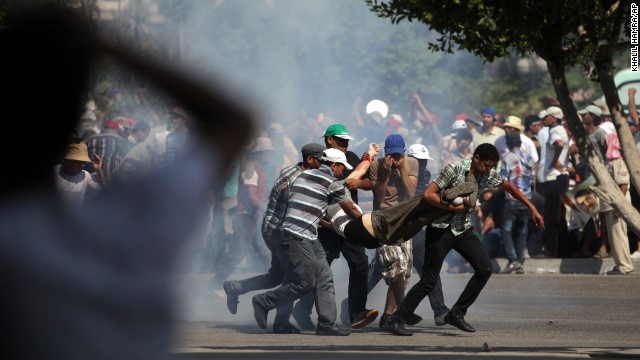
Morsy supporters carry a man who was shot during clashes next to the Republican Guard headquarters in Cairo on July 5. State broadcaster Nile TV said a number of those backing the deposed leader were wounded as they tried to storm the headquarters, where Morsy reportedly was being held.
A wounded man is helped following the gun battle outside the headquarters of the Republican Guard on July 5.
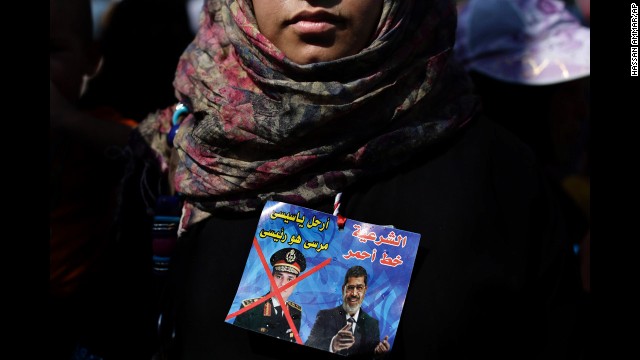
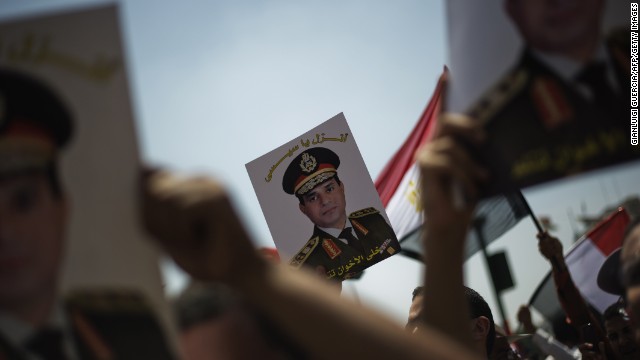
Egyptians hold portraits of Gen. Abdel-Fatah El-Sisi reading "Come down, Sisi" as they gather in Cairo's landmark Tahrir Square on July 5.
Morsy supporters react to an explosion during clashes with police officers on July 5 outside Cairo University in Giza.
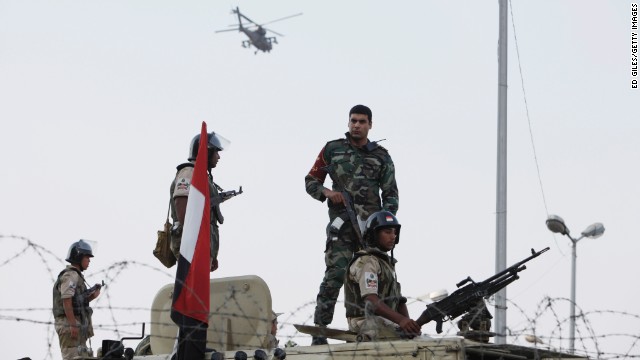
Egyptian Army soldiers stand guard at the Cairo headquarters of the Republican Guard on July 5 as an Apache attack helicopter flies overhead.
Morsy supporters pray near the University of Cairo in Giza on July 5.
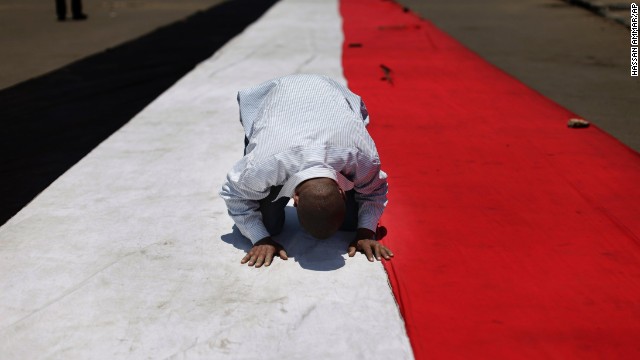
A man prays on July 5 before the protest near the University of Cairo.
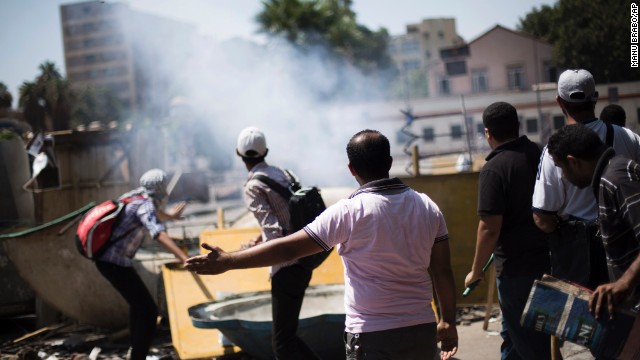
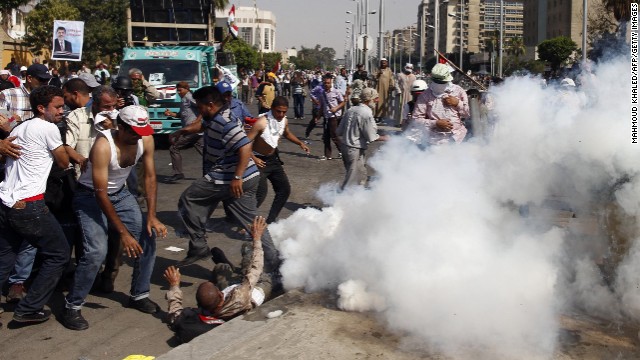
Protesters take cover from tear gas during clashes outside the headquarters of the Republican Guard in Cairo on July 5.
A military helicopter flies by Egypt's Presidential Palace in Cairo on July 5.
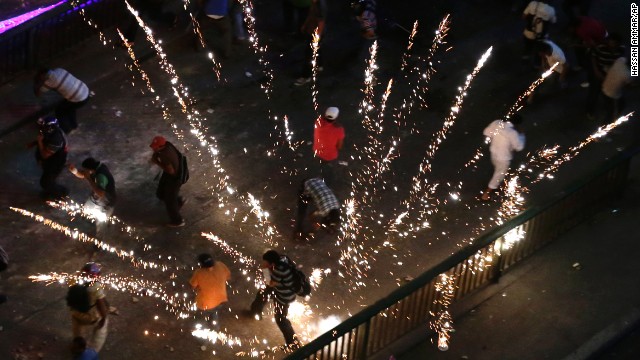
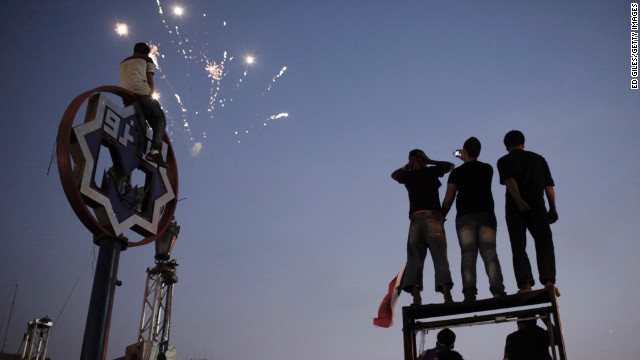
Egyptians watch fireworks in Tahrir Square on Thursday, July 4, the day after Morsy's ouster.
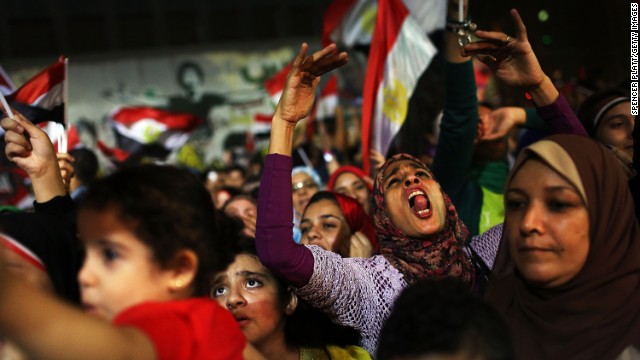
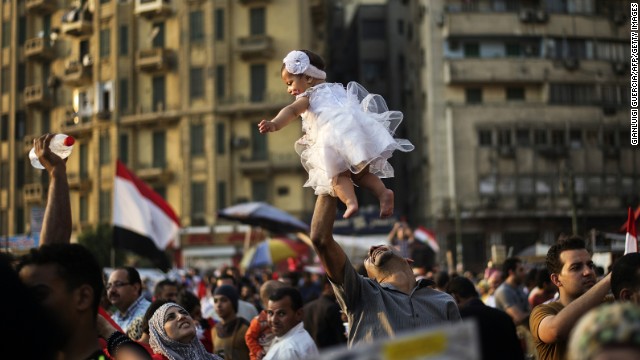
People dance and cheer in the streets of Cairo on July 4.
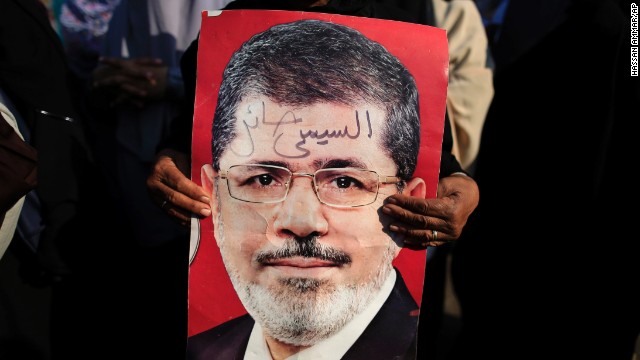
A Morsy supporter holds a poster of the deposed president during a July 4 rally in Nasr City.
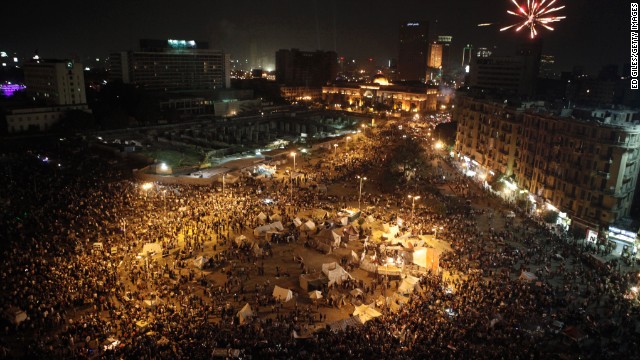
A massive crowd gathers in Tahrir Square on July 4.
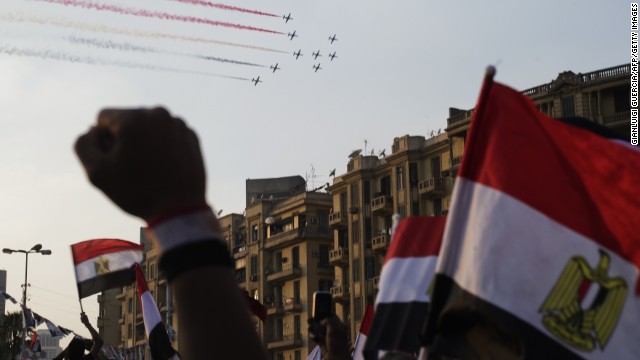
Egyptians cheer and wave national flags as airplanes fly above Tahrir Square on July 4, leaving a trail of smoke in the colors of the national flag.
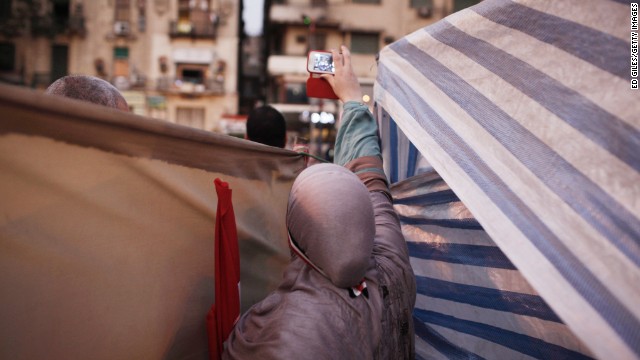
A woman uses a mobile phone to record the July 4 celebrations in Tahrir Square.
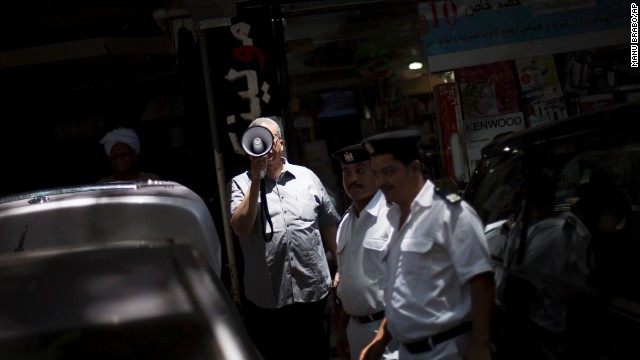
An opposition protester chants slogans against Morsy near Cairo University, where Muslim Brotherhood supporters gathered on July 4 to show support for the ousted president.
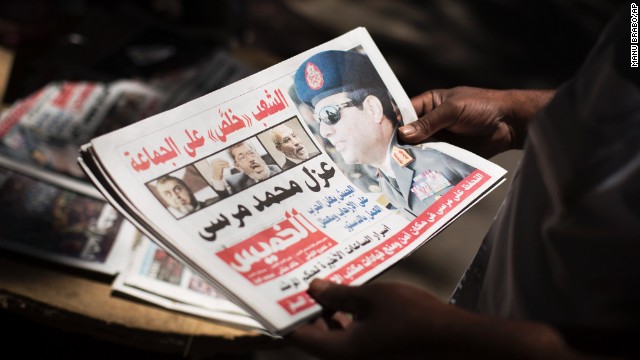
A man holds a newspaper near Mesaha Square in Cairo on July 4.
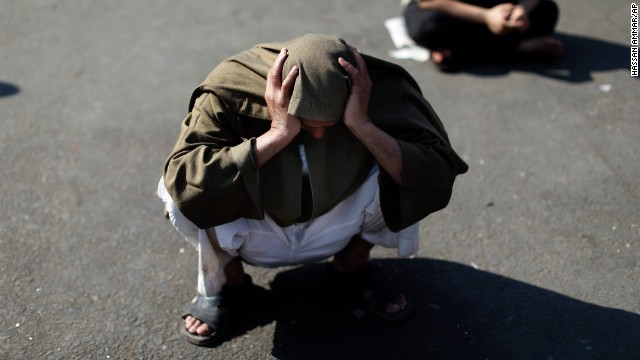
Dejected Morsy supporters attend a rally in Nasr City on July 4.
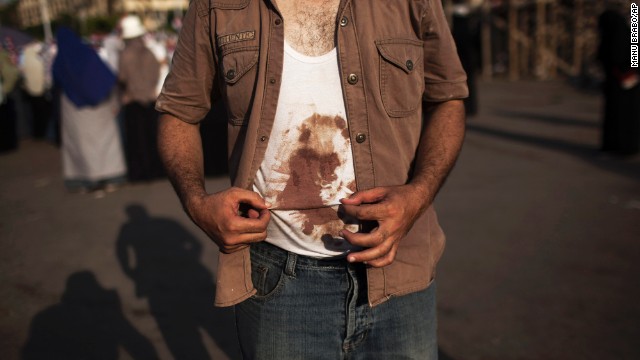
A Morsy supporter shows his bloodied shirt during a July 4 rally near the University of Cairo.
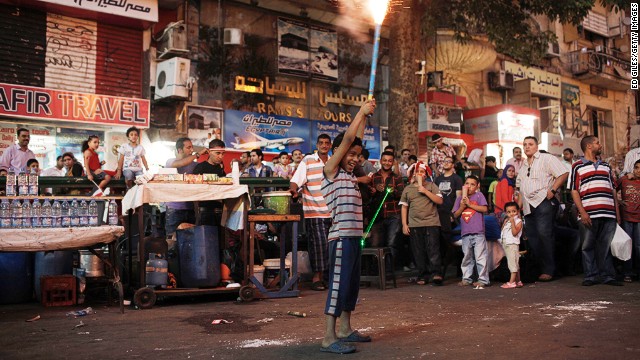
A young Egyptian boy shoots off fireworks during celebrations in Tahrir Square on July 4.
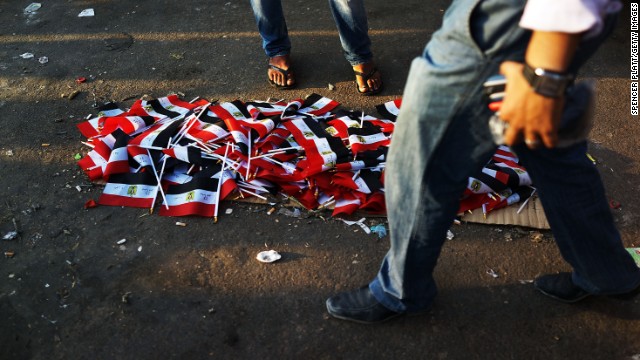
People walk by a pile of Egyptian flags for sale in Tahrir Square on July 4.
Crowds throng Tahrir Square on July 4.
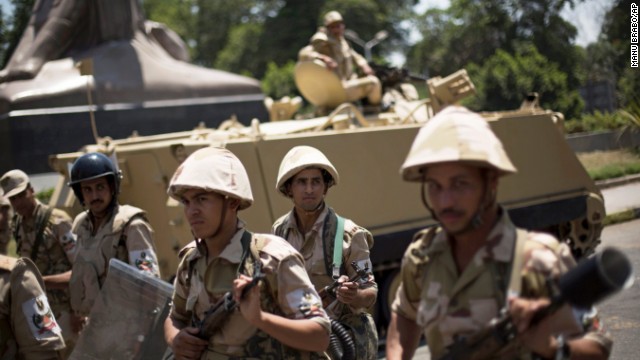
Egyptian soldiers deploy near Cairo University on July 4.
People dance and cheer at Tahrir Square in Cairo on July 4.
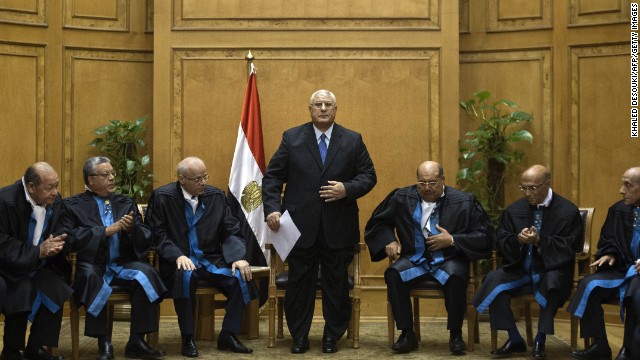
Adly Mansour, center, stands after delivering a speech during his swearing-in ceremony as Egypt's interim president in the Supreme Constitutional Court in Cairo on July 4. Mansour has served as the head of the country's Supreme Constitutional Court.
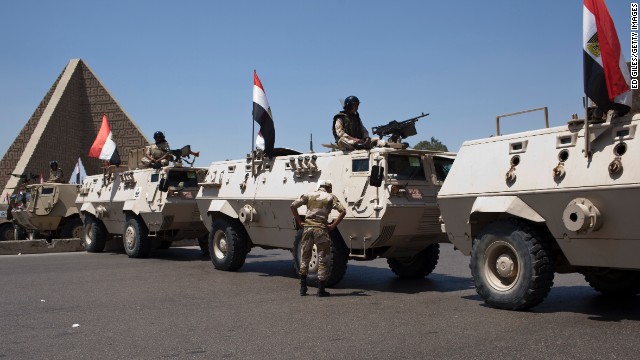
Armored vehicles with the Egyptian army sit at a checkpoint in the Cairo district of Nasr City on July 4.
A Morsy supporter reacts as a military helicopter flies over during a July 4 rally in Nasr City.
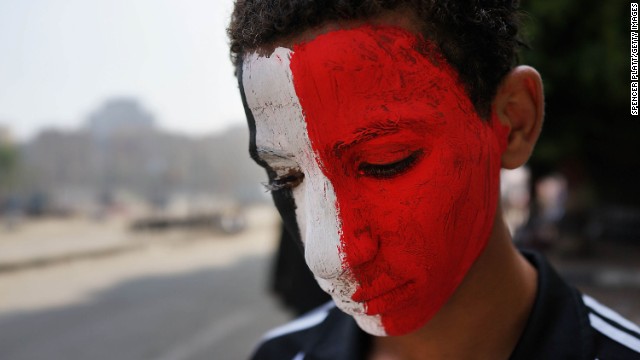
A boy with face paint the color of the Egyptian flag pauses on July 4 in Tahrir Square.
A pedestrian shakes hands with a member of the military at a roadblock in Giza.
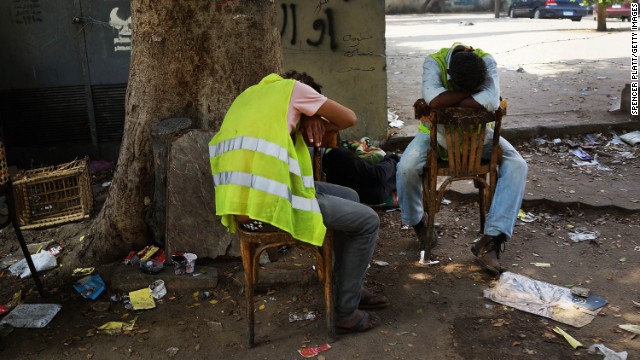
Security personnel rest on July 4 in Tahrir Square.
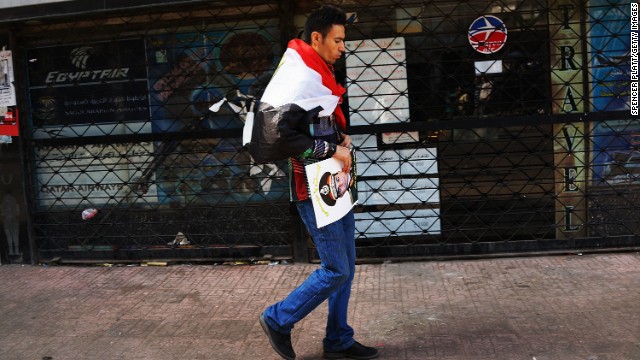
A man walks to Tahrir Square on July 4.
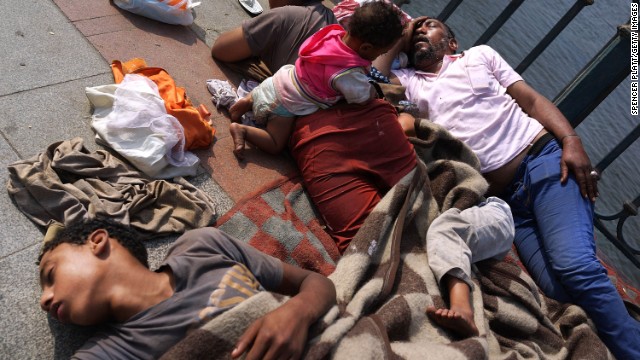
A family sleeps on a bridge near Tahrir Square on July 4.
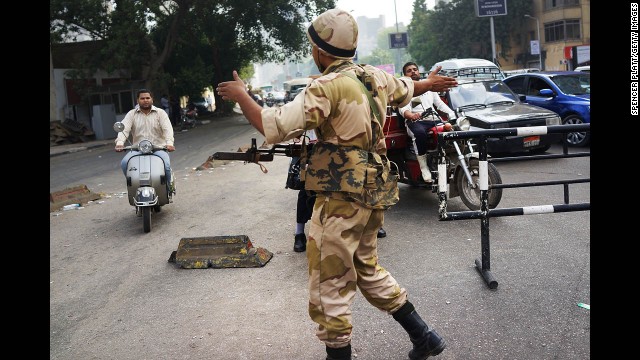
A member of the Egyptian military redirects traffic on July 4 at a roadblock in Giza.
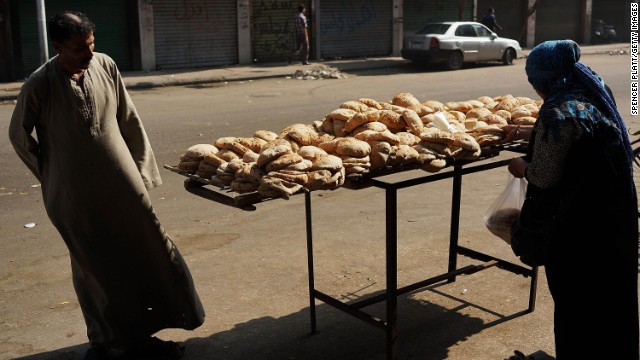
Bread is sold near Tahrir Square on July 4.
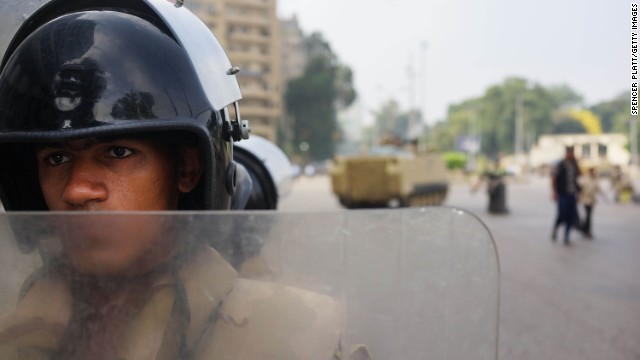
An Egyptian military member guards a roadblock in Giza on July 4.
1
2
3
4
5
6
7
8
9
10
11
12
13
14
15
16
17
18
19
20
21
22
23
24
25
26
27
28
29
30
31
32
33
34
35
36
37
38
39
40
41
42
43
44
45
46
47
- The decree would grant Adly Mansour limited legislative powers
- No deadline has been set for the announcement of a new government.
- The declaration outlines a timetable for parliamentary and presidential elections
Are you in Egypt? Send us your experiences, but please stay safe. Read a version of this story in Arabic.
Cairo (CNN) -- Egypt's interim leader, Adly Mansour, has issued a constitutional declaration giving himself limited power to make laws, and outlined a timetable for parliamentary and presidential elections, according to state media.
There was no official word on the decree from the president's office.
If the state media reports are accurate, the 33-article decree would grant Mansour limited legislative powers, but only after consultation with a cabinet, which would wield veto power.
The distinction is important, because deposed President Mohamed Morsy was criticized for expanding the powers of his office.
The decree also would put in motion a time line for voting on an amended constitution and for holding parliamentary and president ballots.
The declaration calls for a constitutional referendum in November, followed by parliamentary elections in December and a presidential poll in February.
Awaiting confirmation
Without confirmation from the president's office, it is impossible to say whether the reports -- carried by state-run Al-Ahram and MENA -- are accurate.
The currents of information in Egypt have been swift and shifting following last week's military coup that ousted Morsy. He is reportedly detained in the Republican Guard headquarters.
Reports over the weekend had diplomat and Nobel Peace Prize winner Mohamed ElBaradei in line to become interim prime minister. His political party's claim Saturday was contradicted later in the day by a Mansour spokesman, who said a decision had yet to be made.
On Sunday, Mansour instead nominated ElBaradei as interim vice president.
Balancing act
The moves by the interim president are clearly meant to appeal to supporters of the coup -- but unlikely to appease Morsy's supporters.
Clashes between them and security forces killed 51 people on Monday, and wounded another 435. It was the deadliest day in Cairo since the revolution that forced former President Hosni Mubarak from office in 2011.
On Tuesday, funerals for many of those killed will be held. There are fears that the funerals could spark renewed violence.
CNN's Reza Sayah reported from Cairo. Ed Payne reported and wrote from Atlanta.