
Have you ever found out that something you remember from your youth is now gone, and you didn’t even notice? If you are a certain age, you might feel that way when I deliver the news: You haven’t been able to buy International Reply Coupons (IRCs) at a US Post Office since early 2013. By the end of 2026, you won’t be able to buy them anywhere. The age of the IRC is over.
What’s an IRC?
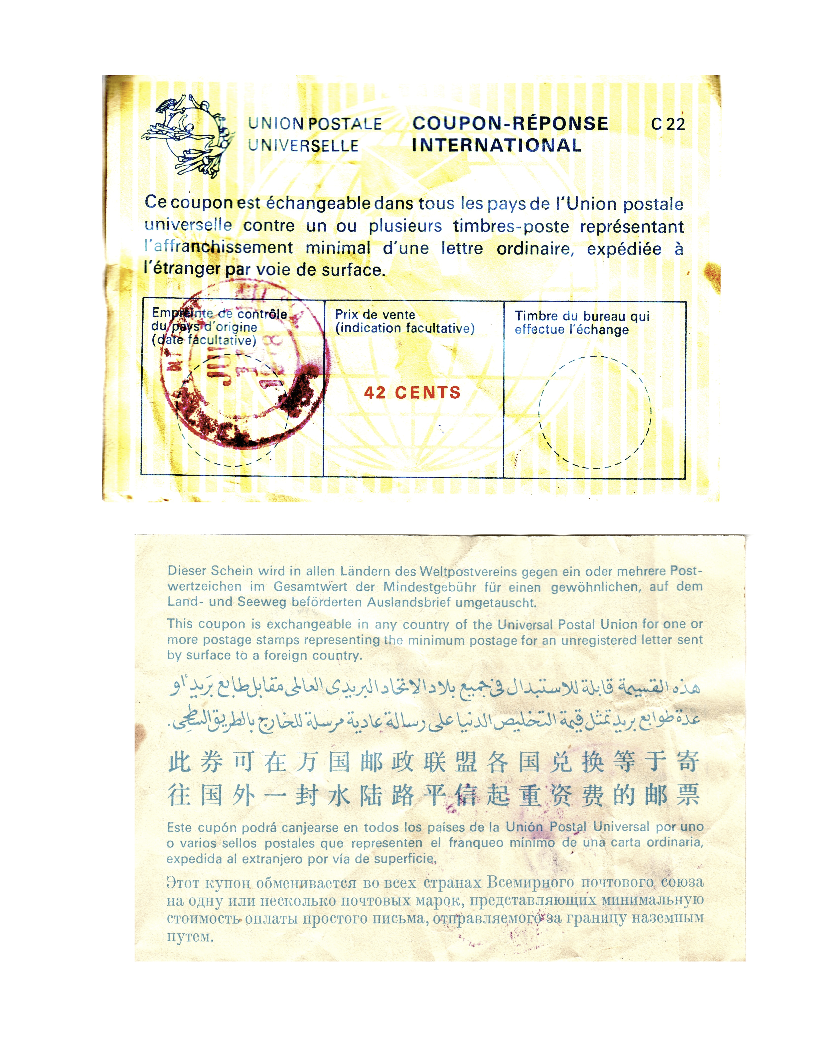
An IRC from 1978 (public domain).
If that didn’t mean anything to you, you might be too young to remember, or maybe you just weren’t into shortwave listening or ham radio. Although there were other reasons to get IRCs, a radio hobby is the most likely reason a Hackday reader would have bought an IRC.
For radio purposes, here’s the problem. You’ve worked on your station for months, and one winter night, you finally pull in that rare station from Luxembourg. They’ll send you a QSL card to verify that you heard them. You only have to send them a letter telling them what time you heard them, what frequency, and some details about the program you heard. But they probably don’t want to pay the postage required to send hundreds or thousands of cards overseas.
While this is a radio-specific problem, you might find the same issue with pen pals or when trying to buy things from an overseas company.
SASE
If everyone were in the same country, the solution would be easy. Take a stamp, put it on an envelope that has your address on it, and stuff it in with the letter. Or, you could just drop a stamp or two in the letter you sent.
The problem is, US postage won’t help Radio Luxembourg. On the other hand, the effort required for you to buy postage that works in Luxembourg would have been a nightmare.
Enter the UPU
The Universal Postal Union is a UN agency that is effectively an association of post offices in 192 countries. Their charter is to facilitate mailing things worldwide.
The IRCs date back to 1906. The idea is you buy an IRC at your post office. You send it to Radio Luxembourg, or wherever. There, the mail person at the radio station could go to their post office and trade the coupon for enough local postage to send a surface letter worldwide.
Slow Death
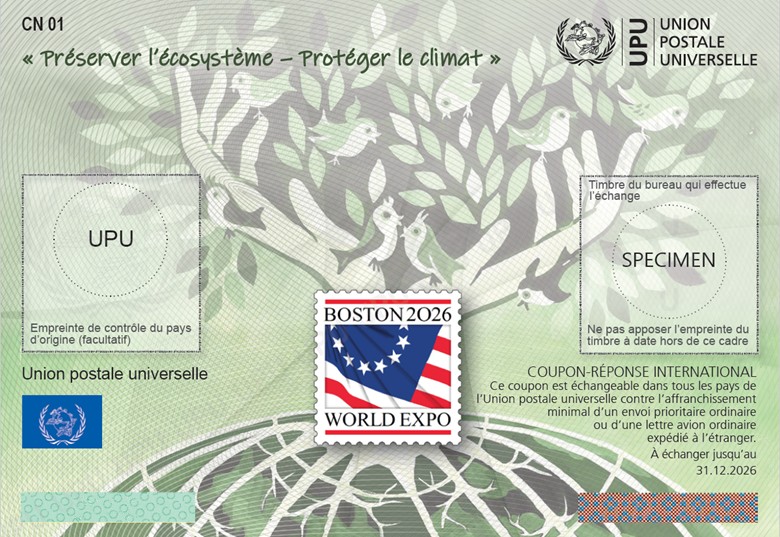
A more recent IRC (UPU).
As demand has dwindled, post offices worldwide have quit selling IRCs. As of last year, Australia still did. But Germany, Britain, the United States, and many other countries gave up on them long ago. In fact, Britain’s Royal Post claimed that the average post office sold less than one IRC per year at the time it threw in the towel.
UPU decided to end IRCs altogether by December 31, 2026. The end of an ear and, apparently, not just for radio hobbyists. It is telling that the UPU’s recent editions of IRCs had print runs of 1,000 or even 500. So they obviously weren’t selling very many.
IRCs Other Claim to Fame
If you’ve heard of these before and you aren’t interested in radio, then it might have been in economic history. Have you heard of the Ponzi scheme? It has become a generic term for any business scheme that relies on raising money from new investors to service debt owed to old investors.
However, the original Ponzi scheme dates back to 1920, when Charles Ponzi realized he could buy IRCs in a country where they were cheap and sell them for more in another country. He was happy to accept investors, of course.
The problem is that profits are thin, and the costs of acquiring and transporting large numbers of IRCs quickly swamp most potential profits. Fluctuations in currency exchange rates take the rest.
Goodbye!
So the end of the IRC marks a closed chapter for ham radio and swindling. There were probably other uses, too, that are now consumed by electronic mail, payment systems, and the like.
You have to wonder what adventures IRCs went on during their global travels. The video below shows one’s story.