- NEW: Dozens of people have been killed in Syria on Tuesday, opposition says
- NEW: Top Iranian official urges "national dialogue" to settle the crisis
- NEW: Syria's former prime minister had been plotting his defection, spokesman says
- NEW: Fighting rages in Aleppo and in Damascus and its suburbs
Aleppo, Syria (CNN) -- Syria's president welcomed a top official Tuesday from Iran, a friend and ally of the much reviled and increasingly isolated government in Damascus.
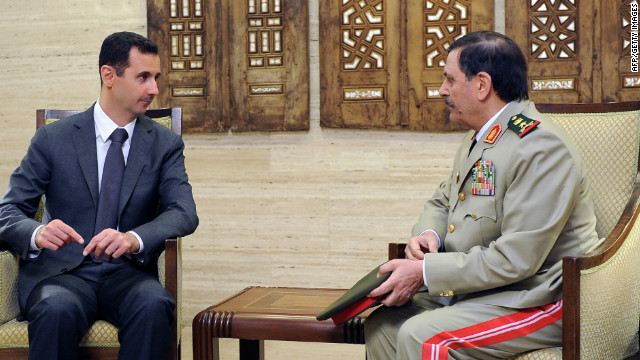
Saeed Jalili, secretary of Iran's Supreme National Security Council, met with President Bashar al-Assad to discuss resolving the 17-month-long civil war and rescuing several Iranians who were kidnapped over the weekend. State TV showed footage of Jalili and al-Assad in the first video of the president that has surfaced since last month.
Jalili called on Syrians to sit down and forge a solution to the crisis, which morphed into a nationwide uprising and civil war after government forces cracked down on peaceful protesters in March 2011.
"The Islamic Republic of Iran believes in a Syrian solution based on national dialogue among all Syrian groups to settle the country's issues, and does not consider foreign approaches as useful," Jalili said, according to Iran's state-run Press TV.
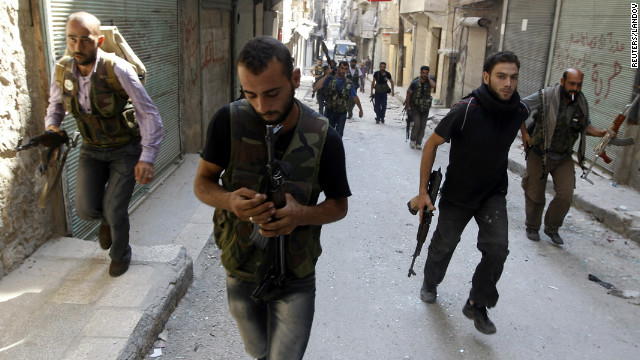
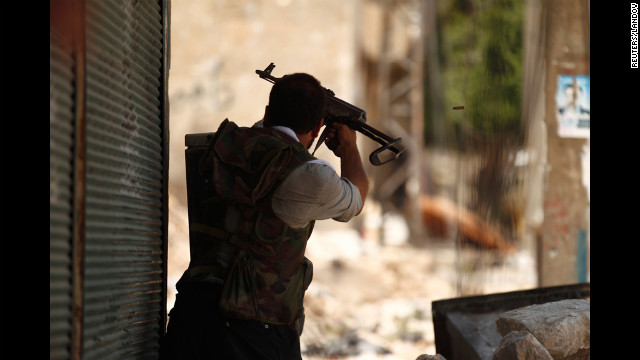
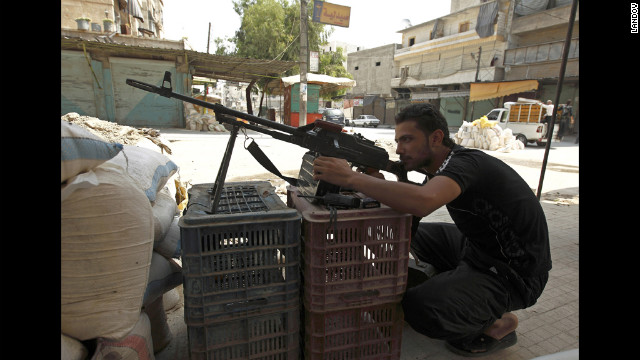
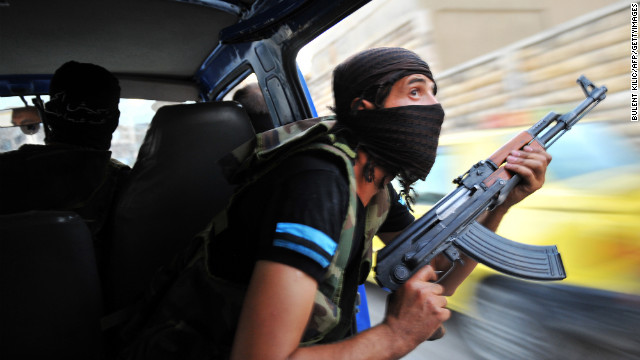
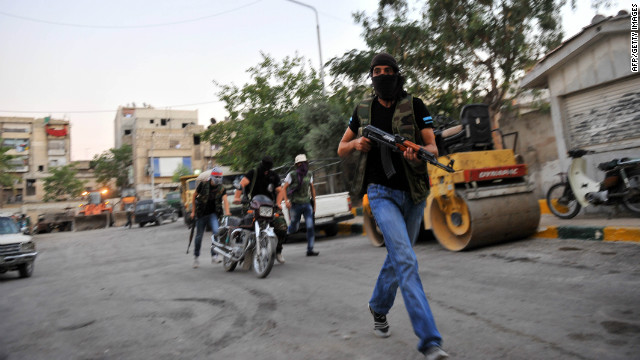
A Syrian rebel prepares his weapon as a group of Free Syrian Army fighters head toward the fighting with Syrian Army soldiers in the Salah ad-Din neighborhood of central Aleppo on Sunday, August 5.
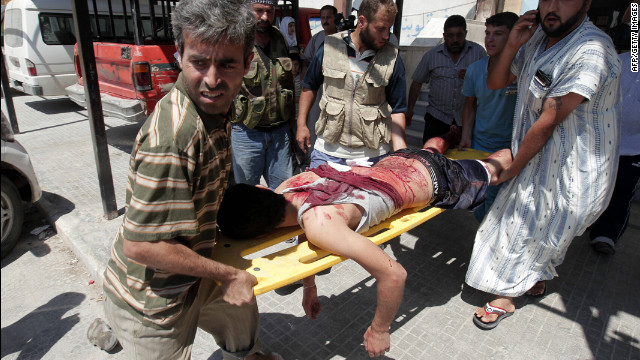
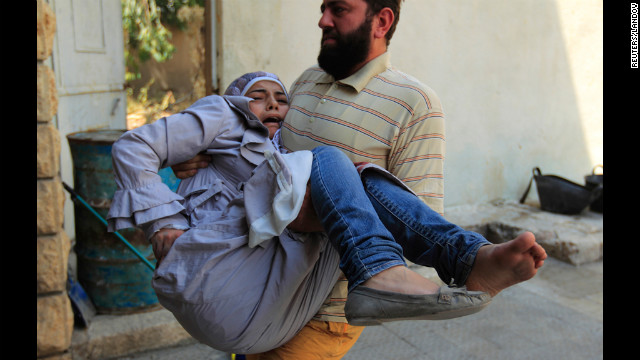
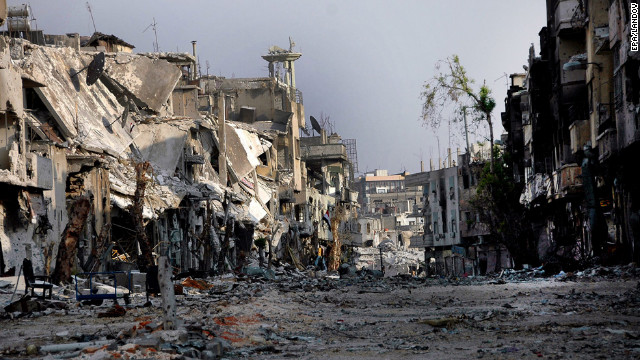
Syrians evacuate a civilian wounded in shelling in the northern city of Aleppo on Saturday, August 4. Syria's armed forces pounded Aleppo's rebel-held Salah ad-Din district with air and ground fire as violence also raged in the Shaar and Sukkari districts, according to reporters in the area and a rebel commander.
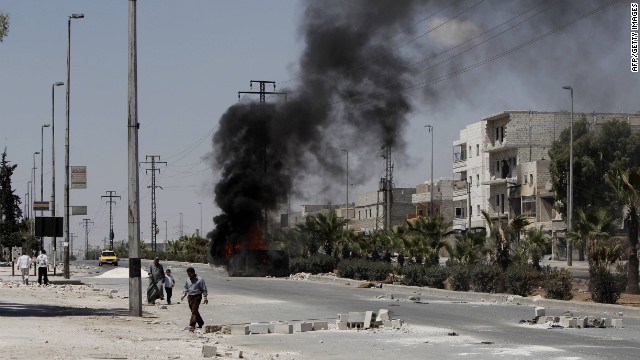
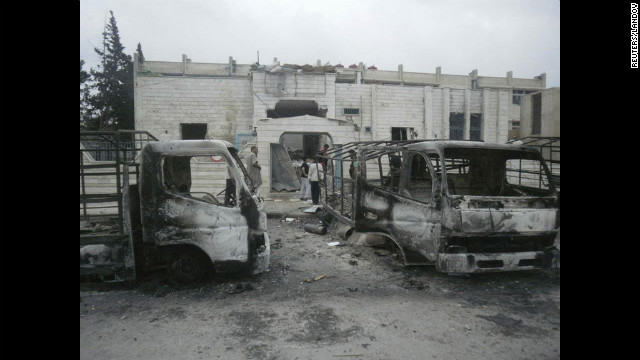
A vehicle burns as Syrians walk through debris from clashes between Syrian armed forces and rebels in the northern city of Aleppo on Saturday, August 4.
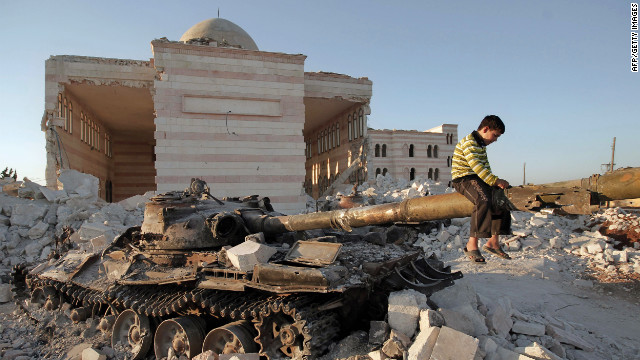
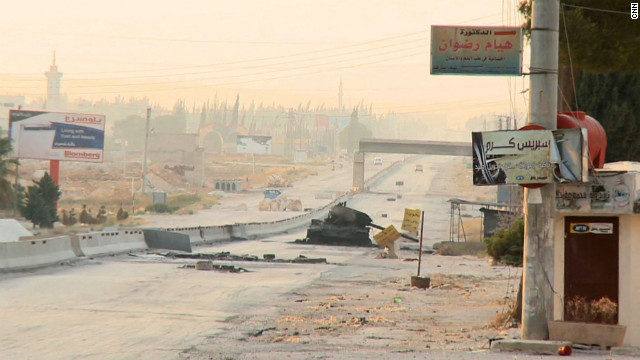
A boy plays on the gun of a destroyed Syrian army tank partially covered in the rubble of the destroyed Azaz mosques, north of the restive city of Aleppo, on Thursday, August 2.
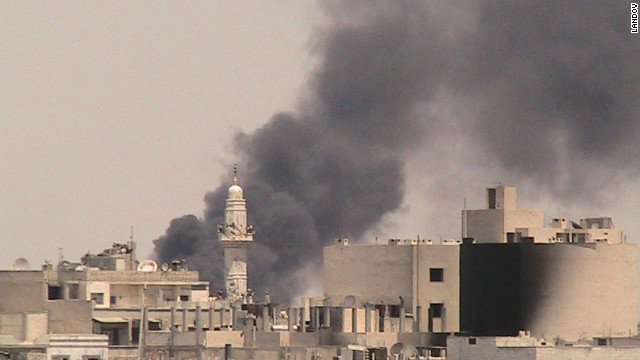
Smoke rises from Al-Safsaf in Homs on Friday, August 3.
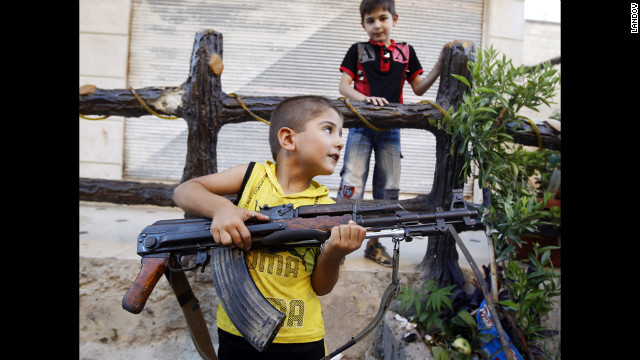
A boy plays with an AK-47 rifle owned by his father in Azaz, some 29 miles north of Aleppo on Friday, August 3.
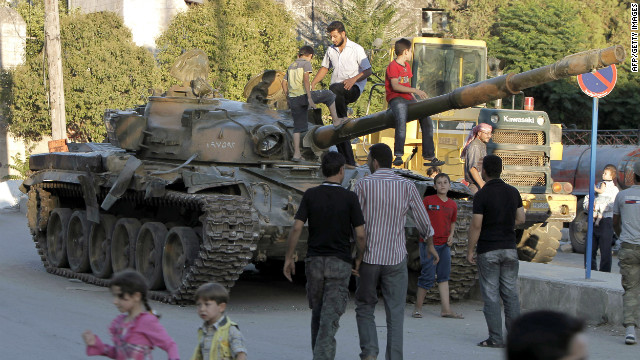
Syrians climb on an abandoned Syrian army tank north of Aleppo on Thursday, August 2.
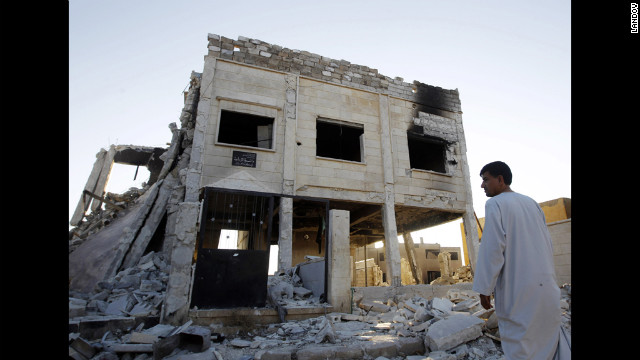
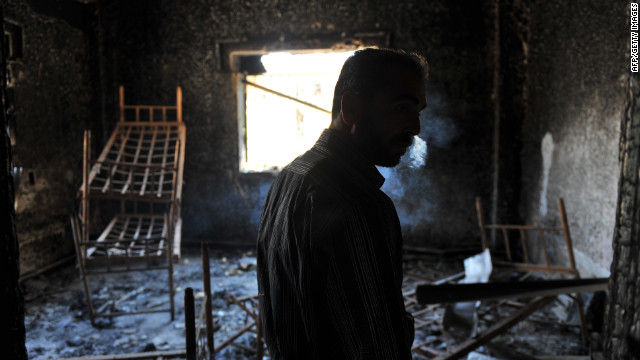
A man looks at a destroyed Syrian army compound in Azaz, 29 miles north of Aleppo on Friday, August 3.
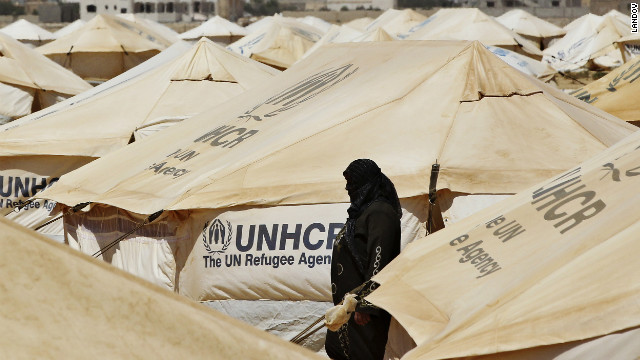
A Syrian refugee walks at the Al Zaatri refugee camp in the Jordanian city of Mafraq, near the border with Syria, on Friday, August 3.
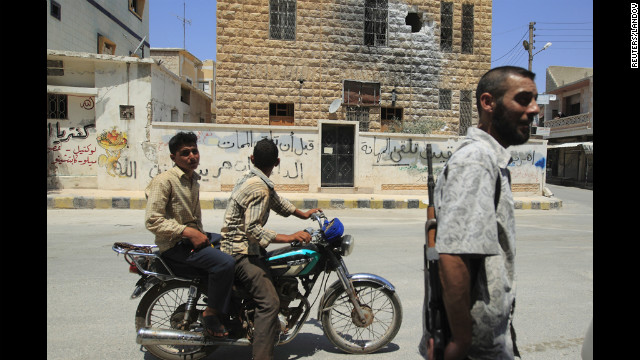
People and a member of the Free Syrian Army commute on Wednesday, August 1, past a building on the outskirts of Idlib that was hit by rocket fire Tuesday night by forces loyal to President Bashar al-Assad. Unrest spread across other volatile regions of the country as al-Assad's forces shelled targets and launched raids in and around Damascus, Homs, Daraa and Deir Ezzor.
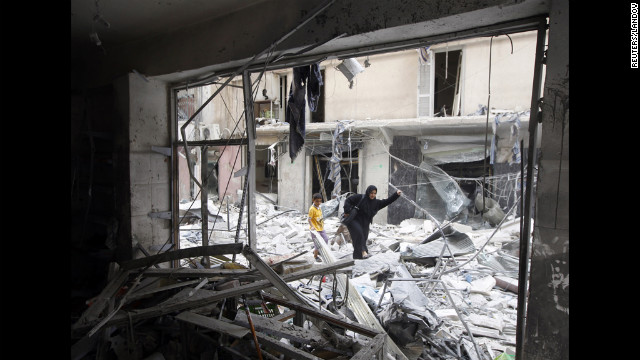
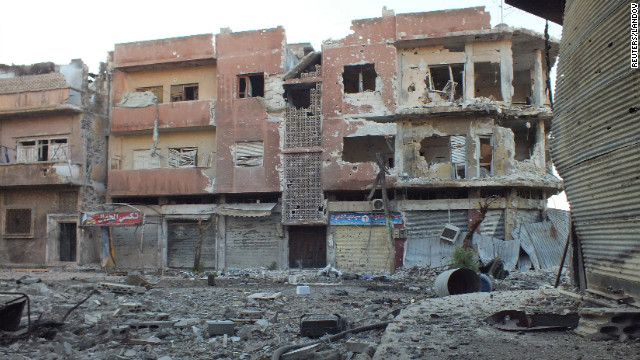
A woman and child on Wednesday walk through rubble of a building destroyed by shelling from forces loyal to Syrian President Bashar al-Assad in Aleppo.
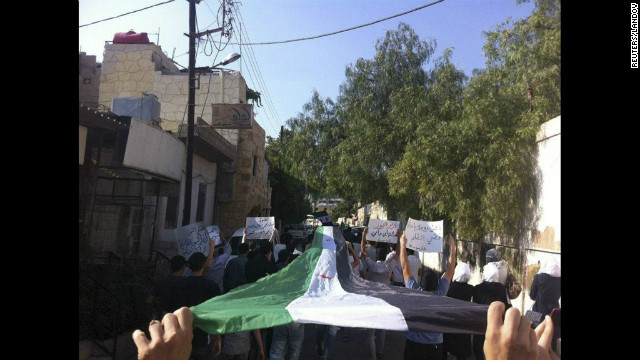
Demonstrators hold an opposition flag during a protest Wednesday against Syria's President Bashar al-Assad in Damascus.
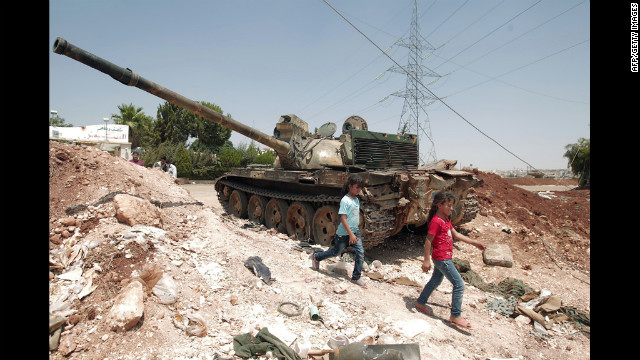
Syrian girls on Wednesday walk past a Syrian army tank captured two days earlier by rebel fighters at a checkpoint in the village of Anadan. The strategic checkpoint secures the rebel fighters free movement between the northern city of Aleppo and Turkey.
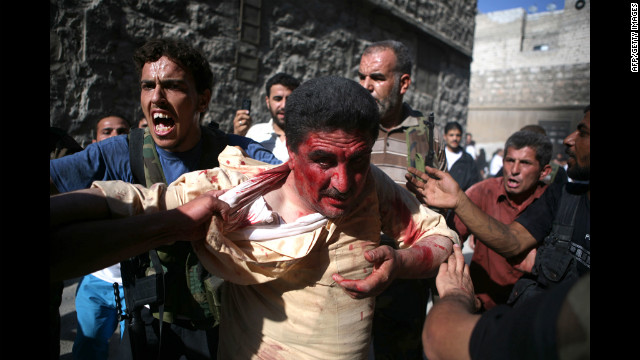
Rebel Free Syrian Army fighters capture a policeman who they allege is a "Shabiha" or pro-regime militiaman, on Tuesday, July 31, as the rebels overrun a police station in Aleppo.
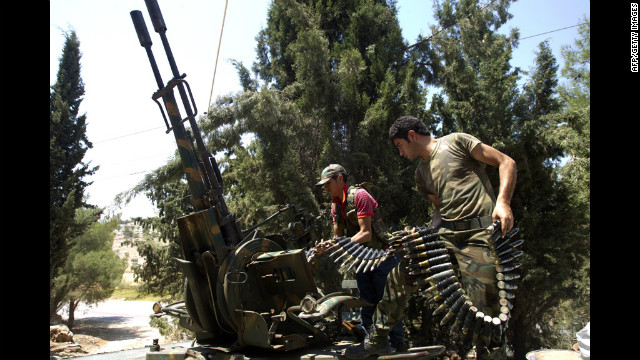
Rebel fighters load an anti-aircraft machine gun on an armored vehicle in Atareb, east of Syria's second-largest city, Aleppo, on Tuesday, July 31.
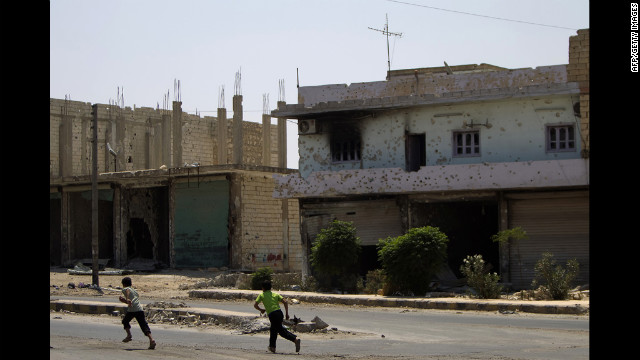
Syrian boys run near a building hit by bullets and fire in Atareb.
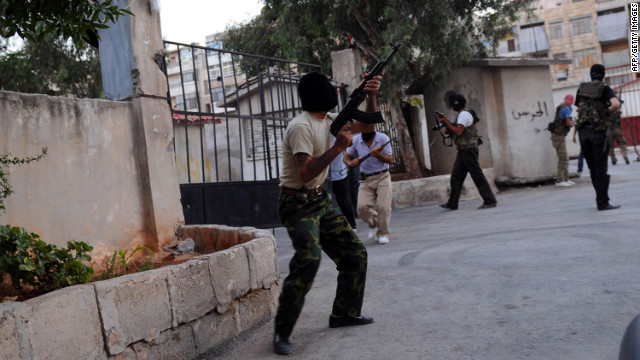
A member of the Free Syrian Army fires at forces loyal to President Bashar Al-Assad in a district of Aleppo called Salah Edinne on Tuesday.
A member of the Free Syrian Army carries an injured civilian to safety in Aleppo's district of Salah Edinne on Tuesday.
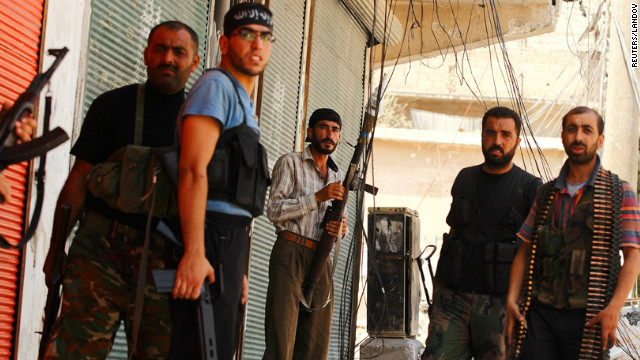
Members of the Free Syrian Army learn that a tank belonging to forces loyal to President Bashar Al-Assad is heading to the area.
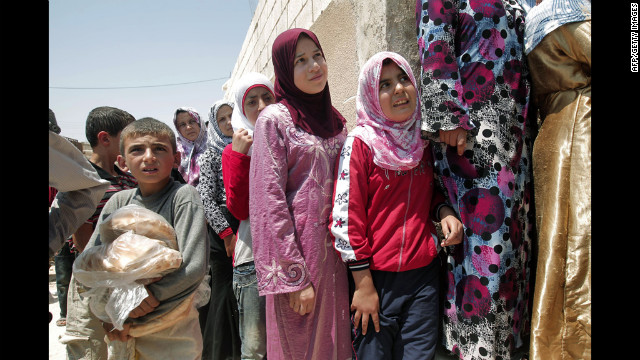
A Syrian boy carries bags of bread as people wait outside a bakery near Syria's second-largest city, Aleppo.
A photo released by Syrian Arab News Agency depicts damaged buildings in Homs on Monday, July 30.
A Free Syrian Army fighter takes position Sunday, July 29, in Aleppo as people flee shelling. Intense clashes have been under way for more than a week between the regime and rebels in Aleppo, Syria's commercial and cultural center.
Parts of Syria's largest city saw the fiercest clashes yet in the country's 16-month crisis on Saturday, July 28. About 200,000 people have fled fighting in Aleppo and surrounding areas in the past two days, a U.N. official says.
Fighting leaves vehicles damaged Saturday in the southwestern city of Daraa.
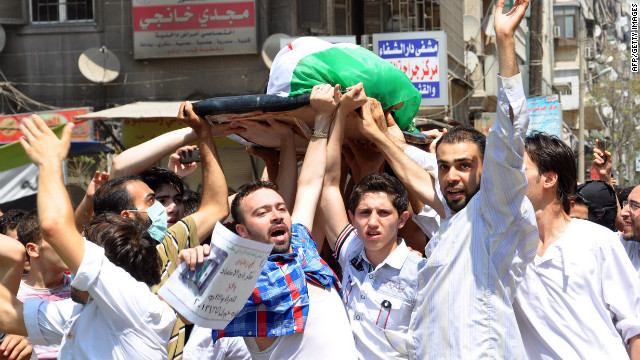
Syrians carry the body of a man allegedly killed in the bombardment of Sukari, southwest of Aleppo, by Syrian regime forces on July 27.
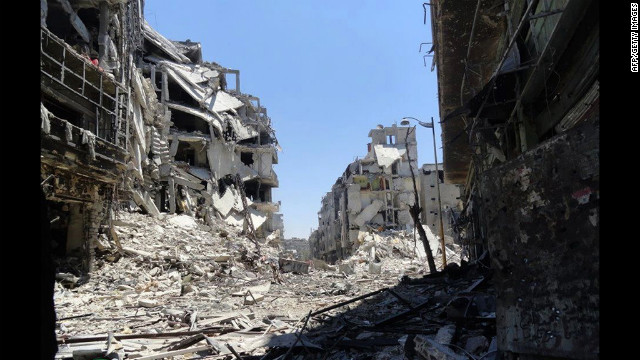
Destruction appears widespread in Homs on Friday, July 27, in a handout photo from the Syrian opposition Shaam News Network.
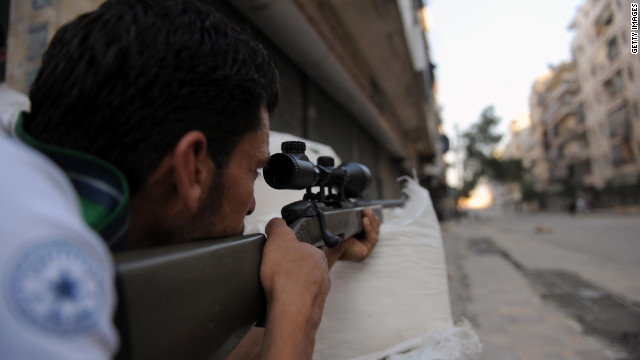
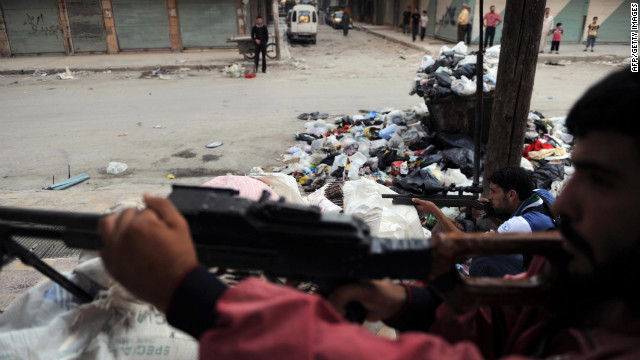
A Syrian opposition fighter takes aim during clashes with forces loyal to President Bashar al-Assad in Aleppo on Wednesday, July 25.
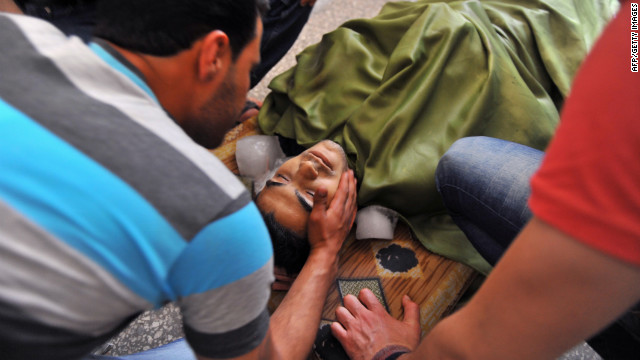
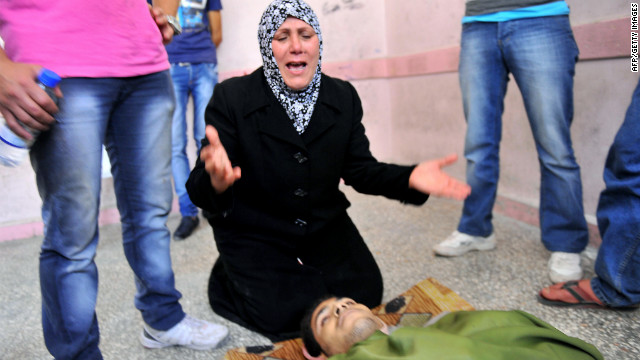
Family and friends mourn over the body of Usame Mircan, who they say was killed by a Syrian government sniper in Aleppo on Wednesday.
Usame Mircan's mother grieves after he was killed during fighting in Aleppo.
The bodies of men killed during clashes between Syrian rebel fighters and goverment forces lie on the Aleppo street on Thursday, July 26.
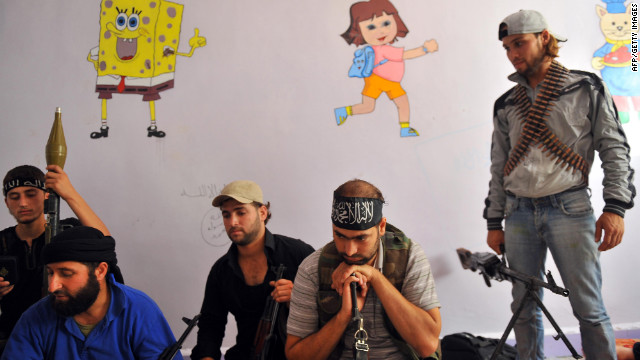
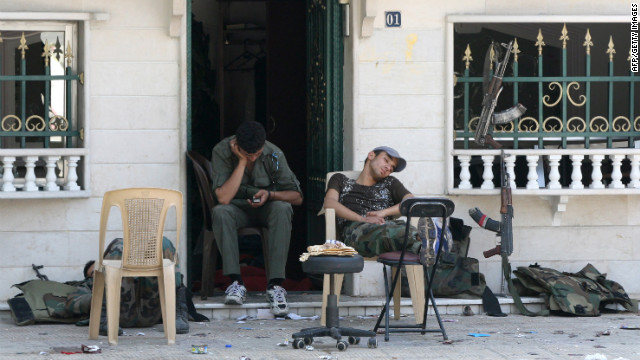
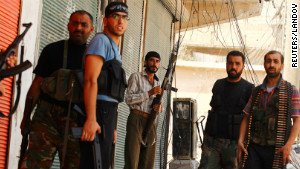
Fighters from the Syrian opposition rest at a former primary school in Aleppo on Wednesday.
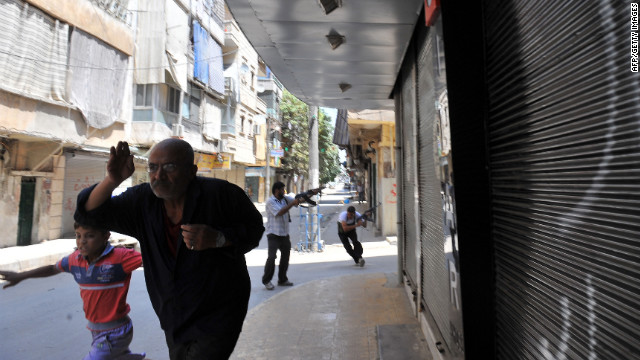
Residents take cover as fighters from the Syrian opposition clash with forces loyal to President Bashar al-Assad in Aleppo on Wednesday.
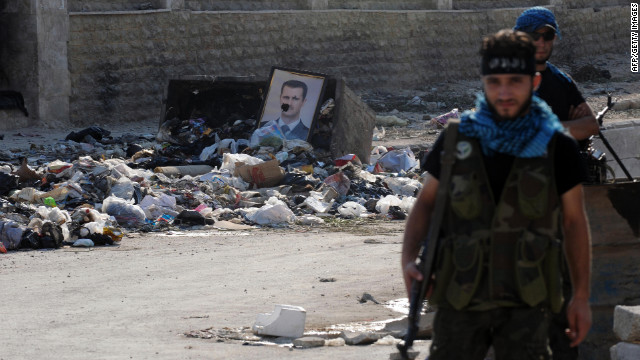
Syrian rebels guard a checkpoint in Aleppo on Wednesday.
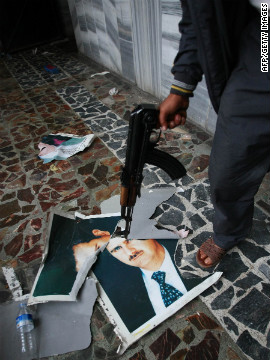
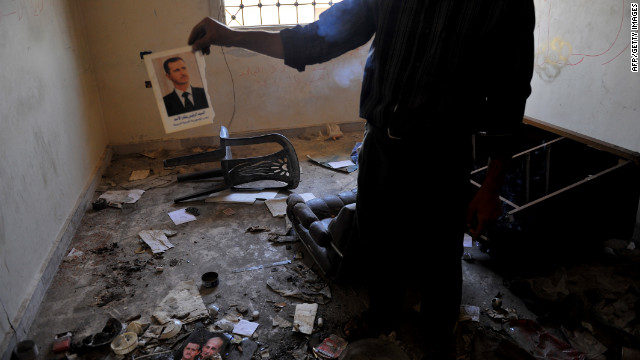
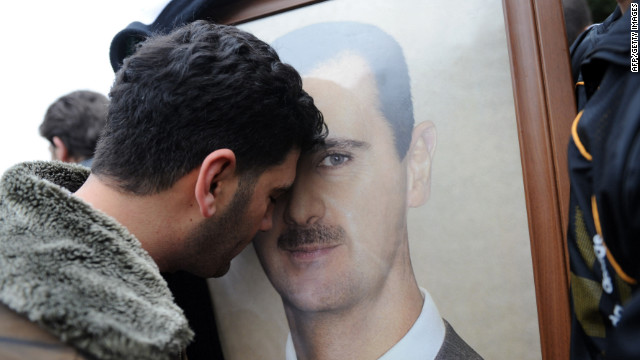
A damaged portrait of President Bashar al-Assad sits among piles of debris at a checkpoint manned by Syrian rebels in Aleppo on Wednesday.
Syrian rebels drive through Selehattin near Aleppo during clashes with government forces on Monday, July 23.
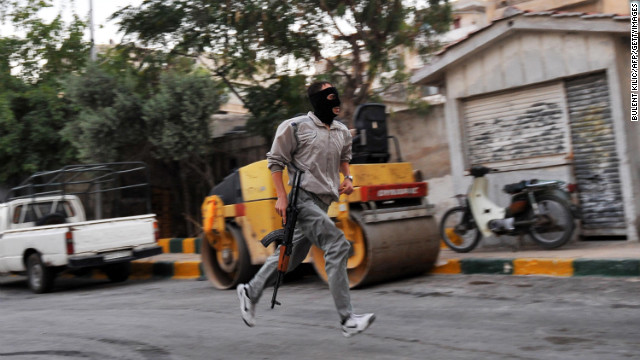
A Syrian rebel runs through the streets of Selehattin during an attack on a municipal building. The rebel Free Syrian Army says it is attempting to "liberate" several districts of Aleppo.
Syrian rebels work to find snipers during clashes Monday between the opposition and government forces in Selehattin.
Syrian rebels make their way down a street Monday in Selehattin near Aleppo. If they gain control of Aleppo, it would mark a pivotal point in the Syrian crisis.
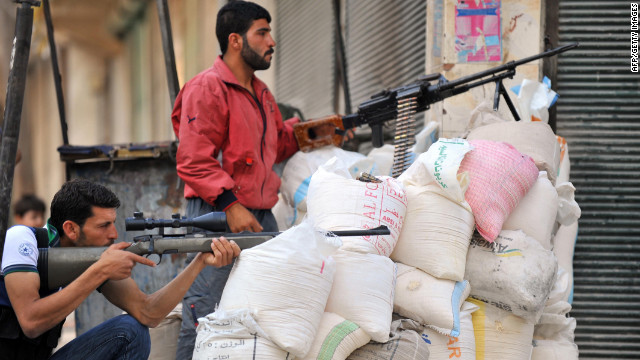
Syrian rebels take cover behind sandbags during fighting Monday at the entrance to the city of Selehattin.
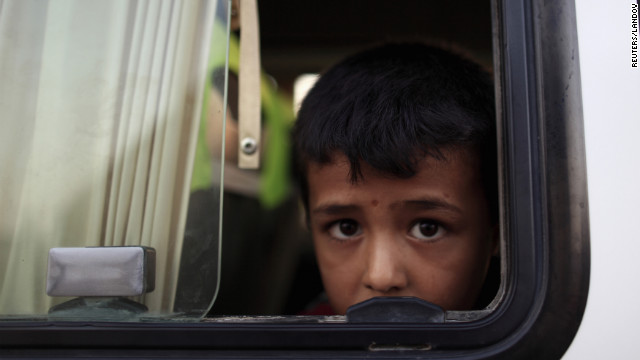
On Sunday, July 22, a Syrian refugee looks out from a bus as he arrives at a refugee camp in Turkey opposite the Syrian commercial crossing point Bab al-Hawa.
Syrian refugees flee from a refugee camp nicknamed "Container City" on the Turkish-Syrian border in Kilis province, southern Turkey, on Sunday.
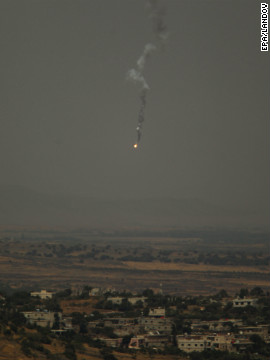
A mortar shell falls toward the Syrian village of Jbatha Al-khashab, about 45 kilometers (28 miles) south of Damascus. It's seen from the Israeli side of the border, in the Golan Heights.
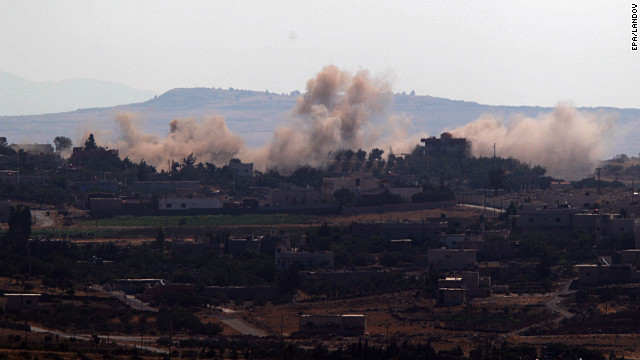
Smoke from artillery shelling rises above Jbatha Al-khashab.
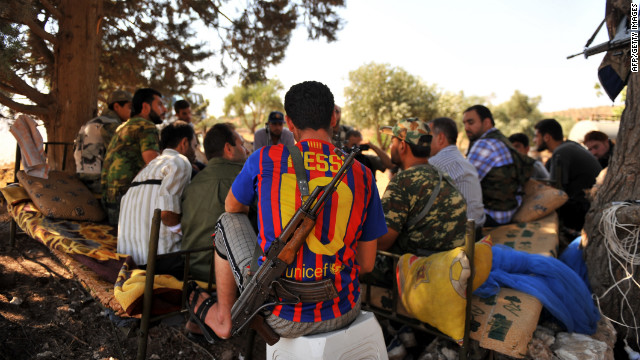
An armed Syrian rebel wearing the jersey of FC Barcelona rests with comrades near the northern city of Aleppo on Sunday. The rebel Free Syrian Army announced the start of the battle to "liberate" Aleppo, Syria's commercial hub and a traditional bastion of President Bashar al-Assad's regime.
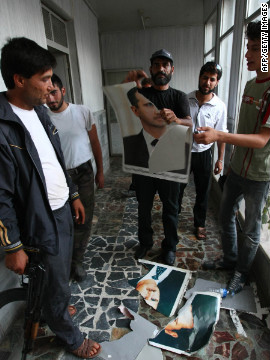
A Free Syrian Army soldier rips a portrait of President Bashar al-Assad at the Bab Al-Salam border crossing to Turkey on Sunday.
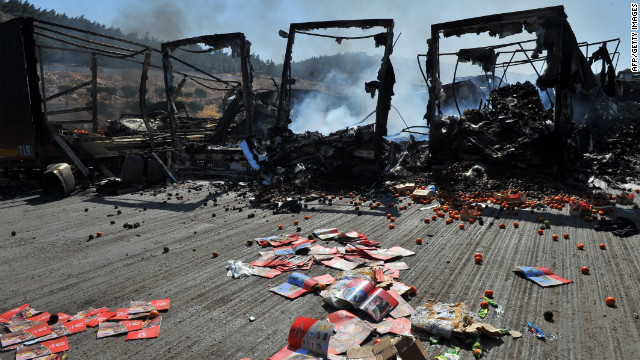
Dozens of Turkish truck drivers on Saturday, July 21, accused Free Syrian Army rebels of having burned and looted their lorries as they captured Syria's Bab al-Hawa post, near Aleppo, from government troops.
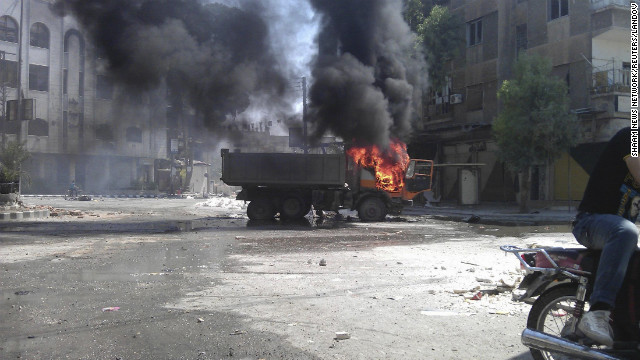
In this photo released by the Shaam News Network, a truck burns after shelling in the Erbeen suburb of Damascus on Saturday, July 21.
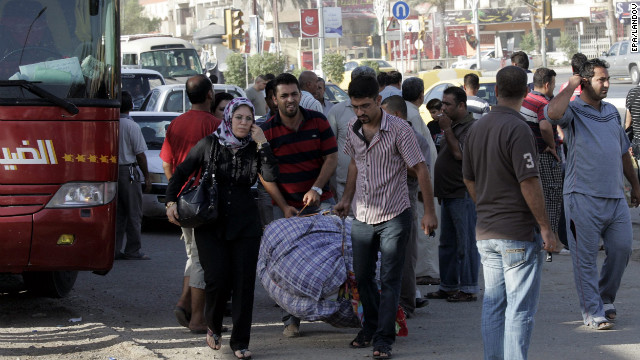
Refugees fleeing the violence in Syria arrive by bus in Baghdad, Iraq, on Saturday.
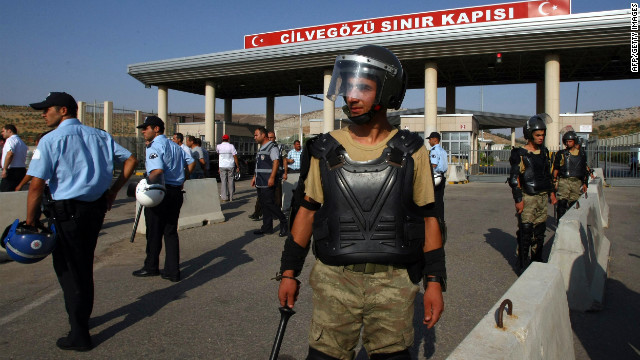
Turkish soldiers stand guard at the Cilvegozu border gate in Reyhanly that connects to Syria's Bab al-Hawa post. An estimated 120,000 people have fled Syria to Turkey, Iraq, Lebanon and Jordan.
Burned-out trucks at the Bab al-Hawa Syrian border post with Turkey on Friday, July 20. Syrian rebels seized control of the post after a fierce battle with Syrian troops, an AFP photographer at the scene reported.
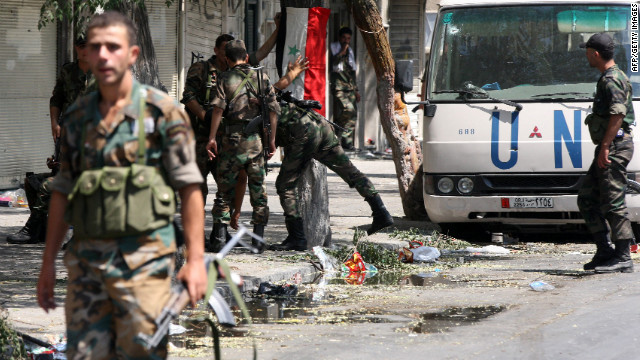
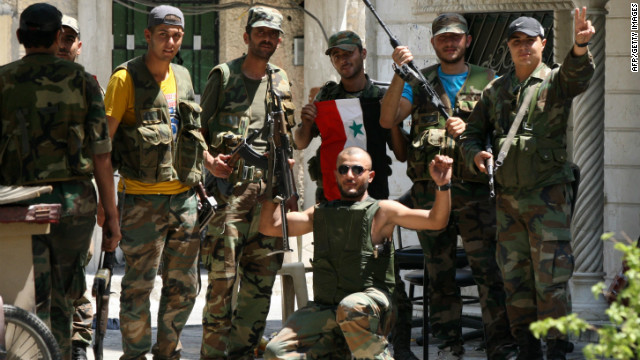
Syrian soldiers celebrate in the al-Midan area in Damascus on Friday. Syrian regime forces routed rebel fighters from the Damascus neighbourhood of Midan, Syrian state television reported, saying troops had "cleaned" the district of "terrorists."
Journalists are shown a dead body on a government tour of the al-Midan area in Damascus on Friday.
Members of Syria security forces rest in the al-Midan area in Damascus on Friday.
Syrian army soldiers hang their national flag in a partially destroyed neighborhood in the al-Midan area in Damascus.
Smoke hangs in the air in a partially destroyed neighborhood in the al-Midan area in Damascus.
Members of Syria security forces pose for photographers in the al-Midan area in Damascus after driving out the rebel fighters.
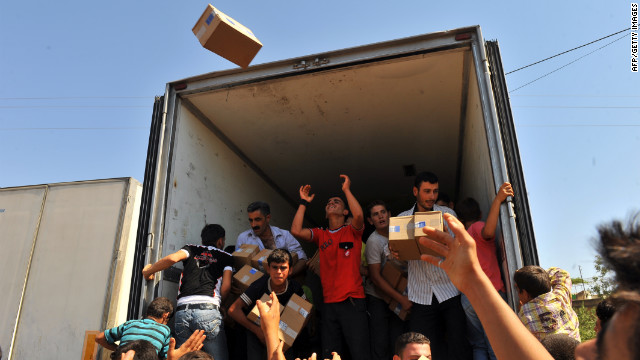
Syrian residents take goods from a truck that rebels captured at the Bab al-Hawa border crossing with Turkey on Friday.
A picture released by the official Syrian Arab News Agency on July 19 shows Syrian General Fahd al-Freij meeting with President Bashar al-Assad in Damascus after his swearing-in ceremony as defense minister.
A man holds up a picture of President Bashar al-Assad at a former police station in Atareb after clashes between Syrian soldiers and Free Syrain Army near Aleppo on Thursday, July 19. Rebels seized control of border crossings with Iraq on Thursday, dealing a new blow to al-Assad, as China and Russia dismayed the West by blocking U.N. action against his regime.
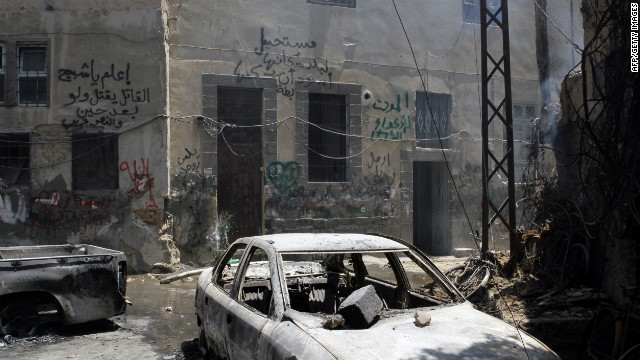
People walk along the street in Atareb amidst damage caused by clashed between Syrian soldiers and the Free Syrian Army.
A Syrian man checks the former police station of Syrian regime after a clash at Atareb on Thursday.
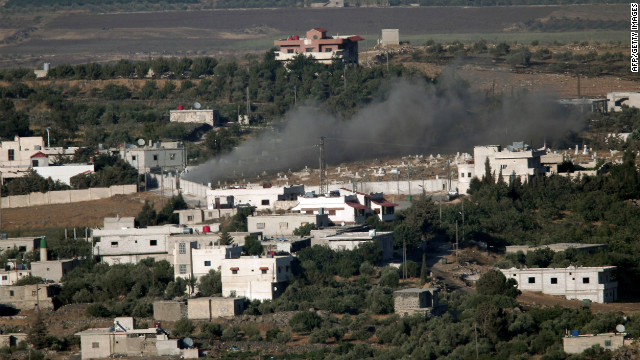
Smoke ascends from from alleged shelling of the Syrian village of Jebata al-Khashab as seen from the hill village of Buqaata in the Israeli-annexed Golan Heights on Thursday.
The death toll in Syria on July 12 reached 287, making it the bloodiest day in Syria since the uprising began. As it has done consistently, Syrian state television blamed "armed terrorist groups" for the killings.
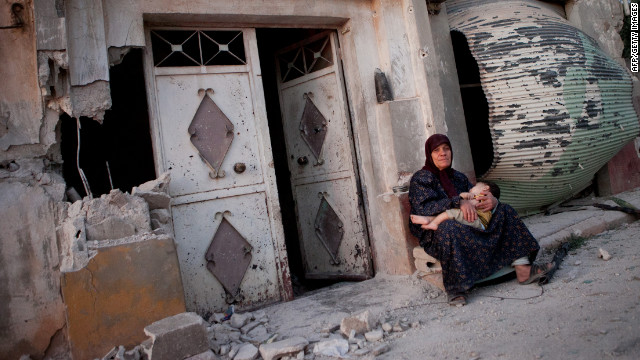
A Syrian woman sits with her grandson outside a damaged building after attacks in the Syrian village of Treimsa on July 13, 2012. More than 200 people were massacred in the town, according to activists.
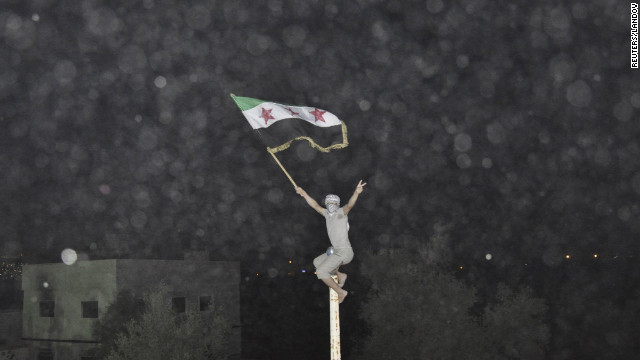
A Syrian demonstrator holds an opposition flag during a protest in Damascus on July 2, 2012. There have been increasing reports of violence in the Syrian capital.
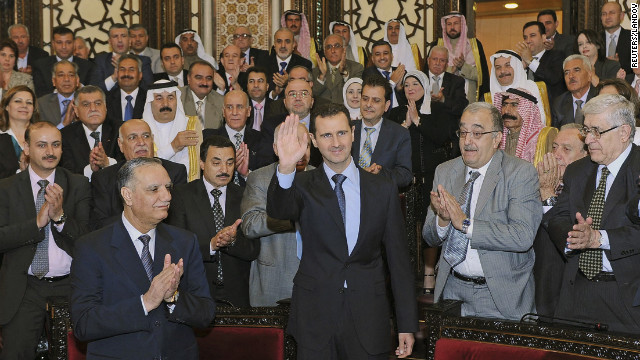
Syria's President Bashar al-Assad waves as he arrives for a speech to Syria's parliament in Damascus on June 3, 2012. The embattled president denied that government forces were behind the "outrageous" massacre in Houla.
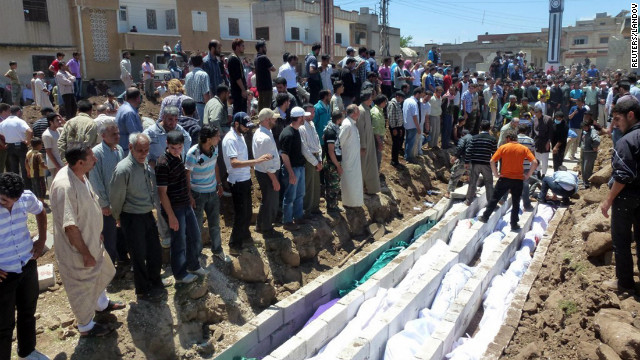
People gather at a mass burial on May 26, 2012 for victims reportedly killed during an artillery barrage from Syrian forces in Houla. The attack left at least 108 people dead, including nearly 50 children, according to the United Nations.
Members of the Free Syrian Army return to Qusayr on May 12, 2012 after an attack on Syrian regime forces in the village of Nizareer, near the Lebanese border in Homs.
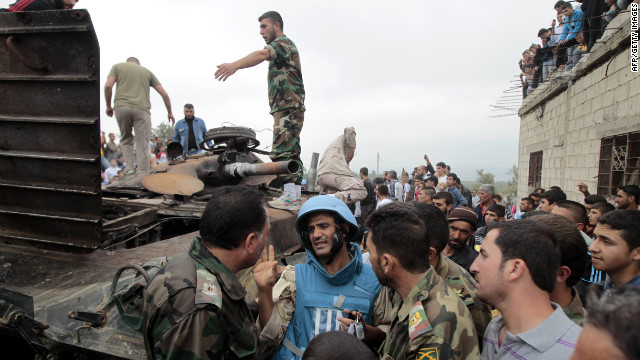
A U.N. observer speaks with Syrian rebels and civilians in the village of Azzara on May 4, 2012, days before the country's parlianemtary polls were held against a backdrop of unrest.
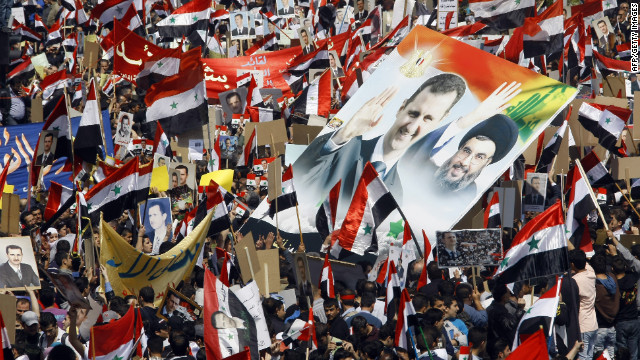
Thousands of Syrians wave their national flag and hold portraits of President Bashar al-Assad and Lebanon's Hezbollah chief Hassan Nasrallah, right, during a rally to show support for their leader on March 29, 2012 in Damascus.
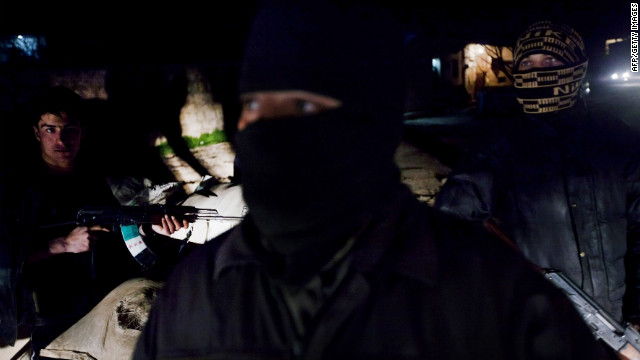
Syrian rebel fighters man a checkpoint leading into the town of Taftanaz in the rebel stronghold province of Idlib on March 20, 2012.
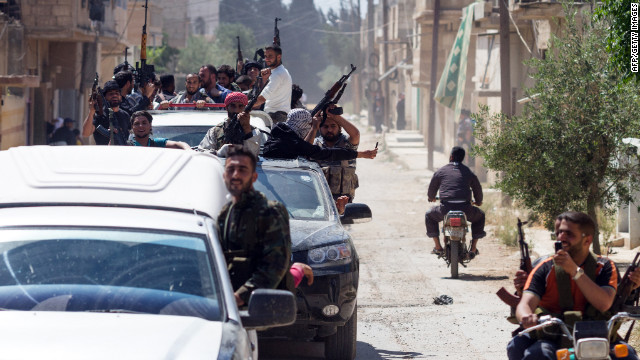
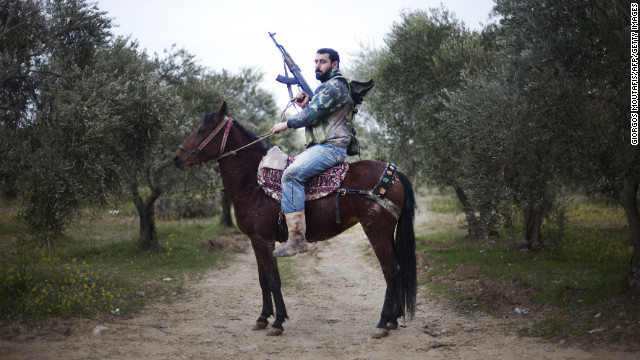
A Free Syrian Army rebel mounts his steed in the Al-Shatouria village near the Turkish border in northwestern Syria on March 16, 2012, a year after the uprising began. The Free Syrian Army is an armed opposition group made up largely of military defectors.
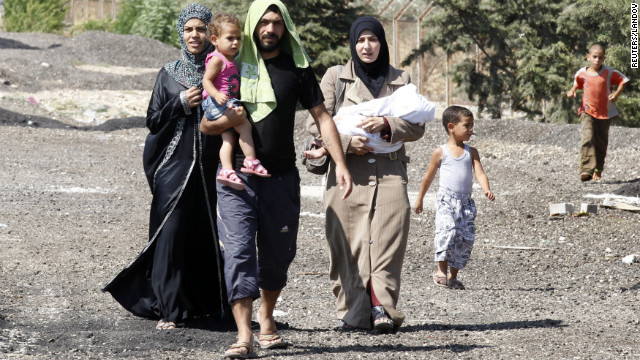
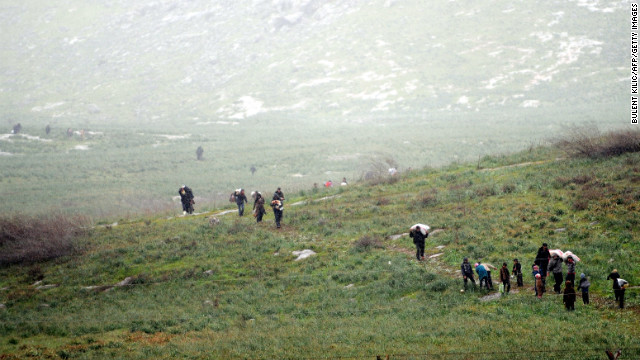
Syrian refugees walk across a field before crossing into Turkey on March 14, 2012. International mediator Kofi Annan called for an immediate halt to the killing of civilians in Syria as he arrived in Turkey for talks on the crisis.
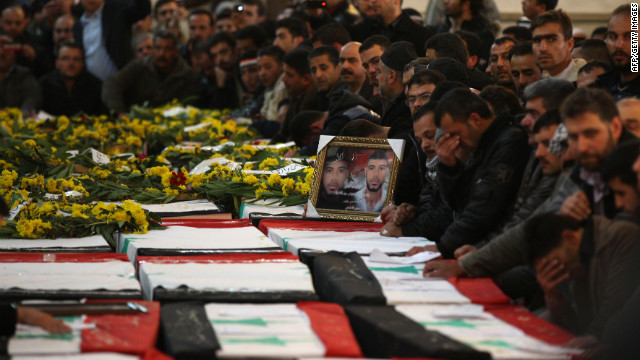
A day after the twin suicide bombings, Syrian mourners pray over the coffins of the 44 people killed during a mass funeral in Damascus.
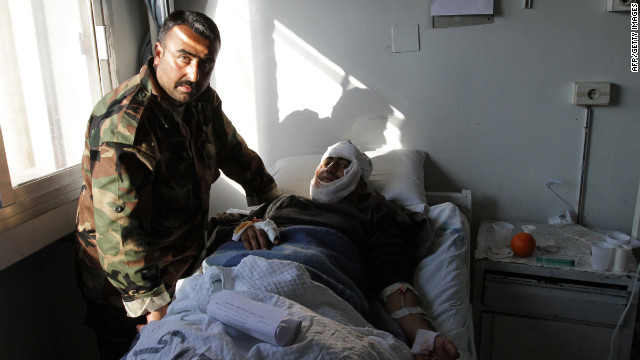
A Syrian man who was wounded in a suicide attack rests at a hospital in Damascus on December 23, 2011. Suicide bombers hit two security service bases in the Syrian capital, killing dozens of people.
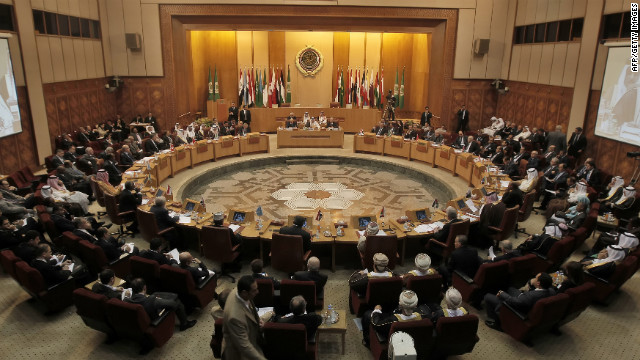
Arab foreign ministers attend an emergency meeting at the Arab League headquarters in Cairo on October 16, 2011, to discuss the crisis in Syria.
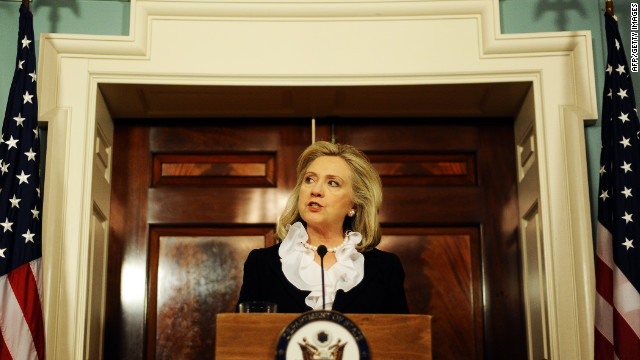
U.S. Secretary of State Hillary Clinton speaks to the media in Washington on August 18, 2011. Clinton said U.S. sanctions on Syrian oil "strike at the heart of the Syrian regime."
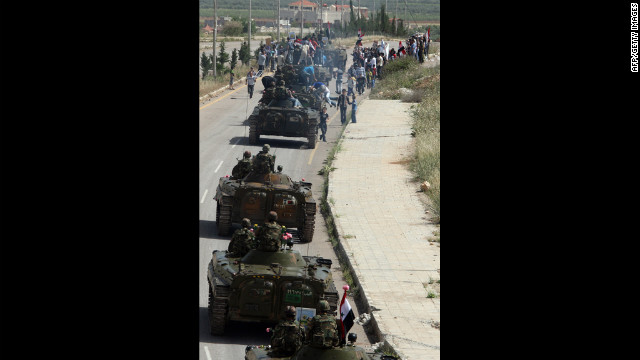
Syrian youths wave national flags while army troops drive out of Daraa on May 5, 2011. During a week-long military lockdown of the town, dozens of people were reportedly killed in what activists described as "indiscriminate" shelling on the city.
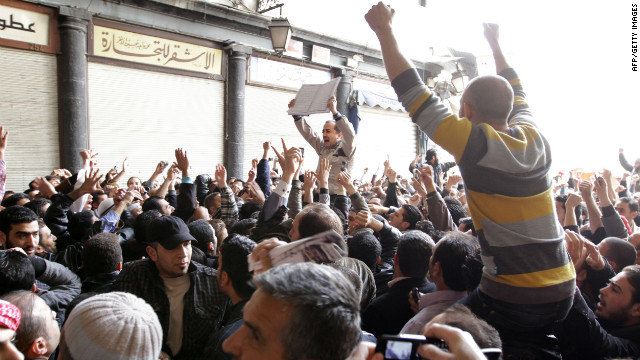
Syrians in Damascus protest in the street on March 25, 2011, after clashes with government forces in Daraa left several dead.
Supporters of Syrian President Bashar al-Assad rally on April 1 in Istanbul, Turkey, as delegates from dozens of countries gather to push for ways to end the deadly violence in Syria. The United Nations estimates more than 10,000 people have been killed since the beginning of the crisis in March 2011. The conflict is now being labeled a civil war by the International Committee of the Red Cross.
1
2
3
4
5
6
7
8
9
10
11
12
13
14
15
16
17
18
19
20
21
22
23
24
25
26
27
28
29
30
31
32
33
34
35
36
37
38
39
40
41
42
43
44
45
46
47
48
49
50
51
52
53
54
55
56
57
58
59
60
61
62
63
64
65
66
67
68
69
70
71
72
73
74
75
76
77
78
79
80
81
Photos: Showdown in Syria
The battle for Aleppo, Syria, intensifies
Syria rebels capture regime's weapons
Reporter in Syria: Intense shelling
Syrian and Iranian news outlets have reported that 48 Shiite pilgrims from Iran were abducted Saturday. But rebels say the Iranians are military personnel, an assertion that Iran denies.
Iran's Foreign Ministry is working through diplomatic channels to get the people freed and is engaging with other countries about Syria.
It has summoned the charge d'affaires of Switzerland to protest the abduction and urge the United States to use its influence to free the abducted Iranians. The Swiss Embassy represents U.S. interests in Iran because the United States and Iran lack diplomatic relations.
Iranian Foreign Minister Ali Akbar Salehi is expected to visit Turkey on Tuesday as well, with Syria on the list of regional issues to be discussed, Turkish Foreign Ministry spokesman Selcuk Unal said Tuesday.
The Syrian and Iranian officials met as violence raged in Aleppo, Syria's most populous city, and Damascus and its suburbs.
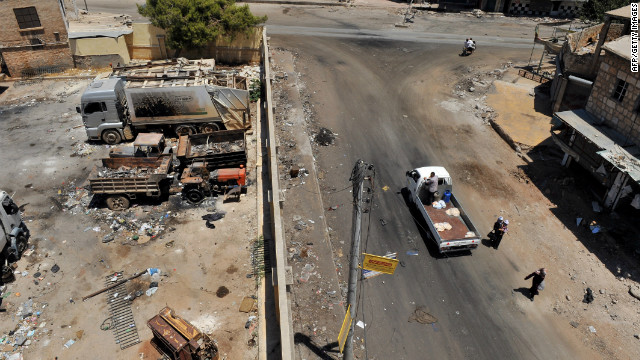
The opposition Local Coordination Committees of Syria said at least 100 people have been killed across the nation Tuesday. Also, there are fears of a major Syrian military assault on Aleppo as rebels and regime forces fight for control of the sprawling metropolis.
State TV said special forces engaged terrorist groups in Aleppo and caused big losses to them, including casualties and injuries. The LCC said at least 23 people died in Aleppo, including 10 "field-executed" prisoners.
Artillery shells fell on several Aleppo neighborhoods Tuesday morning "amid a state of panic among residents," opposition activists said. "Many people" were injured in the Shaar neighborhood, which is suffering a humanitarian crisis amid a lack of doctors and medical supplies, the LCC said.
In one instance, men, women and children waited 1½ hours to receive free bread from the rebel Free Syrian Army. Many started to pack up and leave.
Amnesty International
released a series of satellite images from the Aleppo area, including one that shows "more than 600 probable artillery impact craters" in the nearby town of Anadan.
"Turning Syria's most populous city into a battlefield will have devastating consequences for civilians. The atrocities in Syria are mounting already," said Christoph Koettl, emergency response manager for Amnesty International USA.
"The Syrian military and the opposition fighters must both adhere to international humanitarian law, which strictly forbids the use of tactics and weapons that fail to distinguish between military and civilian targets."
A license to fund Syria
Is U.N. fiddling while Syria burns?
How to stop al Qaeda in Syria
Secret support for Syrian opposition
The LCC said 26 people died in Damascus and its suburbs, where raids, artillery shelling and arrests are reported. The Damascus suburban town of Kafr Batna "is witnessing a mass exodus due to the presence of masses of military and security reinforcements; residents fear the city will be stormed," the LCC said.
The visit comes a day after the latest blow to the regime: the defection of Riyad Hijab, who was Syria's prime minister for the last two months.
Hijab cited the "killing and terrorist regime" as a reason for his defection.
Mohammed al-Etri, Hijab's spokesman, said Hijab had been planning to defect even before he was chosen as prime minister. Al-Etri said Hijab had no choice but to take the job because the regime would have killed him if he had declined.
He said the former prime minister was going to leave three weeks ago but delayed the defection because of tensions after the bombing that killed four top security officials in Damascus last month.
It is not clear precisely where Hijab is. Initially, opposition and Jordanian sources said he went across the border to Jordan. But his spokesman and the government wouldn't say where he is. Al-Etri said Hijab is in a safe place in a neighboring Arab country, is in good health and plans to move to another nation.
The chaos in Syria prompted 1,316 civilians and 12 soldiers to flee to Turkey on Monday night, Unal, the Turkish Foreign Ministry spokesman, said Tuesday. The soldiers included one brigadier general, he said on Twitter.
"With the latest arrivals, the number of our Syrian guests living in the shelter centers in our country reached close to 47,500," Unal said. "These numbers and the numbers of Syrians in other countries show how grave the situation in Syria is."
Roughly 17,000 people have been killed since the Syrian conflict began, U.N. Secretary-General Ban Ki-moon said last month. The opposition put the toll at more than 20,000.
Complete coverage: Unrest in Syria
CNN's Ben Wedeman, Salma Abdelaziz, Yesim Comert, Jomana Karadsheh, Holly Yan, and Joe Sterling contributed to this report.