

It seems that for as long as there have been readily available 3D printers, there have been moral panics about their being used to print firearms. The latest surrounds a Washington State Legislature bill, HB2320, which criminalises the printing of unregistered guns. Perhaps most controversially, it seeks so impose a requirement on printers sold in the state to phone home and check a database of known firearms and refuse to print them when asked.
This has drawn a wave of protest from the 3D printing community, and seems from where we are sitting to be a spectacularly ill-conceived piece of legislation. It’s simply not clear how it could be implemented, given the way 3D printers and slicing software actually work.
Oddly This Isn’t About Firearms
The root of the problem with this bill and others like it lies in ignorance, and a misplaced belief in the power of legislation. Firearms are just the example here, but we can think of others and we’re sure you can too. Legislators aren’t stupid, but by and large they don’t come from technology or engineering backgrounds.
Meanwhile they have voters to keep happy, and therefore when a moral panic like this one arises their priority is to be seen to be doing something about it. They dream up a technically infeasible solution, push to get it written into law, and their job is done. Let the engineers figure out how to make it work.
How To Hack Public Scrutiny When It Matters

President Nixon addressing the White House Press Corps in 1971. White House Photo Office Collection, Public domain.
Our governments have a mechanism in place to curtail this, public scrutiny. In short, when they embark on something stupid the public is supposed to push back. It comes as in this case from the people themselves, but perhaps most effectively it comes from the press corps which surround the legislatures.
A politician doesn’t really care much if a bunch of 3D printer enthusiasts are angry about something, but I promise you he’s all over it if it’s lead story on the local news. This should protect us, but the flaw when it come to tech stories is that the ignorance is not confined to the legislature. You don’t get to be a political press corps journalist without being pretty good at your job, but unfortunately for us, being pretty good at that job doesn’t include knowing anything about tech. Instead they have finely tuned noses for politics, public policy, and other things that are central to that beat, so when they encounter a tech story they are more likely to follow received opinion than what’s really going on.
Over the years here at Hackaday we’ve seen it time and time again, with respect to drones, right to repair, the DMCA, and even from time to time, 3D printed fiearms. We’ve even wished for technology-aware political journalists in the past too, but inevitably they don’t read Hackaday. Perhaps we should therefore examine how our community approaches stories like this in the first place, and change what we do. We’re good at complaining using our channels, perhaps it’s time to try theirs instead.
The Press Release As A Magic Bullet
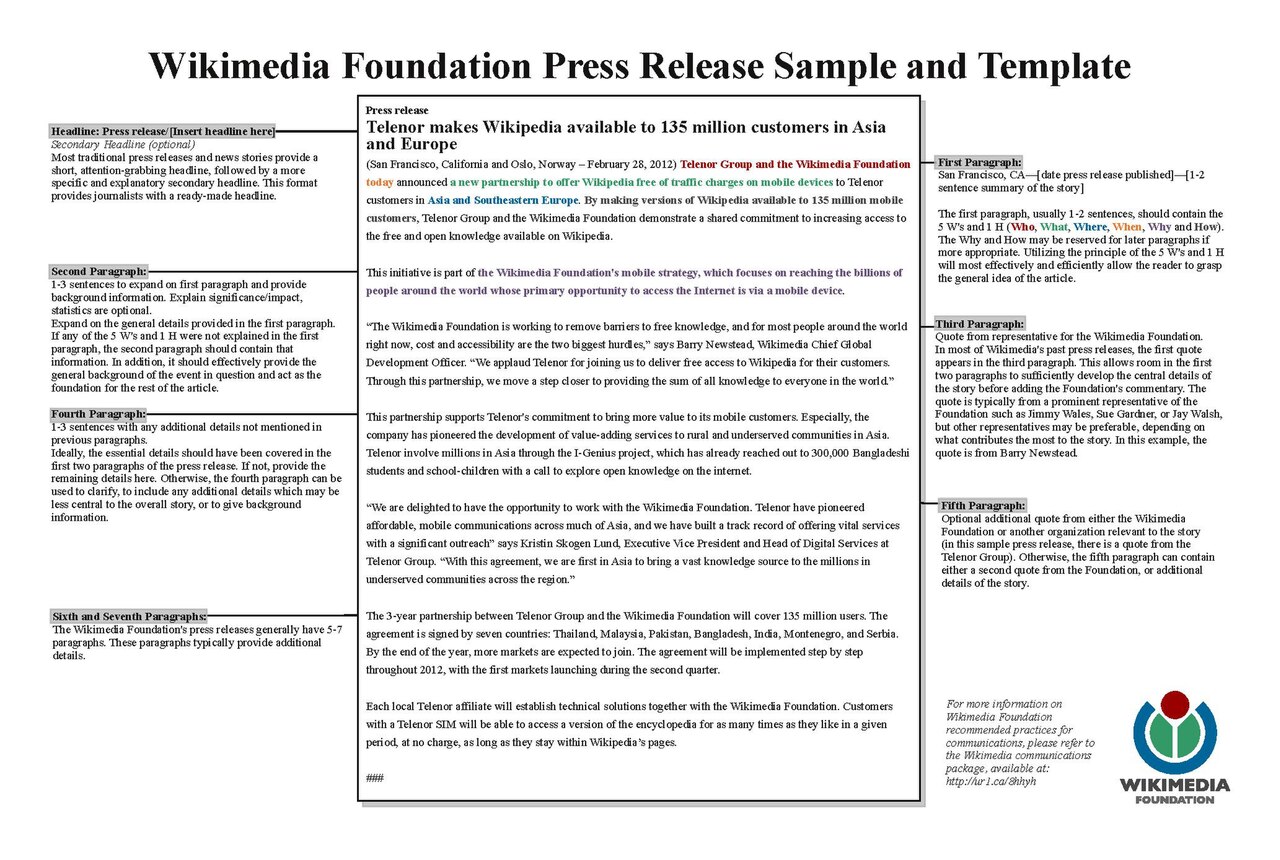
Wikipedia’s example press release template (CC-BY-SA 4.0)
There exists a tried and tested method for getting things in front of journalists, it’s called a press release. It’s a standardised form for making a point to a journalist, and when done correctly it can be very effective. How to write one is beyond the remit of Hackaday, but there are many resources online to help you. An appropriate one here is the UK Crafts Council’s one for makers. Take your concerns, distil them into a well-written and reasoned paragraph, and package it up as a press release.
Don’t send them personally, instead send them as an organisation, for example I wouldn’t write one as Jenny List. Instead I’d represent my hackerspace or my 3D printing society. As someone who’s written a few in my time as well as editing other people’s ones, I’d advise you to avoid writing either a rant or a manifesto, be factual and concise. If you appear to be a random crazy, your release will go in the round file.
When you have your press release, identify the channels where it will have the most impact. I might start with the local and regional papers and broadcasters, and find the journalists whose beat intersects with my target. The trick is writing up the technical aspects of the issue clearly enough that everyone can understand it, which is no mean feat, but it is infinitely easier when you already understand the tech than when you don’t.
This may seem like an odd departure from a 3D printing story, but perhaps like many of you I am tired of seeing badly thought out tech legislation passing without question. Perhaps it’s time our community learned some of the techniques used by the people who do mange to have influence, after all it can be easier than you think. We have the knowledge. It’s our responsibility to bring it to the people when necessary.