
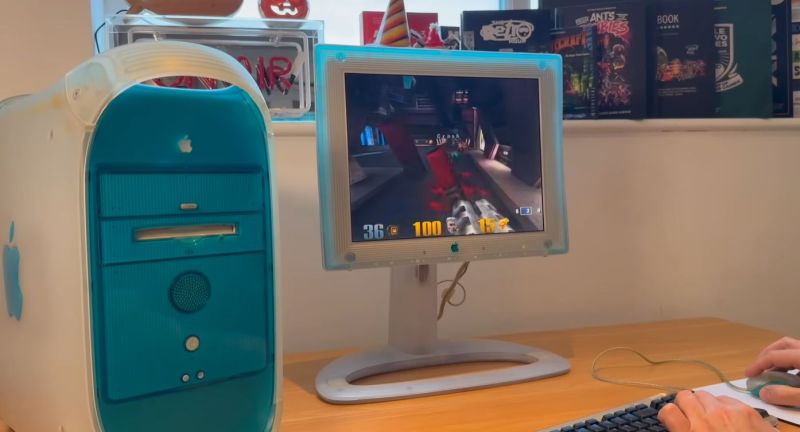
Back in the late 90s, Apple was definitely a pretty fruity company, with its aggressively translucent shades of colored plastic that often got described in terms of such fruit variants. Although the iMac steals a lot of the glory here, the Power Mac series and associated hardware deserves that spot in the limelight as well. Recently [Dan Wood] put together a full Power Mac G3-based setup, including the appropriate LCD monitor and other peripherals as someone with some serious disposable income back in 1999 might have owned.
Why Macs are better than PCs. (Credit: Dan Wood, YouTube)
Part of Steve Jobs’ return to Apple, the Power Macintosh G3 debuted first in basically recycled beige enclosures from previous Macintosh systems before its second generation introduced the Blue and White version, as it was officially called. This dazzling style was carried through in the peripherals, with pin stripes, translucent plastic and a distinct absence of sharp corners or edges.
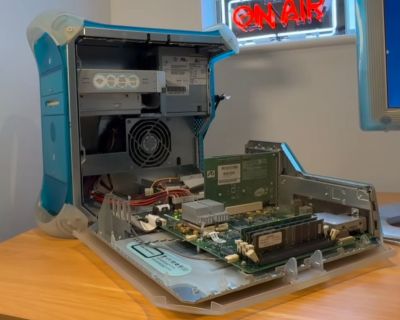
As for what you get in these colorful Power Mac G3s, a 300 to 450 MHz CPU, an official memory limit of 192 MB and perhaps the most user-friendly way to access the logic board to upgrade and install components with the folding lid. Something which had PC users with sharp edged cases and plentiful blood sacrifices to the PC gods somewhat steaming in jealousy.
For the time these Power Mac G3s didn’t just look fetching, they also were quite powerful. Something which came at a pretty hefty price tag, of course. The 400 MHz model that [Dan] got his paws on would have cost around $2,000 back in 1999, or closer to $4,000 clams today. The active-matrix TFT LCD screen would have been cutting edge as well, with a similar cutting edge price tag.
Released before OS X this system runs Mac OS 8.6, though it can run OS X 10.4 (Tiger) which unlocks more software options and of course the transition a proper multi-tasking OS. This particular system was apparently used for graphics design until 2010 based on the files on the HDD. As demonstrated in the video, the system is still quite usable, even in 2026, thanks to all the software available online.