
- NEW: The Muslim Brotherhood blames terrorists for setting its headquarters ablaze
- President Morsy says those tied to violence "will not escape punishment"
- He calls for dialogue, but doesn't take back his edict or the constitutional vote date
- The U.S. is watching events in Cairo with "growing concern," Hillary Clinton says
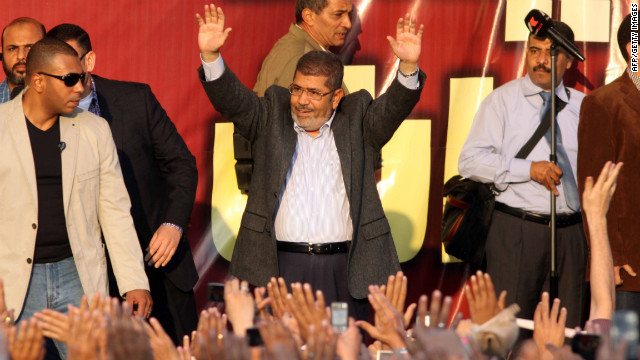
Cairo (CNN) -- Egyptian President Mohamed Morsy didn't back off the controversial edict he has issued or Egypt's upcoming constitutional referendum, saying Thursday night that he respects peaceful opposition to his decisions but won't stand for violence.
Addressing "those who oppose me" and his supporters, Morsy condemned those involved in recent clashes -- referring specifically to those armed with weapons and who are backed and funded by members of the "corrupt ... ex-regime" -- and promised they'd be held accountable.
"(They) will not escape punishment," the president said in a televised speech.
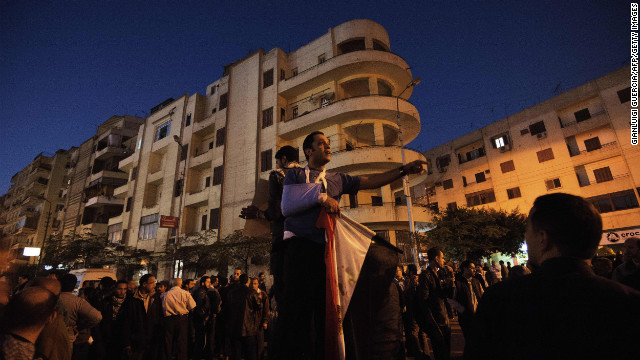
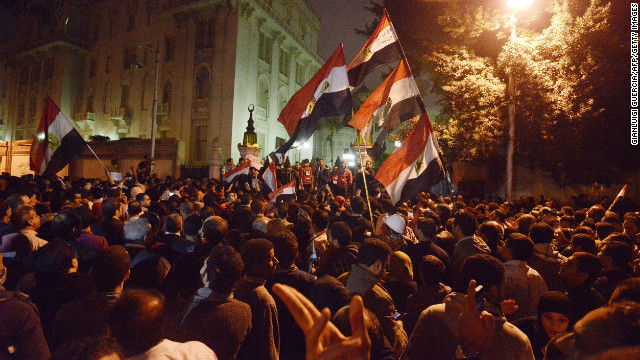
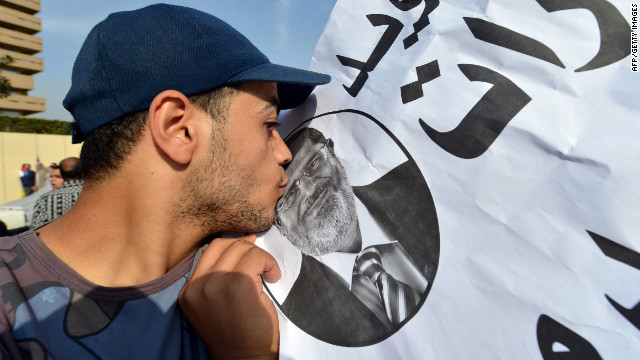
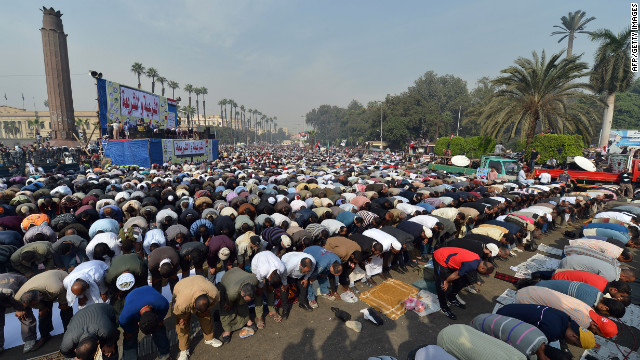
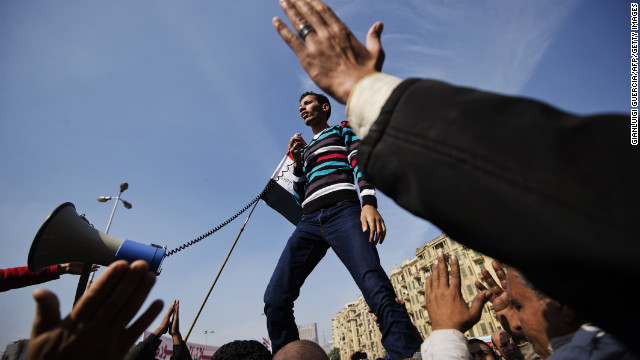
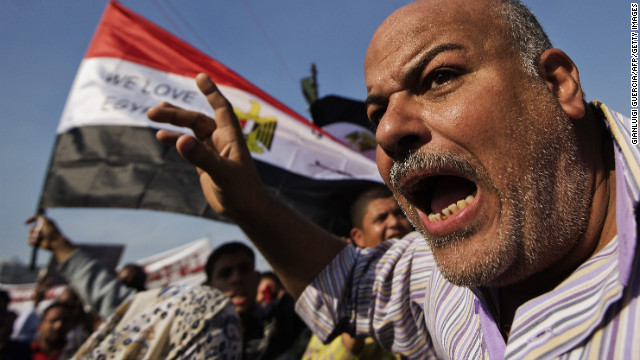
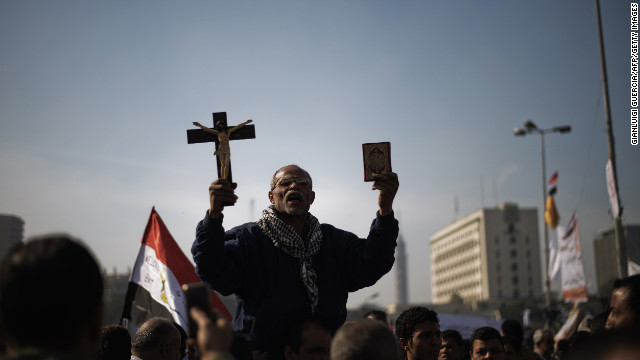
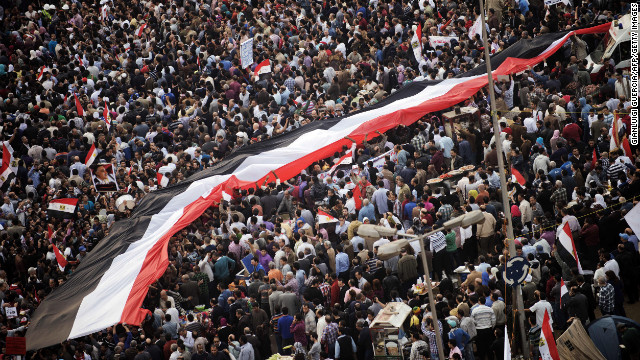
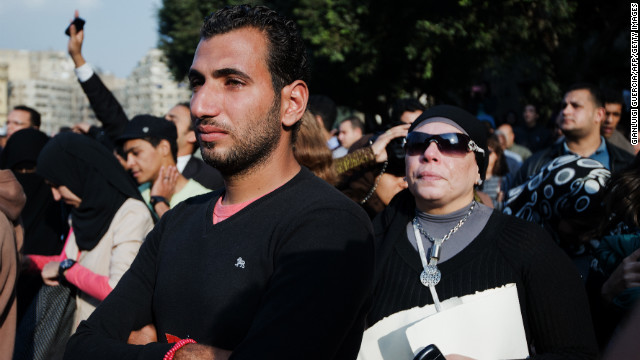
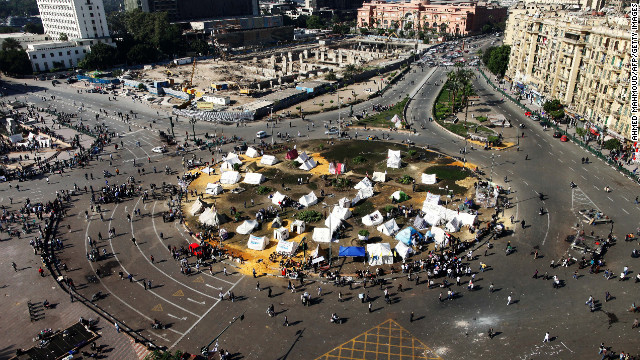
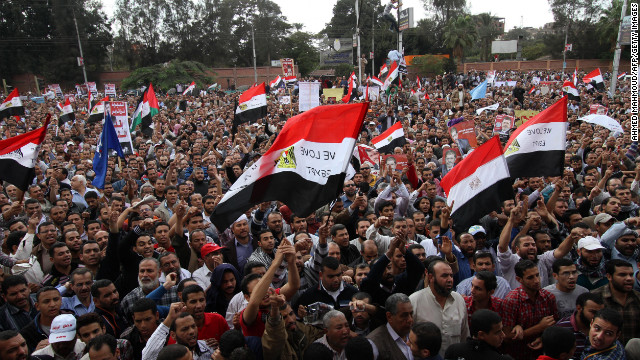
Morsy's words not only didn't mollify many protesters on the streets, it further enraged them. Activists camped in Cairo's Tahrir Square chanted "Leave! Leave! Leave!" as the president talked.
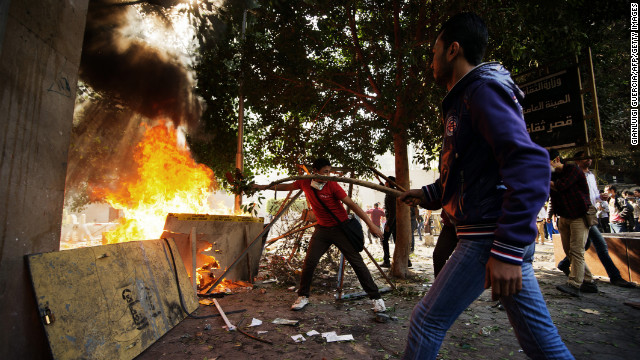
And minutes after his speech ended, the Muslim Brotherhood headquarters in Cairo was "ablaze," state TV reported, citing witnesses. The Islamist group said on Twitter and on its website that the building had come under "a terrorist attack" and hundreds were surrounding it.
This is not the first time the Brotherhood or its political wing the Freedom and Justice Party, which Morsy once led, has been targeted in recent weeks.
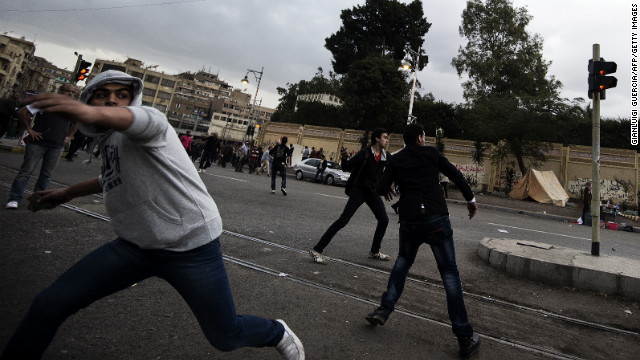
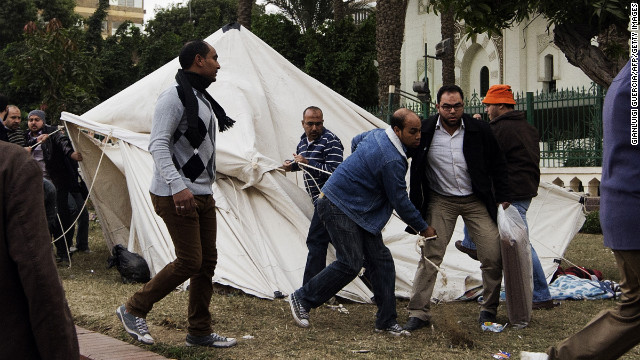
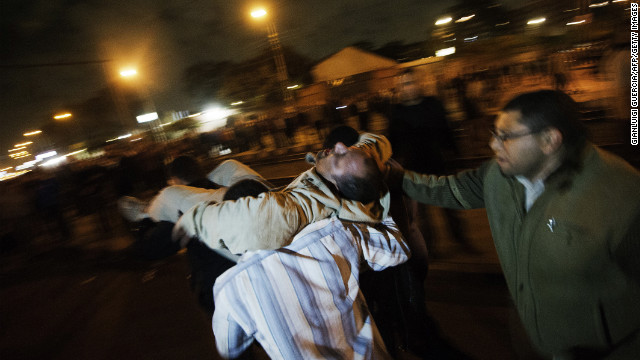
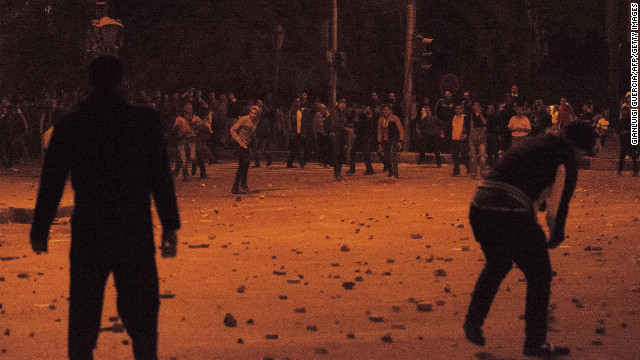
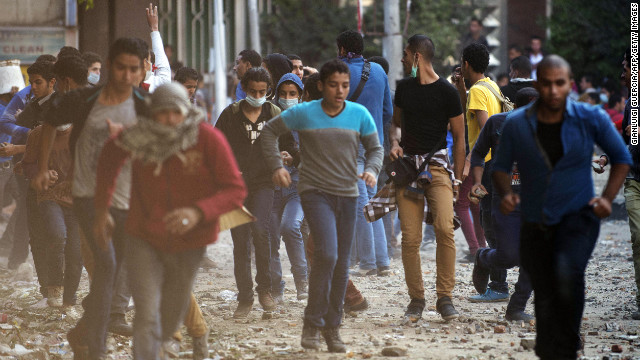
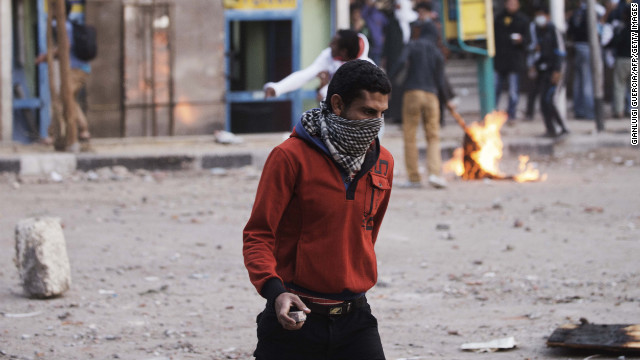
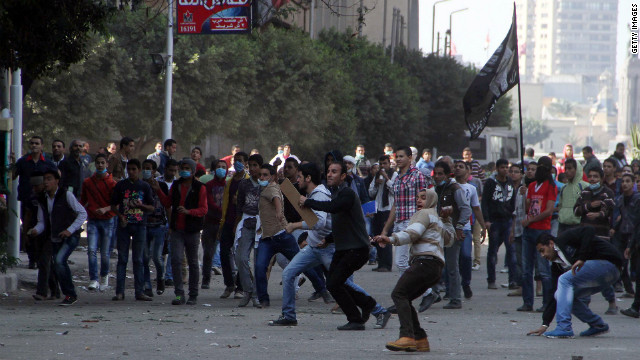
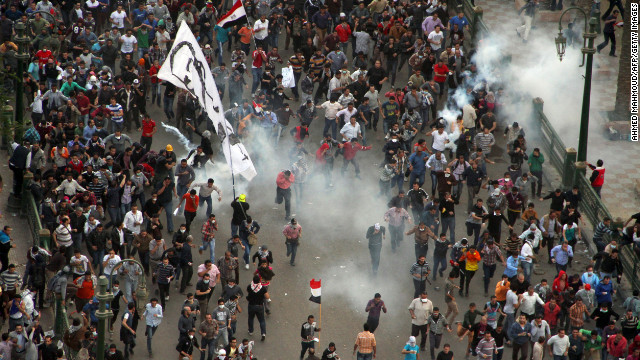
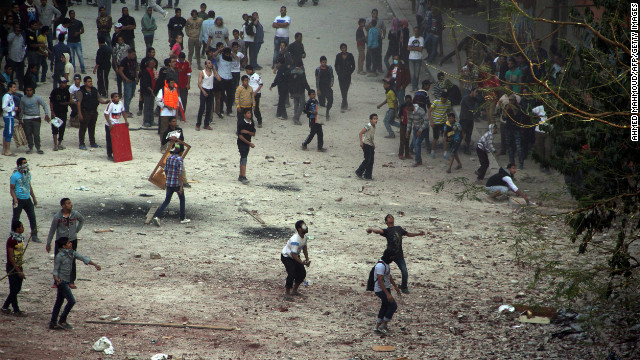
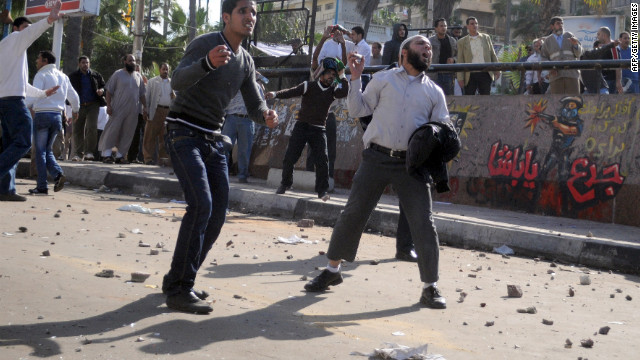
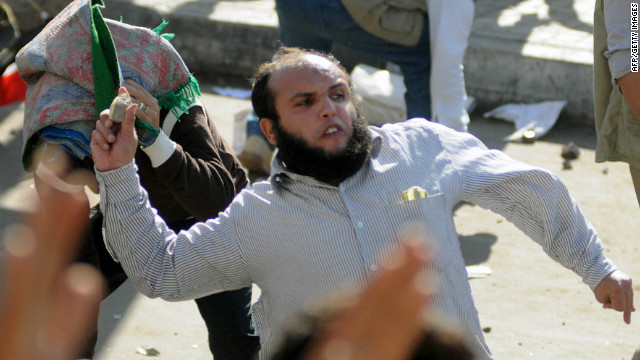
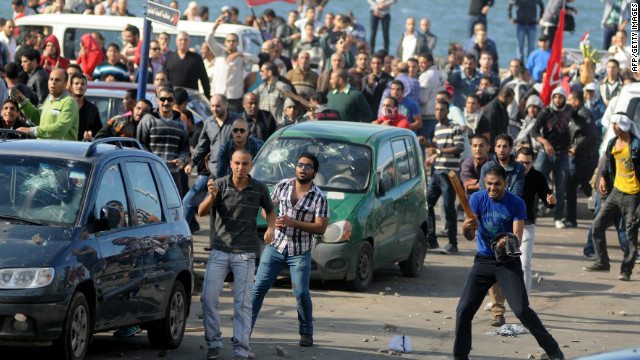
Violent scenes recently playing out around Cairo and elsewhere in the North African nation resemble those of the 2011 uprising that led to the ouster of then President Hosni Mubarak, said Hasan Amin, a CNN iReporter.
That includes thugs with knives and rocks chasing down protesters, presidential backers belittling opponents, and pressure from various quarters for protesters to go home and be quiet.

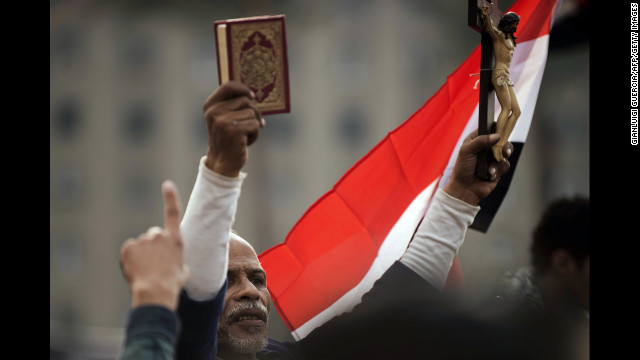
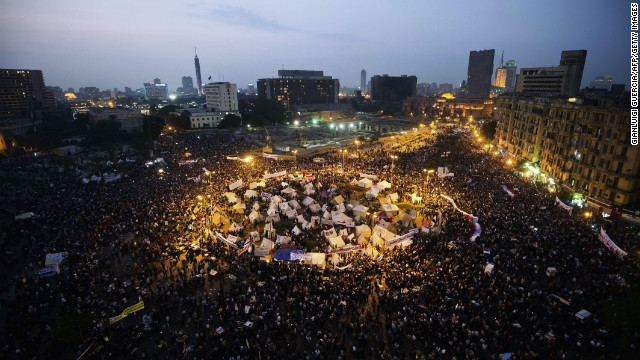
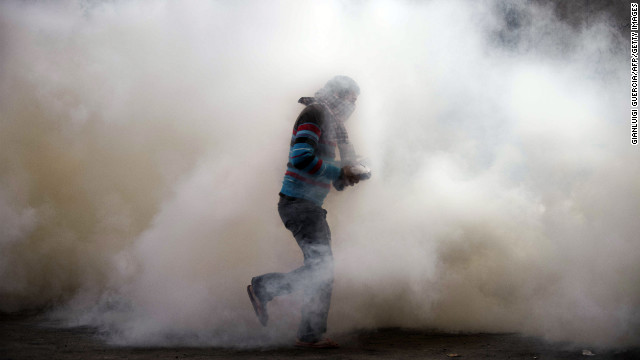
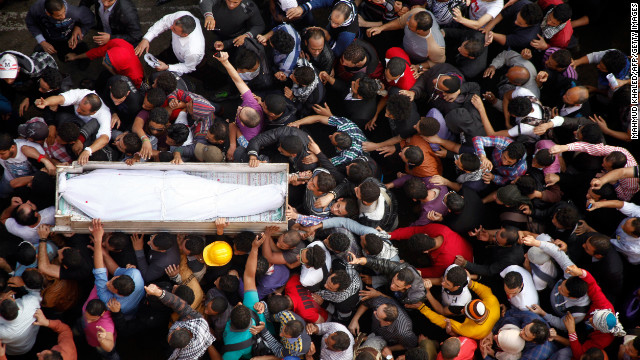
Egyptians protest over presidential powers
Egyptians protest over presidential powers
Egyptians protest over presidential powers
Egyptians protest over presidential powers
Egyptians protest over presidential powers
Egyptians protest over presidential powers
Egyptians protest over presidential powers
Egyptians protest over presidential powers
Egyptians protest over presidential powers
Egyptians protest over presidential powers
Egyptians protest over presidential powers
Egyptians protest over presidential powers
Egyptians protest over presidential powers
Egyptians protest over presidential powers
Egyptians protest over presidential powers
Egyptians protest over presidential powers
Egyptians protest over presidential powers
Egyptians protest over presidential powers
Egyptians protest over presidential powers
Egyptians protest over presidential powers
Egyptians protest over presidential powers
Egyptians protest over presidential powers
Egyptians protest over presidential powers
Egyptians protest over presidential powers
Egyptians protest over presidential powers
Egyptians protest over presidential powers
Egyptians protest over presidential powers
Egyptians protest over presidential powers
Egyptians protest over presidential powers
Egyptians protest over presidential powers
Egyptians protest over presidential powers
Egyptians protest over presidential powers
Egyptians protest over presidential powers
Egyptians protest over presidential powers
Egyptians protest over presidential powers
Egyptians protest over presidential powers

1

2

3

4

5

6

7

8

9

10

11

12

13

14

15

16

17

18

19

20

21

22

23

24

25

26

27

28

29

30

31

32

33

34

35

36
"It's exactly the same battle," said Amin.
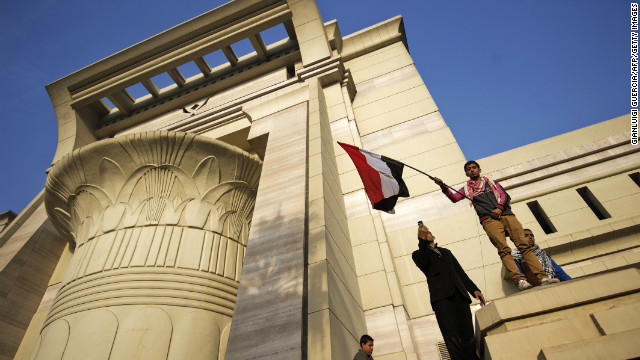
A November 22 edict by Morsy, in which he made his decisions immune to judicial oversight until a new constitution is voted upon, set off the latest wave of political unrest. And it's been growing -- and growing more violent -- in recent days.
Ahead of the president's speech, opposition leaders were specific in what would mollify them: Morsy would have to roll back his edict granting himself expanded presidential powers and postpone the scheduled December 15 referendum on a proposed constitution, one which they say doesn't adequately represent or protect all Egyptians.
iReport: Bloody clashes around Egyptian Presidential palace
While protesters were upset by what the president said, the remarks themselves weren't surprising. Morsy previously had defended the edict as necessary to defend the revolution and his administration has insisted the referendum will go ahead as planned.
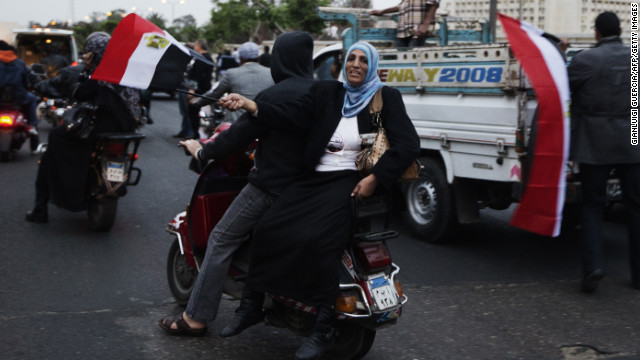
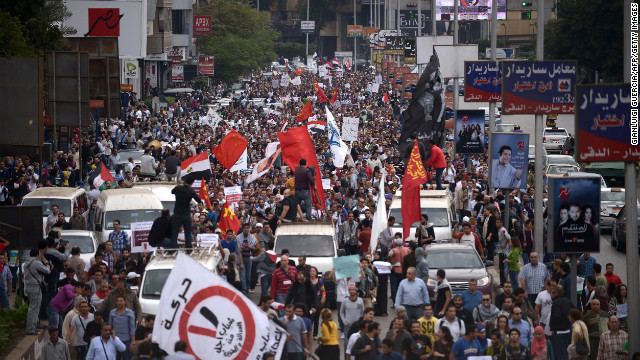
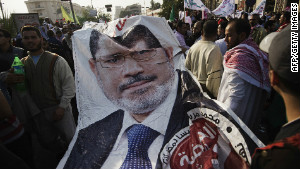
But protesters haven't bought that argument, accusing the president of consolidating power for himself and the Muslim Brotherhood. They've said they're committed to forcing the president to bend to the will of the people, as happened in 2011.
"This is not what we asked for," one protester said. "It's a complete dictatorship."
About 40 miles north of Cairo, a crowd tried to storm Morsy's home in Zagazig, according to the Interior Ministry. Police fired tear gas to disperse the crowd and at least 20 protesters and six police officers were injured.
Read more: Q&A: What's driving Egypt's unrest?
Police arrested eight people. The suspects were carrying swords and clubs, the ministry said. Morsy was not there at the time.
In the Maadi neighborhood of Cairo, someone also damaged the offices of the Freedom and Justice Party, the political wing of the Muslim Brotherhood, the ministry said.
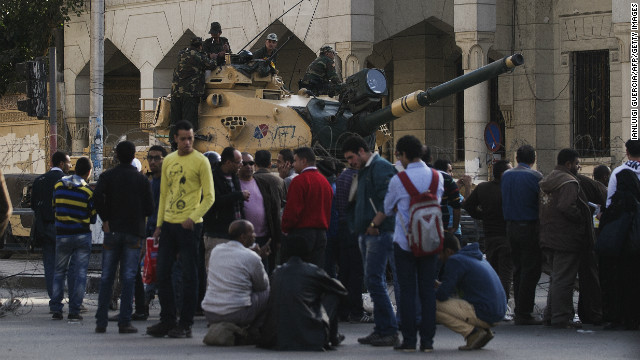
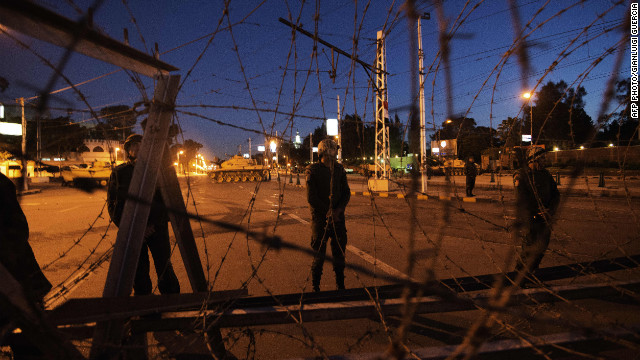
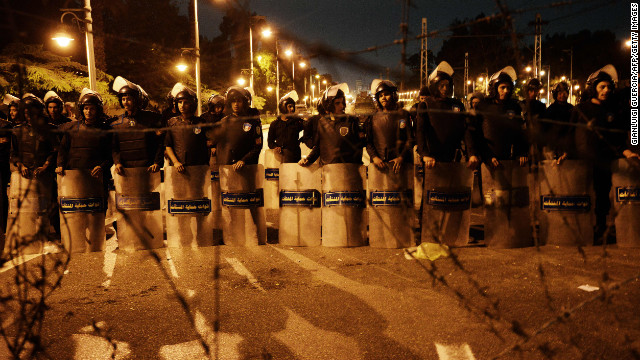
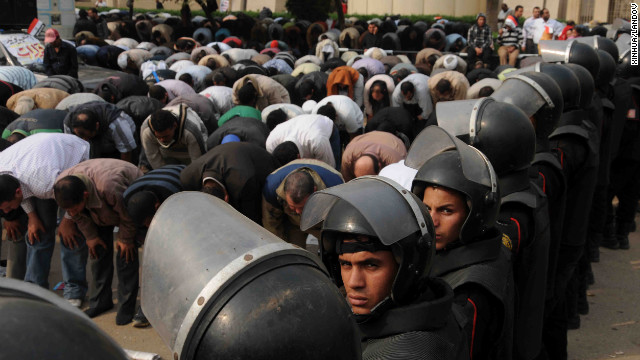
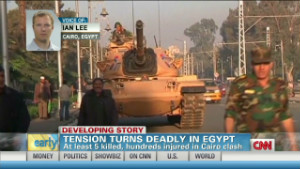
The scene was calm, but tense, outside the presidential palace in Cairo, where the military parked tanks and armored personnel carriers, put up barbed-wire barricades and deployed soldiers.
The area resembled a war zone. Piles of rubble and burned cars littered the streets. The doors of nearby storefronts were smashed in.
Opposition groups marched towards the area chanting "Down with Morsy" and other slogans Thursday night, ahead of Morsy's speech, according to the semi-official al-Ahram newspaper.
On Thursday, Morsy suffered another defection from his inner circle. Rafik Habib, the deputy head of the Freedom and Justice Party, resigned, party spokesman Ahmed Sobe said. Habib did not give a reason.
His resignation brings to five the number of presidential advisers who have left in the last two days. It is the first, however, from the Freedom and Justice Party.
Read more: Egyptian media strikes against President Morsy
Adviser Amr Ellissy said Wednesday on Twitter that he resigned "in protest of the constitutional declaration and the fact that I was not consulted in making these decisions."
Egyptian judges and media organizations also have staged strikes to show their displeasure with the situation.
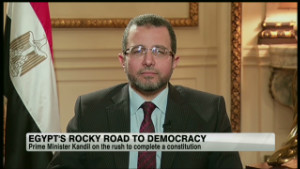
Vice President Mahmoud Mekki on Wednesday asked critics to submit their proposals for improving the constitution.
Opposition leaders will talk with Morsy if he withdraws his decree and delays the referendum, said Mohamed ElBaradei, leader of the liberal Constitution Party and a Nobel Peace Prize laureate.
Muslim Brotherhood officials seemed less inclined to bargain.
Muslim Brotherhood Secretary-General Mahmoud Hussein said Thusday protesters weren't interested in democracy. He accused them of using "crude and contemptible ways of expression, rather than (putting) their points across in a civilized manner."
Meanwhile, the blame game over who is responsible for the violence continued.
"We hold opposition figures ... fully responsible for escalation of violence & inciting their supporters," the Muslim Brotherhood said on Twitter.
On Thursday, 11 organizations representing lawyers, journalists, writers, actors, musicians and tour guides said Morsy and the Muslim Brotherhood were behind the violence, al-Ahram reported.
The group said it would call for Morsy's ouster if the administration failed to protect protesters and "fulfill the aspirations of the January 25 revolution," the newspaper said.
Because Egypt is a key player in the unstable Middle East and North Africa, what happens there has important ramifications far beyond its borders, and is being followed closely worldwide.
"We have been watching the events unfolding in Cairo with growing concern," U.S. Secretary of State Hillary Clinton said Thursday while attending a security conference in Dublin, Ireland. "The upheaval we are seeing once again in the streets of Cairo and other cities indicates that dialogue is urgently needed."
Are you there? Share your story but stay safe. Read a version of this story in Arabic.
Reza Sayah and Ian Lee reported from Cairo; Michael Pearson reported and wrote from Atlanta. CNN's Saad Abedine, Greg Botelho and Amir Ahmed and journalist Mohamed Fadel Fahmy also contributed to this report.

