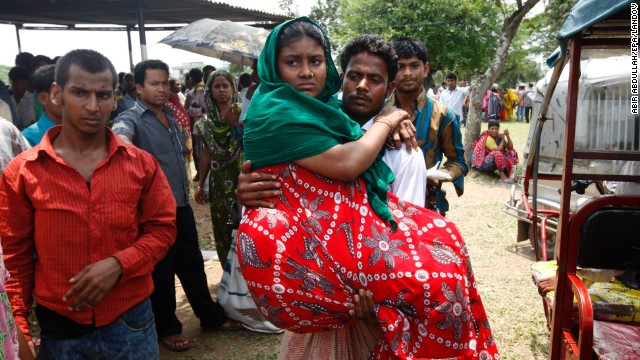
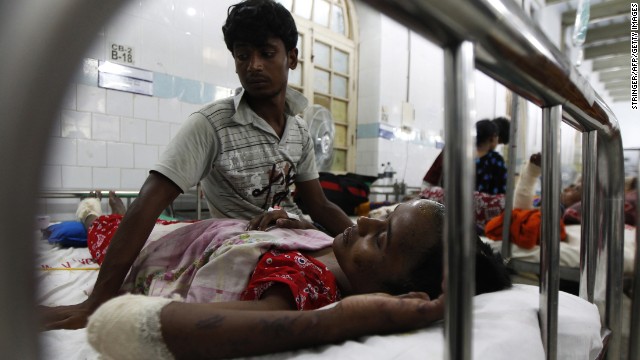
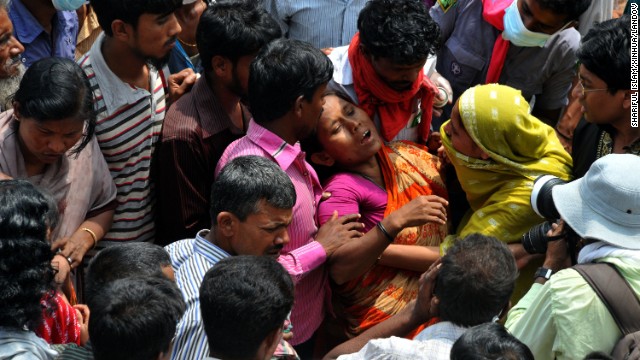
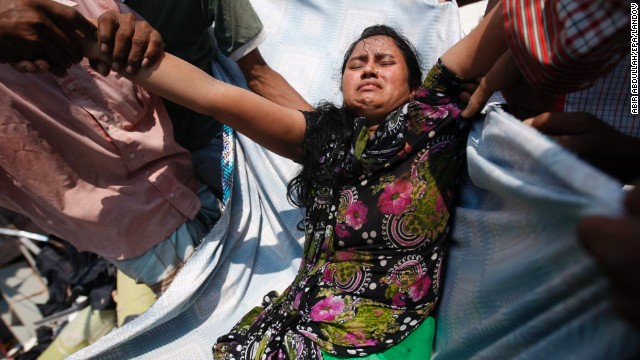
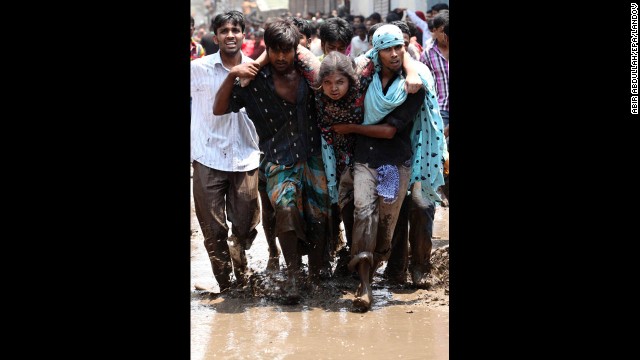
More than 900 people died when the Rana Plaza, which housed garment factories and shops, collapsed on April 24. Workers continue to find bodies, many of them decomposed and difficult to recognize." border="0" height="360" id="articleGalleryPhoto001" width="640"/>An injured worker who survived the building collapse is carried by her husband to collect her wages in Savar near Dhaka, Bangladesh, on Wednesday, May 8.
More than 900 people died when the Rana Plaza, which housed garment factories and shops, collapsed on April 24. Workers continue to find bodies, many of them decomposed and difficult to recognize.
Garment workers who survived the building collapse line up to collect their salaries in Savar on May 8.
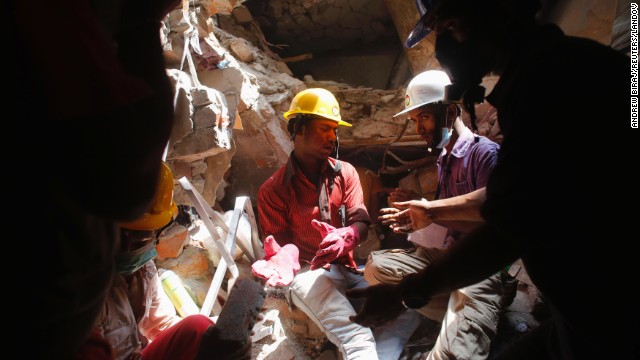
Workers continue rescue and recovery operations on Tuesday, May 7, nearly two weeks after the Rana Plaza building's collapse outside Dhaka.
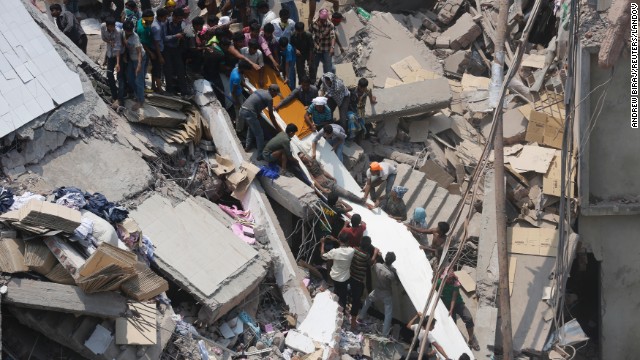
Rescue workers recover a body from the rubble on May 7.
Relatives place a body in the back of a truck on May 7.
A woman attempts to identify one of the bodies kept in a schoolyard on May 7.
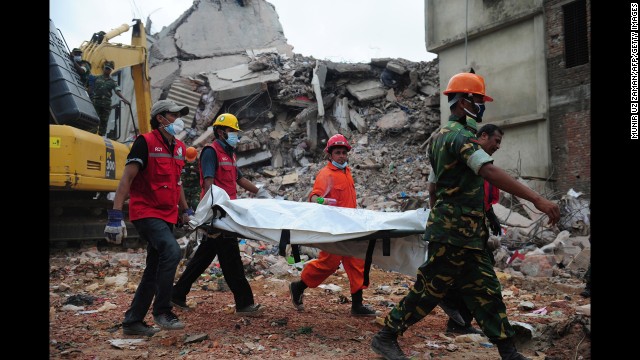
Members of the Bangladeshi army and firefighters carry the body of a garment worker from the scene of the building collapse in Savar, outside Dhaka, on Sunday, May 5.
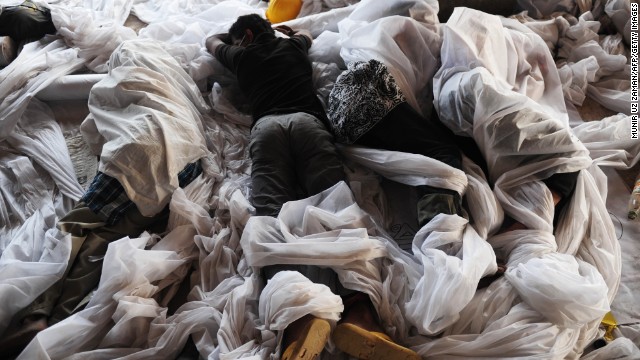
A woman holds a portrait of her missing relative as she sleeps on Saturday, May 4.
Relatives attempt to identify the bodies of loved ones on May 4.
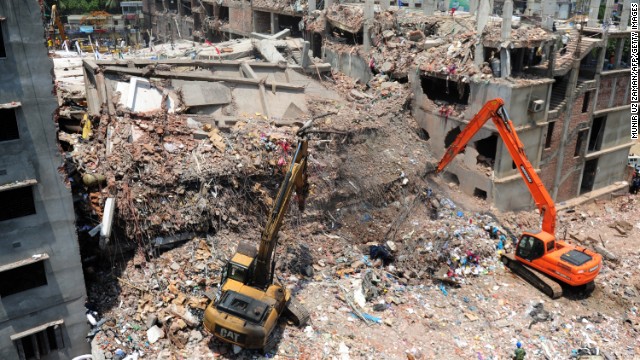
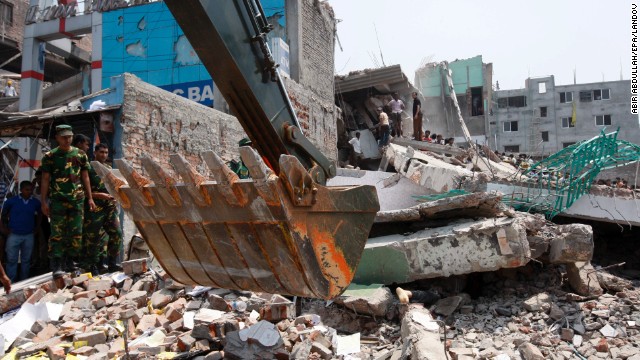
Rescue workers dig out debris from the Rana Plaza building as Bangladeshi army personnel continue the second phase of a rescue operation using heavy equipment on Friday, May 3.
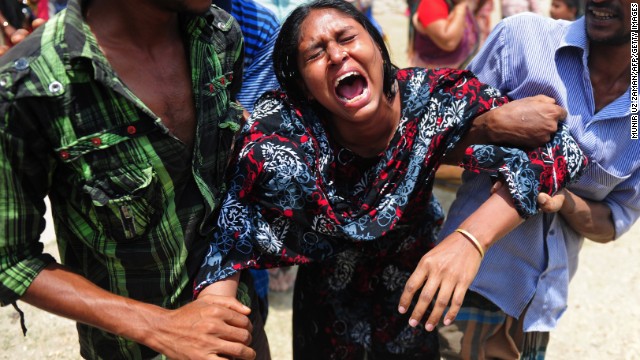
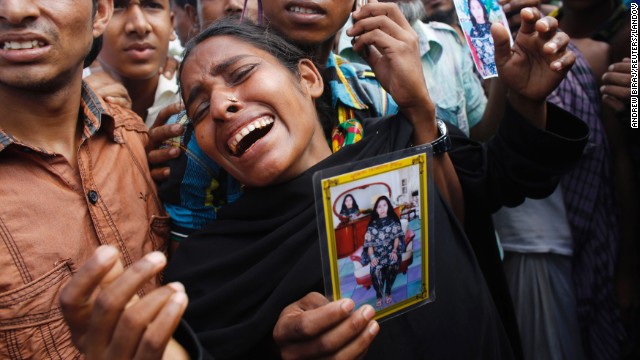
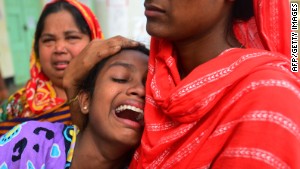
A woman reacts on May 3 after identifying a body found in the rubble.
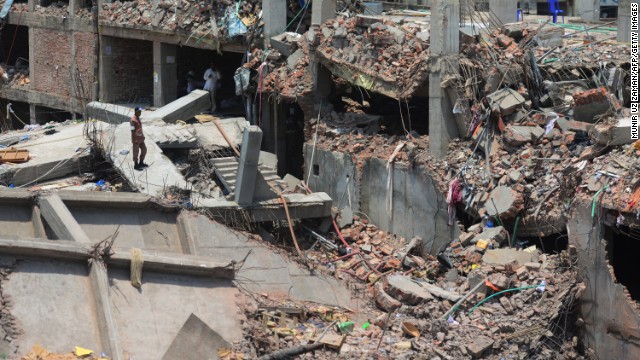
A man stands amid the destruction as rescue and army personnel continue recovery operations on May 3.
A woman holds up a picture of a missing person believed to be trapped in the rubble on May 3.
A garment worker rescued from the wreckage of the Rana Plaza building lies in a hospital in Dhaka on Thursday, May 2.
A woman weeps after identifying her daughter's body in the rubble in Savar on May 2.
Rescue workers move debris as Bangladeshi army personnel continue the second phase of a rescue operation at the site of the collapsed building in Savar on May 2.
A woman mourns before a mass burial in Dhaka on Wednesday, May 1.
Unidentified bodies from the rubble lie on the ground as people gather for a mass burial in Dhaka on May 1.
Workers dig graves during a mass burial of unidentified garment workers on May 1.
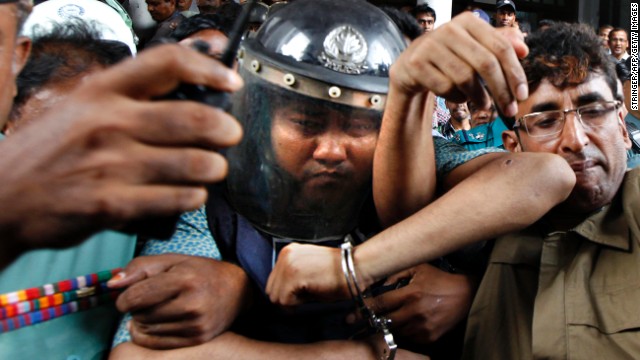
Sohel Rana, owner of the collapsed Rana Plaza building, wears police-issued body armor and a helmet while being escorted to court in Dhaka on Tuesday, April 30. Rana was arrested near the Indian border, and protesters called for him to be hanged.
Bangladeshi troops carry the body of a garment worker out of the rubble of the collapsed Rana Plaza building in Savar on April 30.
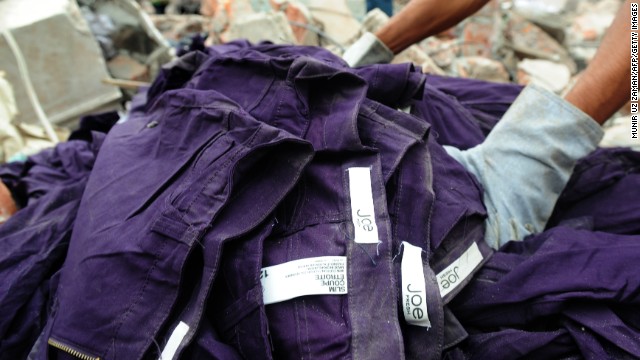
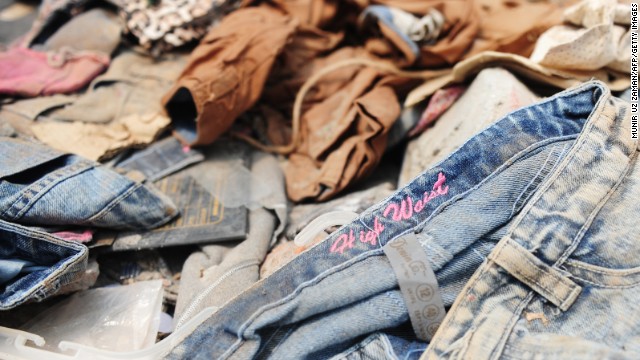
Clothing with Joe Fresh labels lies in the debris on April 30.
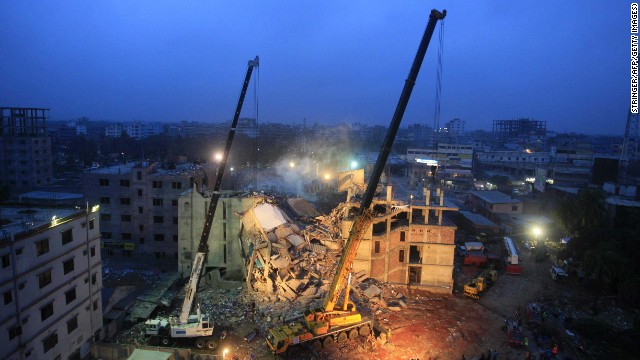
Cranes operated by Bangladeshi army personnel work on Monday, April 29.
Firefighters try to control a blaze that started while they were trying to rescue a woman with heavy equipment on April 29.
Bangladeshi army personnel begin the second phase of the rescue operation using heavy equipment on April 29.
Rescuers look for survivors on Sunday, April 28. The Bangladesh Red Crescent Society says the chances of finding anyone alive in the rubble at this date are remote.
A woman mourns on April 28 at the site of the building collapse in Savar.
Rescue workers search for survivors on April 28.
Volunteers sleep before they begin more rescue operations on April 28.
Rescue workers carry a victim's body recovered from the rubble on April 28.
Clothes lie in the rubble on Saturday, April 27.
An arrested owner of a garment factory is escorted to an appearance at the court in Dhaka on April 27. Four people were arrested and four others are being questioned by police.
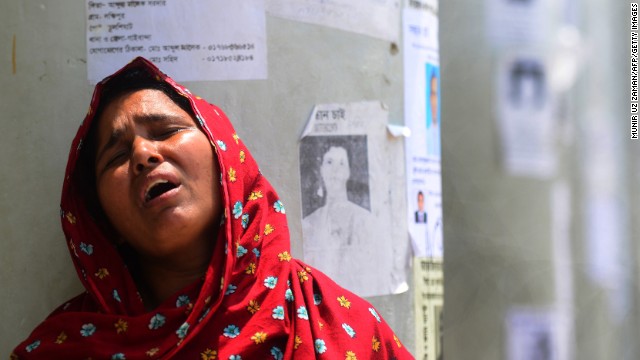
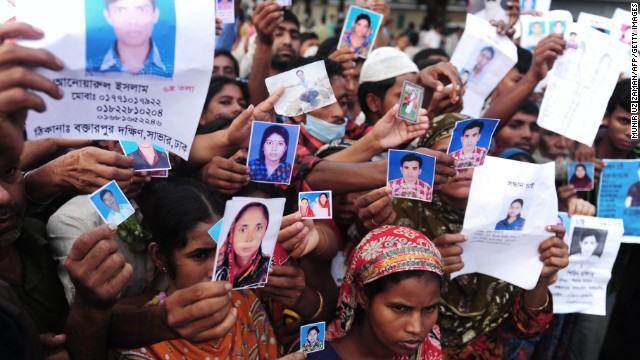
Relatives hold photos of missing and dead workers outside the factory April 27.
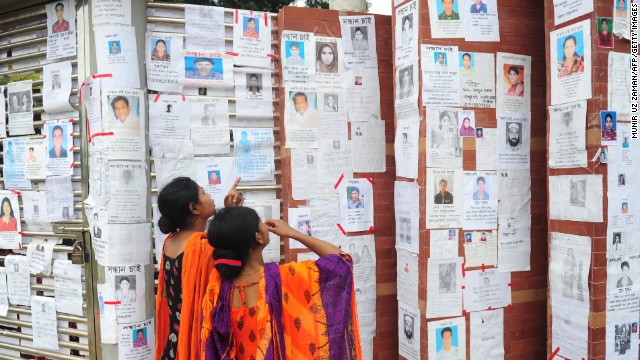
Two Bangladeshi women look at a board with notices posted of missing and dead workers on April 27.
Bangladeshi relatives and workers load a body onto a truck on April 27.
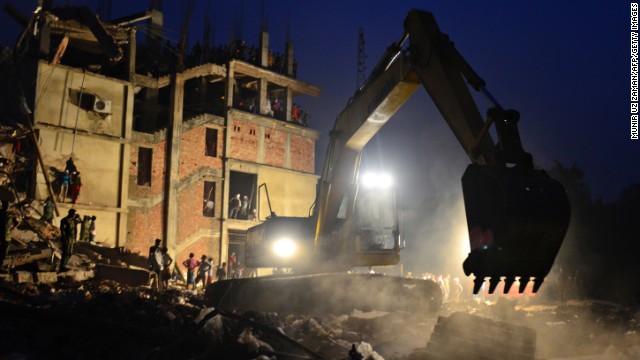
An excavator operated by the Bangladeshi Army removes debris on April 26.
Volunteers and rescue workers conduct rescue operations on April 26.
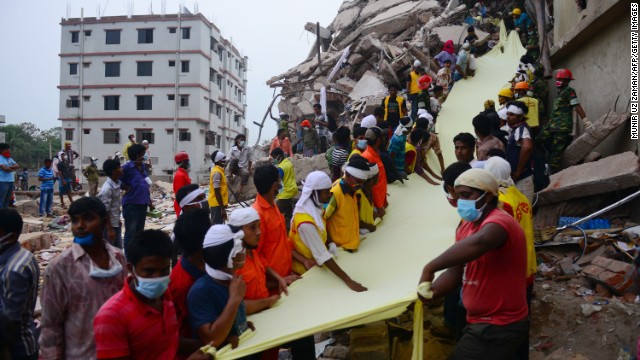
Rescue workers use textile as a slide to move bodies out of the rubble on April 26.
Rescue workers look for trapped garment workers on April 26.
Rescue workers stand on the rubble of the collapsed building on April 26.
Rescue workers search the rubble for victims and survivors on April 26.
A rescue worker looks for trapped workers on April 26.
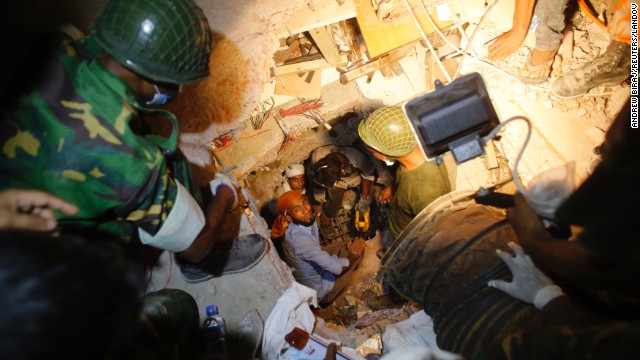
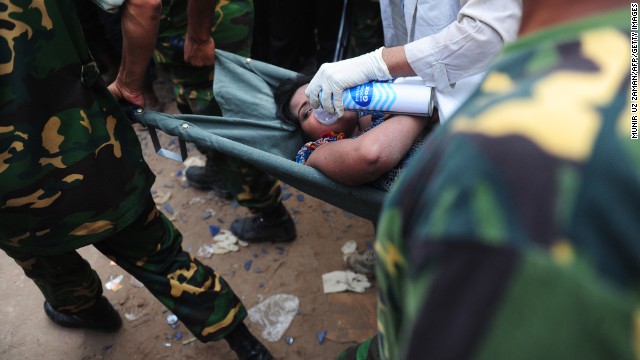
Bangladeshi army personnel recover a survivor from rubble on April 26, 48 hours after the collapse.
Volunteers and rescue workers assist in rescue operations on April 26.
A physician assists a survivor after he was recovered from the rubble on April 26.
People rescue garment workers trapped at a building outside Dhaka, Bangladesh, on Thursday, April 25.
A Bangladeshi woman shows a picture of her missing daughter-in-law she believes is trapped in the collapsed building on April 25.
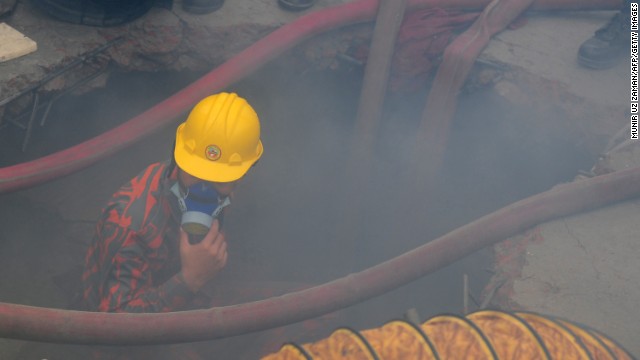
Bangladeshi firefighters cut a hole through concrete during rescue operations on April 25 in Savar, a suburb of Dhaka.
Volunteers and rescue workers work at the scene on April 25.
A woman appears devastated on April 25 after identifying the body of her husband killed in the building collapse.
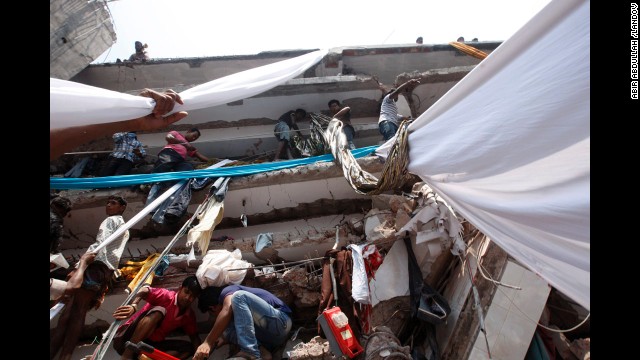
Bangladeshi garment workers help evacuate a survivor by using a roll of fabric on April 24.
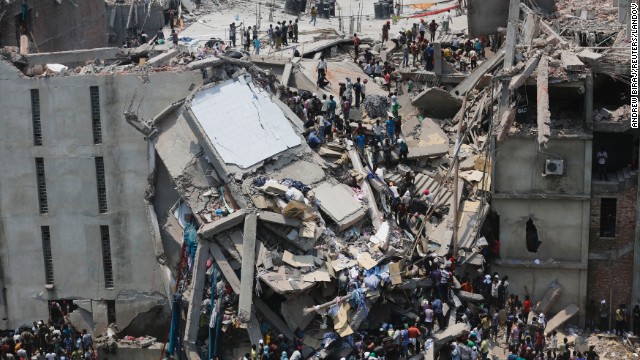
" border="0" height="360" id="articleGalleryPhoto0052" width="640"/>People rescue garment workers on Wednesday, April 24, after the building caved in, leaving a chaotic mass of broken concrete and twisted metal.
Relatives who lost a brother mourn outside a hospital on April 24.
Rescuers help an injured garment worker to escape from the Rana Plaza building on the outskirts of Dhaka on April 24.
Civilians help an injured garment worker on April 24. Work was proceeding slowly to avoid causing further collapse, an official said.
Rescue workers search for trapped garment workers in the Rana Plaza building on April 24.
An injured Bangladeshi lies on the hospital floor on April 24.
The injured receive treatment at a hospital on April 24.
An injured person rests in a hospital bed on April 24.
People wait anxiously on April 24 while rescuers search for survivors.
Rescuers help an injured person out of the seventh floor on April 24.
Civilians help out in rescue efforts at the collapsed building on April 24.
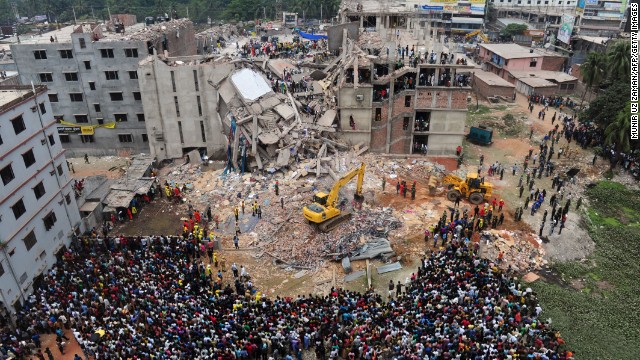
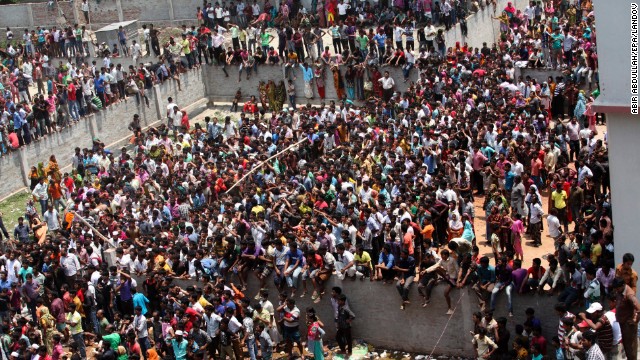
Hundreds watch the rescue operations on April 24.
People search for garment workers trapped under the debris on April 24.
Rescuers help an injured worker on April 24.
A body is trapped under the damaged building on April 24.
A woman is carried away from the building on April 24.
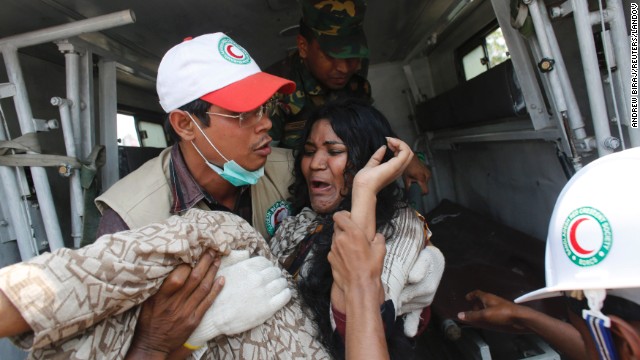
A rescue worker carries a worker to an ambulance on April 24.
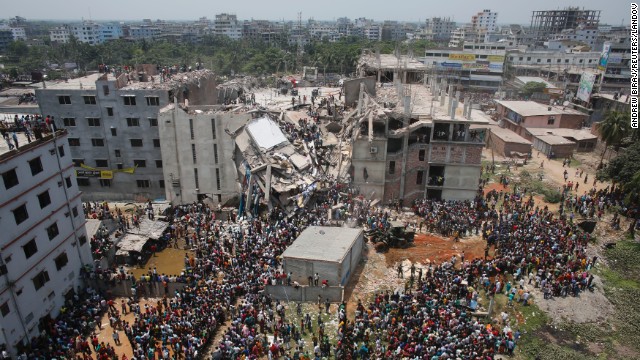
Crowds gather around the collapsed building on April 24.
Rescuers bring out an injured garment worker from the building's sixth floor.
1
2
3
4
5
6
7
8
9
10
11
12
13
14
15
16
17
18
19
20
21
22
23
24
25
26
27
28
29
30
31
32
33
34
35
36
37
38
39
40
41
42
43
44
45
46
47
48
49
50
51
52
53
54
55
56
57
58
59
60
61
62
63
64
65
66
67
68
69
70
- The nine-story building collapsed on April 24, trapping people in the wreckage
- As workers keep pulling bodies from the rubble, the death toll reaches 1039
- Rescuers managed to save more than 2,400 survivors
- But hundreds of people looking for missing relatives are still waiting near the site
Bangladesh reaches grim milestone
Trade rules and cheap Bangladesh clothes
Dhaka, Bangladesh (CNN) -- More than two weeks after a building in Bangladesh housing factories full of garment workers caved in, the death toll from the South Asian nation's deadliest industrial disaster has surpassed 1,000, authorities said Friday.
For the 17th day, rescue and recovery workers are searching through the nine-story building's tangled wreckage in Savar, a suburb of the capital, Dhaka. During the first several days of dangerous and painstaking work, they got more than 2,400 people out of the rubble alive.
But since then, they haven't found any more survivors. The past 11 days have focused on the grim task of retrieving dead bodies still buried in the heap of broken concrete, many of them so severely decomposed that authorities struggle to identify them.
As more bodies were recovered on Friday, the total number of people confirmed dead rose to 1,039, said Maj. Zihadul Islam, a fire service official.
The owners of the building and the factories are under investigation over accusations they ordered workers to enter the premises on the day of the collapse despite cracks in the structure the day before.
Lax safety standards
The Bangladeshi government has faced criticism for failing to improve the lax safety standards in the country's thousands of garment factories where millions of people work.
The Savar building collapse happened five months after a fire at a garment factory near Dhaka killed more than 100 people. And on Wednesday, eight people died in a fire at another factory in the Dhaka area.
The European Union has threatened to take trade action against Bangladesh if it doesn't take concrete steps to improve health and safety conditions for workers.
Western retailers and clothing brands that source their products from Bangladeshi factories are also under pressure to subject their supply chains to greater scrutiny.
The grim search for bodies
At the site of the building collapse in Savar, the salvage operation is in its final stage, using cranes and bulldozers to clear the rubble and uncover the remaining bodies, the national news agency Bangladesh Sangbad Sangstha (BSS) reported Thursday.
The smell of death continues to permeate the surrounding area, prompting people passing by on a nearby highway to cover their noses, BSS said. Recovery workers combing the debris have had to resort to using face masks and cans of air freshener to try to block out the stench.
Hundreds of people looking for their missing relatives are still waiting by the grounds of a nearby school where retrieved bodies are first taken for an initial attempt at identification. But the decomposed state of the bodies often means they are unrecognizable.
Authorities have resorted to sending some of the remains to a Dhaka hospital for DNA tests, BSS reported. The bodies are then buried unidentified pending the results of the DNA tests.
Journalist Farid Ahmed reported from Dhaka, CNN's Jethro Mullen reported and wrote from Hong Kong.