




- NEW: "My government is trying and committed to social transformation," she says
- NEW: More protests are expected Tuesday night
- Demonstrators say the government makes the poor pay while throwing out money
- Brazil is spending heavily on the upcoming World Cup and Olympic Games
Are you witnessing the protests in Brazil? Share your images and videos with CNN iReport.
Sao Paulo, Brazil (CNN) -- Brazilians angry about high taxes, corruption, lavish spending on the upcoming World Cup soccer tournament and other complaints vowed to hit city streets again Tuesday, a day after the largest protests in the country in at least 20 years.
President Dilma Rousseff said Tuesday their message was being heard.
"The direct message from the streets is for more citizenship, better schools, better hospitals, better health, for direct participation," she said in a nationally televised address. "My government is trying and committed to social transformation."
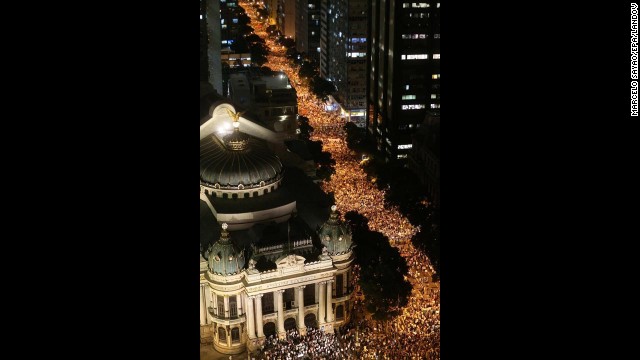
The protests blocked seven lanes of the main ring road around Sao Paulo on Monday night in what was a largely peaceful, even festive demonstration.

Other protest groups marched down major business avenues in the city, while in Rio de Janeiro, crowds clogged entire city blocks, waving Brazilian flags and chanting against corruption and for democracy.
"Brazilians want to put a stop to the various problems that exist in the country," said CNN iReporter Phillip Luiz Viana, who participated in the protests in Sao Paulo. "We see no reason to have such bad infrastructure when there is so much wealth that is so highly taxed."
Police stayed largely on the sidelines after being accused of using heavy-handed tactics in earlier demonstrations.
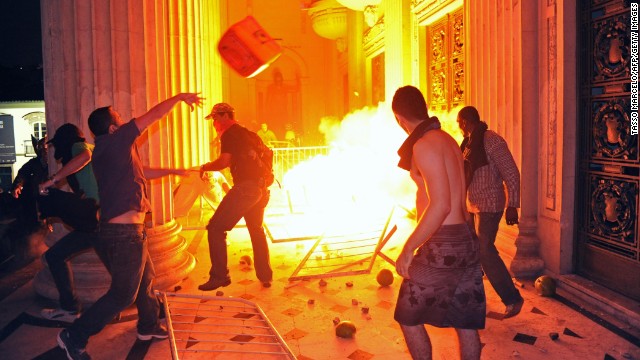
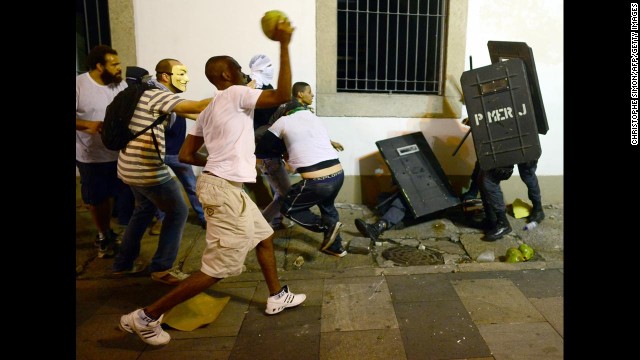
But they did push back when protesters attempted to storm government buildings in Rio de Janeiro and Sao Paulo and attempted to rush the National Congress building in Brasilia, the nation's capital. Police held them at bay, the official Agencia Brasil news service reported.
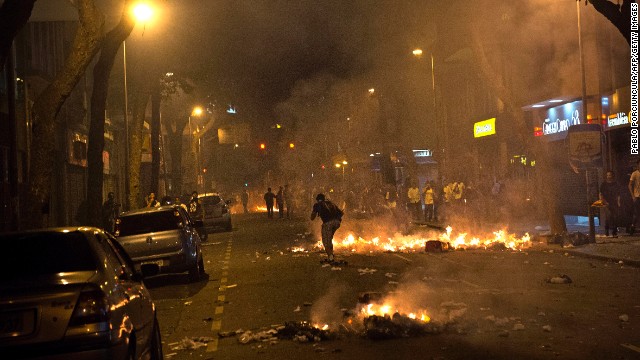
In Rio de Janeiro, protesters looted and vandalized several shops and burned cars, the news agency said.
Thousands protest over rising costs of 2014 World Cup
Police also used tear gas to break up a protest trying to form near a stadium in Belo Horizonte, one of six Brazilian cities hosting a dry run for Brazil's hosting of the 2014 World Cup soccer tournament.
The agency reported that an 18-year-old who was not part of the demonstrations fell from an overpass when the crowd of protesters passed by. He was taken to a hospital, where he was listed in stable condition, the agency said.
While praising the largely peaceful protests, Rousseff said that what she characterized as "isolated and minor acts of violence" should be confronted "with vigor."
More protests are expected Tuesday in Sao Paulo.
They are being organized largely by university students and a group called the Free Fare Movement, which wants public transportation to be free of charge.
The protests follow a week of smaller demonstrations that began in response to plans to increase fares for Brazil's public transportation system, from 3 to 3.20 reais ($1.38 to $1.47), but have broadened into wider protests over economic and social issues plaguing the country.
Protesters say they are angry about, among other things, government decisions to spend money on the World Cup and other projects instead of improving health care, education and other social programs.
Brazil is building stadiums and revamping its infrastructure ahead of the World Cup and the 2016 Olympic Games, events that will put the world's focus on the Latin American nation of 201 million people.
What's really behind the Brazilian riots?
"They destroyed schools to build parking lots for stadiums; hospitals are overcrowded; people are hungry on the streets," Rio de Janeiro protester Fernando Jones said.
The protests have attracted international attention, and the office of the United Nations High Commissioner for Human Rights urged Brazilian authorities Tuesday to show restraint in handling protesters.
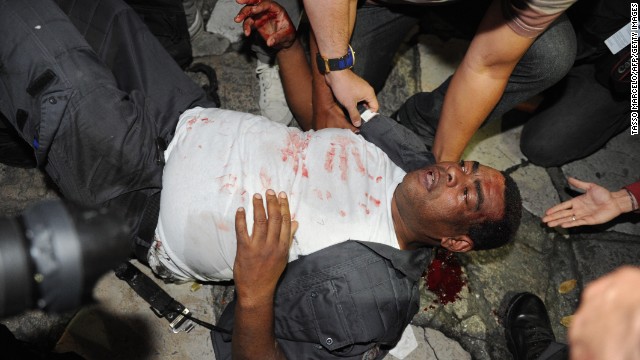
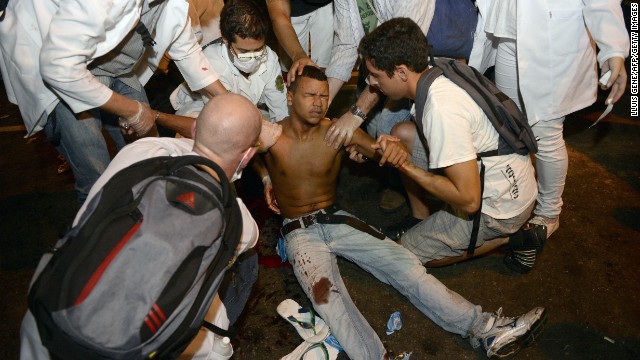
Last week, at least 100 people were injured and 120 arrested after violent clashes between police and protesters in Sao Paulo. Police used rubber bullets and tear gas against protesters and journalists, bringing complaints of brutality and targeting of media covering the events.
Read: Brazil wins Confederations Cup opener
On Monday, Rousseff issued a statement saying that "peaceful demonstrations are legitimate and part of democracy."
"It is right for the youth to protest," she said.
Former President Lula da Silva also came out in support for the protests on his Facebook page, urging officials to work out a solution for affordable transit rates.
Read: 'The man who made a nation cry'
Shasta Darlington reported from Sao Paulo; Michael Pearson wrote from Atlanta; CNN's Marilia Brocchetto and Ben Brumfield also contributed to this report.
