
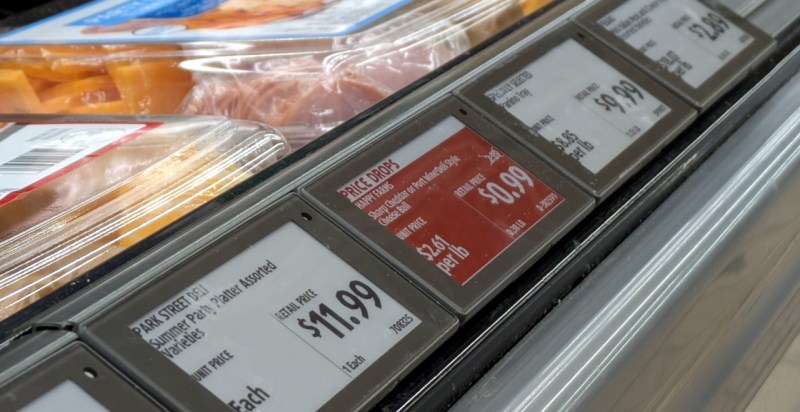
Unless you’ve spent the last few years locked indoors and had all of your goods delivered to you — a not entirely implausible situation, given our audience — you’ve likely noticed the growing popularity of electronic shelf labels (ESLs). They’ve been a common sight in grocery stores like Aldi for some time, and major retailers such as Walmart and Home Depot have been expanding their use of the technology.
On the surface, it makes perfect sense. With electronic ink displays, you can create a price tag that looks enough like a paper label that the customer’s experience isn’t really any different, but the retailer doesn’t have to send somebody out to update the prices. Sure, the upfront cost is higher than a roll of sticky paper, but theoretically, the ESLs should pay for themselves thanks to the reduced labor costs.
 It’s the sort of high-tech solution to a common problem that one of us would have come up with. If this were a decade ago, we wouldn’t have been surprised to see something like this get entered into the Hackaday Prize. It might have even won.
Now that the technology is becoming commonplace, there’s even more reason for hardware hackers to be interested in it. Since most of these tags will show whatever image you beam over to them via radio or infrared, we’ve seen a number of projects that repurpose second-hand tags as convenient data displays.
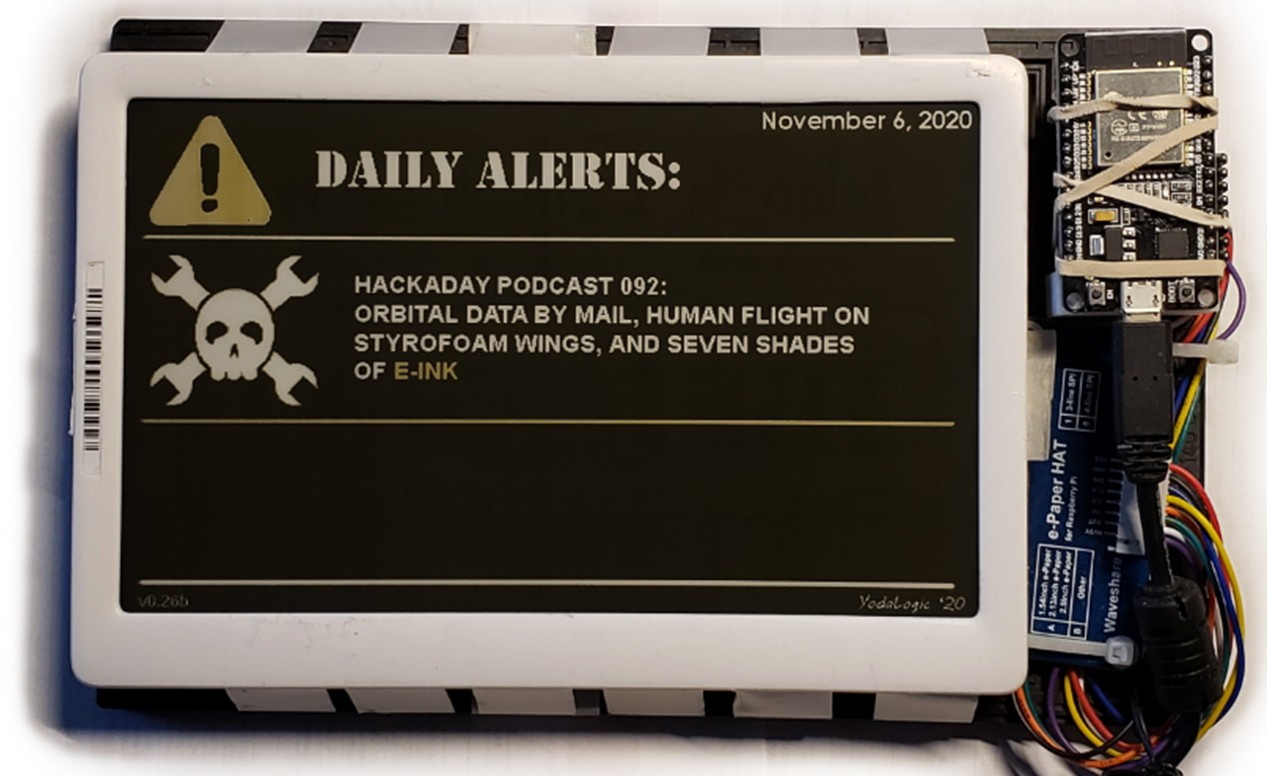
Rather than showing the price of milk, they can show the current price of Bitcoin. Or maybe you’d like to stick them up all over the house to display the weather forecast and your family calendar. They’ve been repurposed as badges at hacker cons, and at least one industrious hacker has used a discarded ESL to show an alert whenever a new episode of the Hackaday Podcast drops.
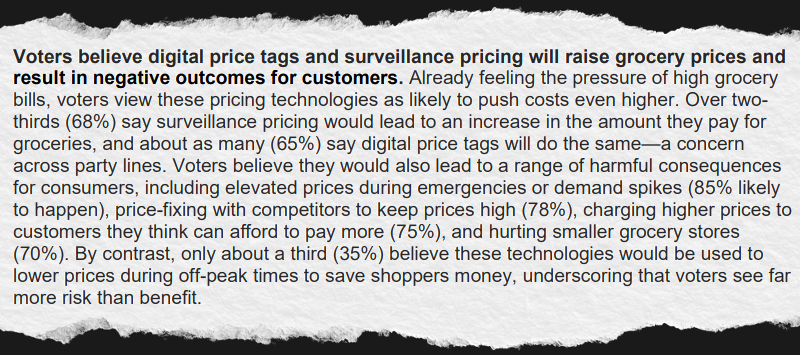
But not everyone is happy about ESLs. Recently, the United Food and Commercial Workers (UFCW) International Union released the results of a poll showing that most American consumers are opposed to ESLs, citing concerns that the technology would ultimately lead to higher prices.
With Great Power Comes…
The rejection of electronic shelf labels isn’t just about automation taking over a job that humans used to do, although that’s likely part of it. What’s got most consumers worried is what happens in the future once ESLs are the norm. There’s growing concern that the ability to rapidly and remotely update an item’s price will enable retailers to implement aggressive dynamic pricing schemes that were previously impractical. When you don’t have to send out a teenager with a price gun for each change, there’s nothing stopping stores from updating item prices every hour.
Things get really worrying when you consider the possibilities should the ESL system get tied into other data sources, and artificial intelligence be given free rein to virtually put its thumb on the scale. It’s not hard to imagine the price of umbrellas going up when it rains, or a premium being put on a particular team’s merchandise after they win a big game.
Such practices are referred to as “surveillance pricing”, and according to the UFCW poll, as many as 75% of respondents believe that one day stores might even attempt to tailor the price of an item to the individual. Like something out of Minority Report, the price tag could jump up when it detects a more affluent shopper passing by — or at least, one with a higher credit limit.
To those who may say this all sounds a bit far-fetched, the reality is that surveillance pricing is already here for many goods and services. Anyone who’s ever booked a hotel room can tell you that the price goes up and down based on demand, and rideshare services like Uber and Lyft have never hidden the fact that they adjust fare prices in real-time. Online retailers such as Amazon also routinely offer personalized “deals” based on your shopping habits or search activity, although whether or not you actually save any money in these scenarios is up for debate.
Electronic shelf labels don’t make surveillance pricing possible, since it’s already happening every day online. Rather, it enables retailers to use those same techniques in their brick-and-mortar stores in ways that weren’t possible before.
A Double-Edged Label
As hardware hackers, we love electronic shelf labels, if for no other reason than all those e-ink displays eventually trickling down to us. But the ability to change prices on a whim and without the need for human interaction is troubling, especially when considering the pricing schemes that are already so prevalent online. For better or for worse, we’ve become accustomed to dynamic pricing when we buy things on the Internet, but that doesn’t mean we have to accept as an eventuality that the same practices will eventually come to the grocery aisle.
So, Dear Reader, where do you fall on the subject? Are you excited about the technological implications of turning each price tag into a tiny remotely-controlled computing device, or does the potential for misuse outweigh the benefits? If so, do you think there’s a path forward that allows stores to take advantage of electronic shelf labels while protecting the consumer? Let us know in the comments.