- NEW: Entire House to be briefed on leaks of classified surveillance information
- It's unclear where Edward Snowden, the man who outed himself as leaker, may be
- Ex-official: U.S. may move quickly to bring charges against Snowden, request extradition
Washington (CNN) -- The entire House of Representatives will get its first briefing Tuesday on the government's recently revealed top secret surveillance programs, while the man behind the leaks continues to hide out, presumably in Hong Kong.
Senior officials from the Justice Department, FBI, National Security Agency and Office of the Director of National Intelligence will attend the closed meeting for all House members, not just those who are in leadership posts or on the Intelligence Committee.
The briefing comes as the FBI has begun an investigation into the leak of information about the NSA's PRISM program. The secret set of tools is used to collect data about overseas Internet communications. The NSA and FBI have obtained massive amounts of U.S. phone logs through a court order.
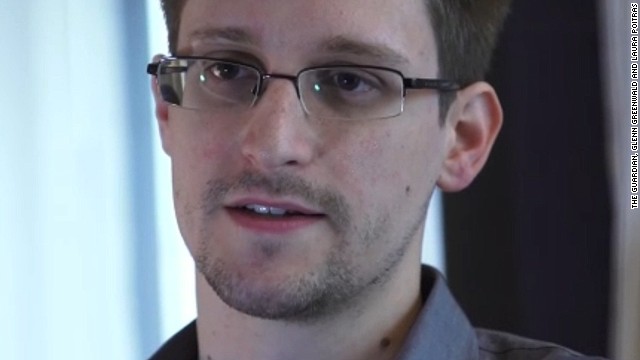
Edward Snowden, a 29-year-old contract computer employee, first went public Sunday in an interview with the British newspaper The Guardian and said he had provided information out of concern about what he viewed as excessive intrusions by the NSA's programs.
Snowden, an employee of Booz Allen Hamilton, a contractor for the U.S. electronic intelligence agency, had been working at an NSA facility in Hawaii and had also worked for the CIA in the past. Snowden was last heard from during interviews he conducted from a hotel room in Hong Kong, but his whereabouts are unclear at the moment.
Former intelligence worker Edward Snowden revealed himself as the source of documents outlining a massive effort by the NSA to track cell phone calls and monitor the e-mail and Internet traffic of virtually all Americans. Snowden, 29, fled to Hong Kong after copying the last set of documents. He says he just wanted the public to know what the government was doing. "Even if you're not doing anything wrong you're being watched and recorded," he said. The Justice Department has begun a preliminary investigation into what it called "the unauthorized disclosure of classified information by an individual with authorized access."
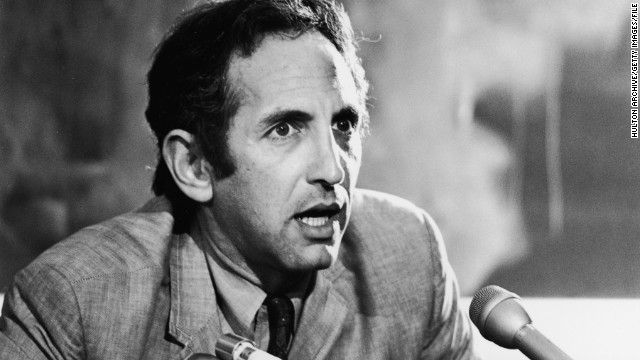
Military analyst Daniel Ellsberg leaked the 7,000-page Pentagon Papers in 1971. The top-secret documents revealed that senior American leaders, including three presidents, knew the Vietnam War was an unwinnable, tragic quagmire. Further, they showed that the government had lied to Congress and the public about the progress of the war. Ellsberg surrendered to authorities and was charged as a spy. The court eventually learned that he was illegally wiretapped by the government and that President Nixon had ordered a break-in at the office of Ellsberg's psychiatrist in attempts to discredit him. All charges against the whistle-blower were dropped. Since then he has lived a relatively quiet life as a respected author and lecturer.

Starting in 1932, the U.S. Public Health Service studied untreated syphilis in black men who thought they were getting free health care. The patients weren't told of their affliction or sufficiently treated. Peter Buxtun, who worked for the Public Health Service, relayed information about the Tuskegee syphilis experiment to a reporter in 1972, which halted the 40-year-long study. His testimony at congressional hearings led to an overhaul of the Health, Education and Welfare rules concerning work with human subjects. A class-action lawsuit was settled out-of-court for $10 million, with the U.S. government promising free medical care to surviving participants and their families. Here, Herman Shaw, one of the test subjects, appears with President Bill Clinton in 1997 during a ceremony apologizing to survivors.

In 2005, retired deputy FBI director Mark Felt revealed himself to be the whistle-blower "Deep Throat" in the Watergate scandal. He anonymously assisted Washington Post reporters Carl Bernstein and Bob Woodward with many of their stories about the Nixon administration's cover-up after the June 1972 break-in at the Democratic National Committee headquarters. The stories sparked a congressional investigation that eventually led to President Nixon's resignation in 1974. The Post won a Pulitzer Prize for its coverage. Felt was convicted on unrelated conspiracy charges in 1980 and eventually pardoned by President Ronald Reagan before slipping into obscurity for the next quarter-century. He died in 2008 at age 95.
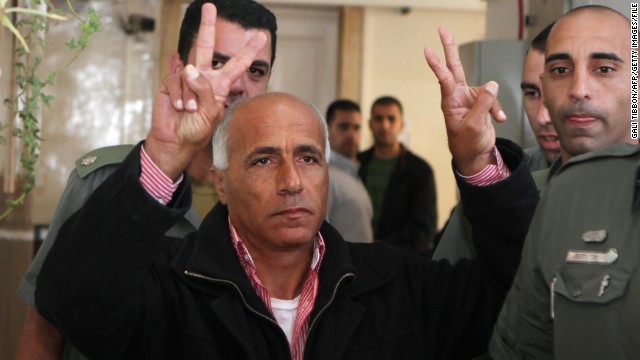
Mordechai Vanunu, who worked as a technician at Israel's nuclear research facility, leaked information to a British newspaper and led nuclear arms analysts to conclude that Israel possessed a stockpile of nuclear weapons. Israel has neither confirmed nor denied its weapons program. An Israeli court convicted Vanunu in 1986 after Israeli intelligence agents captured him in Italy. He was sentenced to 18 years in prison. Since his release in 2004, he has been arrested on a number of occasions for violating terms of his parole.
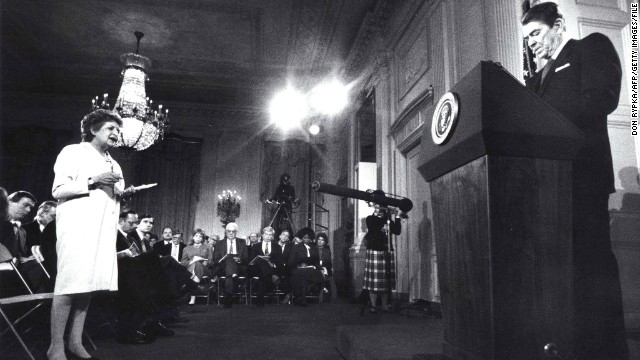
Mehdi Hashemi, an officer of Iran's Islamic Revolutionary Guards Corps, opposed Iranian relations with the United States and acted to undermine an arms for hostages deal, even though senior Iranian officials supported it and carried it out. A secret and rogue operation carried out by an American military officer used the proceeds from weapons sales to Iran to fund the anti-communist Contras in Nicaragua and attempted to secure the release of U.S. hostages held by Iran-backed Hezbollah in Lebanon. Hashemi leaked evidence of the deal to a Lebanese newspaper in 1986. President Ronald Reagan's closest aides maintain he did not fully know, and only reluctantly came to accept, the circumstances the Iran-Contra affair. Here, Reagan addresses the media at the White House in 1987.
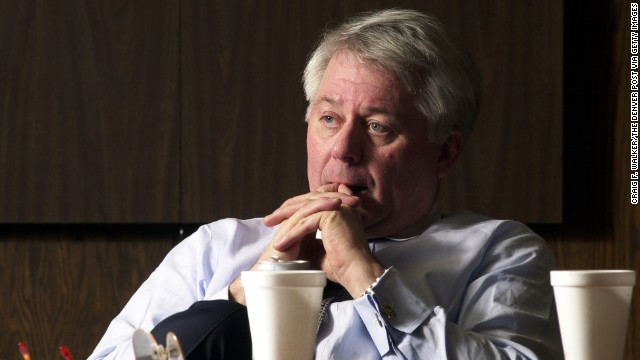
Tobacco industry executive Jeffrey Wigand issued a memo to his company in 1992 about his concerns regarding tobacco additives. He was fired in March 1993 and subsequently contacted by "60 Minutes" and persuaded to tell his story on CBS. He claimed that Brown & Williamson knowingly used additives that were carcinogenic and addictive and spent millions covering it up. He also testified in a landmark case in Mississippi that resulted in a $246 billion settlement from the tobacco industry. Wigand has received public recognition for his actions and continues to crusade against Big Tobacco. He was portrayed by Russell Crowe in the 1999 film "The Insider."
For 10 years, Frederic Whitehurst complained mostly in vain about practices at the FBI's world-renowned crime lab, where he worked. His efforts eventually led to a 1997 investigation that found lab agents produced inaccurate and scientifically flawed testimony in major cases, including the Oklahoma City and World Trade Center bombings. The Justice Department recommended major reforms but also criticized Whitehurst for "overstated and incendiary" allegations. He also faced disciplinary action for refusing to cooperate with an investigation into how some of his allegations were leaked to a magazine. After a yearlong paid suspension he left the bureau in 1998 with a settlement worth more than $1.16 million.
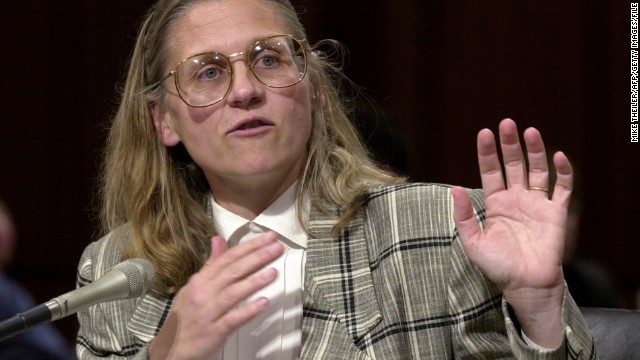
FBI whistle-blower Coleen Rowley accused the bureau of hindering efforts to investigate a suspected terrorist that could have disrupted plans for the September 11, 2001, terror attacks. In 2002 she fired off a 13-page letter to FBI Director Robert Mueller and flew to Washington to hand-deliver copies to two members of the Senate Intelligence Committee and meet with committee staffers. The letter accused the bureau of deliberately undermining requests to look into Zacarias Moussaoui, the only person convicted in the United States of playing a role in the attacks. She testified in front of Congress and the 9/11 Commission about the FBI's mishandling of information. Rowley was selected as one of Time magazine's People of the Year in 2002, along with whistle-blowers Sherron Watkins of Enron and Cynthia Cooper of WorldCom.
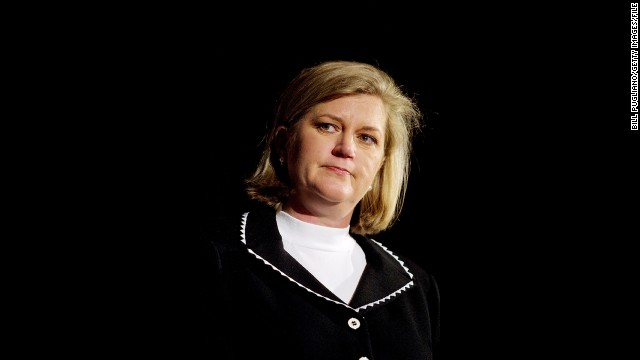
Sherron Watkins, a former vice president at Enron, sent an anonymous letter to founder Kenneth Lay in 2001 warning him the company had accounting irregularities. The memo eventually reached the public and she later testified before Congress about her concerns and the company's wrongdoings. More than 4,000 Enron employees lost their jobs, and many also lost their life savings, when the energy giant declared bankruptcy in 2001. Investors lost billions of dollars. An investigation in 2002 found that Enron executives reaped millions of dollars from off-the-books partnerships and violated basic rules of accounting and ethics. Many were sentenced to prison for their roles in the Enron scandal.

WorldCom President and CEO Bernard Ebbers, right, answers questions from the media during a press conference in 1999. Cynthia Cooper and her team of auditors uncovered massive fraud at WorldCom in 2002. They found that the long-distance telephone provider had used $3.8 billion in questionable accounting entries to inflate earnings over the past five quarters. By the end of 2003, the total fraud was estimated to be $11 billion. The company filed for bankruptcy protection and five executives ended up in prison. Cooper started her own consulting firm and told her story in the book "Extraordinary Circumstances: Journey of a Corporate Whistleblower."

In 2003, federal air marshal Robert MacLean anonymously tipped off an MSNBC reporter that because of budget concerns, the TSA was temporarily suspending missions that would require marshals to stay in hotels just days after they were briefed about a new "potential plot" to hijack U.S. airliners. The news caused an immediate uproar on Capitol Hill and the TSA retreated, withdrawing the scheduling cuts before they went into effect. MacLean was later investigated and fired for the unauthorized disclosure of "sensitive security information."
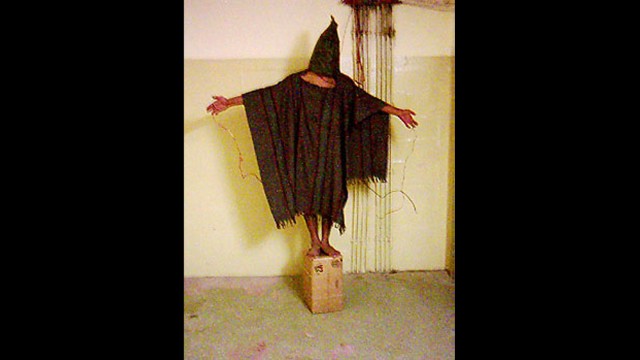
Joe Darby is the whistle-blower behind the Abu Ghraib prison abuse scandal in Iraq. He says he asked Army Reserve Spc. Charles Graner Jr. for photos from their travels so he could share them with family. Instead, he was given photos of prisoner abuse. Darby eventually alerted the U.S. military command, triggering an investigation and global outrage when the scandal came to light in 2004. Graner was sentenced to 10 years in prison for his part in the abuse. He was released in 2011 after serving 6½ years of his sentence. The military and members of Darby's own family ostracized him, calling him a traitor. Eventually he and his wife had to enter protective custody.

The New York Times reported in 2005 that in the months after the September 11, 2001, attacks, President George W. Bush authorized the U.S. National Security Agency to eavesdrop without a court warrant on people in the United States, including American citizens, suspected of communicating with al Qaeda members overseas. The Bush administration staunchly defended the controversial surveillance program. Russ Tice, an NSA insider, came forward as one of the anonymous sources used by the Times. He said he was concerned about alleged abuses and a lack of oversight. Here, President Bush participates in a conversation about the Patriot Act in Buffalo, New York, in April 2004.

Army Pfc. Bradley Manning is accused in the largest leak of classified documents in U.S. history. His court-martial began on June 3. He has pleaded guilty to 10 of 22 charges against him and could face up to two decades in jail. He has pleaded not guilty to the most serious charge - that of aiding U.S. enemies, which carries the potential for a life sentence. At a February proceeding, Manning read a statement detailing why and how he sent classified material in 2010 to WikiLeaks, a group that facilitates the anonymous leaking of secret information through its website.
Notable leakers and whistle-blowers
Notable leakers and whistle-blowers
Notable leakers and whistle-blowers
Notable leakers and whistle-blowers
Notable leakers and whistle-blowers
Notable leakers and whistle-blowers
Notable leakers and whistle-blowers
Notable leakers and whistle-blowers
Notable leakers and whistle-blowers
Notable leakers and whistle-blowers
Notable leakers and whistle-blowers
Notable leakers and whistle-blowers
Notable leakers and whistle-blowers
Notable leakers and whistle-blowers
Notable leakers and whistle-blowers
1
2
3
4
5
6
7
8
9
10
11
12
13
14
15
Notable leakers and whistle-blowers
Snowden's path to top secret clearance
Is NSA leaker a hero or traitor?
NSA leak journalist says more revelations on their way
A federal law enforcement official said the FBI's investigation of the NSA leaks would include searching computers used by Snowden and his home as well as moving to interview his girlfriend, relatives, friends and co-workers. It was not clear how long the investigation would take and what charges might be considered.
Former FBI official Don Borelli told CNN he thinks prosecutors will move quickly to bring charges against Snowden and request his extradition to the United States before he can try to move to another country, possibly to seek political asylum.
Borelli also said the United States wouldn't want to see Chinese officials have a chance to find out all that Snowden may know. "This guy could be a gold mine for the Chinese," Borelli said. "I mean obviously they've got an NSA, a CIA, a contractor with the ability to get his hands on lots and lots of classified information . ... Who knows what other programs he was read in to?"
Borelli said the quickest option is to charge Snowden with disclosure of classified information to someone unauthorized to receive it, an Espionage Act offense that carries up to 10 years in prison.
He said officials will probably steer clear, at least for now, of mentioning possible treason charges that could carry the death penalty. "Some countries will not extradite people if they potentially face the death penalty," said Borelli, now an executive with the Soufan Group, a security consulting firm.
Assange's kind words to NSA leaker
Tom Fuentes, a former FBI assistant director and CNN contributor, said one option might be to file charges against Snowden and then try to get Hong Kong authorities to deport him to the United States.
"The State Department can immediately revoke his U.S. passport and then send a certified copy of revocation to the authorities in Hong Kong, basically notifying them this individual is no longer traveling on a valid U.S. passport and is essentially illegally in your territory," Fuentes said.
A key question is whether U.S. officials know Snowden's whereabouts.
"I would be very certain that they know where he is," Borelli said.
The FBI has a legal attache's office in Hong Kong, and Borelli said agents would use their connections with Hong Kong law enforcement contacts to keep tabs on Snowden.
But he said the FBI is limited in what it can do on foreign soil and could not perform surveillance or other law enforcement operations without the permission of local authorities. Borelli also said he thinks it's unlikely Snowden would participate in a voluntary interview with the FBI.
Borelli said the FBI must find evidence to corroborate the story Snowden gave in his interviews and he thinks it's likely the FBI can find a digital trail from the man's computer use.