
- NEW: Report will say those culpable had access to 350 liters of sarin gas, source says
- Russian foreign minister says Kerry misunderstands the agreement
- The U.N. report will say whether chemical weapons were used, but not who is to blame
- The U.S. and Russia agree on a plan to rid Syria of its chemical weapons
(CNN) -- A U.N. report due Monday will say the perpetrators of last month's chemical weapons attack in Syria had up to 350 liters of sarin gas, a diplomatic source told CNN on Monday.
It will say surface-to-surface missiles were used and will give the trajectory of the missiles, the source said.
Some of the hardware used in the attack had Cyrillic lettering, the source said, citing the report.
While the U.N. investigation is not assigning blame for the attack, the source said the details in the report will serve as "signs of culpability."
Another diplomatic source also said the report will state that sarin gas was used.


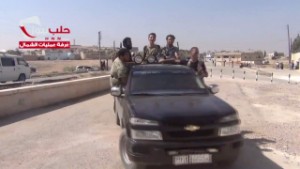
That there was such an attack on August 21 is widely accepted as fact.
The United States, Britain, France, and NATO have said that the Syrian regime was behind the attack and that there's no sign rebels had access to such weapons.
Syria and its ally Russia have blamed rebels. But the U.N. finding that whoever was culpable had access to such large amounts of sarin could bolster the U.S. argument.
Even as the world awaited the report Monday, Russia openly bickered with the United States about an agreement reached over the weekend aimed at averting U.S. military action against the Syrian regime.
Syria: There's a chemical weapons agreement. Now what?
Russia slams U.S. remarks on agreement
The next step in implementing the agreement is to get a U.N. resolution.
But on that front, Russian Foreign Minister Sergey Lavrov accused U.S. Secretary of State John Kerry "and his Western allies" Monday of misunderstanding the deal, according to Russia's state-run Itar-Tass news agency.
The deal does not say that a U.N. resolution will be under Chapter 7 of the U.N. Charter, Lavrov said.
Chapter 7 potentially authorizes the use of force.
Lavrov said comments by Kerry "show unwillingness to read the document" that Russia and the United States agreed to.
Kerry said Monday that a U.N. resolution will need to include the possibility of force. "If the Assad regime believes that this is not enforceable, then they will play games," he said.
The agreement states that if there is noncompliance "or any use of chemical weapons by anyone in Syria, the U.N. Security Council should impose measures under Chapter VII of the U.N. Charter."
It does not specifically state that the resolution being sought now will be under that chapter.

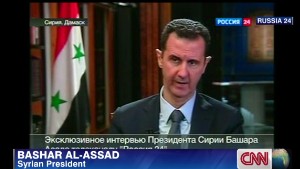

Russia, a Syrian ally, holds veto power on the council.
"A week ago, the Syrian regime did not admit that it even had chemical weapons," Kerry told reporters Monday. "Today, that regime has agreed, at least through the Russians ... to rid itself of those weapons."
But he also noted that "nothing can be accepted at face value."
According to the plan, Syria must submit a full list of its chemical weapons stockpile within a week. International inspectors must be on the ground in the country by November, and all production equipment must be destroyed by the end of November.
By the middle of next year, all chemical weapons material must be destroyed, according to the agreement.
Framework for eliminating Syrian chemical weapons
Syrian minister claims 'victory'
Syria's national reconciliation minister, Ali Haidar, called the framework a "victory" and thanked Russia for orchestrating a chemical weapons deal to avert U.S. military action, Russia's state-run RIA Novosti news agency reported.
Haidar called the deal an achievement of Russian diplomacy and "a victory for Syria won thanks to our Russian friends."
Western allies step up pressure
Top diplomats from the United States, France and Britain met in Paris on Monday and warned that Syria must take its commitment seriously.
"Should diplomacy fail, the military option is still on the table," Kerry told reporters.
British Foreign Secretary William Hague said there's no doubt the Syrian regime has used chemical weapons repeatedly against its people. And French Foreign Minister Laurent Fabius also said France is strengthening its support for the Syrian National Coalition, an opposition umbrella group.
The three Western allies are pushing for a binding timetable for Syria to dispose of its chemical weapons.
A daunting task
The process of securing and destroying Syria's cache of chemical weapons -- in the middle of a civil war -- will be a logistical nightmare.
U.S. intelligence suggests that Syria has about 1,000 metric tons of chemical weapons, most of it sarin and VX stored as unmixed components, Kerry said last week. Sarin and VX are nerve gases that can cause convulsions, paralysis, respiratory failure and death.
To complicate matters, both U.S. officials and Syrian rebels suspect the regime has been moving some if its chemical weapons.
So the Syrian regime is basically on the honor system.
Then there's the matter of where the weapons will be taken, and how.
The U.S. and Russia say they're working on the details. They say they'll submit something in the next few days.
The destruction process will be carried out by personnel from both the United Nations and the Organisation for the Prohibition of Chemical Weapons, which implements the international ban on chemical weapons use, according to the Kerry-Lavrov plan.
Syria's government has denied using chemical weapons, saying instead that rebels used poison gas on its forces.
But in a report issued last week, Human Rights Watch said that President Bashar al-Assad's forces "were almost certainly responsible," citing photos and videos from the attack scene that pointed to weapons not known to be in rebel hands.
Opposition group wants more
Even if Syria's chemical weapons disappear, that won't stop the daily bloodshed on the ground, opposition activists say.
"The Syrian National Coalition insists that the ban of use of chemical weapons, which led to the loss of lives of more than 1,400 Syrian civilians, must be extended to ban the use of the regime air power and ballistic weapons against population centers," the opposition group said in a statement.
Fabius and Kerry addressed concerns about future attacks by al-Assad's forces.
"We understand that removing the chemical weapons still leaves him with artillery and airplanes, and he uses them indiscriminately against his people," Kerry said. "And we are going to do everything in our power to continue to push towards the political resolution that is so critical to ending that violence."
Incessant bloodshed
Amid the international talks, the bloodshed in Syria hasn't stopped for a day. At least 91 people were killed across the country Sunday, including six children, the opposition group Local Coordination Committees of Syria said. CNN cannot independently verify daily death tolls, but the United Nations says more than 100,000 people have been killed in Syria since 2011.
U.N. inspectors turn in report on Syria's chemical weapons
CNN's Joe Vaccarello, Nick Paton Walsh, Saad Abedine and Hamdi Alkhshali contributed to this report.
