- "We all live on one planet," says Aquino, calling for the world to act on climate change
- The typhoon overwhelmed two or three local governments, slowing the initial response
- In Tacloban, only 20 of 290 police were available to respond when disaster struck
- The previous estimate came from officials who were perhaps "too close" to events
(CNN) -- A well-publicized estimate that Typhoon Haiyan killed 10,000 people in the Philippines is "too much," and the death toll likely is closer to 2,000 or 2,500, President Benigno Aquino III told CNN's Christiane Amanpour on Tuesday.
Read: Typhoon Haiyan leaves 1,774 dead, aid efforts mobilize
"We're hoping to be able to contact something like 29 municipalities left wherein we still have to establish their numbers, especially for the missing, but so far 2,000, about 2,500, is the number we are working on as far as deaths are concerned," he said.
The monster storm left behind a catastrophic scene after it made landfall on six Philippine islands last Friday, leaving many without access to food and medical care. At least 800,000 people have been displaced, the United Nations said Tuesday.
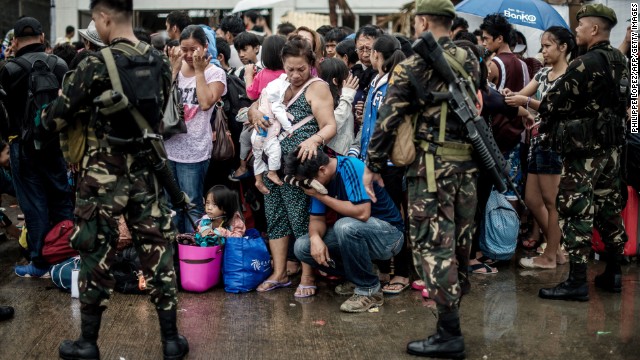
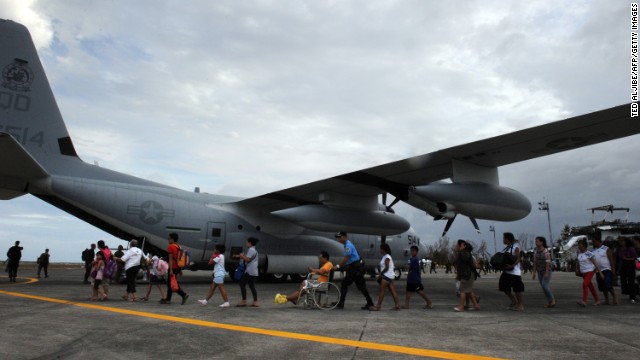
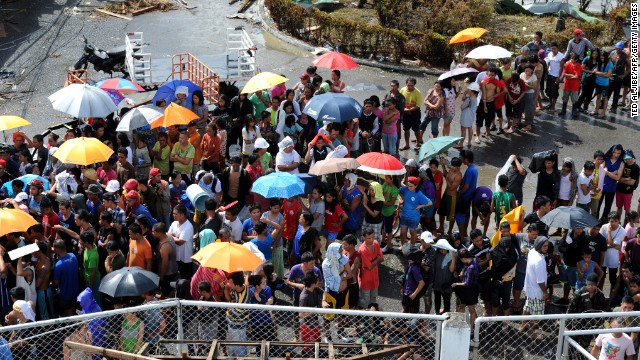
Evacuees wait to board a military aircraft in Leyte, Philippines, on Tuesday, November 12. Typhoon Haiyan, one of the strongest storms in recorded history, laid waste to the Philippines. President Benigno Aquino III said as many as 2,500 people may have been killed by the storm.
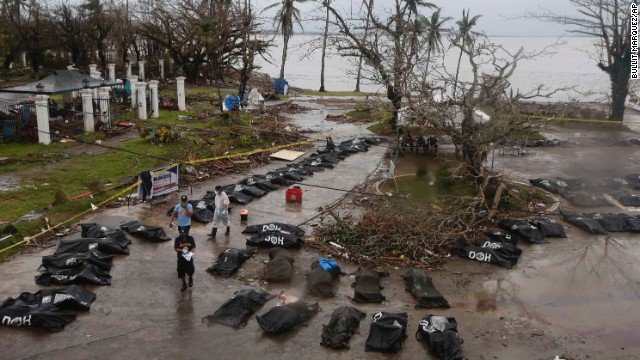
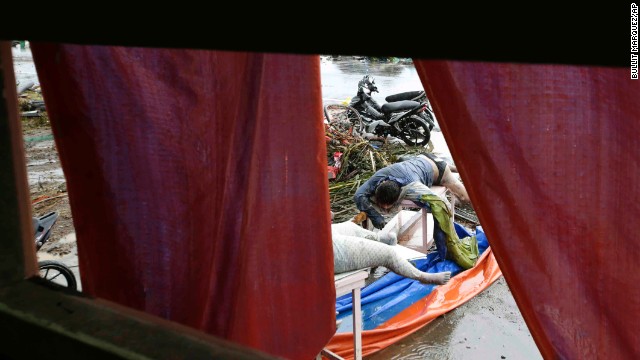
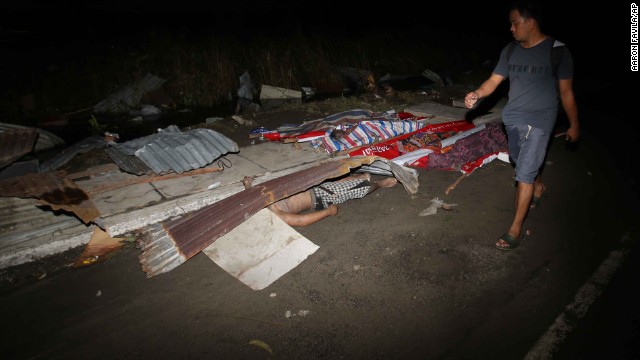
Police line up bodies for processing in Tacloban, Philippines, on November 12.
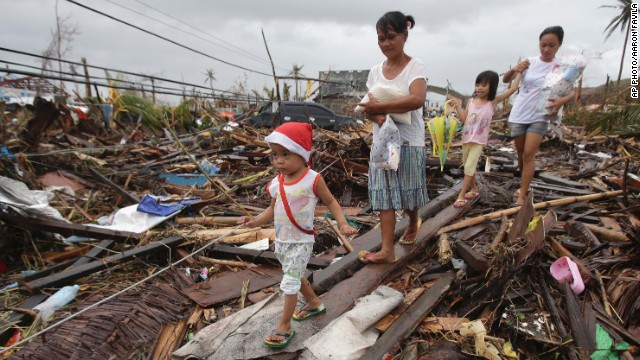
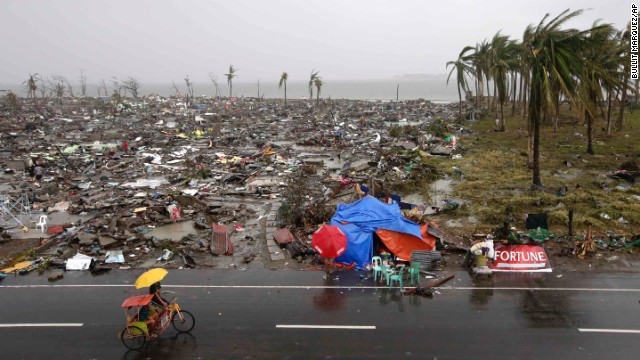
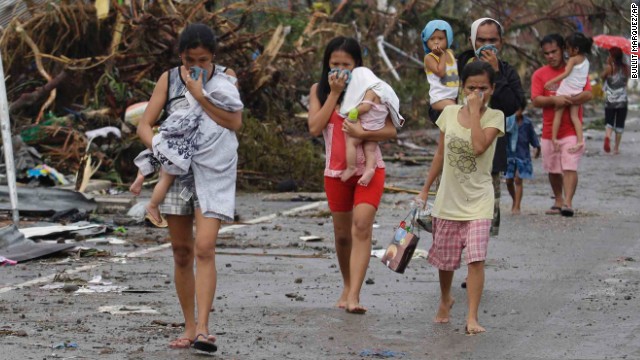
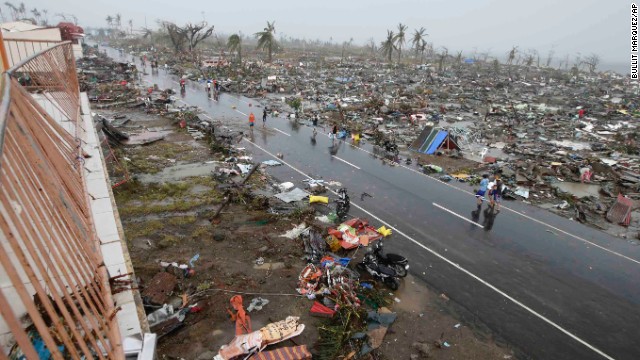
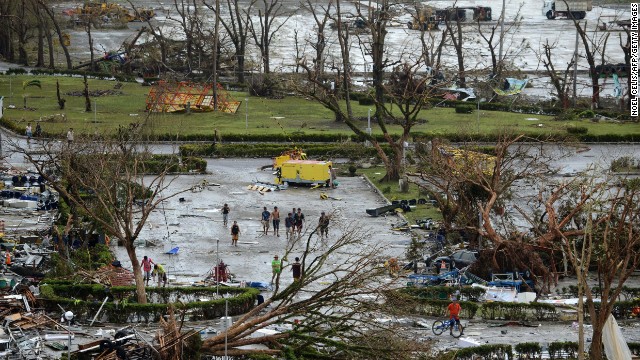
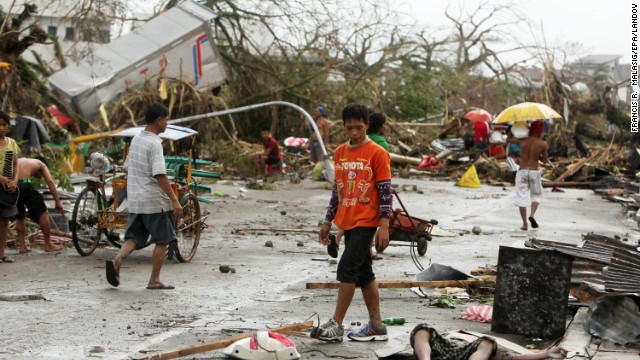
People walk through damage in Tacloban on November 12.
A young man waits at the airport November 12 in hopes of being evacuated from Tacloban.
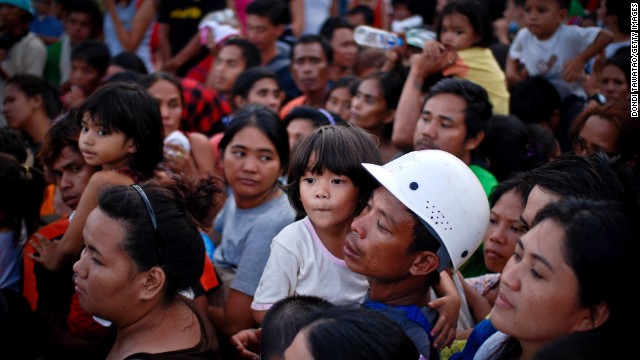
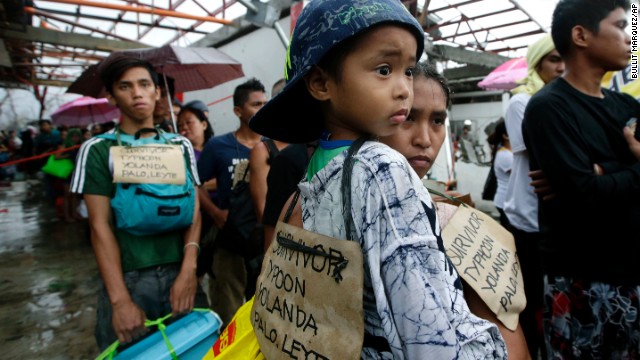
Survivors wait to board a military plane November 12 in Tacloban.
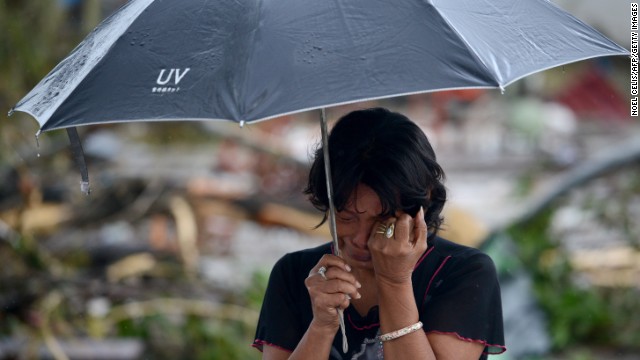
A woman comforts a crying relative as a plane leaves the Tacloban airport November 12.
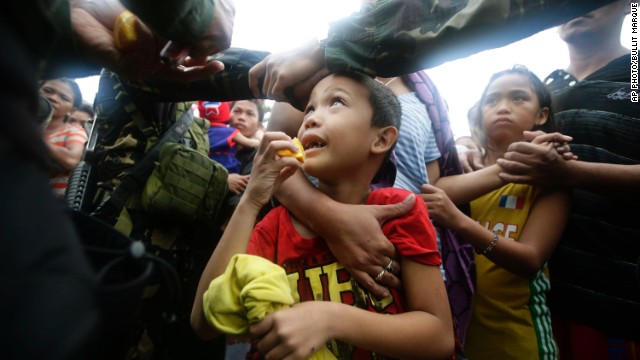
A Philippines air force officer hands out orange slices to typhoon survivors as they line up to board a military plane November 12 in Tacloban.
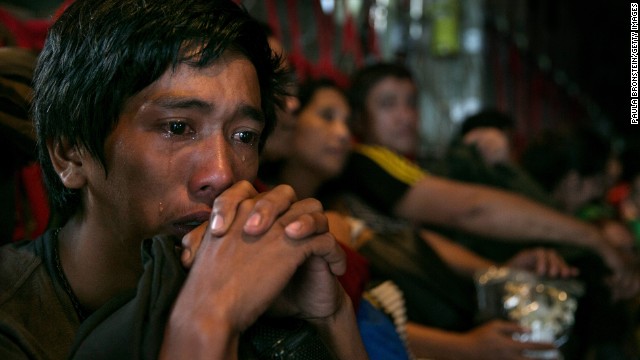
A man sits crying on a packed aircraft in Tacloban on November 12.
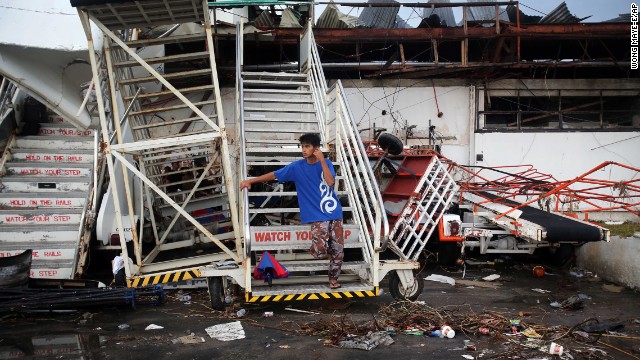
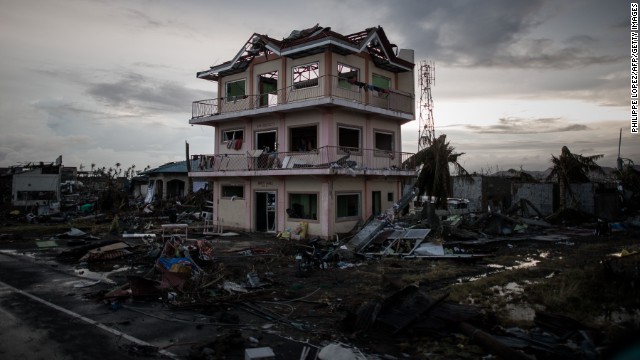
Debris lays scattered around a damaged home near the Tacloban airport on November 12.
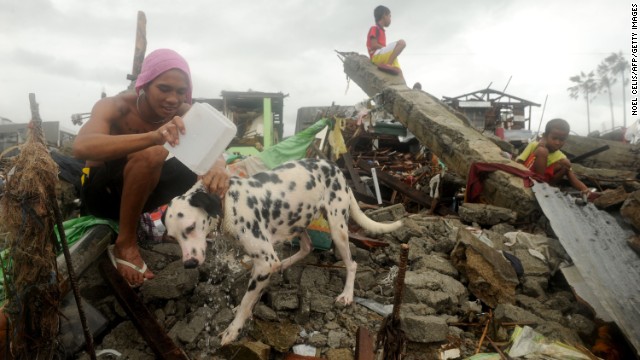
A young man washes his dog November 12 in Tacloban.
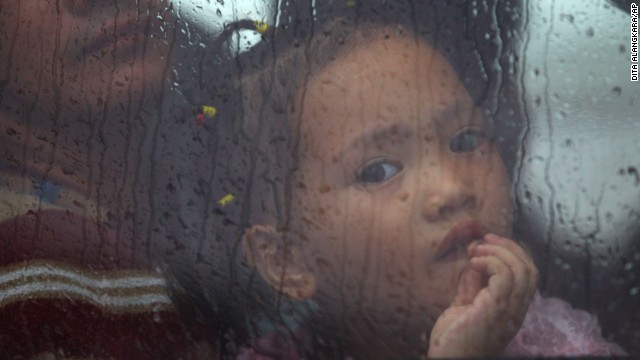
A girl sits inside a bus as she waits for a ferry in Matnog, Philippines, on November 12.
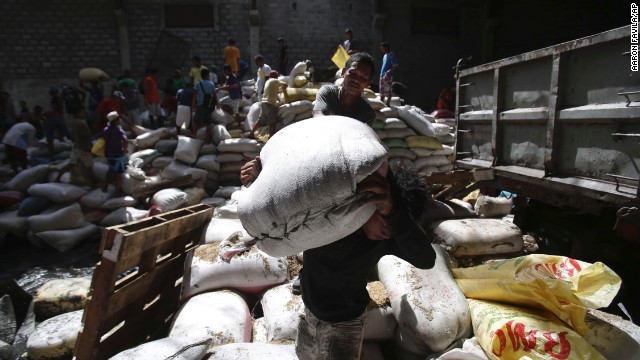
Residents carry bags of rice from a Tacloban warehouse that they stormed November 11 because of a food shortage.
Survivors in Tacloban board a military plane bound for the Philippine capital of Manila on November 11.
People in Tacloban pass debris on November 11.
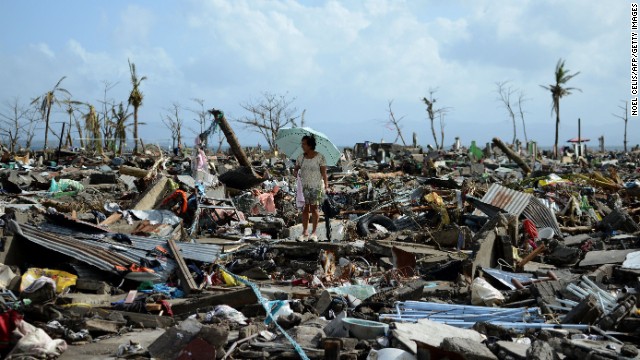
A woman in Tacloban walks amid the debris of destroyed houses on November 11.
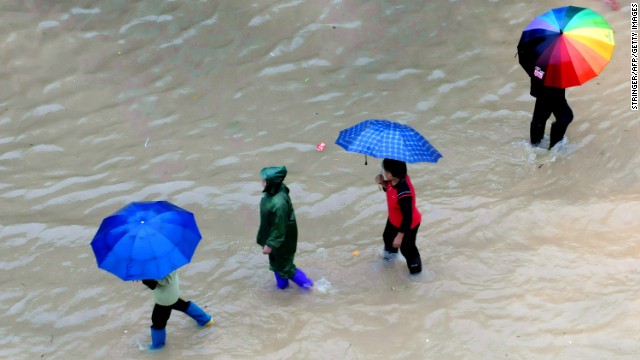
People make their way across a flooded street in Shangsi, China, on November 11. Haiyan moved toward Vietnam and south China after devastating the Philippines.
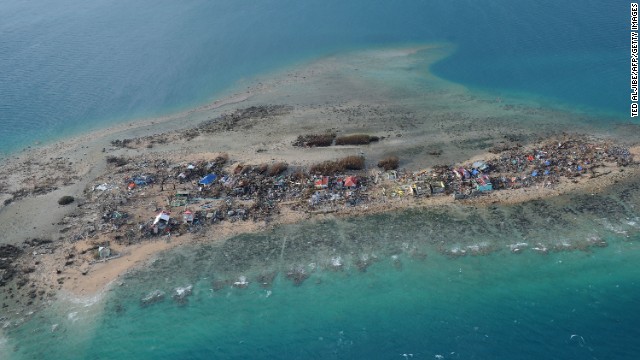
Buildings lie in ruins on Eastern Samar's Victory Island.
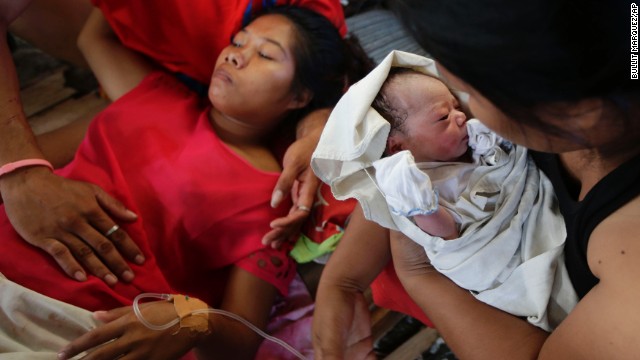
Emily Ortega rests on November 11 after giving birth to Bea Joy at an improvised clinic at the Tacloban airport.
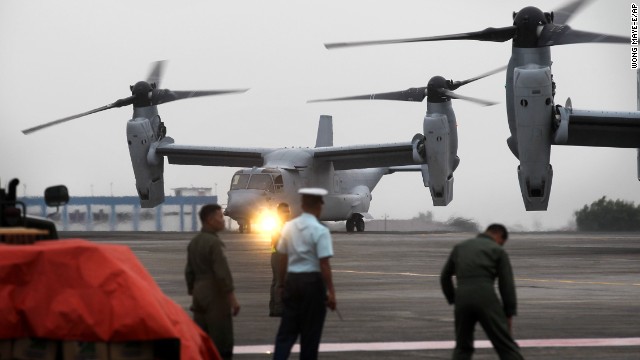
U.S. Marine Corps Osprey aircraft arrive at Manila's Villamor Airbase to deliver humanitarian aid on November 11.
People ride past destruction in Tacloban on Sunday, November 10.
A body lies amid the Tacloban devastation on November 10.
People cover their noses to block the smell of bodies in Tacloban on November 10.
Bodies of victims lie along a Tacloban road on November 10.
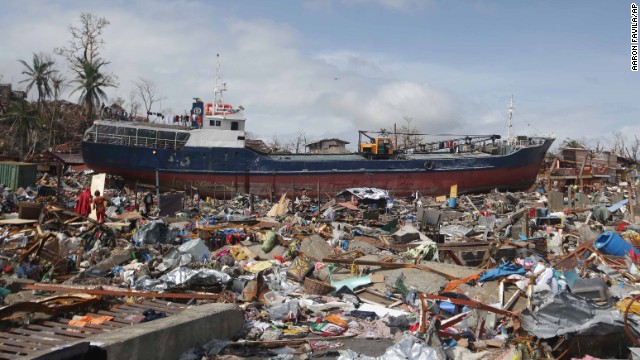
A large boat sits aground, surrounded by debris in Tacloban on November 10.
People walk past the Tacloban devastation on November 10.
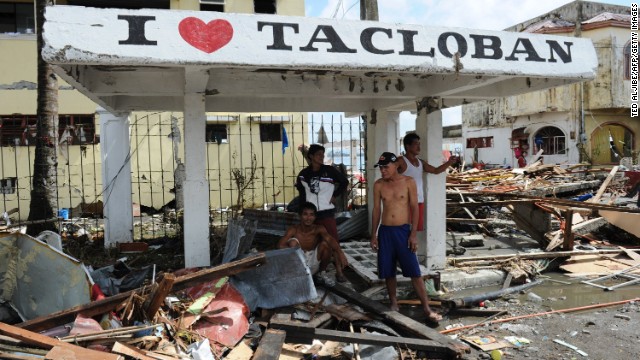
People stand under a shelter in Tacloban.
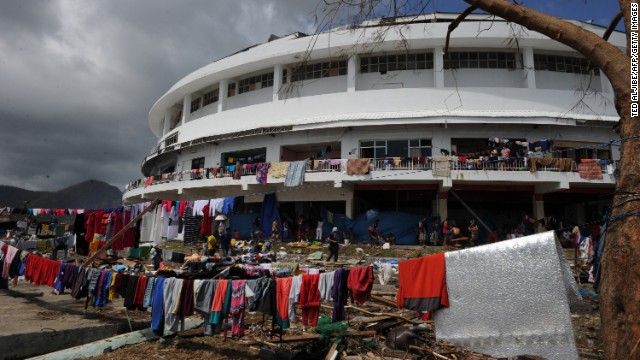
Clothes dry on a line November 10 outside a Tacloban stadium used as an evacuation center.
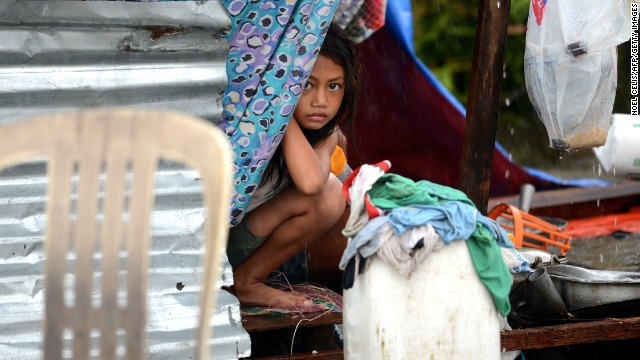
A girl peeks out from a makeshift shelter in Tacloban.
Typhoon survivors wait to receive relief goods at the Tacloban airport on November 10.
A woman mourns in front of her husband's dead body November 10 in Tacloban.
Fallen trees litter the ground at the Tacloban airport on Saturday, November 9.
A resident passes victims' bodies on a Tacloban street November 9.
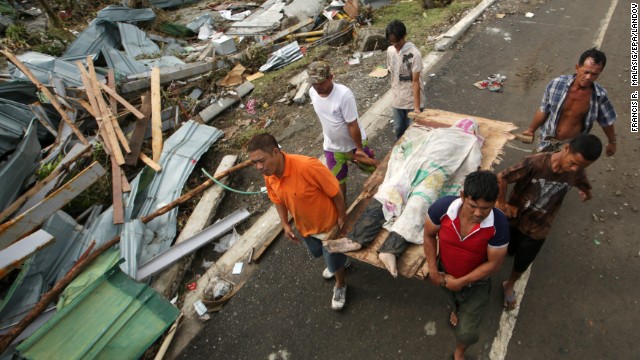
People in Tacloban carry a victim of the typhoon November 9.
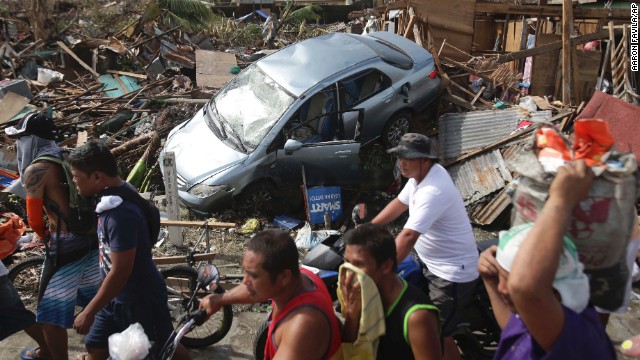
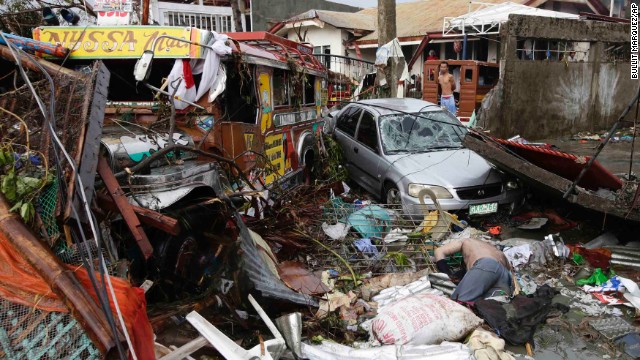
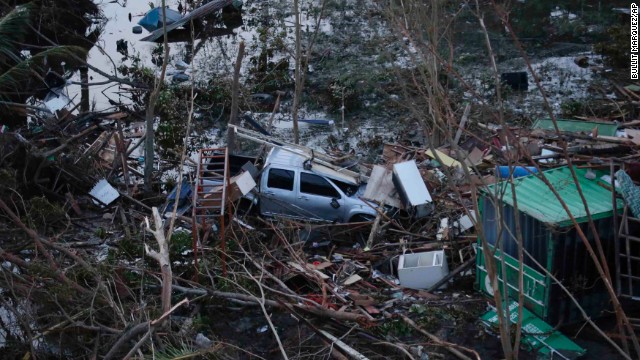
A vehicle lies amid Tacloban debris on November 9.
People walk past a victim left on the side of a road in Tacloban.
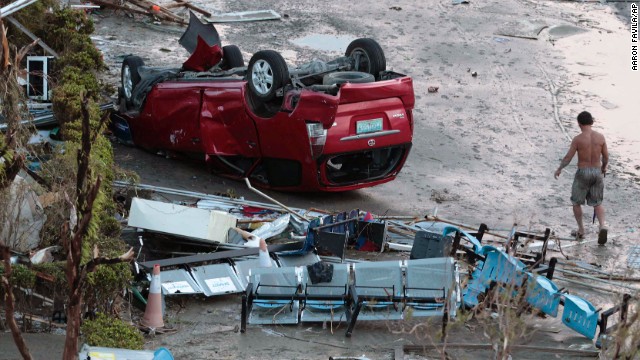
A resident passes an overturned car in Tacloban on November 9.
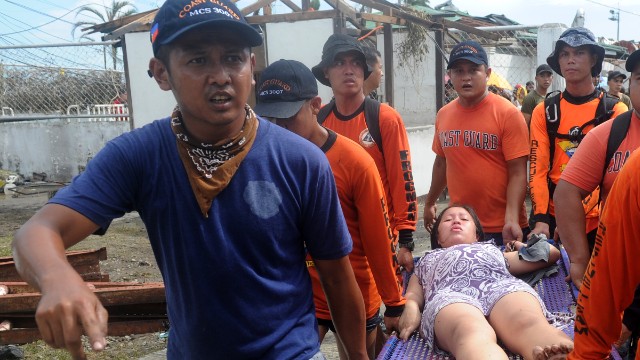
Rescue workers carry a woman about to give birth November 9 at a makeshift medical center at the Tacloban airport.
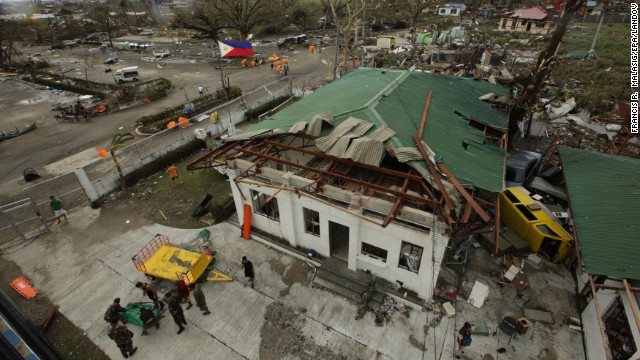
An airport lies in ruins in Tacloban.
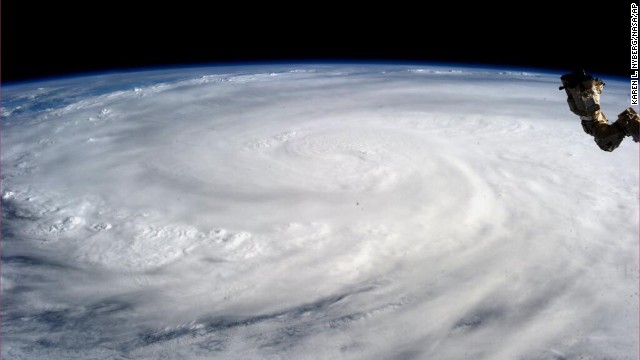
Astronaut Karen L. Nyberg took a picture of the typhoon from the International Space Station on November 9.
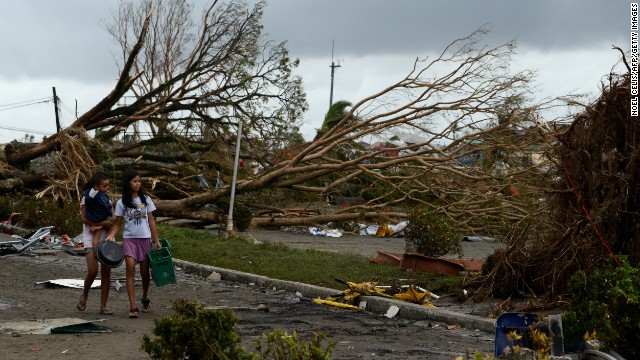
Women walk past fallen trees and destroyed houses in Tacloban on November 9. Residents scoured supermarkets for water and food as they slowly emerged on streets littered with debris.
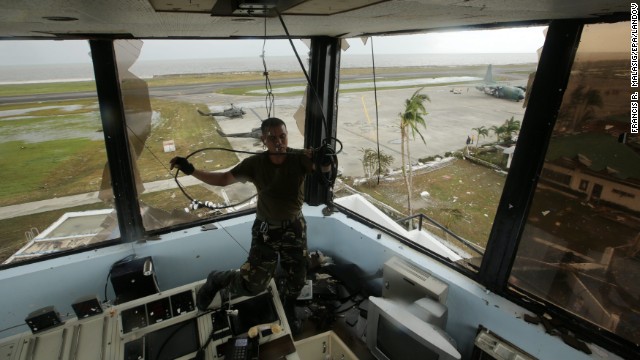
A soldier pulls a cable inside the devastated airport tower in Tacloban.
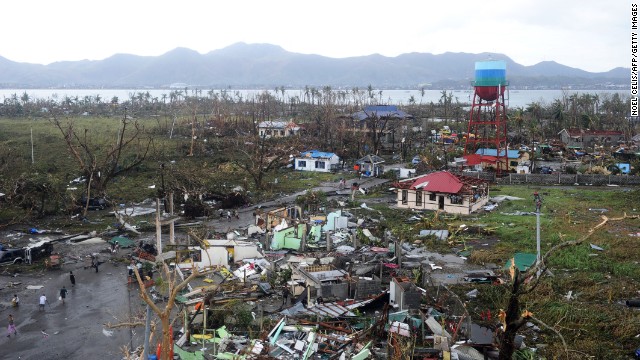
Tacloban houses are destroyed by the strong winds caused by the typhoon.
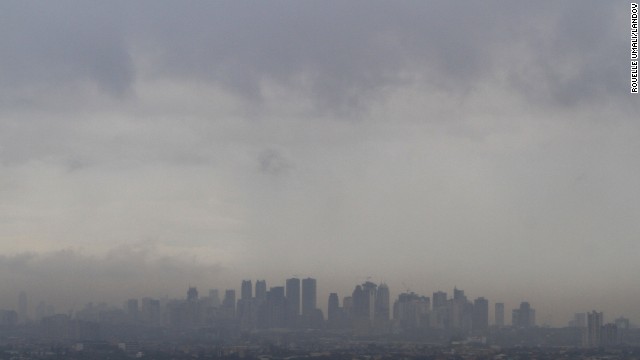
Dark clouds brought by Haiyan loom over Manila skyscrapers on November 8.
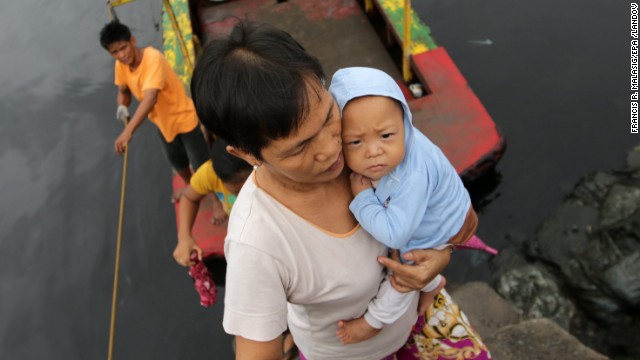
A woman carries a baby across a river November 8 at a coastal village in Las Pinas, Philippines.
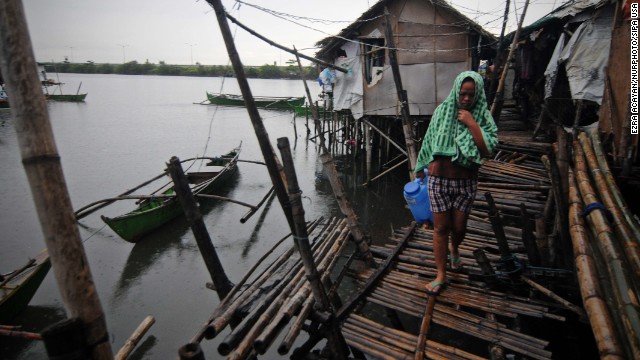
A resident walks along a fishing village in Bacoor, Philippines, on November 8.
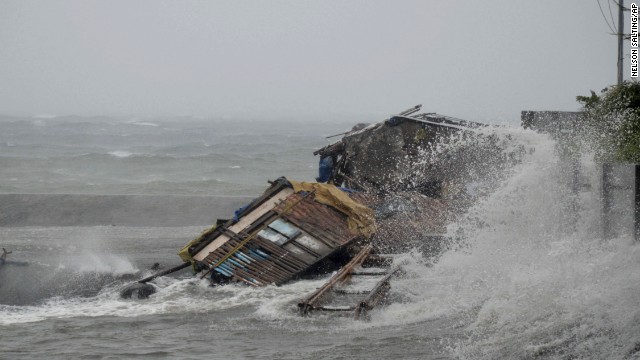
A house in Legazpi, Philippines, is engulfed by storm surge November 8.
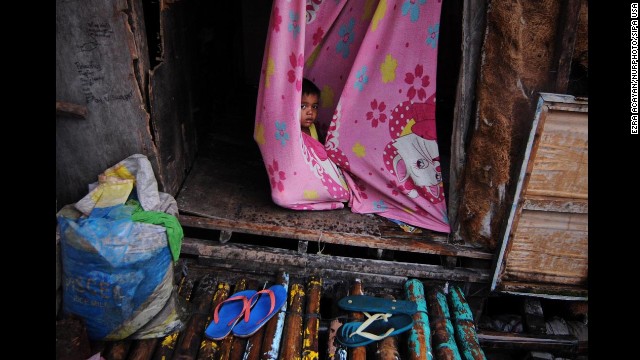
A child wraps himself in a blanket inside a makeshift house along a Bacoor fishing village.
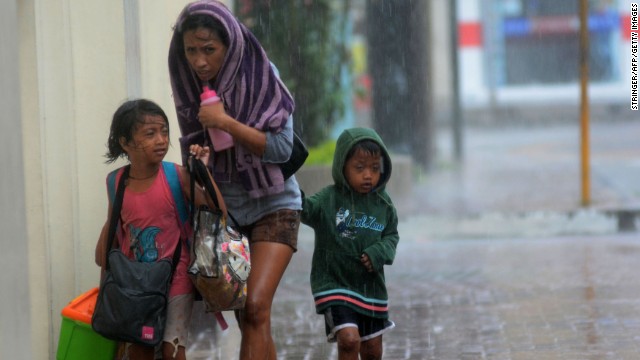
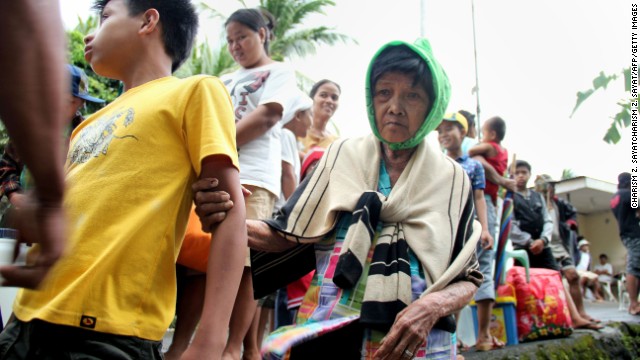
A woman and her children head for an evacuation center November 8 amid strong winds in Cebu City, Philippines.
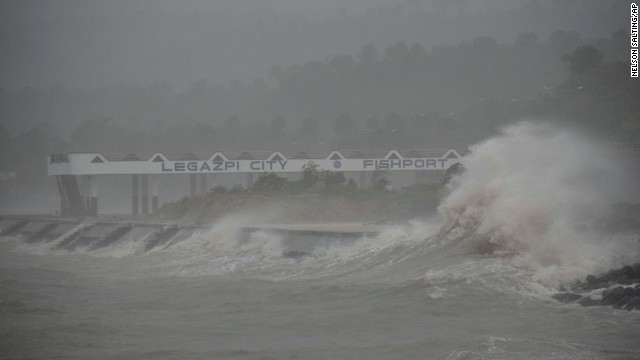
Huge waves from Haiyan hit the shoreline in Legazpi on November 8.
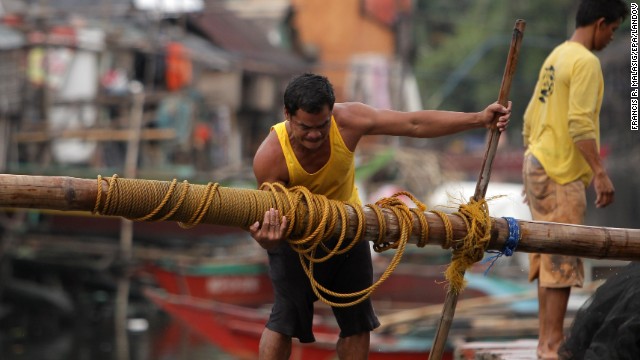
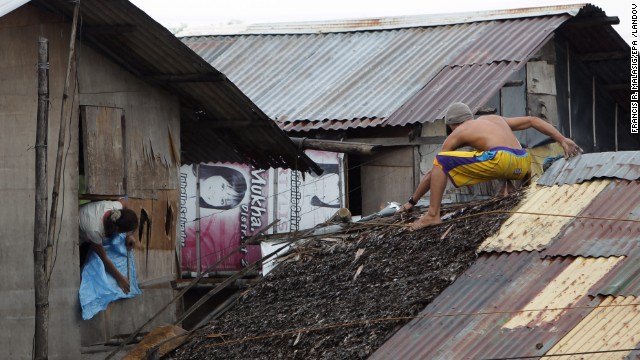
A fisherman lifts a post to reinforce his home at a coastal village in Las Pinas on November 8.
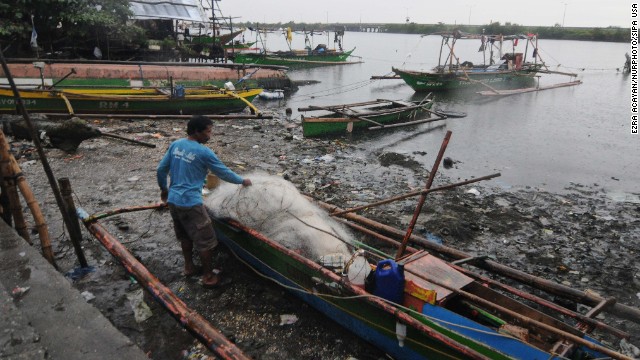
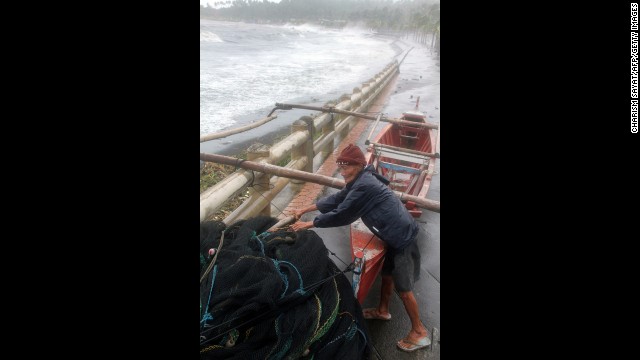
A resident unloads nets off a fishing boat in Bacoor on November 8.
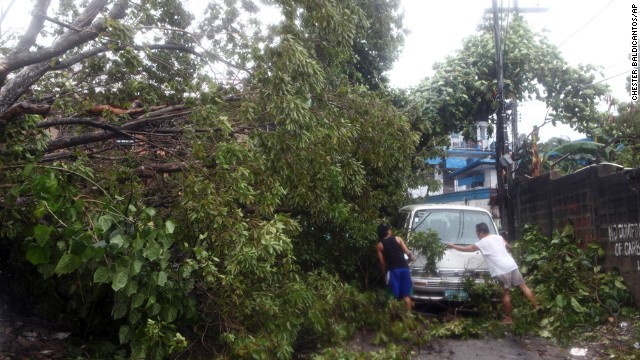
Residents clear a road November 8 after a tree was toppled by strong winds in the Philippine province of Cebu.
A fisherman secures his wooden boat November 8 as Haiyan's strong winds hit Legazpi.
Residents reinforce their homes in Las Pinas on November 8.
Legazpi residents are relocated to an evacuation center on Thursday, November 7. About 125,000 people took refuge in evacuation centers, and hundreds of flights were canceled.
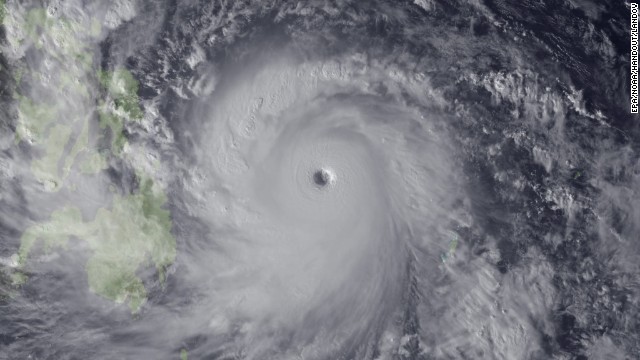
The storm approaches the Philippines in this satellite image taken November 7 by the National Oceanic and Atmospheric Administration.
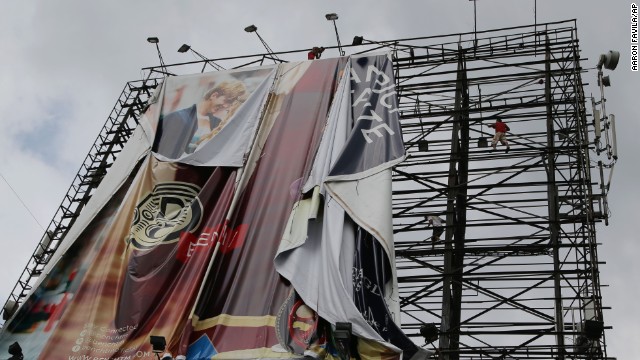
Workers bring down a billboard in Makati, Philippines, on November 7 before Haiyan makes landfall.
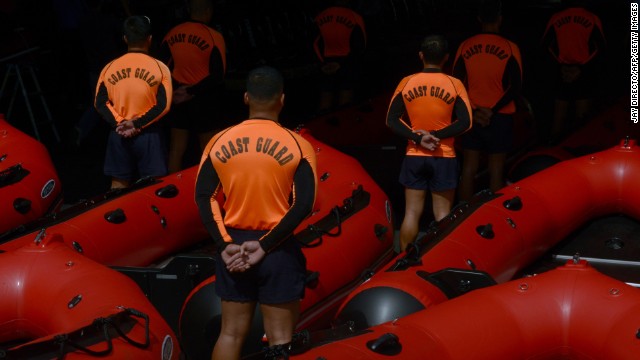
Philippine Coast Guard personnel stand in formation beside newly acquired rubber boats after a blessing ceremony in Manila on Wednesday, November 6. The boats were to be deployed to the central Philippines in preparation for Haiyan.
1
2
3
4
5
6
7
8
9
10
11
12
13
14
15
16
17
18
19
20
21
22
23
24
25
26
27
28
29
30
31
32
33
34
35
36
37
38
39
40
41
42
43
44
45
46
47
48
49
50
51
52
53
54
55
56
57
58
59
Photos: Typhoon Haiyan
Philippine family's survival story
By Tuesday, Philippines officials said 1,774 bodies had been counted and 2,487 people were injured.
The previous estimate of 10,000 killed, Aquino said, came from local officials who perhaps were "too close" to the center of destruction to make an accurate guess.
Read: Typhoon Haiyan crushed town 'like giant hand from the sky'
The typhoon simply overwhelmed the ability of two or three local governments to do their jobs, which include taking care of the initial response, the President said. For example, in Tacloban, only 20 of 290 police were available when disaster struck; many were tending to their own families, he said.
The national government "had to replace a lot of the personnel with personnel from other regions to take care of government's vital functions," Aquino said.
The typhoon wreaked havoc on power lines and communications facilities, which meant government officials faced immense difficulties in identifying needs and dispatching relief supplies and equipment. But the situation has improved, he said. All of the national roads are reopened and most of the airports are nearly back to normal operating levels, he said.
Still, he added, the sheer number of people affected is daunting.
Aquino said the toll might have been higher had it not been for preemptive evacuations, the prepositioning of supplies and cooperation from businesses. "But, of course, nobody imagined the magnitude that this super typhoon brought on us," he said.
Aquino expressed gratitude for the aid that has been pouring in from around the world. "There are, at last count, over 22 countries have either pledged to us, actually given us aid," he said.
Though civil order has broken down in some areas, some 2,000 personnel have been deployed to restore it, he said.
"People were -- became -- desperate, and that's why we are trying to fast-track the situation where national government takes over these local government functions so that order is restored."
Responding to a question about the vulnerability of his country to climate change, Aquino said he had no doubt that climate change is occurring and the world must respond to it. "There should be no debate that this is happening," he said, citing heavy rains during what used to be dry months, periods of drought during what used to be wet months and the havoc that that has inflicted on farmers.
"We all live on one planet," the President said. "Either we come up with a solution that everybody adheres to and cooperates with, or let us be prepared to meet disasters."
Efforts are under way to better prepare the archipelago nation to endure future such assaults, such as planting mangroves in tidal areas as a defense against tsunamis, and investing in meteorology to better predict -- and prepare for -- such events.
After the immediate needs of the populace are met, the nation's focus will turn to rebuilding the tens of thousands of homes affected -- this time to standards better able to withstand typhoons, Aquino said.