
Families of two brothers in Delhi try and comprehend the senseless violence in a Sikh temple in Wisconsin that killed them both. The families of Ranjeet Singh, who migrated to the US 16 years ago and Sita Singh, who had recently moved, recall regular phone calls from the US and the hope that they were all going to reunited.
For 16 years, Lokinder Kaur waited patiently for the day her husband would be reunited with her and their children. That dream died with him in a Sikh temple in Wisconsin.
Ranjit Singh, one of six killed in a shooting attack at the temple, never came home even once in all those years, working at a grocery store during the week and volunteering at the Sikh gurdwara on weekends. He promised his family he was doing what had to be done to get a green card so they could come join him.
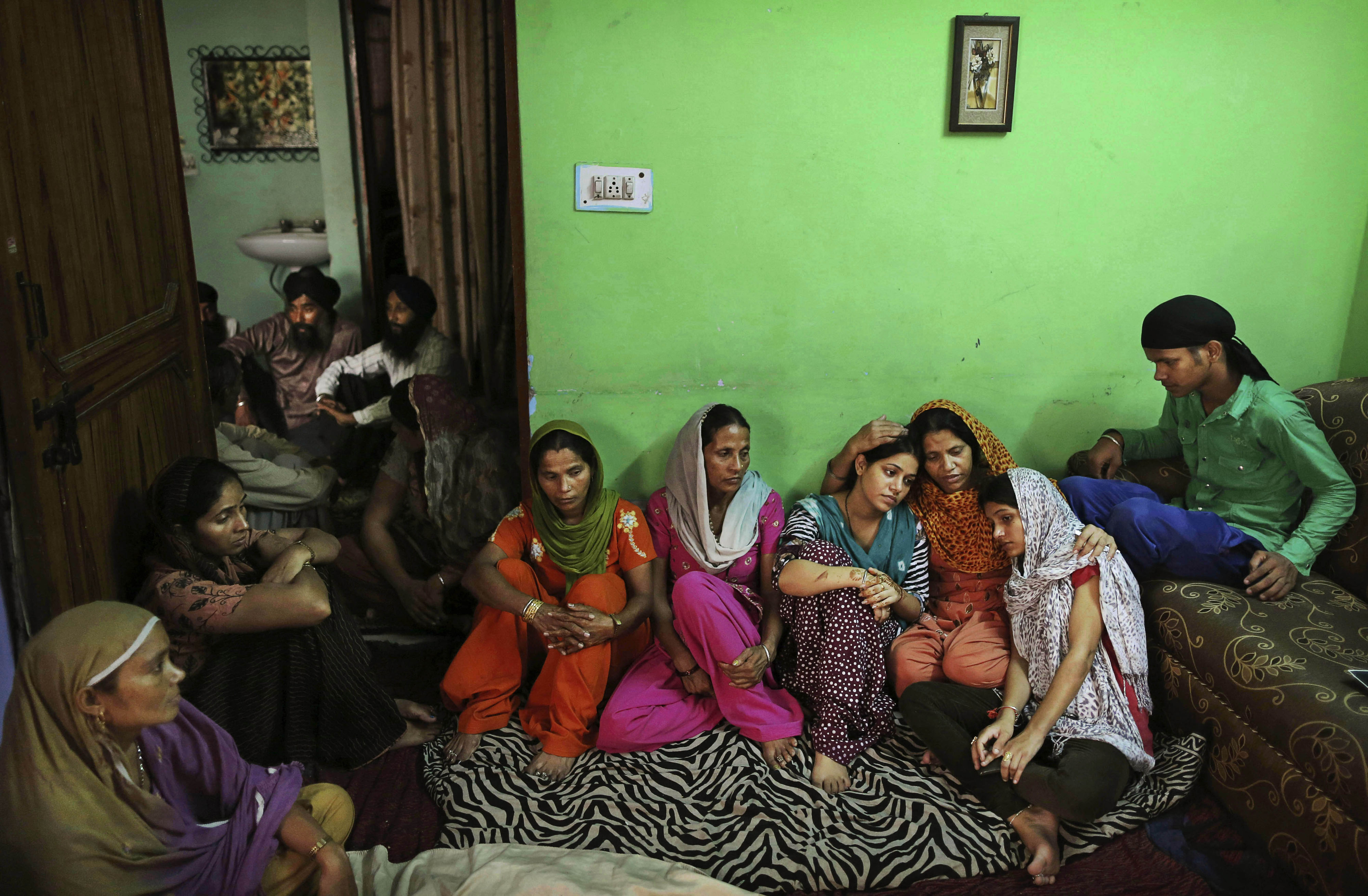
Lokinder Kaur, third from right, mourns with her daughters Jasbir Kaur, 24, fourth from right, and Jaspreet Kaur, 21, second right, as they gather with other relatives at the family home in New Delhi, India, Tuesday, Aug. 7, 2012.
He called every few days, even as the months dragged into years. Kaur said she spoke to Singh just the day before a gunman entered the temple in Oak Creek, Wisconsin, and shot worshippers as they prepared for services on Sunday.
Singh sang devotional songs at the temple and took care of worshipers, serving them meals. His brother, who died in the attack as well, often sang with him.
All Kaur was left with is a recent photograph of Singh, dressed sharply in a crisp shirt and tie and smiling confidently into the camera.
"My children keep asking me, 'What did papa look like?" she said, sobbing at her faded memory of her husband's face. "I have no answers."
When Singh first left for the United States his son was just 7 months old, his daughters 4 and 6. He had a visa for just six months.
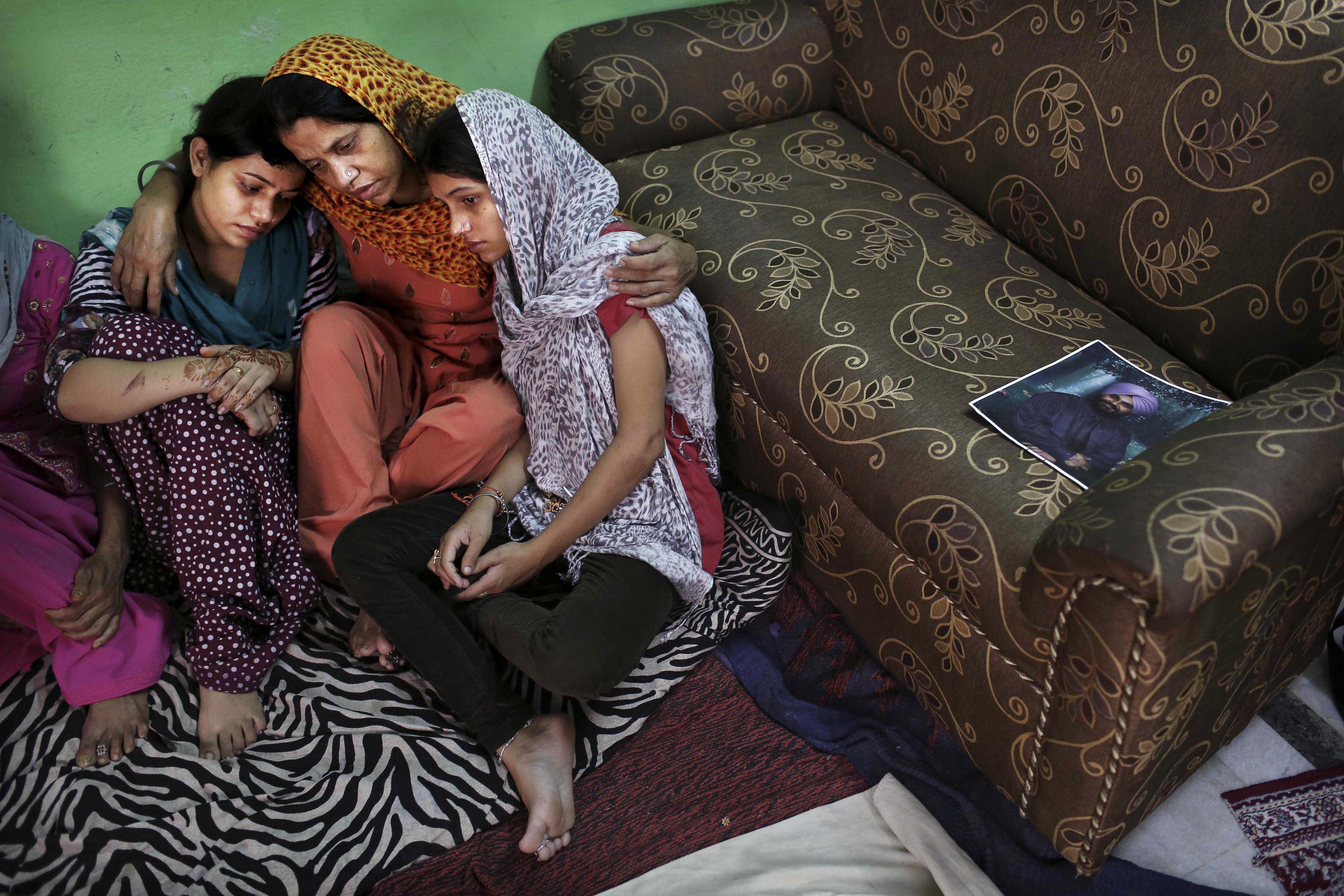
Lokinder Kaur, center, mourns with her daughters Jasbir Kaur, 24, left, and Jaspreet Kaur, 21, right, as a picture of her husband Ranjeet Singh, who was killed in the shooting attack at a Sikh temple in Wisconsin, at the family home in New Delhi, India, Tuesday, Aug. 7, 2012
"My husband had only one dream. To see his children settled abroad," Kaur said as she sat surrounded by grieving family and friends in her modest two-story home in a Delhi neighborhood.
To chase that dream, he kept renewing his visa, finally applying for a green card a few years ago.
"Every six months, he would tell me he would be home soon."
His daughters got married while he was away. His son grew up knowing him only as the voice on the phone, the image in the photographs.
"I just don't understand what happened over there. Why did they die," Kaur asked, sitting on the floor — a tradition in an Indian house of mourning — but leaning against a sofa, exhausted by her grief.
According to police, the gunman was a failed soldier who played in white supremacist heavy metal bands, but his motive remained a mystery.
With their turbans and beards, Sikhs are often mistaken for Muslims or Arabs, and have been targeted in post-Sept. 11 bias attacks in the U.S. The New York-based Sikh Coalition reported more than 700 incidents in the U.S. since 2001.
A short distance away from Lokinder's home, similar scenes of mourning cloud the home of her slain brother-in-law Sita Singh, who traveled back and forth routinely from India to the United States.
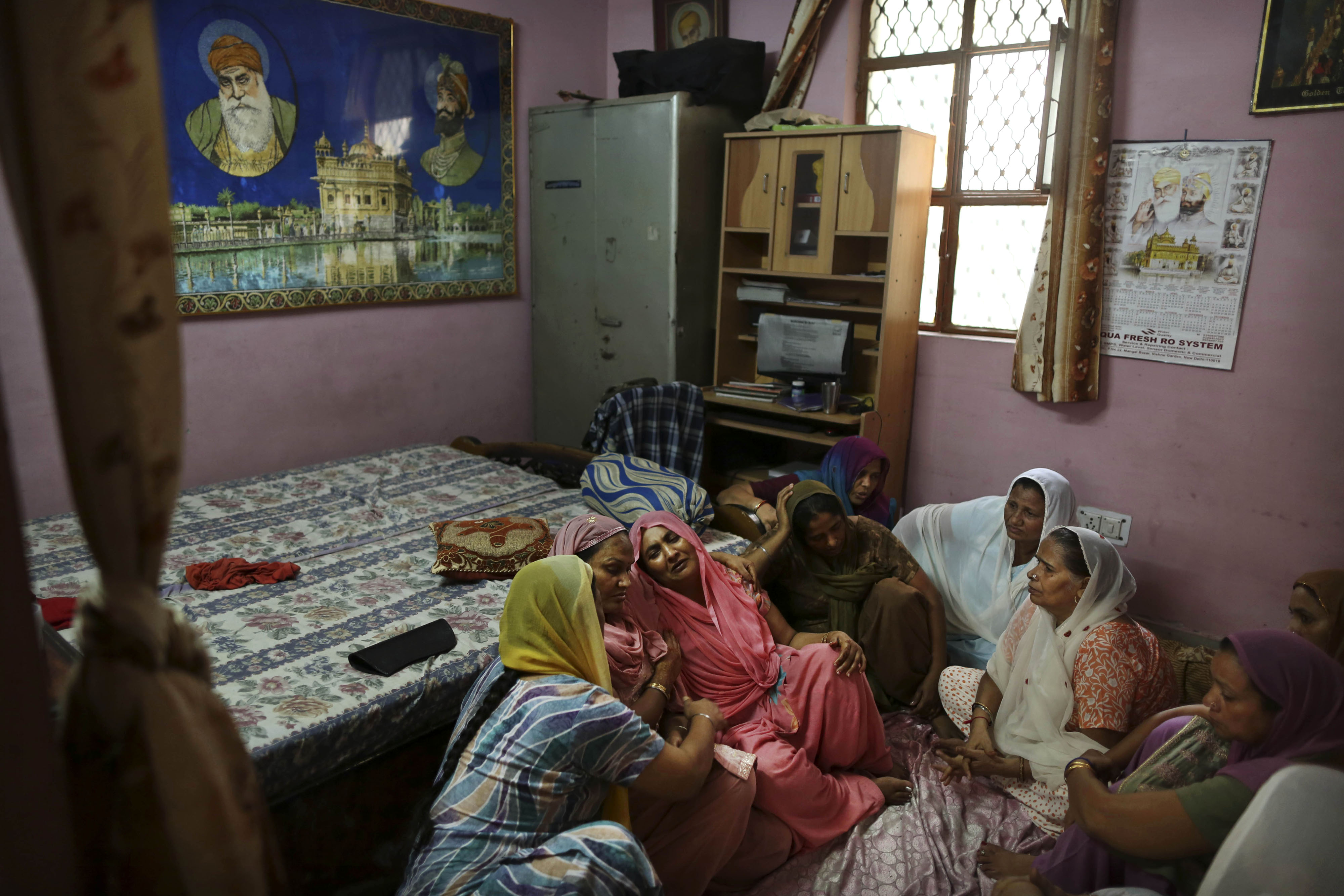
Surinder Kaur, third left, the wife of Sita Singh who was killed in the shooting attack at a Sikh temple in Wisconsin, is comforted at the family home in New Delhi, India, Tuesday, Aug. 7, 2012.
His wife, Surinder Kaur, first got word that something had happened in a 1:30 a.m. phone call from a relative, who said the brothers had been shot. Three hours later they were dead.
"It's just us women left all alone to look after our children," Surinder Kaur said.

This article was distributed through the NewsCred Smartwire. Original article © The Associated Press 2012

For 16 years, Lokinder Kaur waited patiently for the day her husband would be reunited with her and their children. That dream died with him in a Sikh temple in Wisconsin.
Ranjit Singh, one of six killed in a shooting attack at the temple, never came home even once in all those years, working at a grocery store during the week and volunteering at the Sikh gurdwara on weekends. He promised his family he was doing what had to be done to get a green card so they could come join him.
Lokinder Kaur, third from right, mourns with her daughters Jasbir Kaur, 24, fourth from right, and Jaspreet Kaur, 21, second right, as they gather with other relatives at the family home in New Delhi, India, Tuesday, Aug. 7, 2012.
He called every few days, even as the months dragged into years. Kaur said she spoke to Singh just the day before a gunman entered the temple in Oak Creek, Wisconsin, and shot worshippers as they prepared for services on Sunday.
Singh sang devotional songs at the temple and took care of worshipers, serving them meals. His brother, who died in the attack as well, often sang with him.
All Kaur was left with is a recent photograph of Singh, dressed sharply in a crisp shirt and tie and smiling confidently into the camera.
"My children keep asking me, 'What did papa look like?" she said, sobbing at her faded memory of her husband's face. "I have no answers."
When Singh first left for the United States his son was just 7 months old, his daughters 4 and 6. He had a visa for just six months.
Lokinder Kaur, center, mourns with her daughters Jasbir Kaur, 24, left, and Jaspreet Kaur, 21, right, as a picture of her husband Ranjeet Singh, who was killed in the shooting attack at a Sikh temple in Wisconsin, at the family home in New Delhi, India, Tuesday, Aug. 7, 2012
"My husband had only one dream. To see his children settled abroad," Kaur said as she sat surrounded by grieving family and friends in her modest two-story home in a Delhi neighborhood.
To chase that dream, he kept renewing his visa, finally applying for a green card a few years ago.
"Every six months, he would tell me he would be home soon."
His daughters got married while he was away. His son grew up knowing him only as the voice on the phone, the image in the photographs.
"I just don't understand what happened over there. Why did they die," Kaur asked, sitting on the floor — a tradition in an Indian house of mourning — but leaning against a sofa, exhausted by her grief.
According to police, the gunman was a failed soldier who played in white supremacist heavy metal bands, but his motive remained a mystery.
With their turbans and beards, Sikhs are often mistaken for Muslims or Arabs, and have been targeted in post-Sept. 11 bias attacks in the U.S. The New York-based Sikh Coalition reported more than 700 incidents in the U.S. since 2001.
A short distance away from Lokinder's home, similar scenes of mourning cloud the home of her slain brother-in-law Sita Singh, who traveled back and forth routinely from India to the United States.
Surinder Kaur, third left, the wife of Sita Singh who was killed in the shooting attack at a Sikh temple in Wisconsin, is comforted at the family home in New Delhi, India, Tuesday, Aug. 7, 2012.
His wife, Surinder Kaur, first got word that something had happened in a 1:30 a.m. phone call from a relative, who said the brothers had been shot. Three hours later they were dead.
"It's just us women left all alone to look after our children," Surinder Kaur said.
This article was distributed through the NewsCred Smartwire. Original article © The Associated Press 2012