
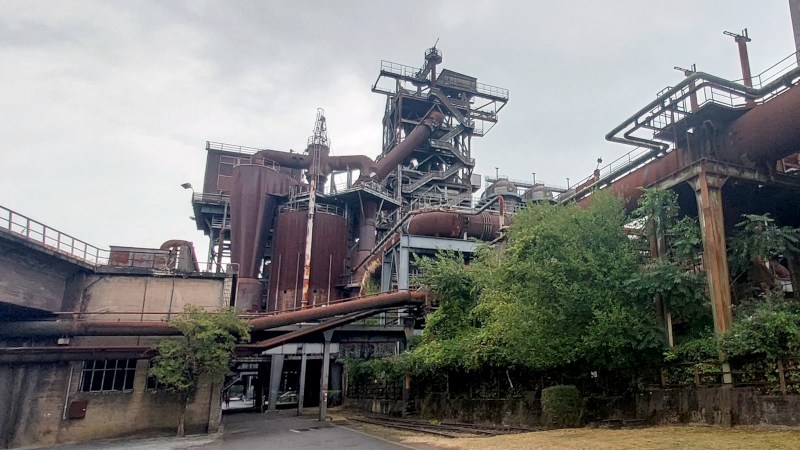
There are many benefits to spending time in the park, but perhaps few of them have a Hackaday angle. There’s a park in Germany you might want to make an exception for, and it lies in the Ruhrpott city of Duisburg.
I was lucky enough last month to join a friend as she toured Germany for the first time with a caravan. It’s a large country with many beautiful places, so her choice might seem unexpected at first sight. The Ruhrpott, or Ruhr area, is a loose conurbation of industrial cities that loosely follows the river Ruhr on its trip to the Rhine on the western edge of the country. It’s close to deposits of coal and iron ore, so just like similar areas in other countries, it became a centre for heavy industry. Today that continues, but as you might expect it’s also dotted with the remains of former industries. It’s one of those which is our subject for today, and it offers a very unusual opportunity.
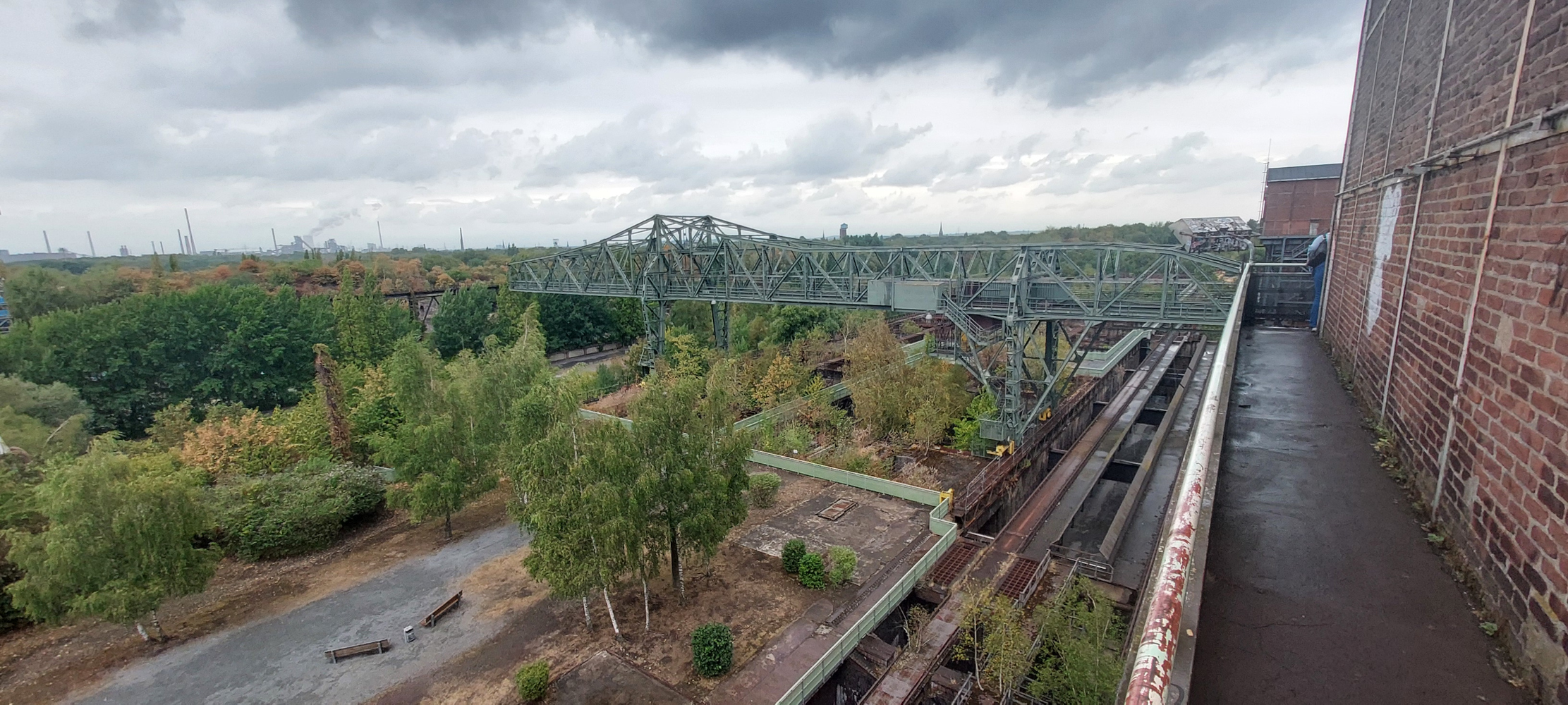
Looking out over the former ore bunkers shows just how huge this site is.
Landschaftspark Duisburg-Nord is a forest park on the northern side of the city of Duisburg. But of course that’s not the whole story, because until 1985 it was the site of the Thyssen ironworks. In rehabilitating the site they chose to keep the main structures of the ironworks intact as they reclaimed the surrounding polluted industrial land, so today it may be one of the few places in the world where you can free of charge get up-close and personal with a fully-intact and preserved blast furnace. The site has three of them remaining along with their associated ore and gas processing plants, and the largest and newest, blast furnace number 5, is a structure you can climb to its top. If you’ve ever been curious about iron smelting, this is the place to come.
Before we take a look at the furnace, it’s worth a quick recap on the basics of iron smelting. Iron ore from the mine is impure iron oxide, and to smelt it those oxygen atoms must be removed. In chemical terms it’s a reduction, and the reducing agent in this case is carbon monoxide. The blast furnace is the reaction vessel for this process.
![A blast furnace, with associated chemistry. OpenStax [CC BY 4.0 ]](https://hackaday.com/wp-content/uploads/2019/04/blast-furnace-diagram.jpg "A blast furnace, with associated chemistry. OpenStax [CC BY 4.0 ]")
A blast furnace, with associated chemistry. OpenStax [CC BY 4.0 ]
As a very simple description, a blast furnace is a vertical tube in which a fire is fed from the top with a mixture of iron ore and carbon, and from the bottom with a blast of air. The quantity of air is adjusted to ensure the carbon at the bottom of the furnace doesn’t fully burn, producing carbon monoxide rather than dioxide. This very hot gas rises through the furnace where the chemical reaction happens, with the excess gas passing through the top of the furnace. The molten iron falls to the bottom of the furnace along with molten impurities from the ore which are referred to as slag. These two liquids form a pool in which a layer of molten slag floats on top of one of molten iron. In practice other minerals such as crushed limestone are added, as a flux.
Blast furnace number 5 follows exactly this process, on a very large scale, and since it had recently been refurbished when it was decommissioned, it’s in very good condition. The Landschaftspark people have given the public extensive free access to it via its many walkways, and while there are a few places that are off limits for saftey purposes, they don’t get in the way of seeing all its parts. From ground level it’s immediately obvious just how large this thing is. The highest point you can climb to is a platform above the loading chute, 70 metres above ground level, but there is another level of machinery above that. It towers over you like any skyscraper, though since it’s an industrial relic rather than a building, there are no lifts. Everything is reached via steel staircases and walkways, and from the area at the base where once a maze of railway sidings existed to take away molten iron and slag, the first staircase takes you up to the base of the furnace. We’re standing where the iron and slag are tapped from the furnace, andjust above us is where the air is injected into its base.
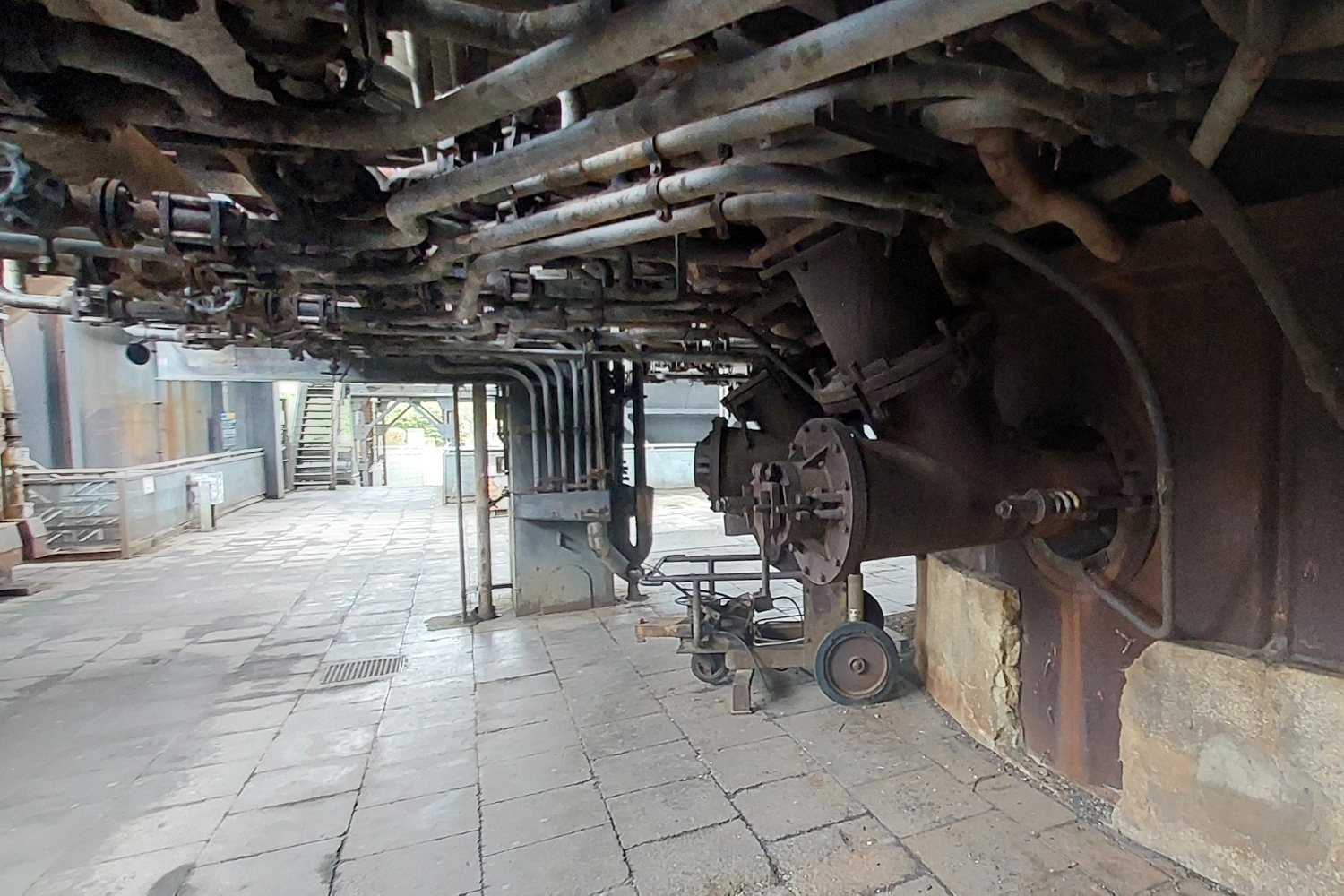
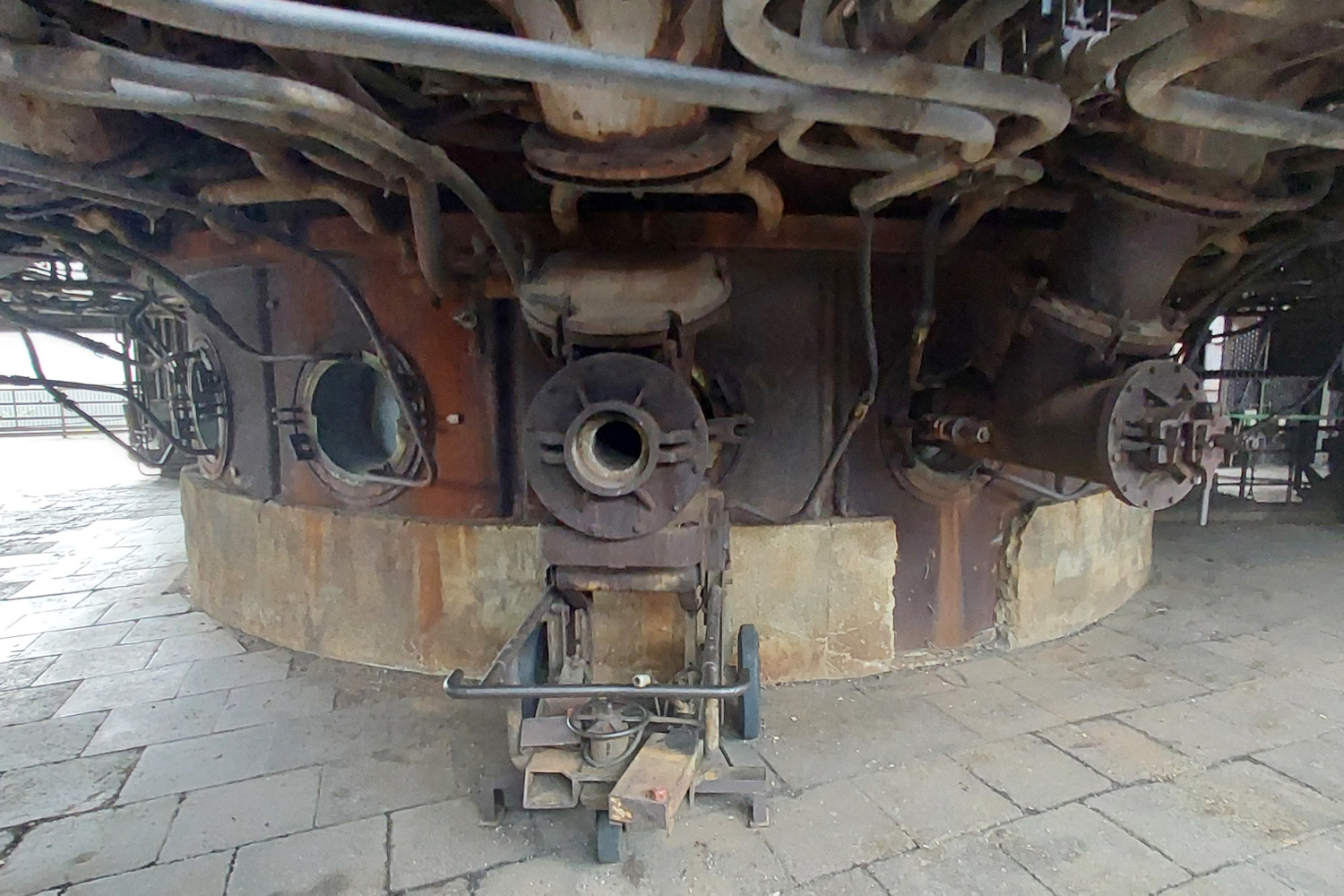
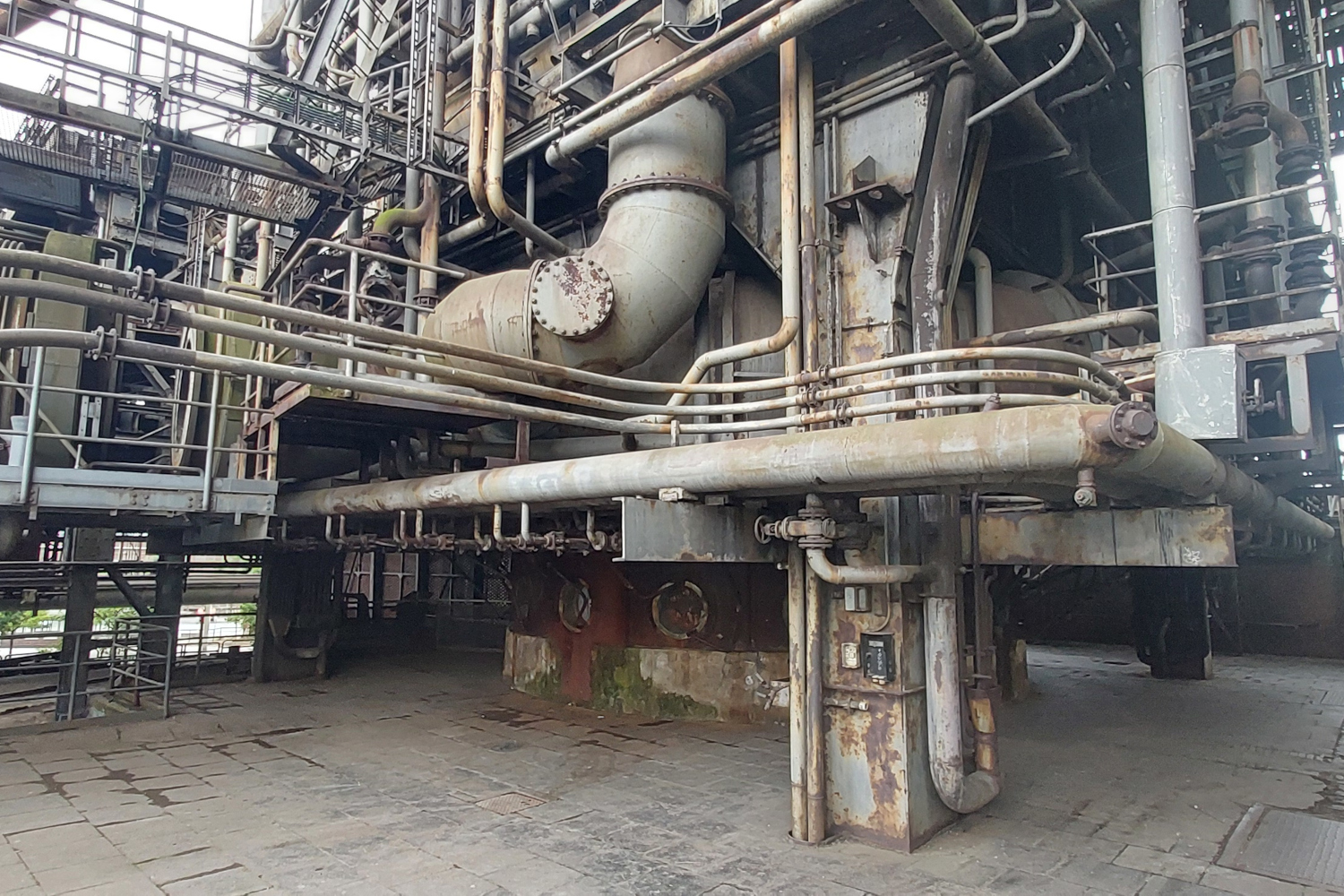
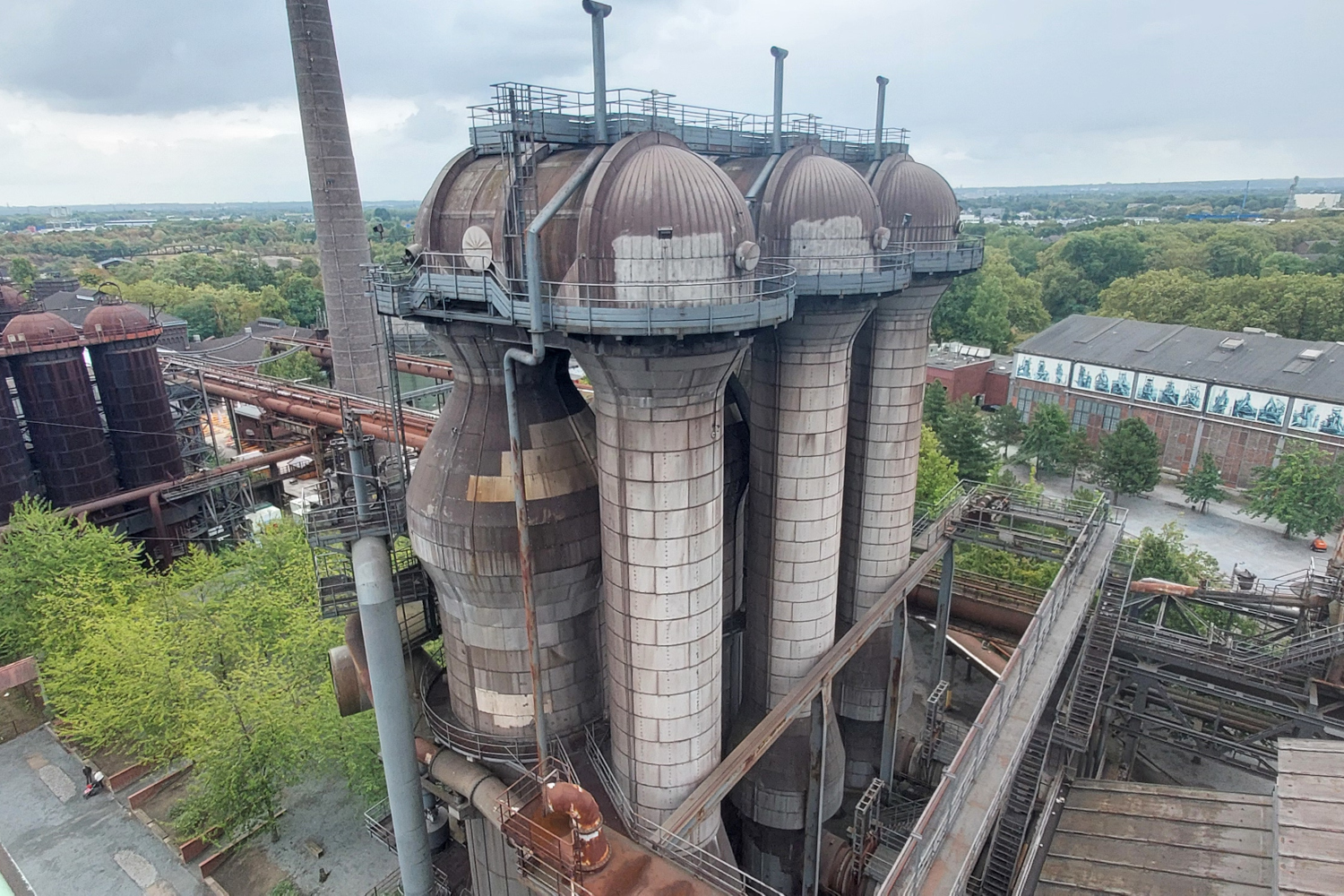
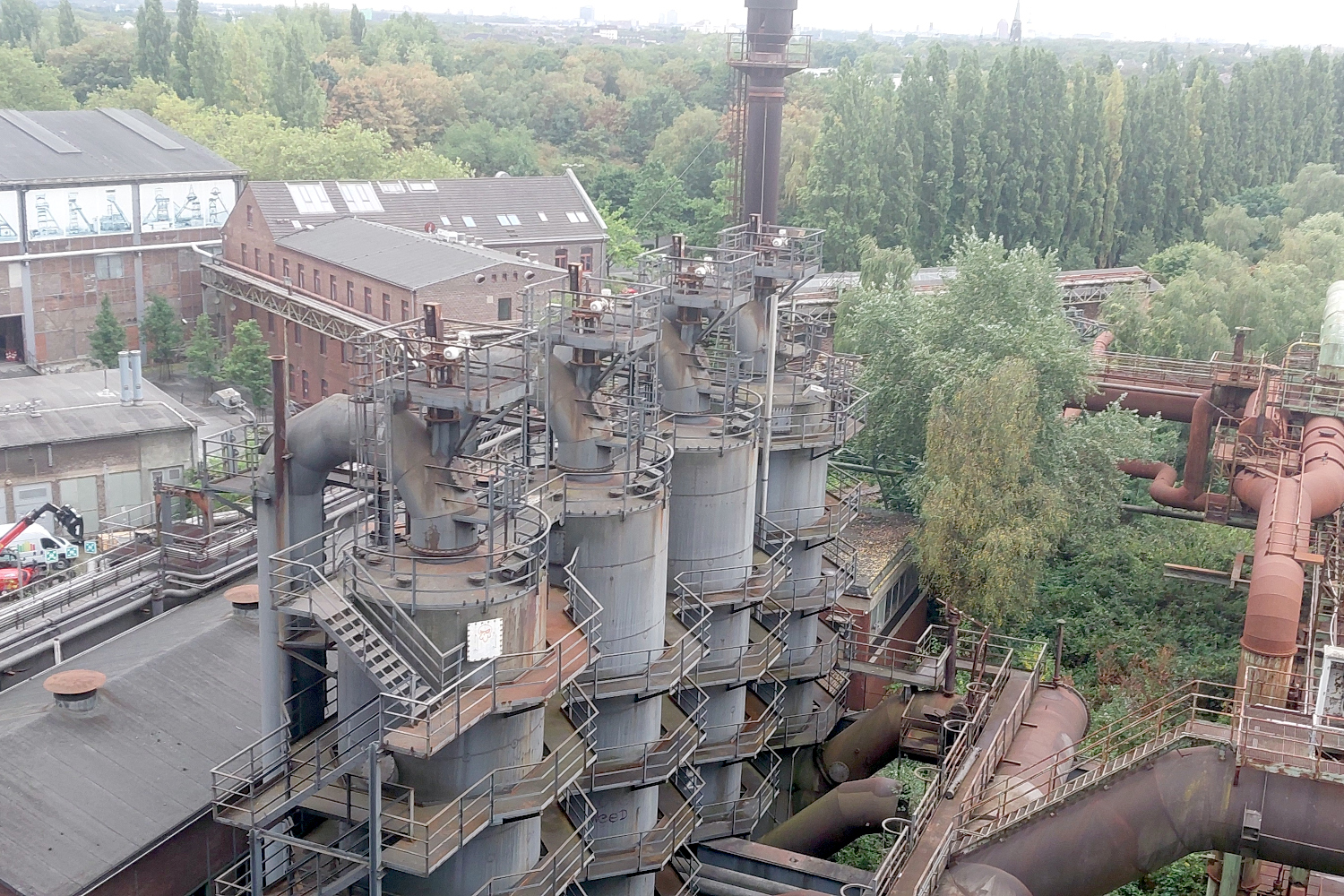
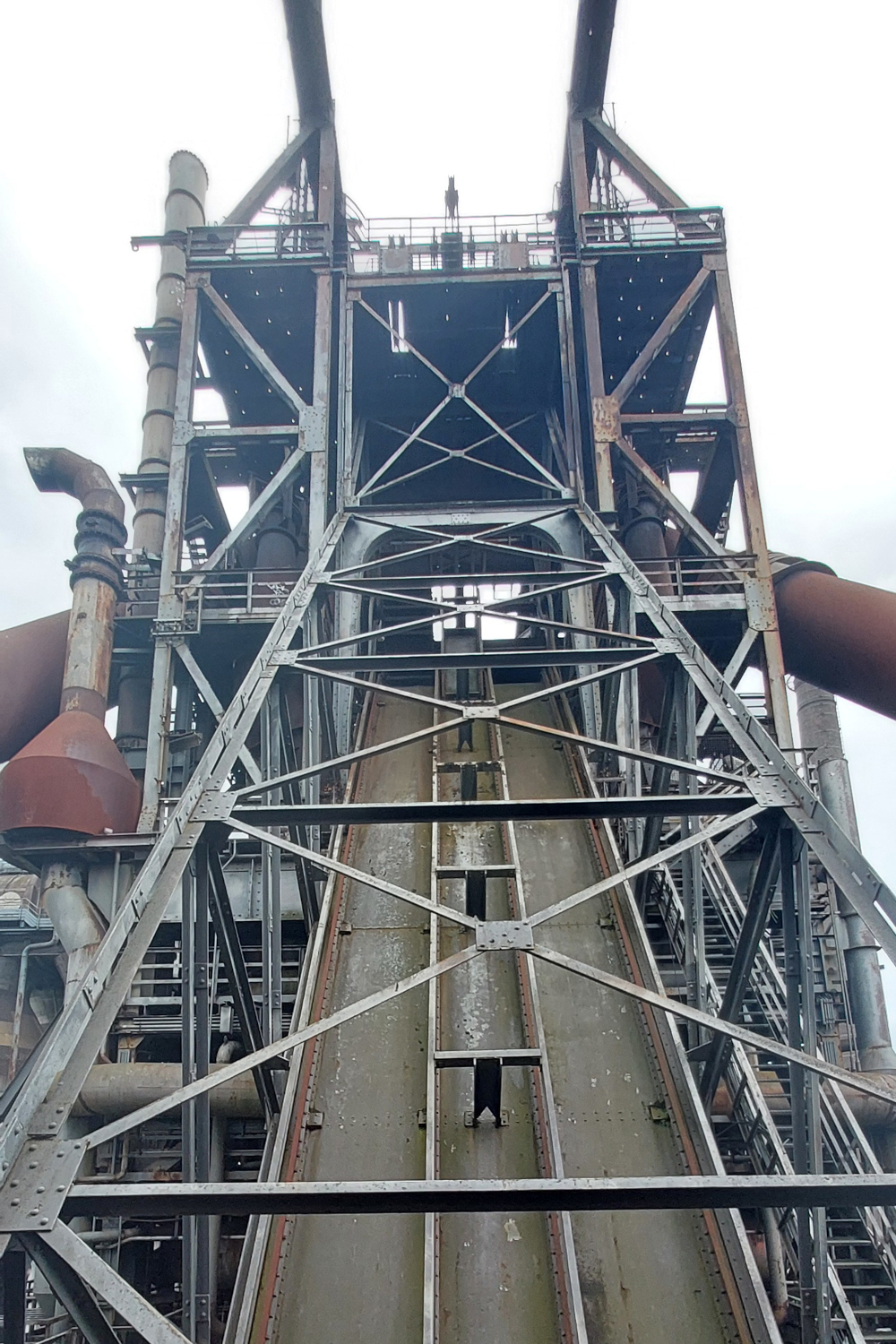
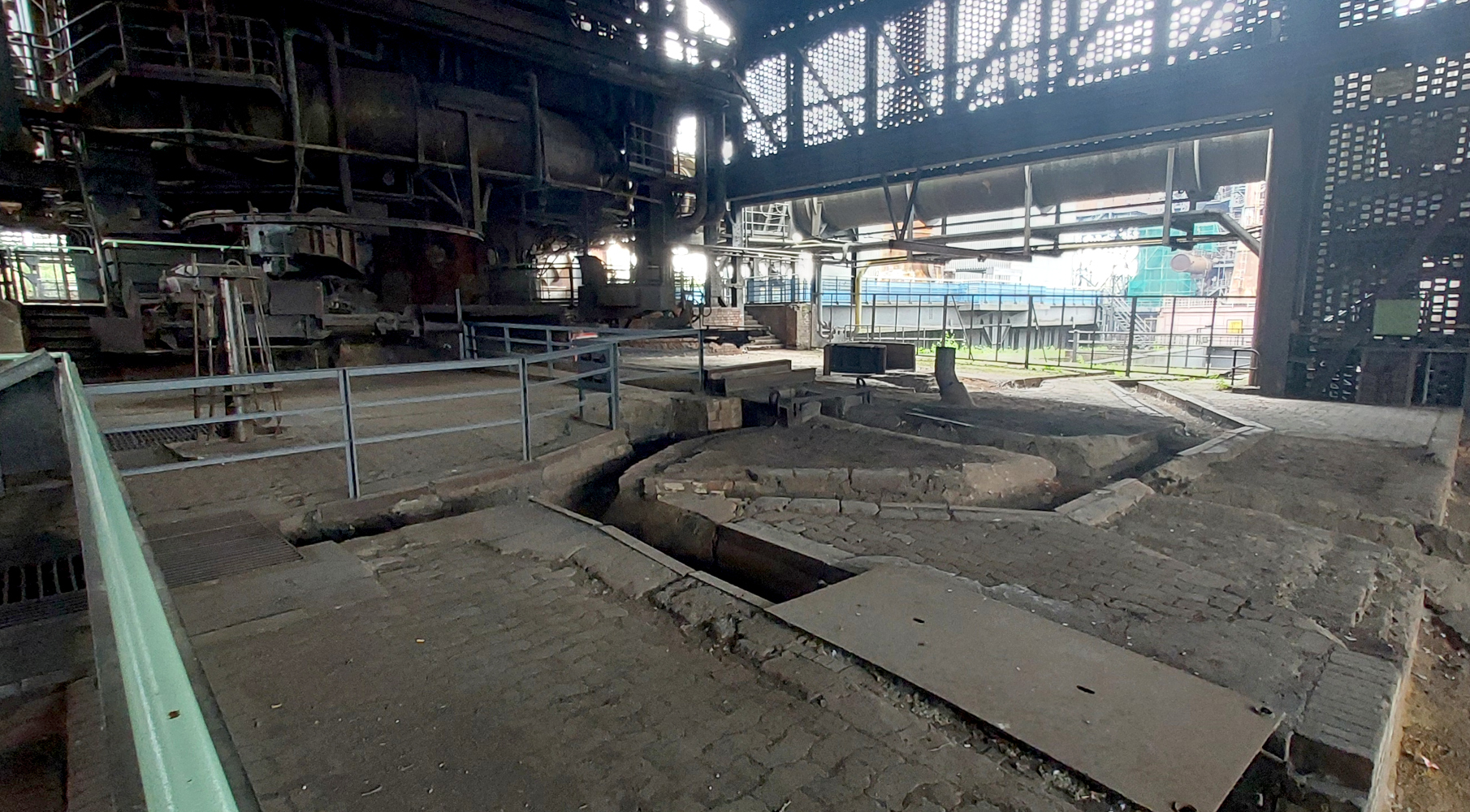
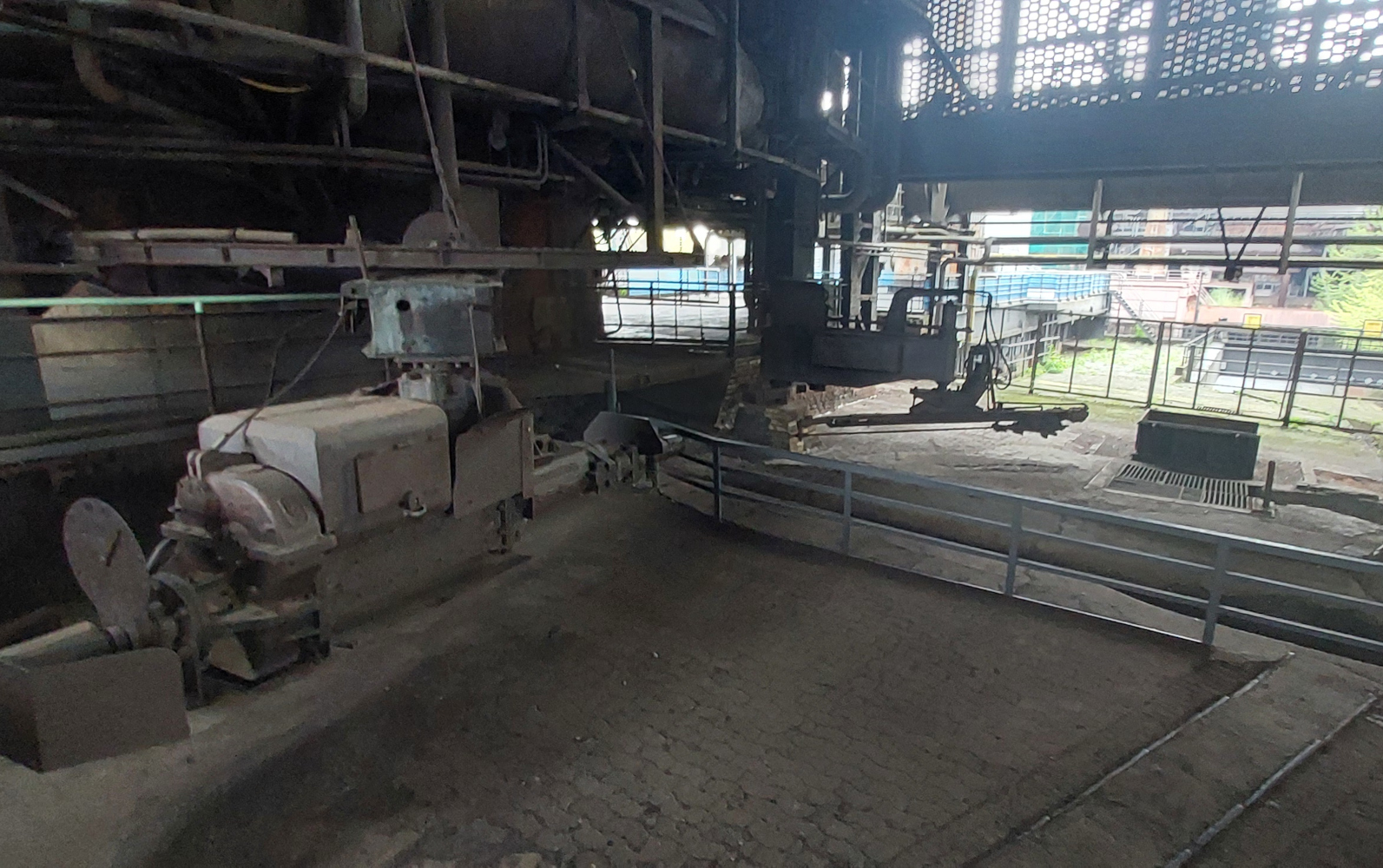
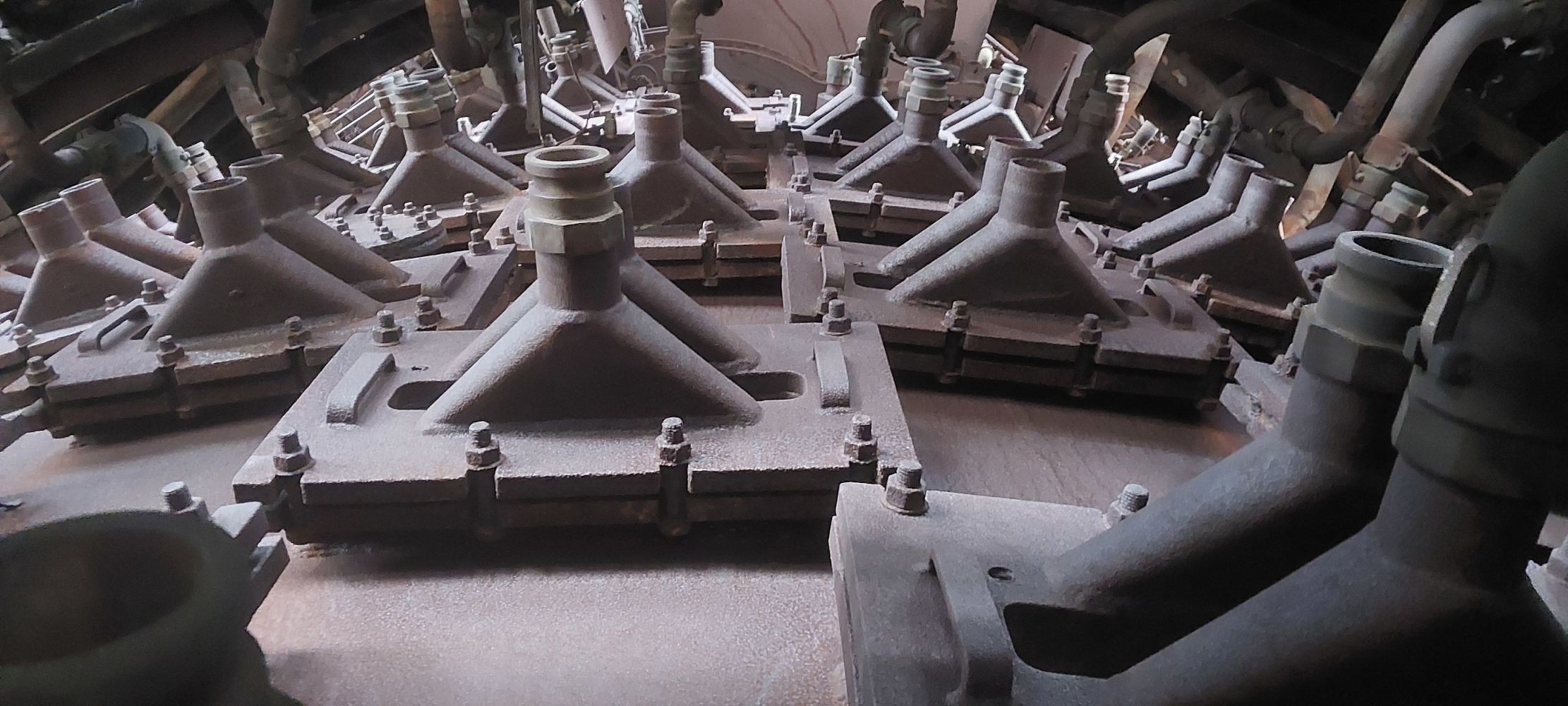
They’ve done a good job of keeping it something like it must have looked when in operation, and you can see the drill on its gantry for tapping the furnace, and the channels in the floor to direct the molten iron or slag. It can either be run into troughs for pig iron, or there are a set of chutes to direct it into rail cars below. Above is the air injection level, and a maze of pipes large and small converge on the furnace. The air would have been preheated using the carbon monoxide from the flue gas in the neighobouring plant, and the pipes bringing it to the furnace are easily 2 or 3 metres in diameter. It appears that they have removed some of the injectors, but enough remains to clearly see the process. This level is surrounded by a wide floor, evidently some processes needed the space.
The following levels climb the furnace, and provide close-up views of the surrounding flue gas scriubbers and air heating plant. A surprise is that the furnace is cooled with a water jacket to stop it melting, so there are successive tiers of water injection. In a few places it’s evident they’ve cut some of the larger pipes to allow the public to traverse the level. From these vantage points you start to see the main structure behind the furnace, a steep inclined plane on which run cable hauled hopper wagons carrying the various ore, coke, and minerals to charge the furnace. Eventually you arrive at the level where these wagons arrive at the top of the furnace, and a mechanism tips them into a hopper. From there a conical cap to the furnace is lowered, allowing them to fall into it. Then it’s up past a level where the imense flue pipes emerge from the conical very top of the furnace to the final level, a wide viewing platform from which you can see for miles across the industrial landscape.You can immediately see tie size of the steelworks site, with a row of immense concrete ore hoppers, a giant traverser crane, and what must have been a water treatment plant. All those subsidiary structures are good for an hour or two’s wandering around on their own, and they’re all open to the public.
Landschaftspark Duisburg-Nord then, is that rare thing, a large open-air industrial museum that’s open to the public free of charge. It’s got good facilities, a cracking restaurant serving traditional German fare, street food vendors if you fancy a currywurst, and even free parking. The Ruhrpott might not be your first thought when you visit Germany, but it’s full of industrial heritage sites like this one. Take the time to visit, if you get the chance. While you’re in the area, remember you aren’t far from the world’s largest computer museum.