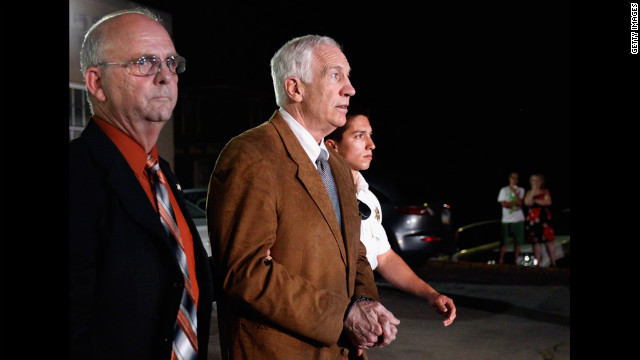
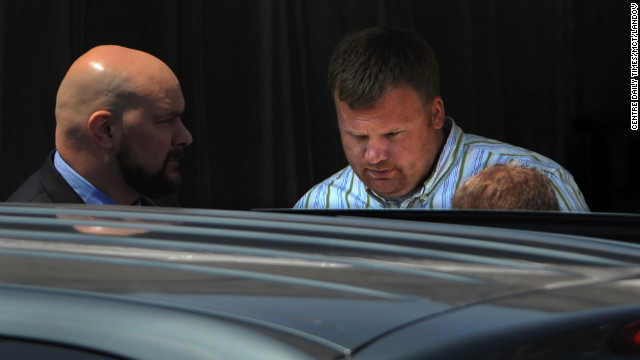
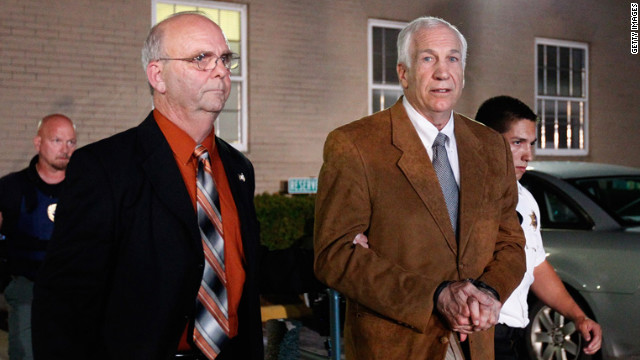
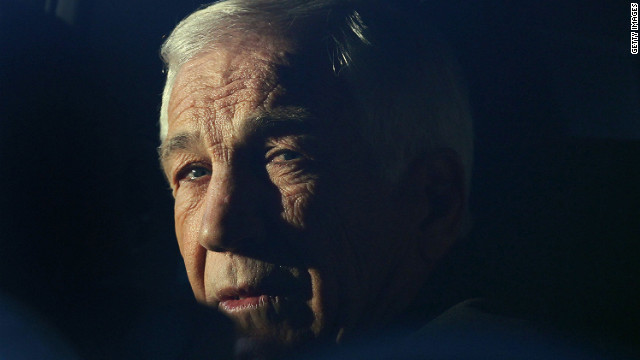
Former Penn State assistant football coach Jerry Sandusky leaves the Centre County Courthouse in handcuffs after a jury found him guilty in his sex abuse trial on Friday, June 22.
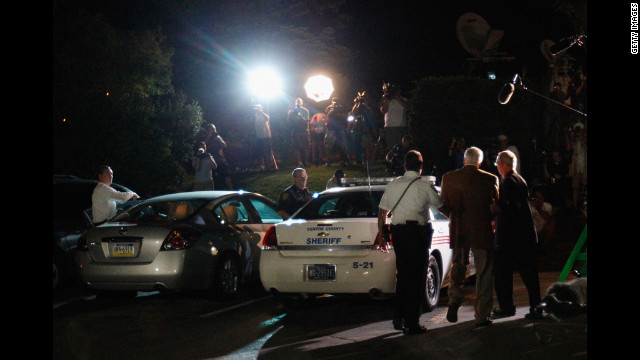
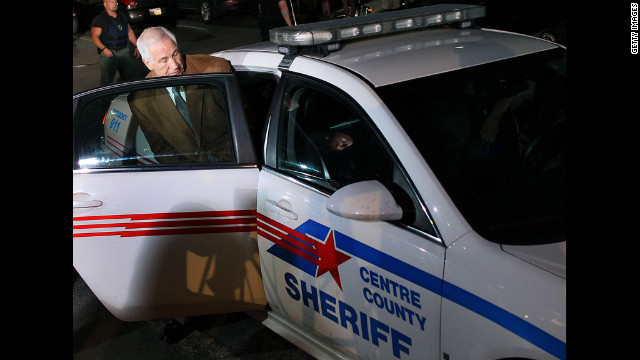
Sandusky is escorted in handuffs to a police car at the Centre County Courthouse under the glare of TV lights. The jury found Sandusky guilty on 45 of 48 counts.
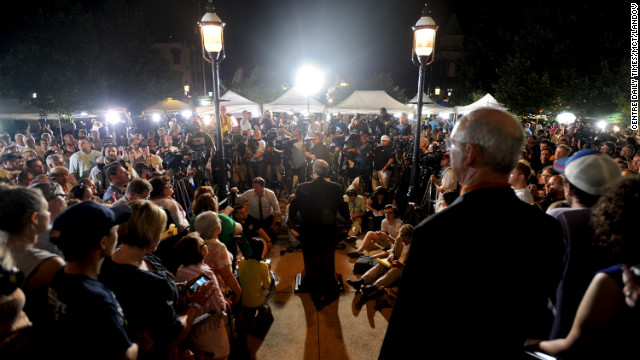
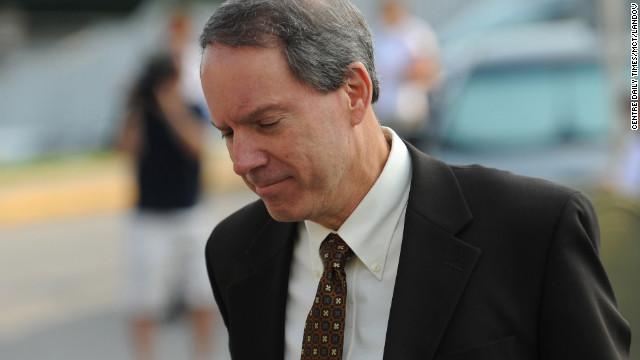
Defense attorney Joe Amendola talks to the media after the trial.
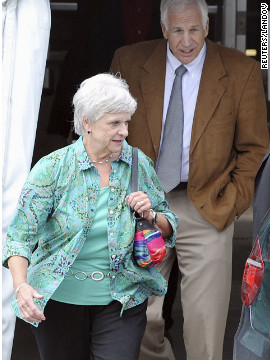
Dottie Sandusky, who has been married to Sandusky for 46 years, walks with her husband while jurors deliberate. She testified that she did not witness any sexual abuse.
Matt Sandusky, one of Jerry Sandusky's six adopted children, said Thursday through his attorney that he also was sexually abused and was prepared to testify.
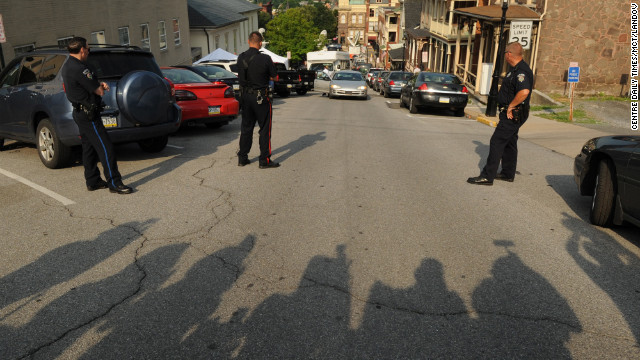
Shadows of the media are seen outside the courthouse during the second day of deliberations. Jurors took 21 hours over two days to convict Sandusky on 45 of 48 charges against him.
Sandusky's attorney Joe Amendola arrives at the courthouse Friday. After the conviction, Amendola announced plans to appeal despite the mountain of convictions against his client.
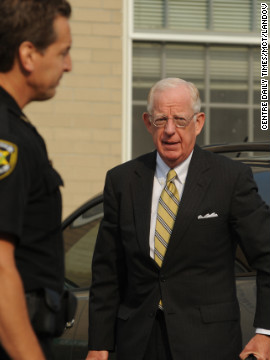
Judge John Cleland walks into the courthouse. Once the jury reached its decision, he revoked Sandusky's bail and ordered his arrest.
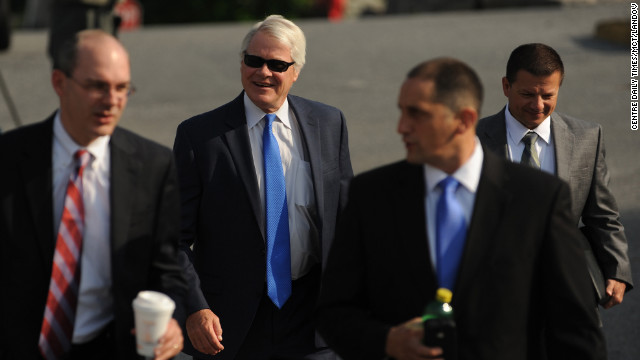
Prosecutor Joseph E. McGettigan III, second from left, and the rest of his prosecution team arrive at the courthouse Friday.
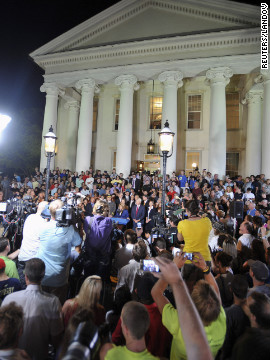
A crowd gathers outside the Centre County Courthouse in Bellefonte, Pennsylvania, to await the Sandusky verdict.
Sandusky faces the cameras as he is led to a sheriff's vehicle in handcuffs after the reading of the verdict.
Sandusky is put into a police car.
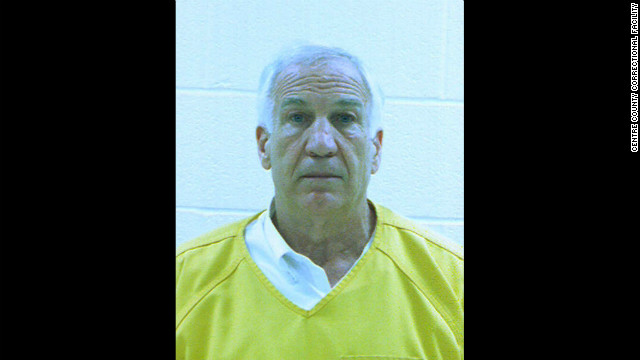
Sandusky was booked into the Centre County Correctional Facility.
1
2
3
4
5
6
7
8
9
10
11
12
13
(CNN) -- A man who was sexually abused by former Penn State assistant football coach Jerry Sandusky has settled his civil suit against the university, his lawyer said.
The man, known during Sandusky's trial at Victim 5, is the first to settle, his attorney Tom Kline told CNN late Saturday night. Kline did not disclose details.
The school still faces suits from several other victims.
Mike Rice, pictured in 2011, was fired from his head coaching position at Rutgers University after a video surfaced of him verbally abusing his players, shoving them and throwing basketballs at them. Click through the gallery to see which coaches also crossed the line.
New Orleans Saints head coach Sean Payton was suspended for the entirety of the 2012 NFL season after his players were accused of taking part in a bounty program, rewarding them for intentionally injuring opposing players. Payton still claims that the accusations are unfounded.
Saints defensive coordinator Gregg Williams was also linked to the bounty scandal and suspended indefinitely. Williams was reinstated by the NFL and hired as a senior assistant defensive coach for the Tennessee Titans in February.
In March 2000, a video was released of Indiana head basketball coach Bobby Knight choking former player Neil Reed. After more claims were made, the hot-headed coach was fired. Here, Knight talks to Indiana player Ted Kitchel during a game against Northwestern University in February 1983.
Longtime Penn State head football coach Joe Paterno was linked to the sex scandal surrounding former defensive coordinator Jerry Sandusky, second from right in 1999. Sandusky was convicted of 45 of the 48 counts against him, including unlawful contact with minors and involuntary deviate sexual intercourse. Court testimony showed that Paterno was aware of the misdeeds but failed to report them, leading to Paterno's termination and the revoking of all his records and titles as Penn State head coach.
Former baseball star and manager Ozzie Guillen has made headlines more than once for his controversial statements. Guillen used an anti-gay term to describe a Chicago Sun-Times columnist in 2006 and expressed sentiment for Fidel Castro in 2012. He apologized for both comments after backlash in the press.
Mike Price was fired from his head football coaching position at the University of Alabama before the team played their first game for him. In 2003, Price admitted propositioning and bringing two women back to his hotel room after attending a golf tournament in Florida. One of the women ordered room service, which was charged to Price's university-issued credit card.
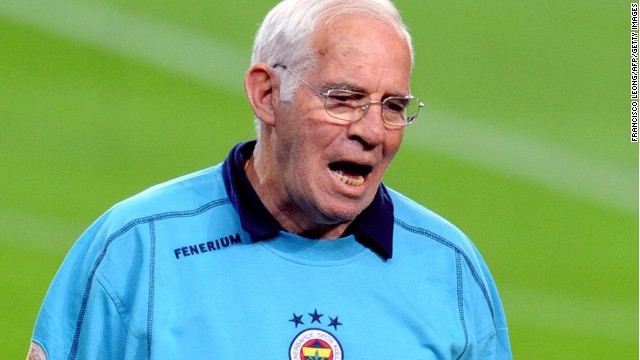
In 2004, video of the head coach of Spain's national soccer team, Luis Aragones, showed him using racist language in describing the opposing team's star player, Thierry Henry. Aragones -- here in 2008 -- claimed that he was trying to "motivate" his players to be aggressive and that he was not a racist. Despite public outcry, he was fined but not fired.
In 1978, Ohio State University head football coach Woody Hayes punched a Clemson University player in the throat immediately after he intercepted an OSU pass. Hayes, here in 1970, was given the chance to resign but refused and was fired.
University of North Carolina-Chapel Hill head football coach Butch Davis was fired in July 2011 in the midst of an NCAA investigation into a cheating scandal involving tutors writing papers for players and a recruiting scandal involving players accepting impermissible benefits. In announcing the move, the university cited the damage that the controversies were causing to UNC's reputation, but Davis maintained that he himself had not done anything wrong.
Coaches who went out of bounds
Coaches who went out of bounds
Coaches who went out of bounds
Coaches who went out of bounds
Coaches who went out of bounds
Coaches who went out of bounds
Coaches who went out of bounds
Coaches who went out of bounds
Coaches who went out of bounds
Coaches who went out of bounds
Photos: Coaches who went out of bounds
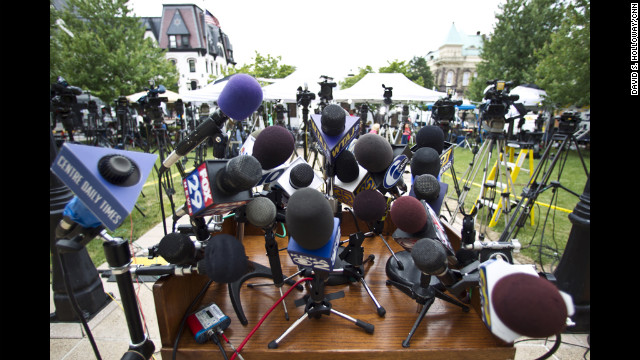
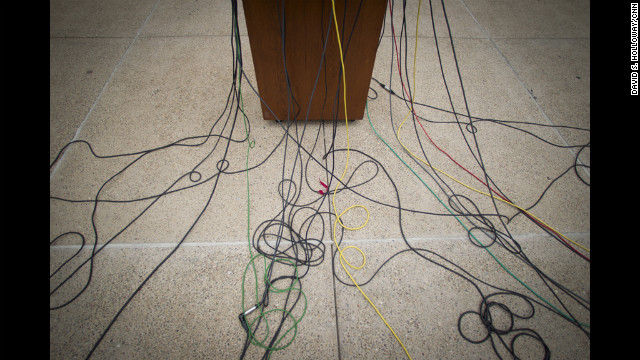
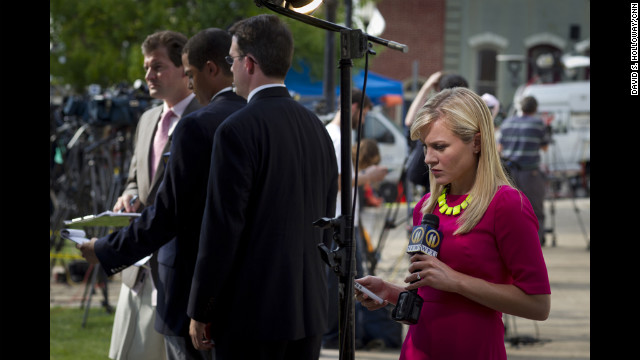
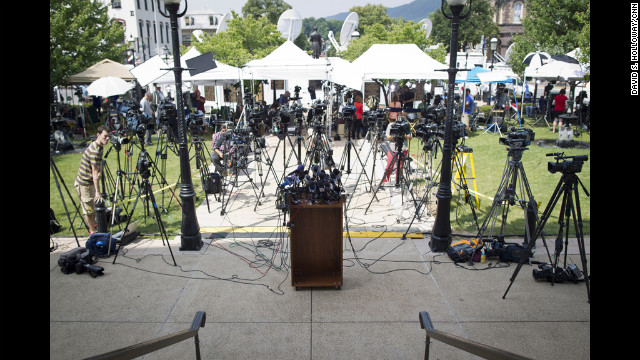
The podium stand outside of Jerry Sandusky's trial on its first day is covered in mics, hinting at the massive media coverage of the event.
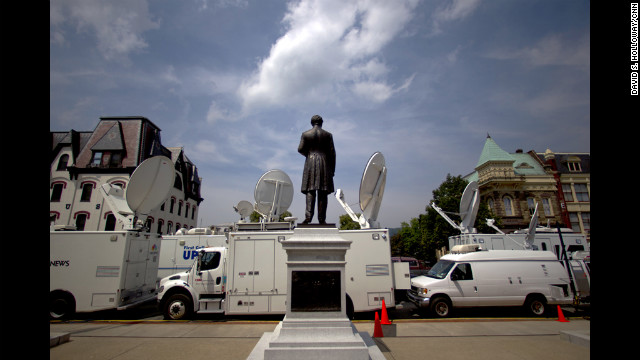
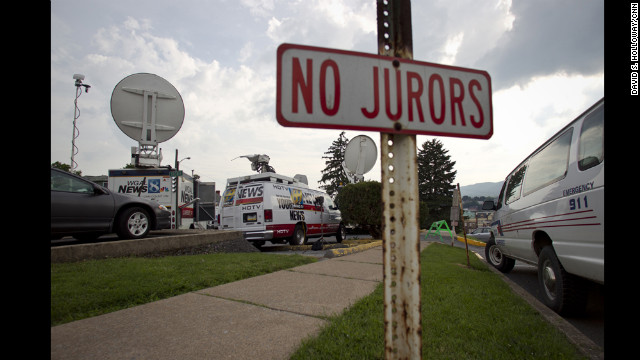
Several news vans pile up outside of the Sandusky trial. The network satellite vans are all parked in front of the Centre County Courthouse and the vans parked in back are live trucks from the regional news outlets.
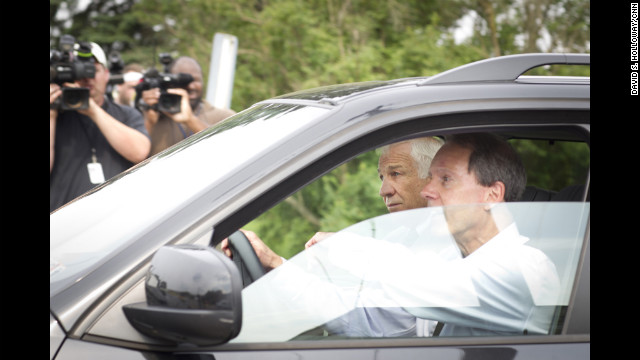
Every day Sandusky arrived in the passenger seat of his attorney Joe Amendola's black BMW SUV.
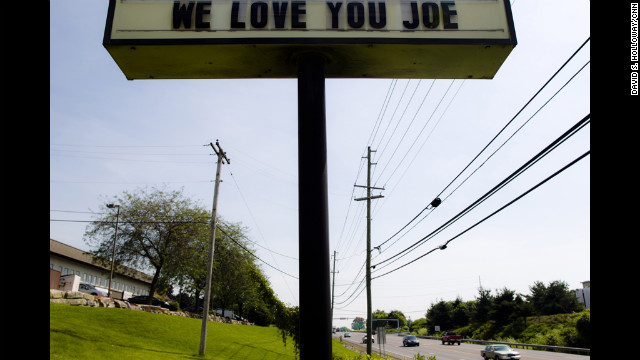
This sign posted on a road near the town of Bellefonte, Pennsylvania, shows support for former Penn State head football coach Joe Paterno.
Mic cords abound as the media took over the courthouse lawn to cover the Jerry Sandusky trial.
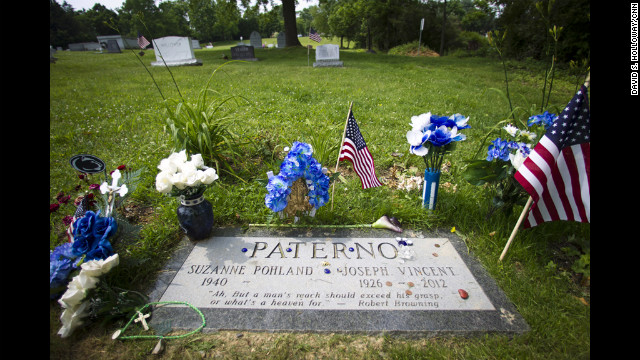
The grave of Joe Paterno is at Spring Creek Presbyterian Cemetery in State College, Pennsylvania.
Reporters wait with microphones outside of the Sandusky trial.
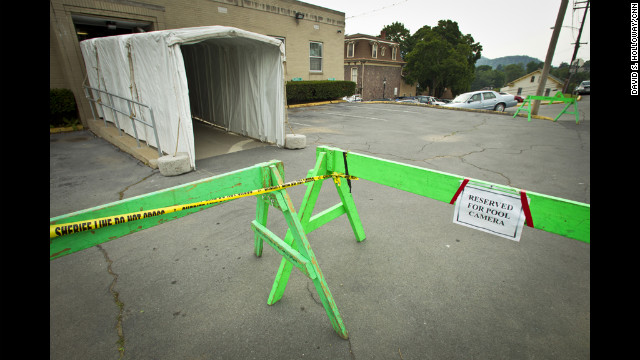
Several photographers and videographers staked out spots behind the police's green barriers in the back of the courthouse where Sandusky's trial was taking place.
Live vans from regional news outlets fill the lot behind the Centre County Courthouse where the Sandusky trial is taking place.
Judge John M. Cleland is presiding over Sandusky's trial at the Centre County Courthouse in Bellefonte, Pennsylvania
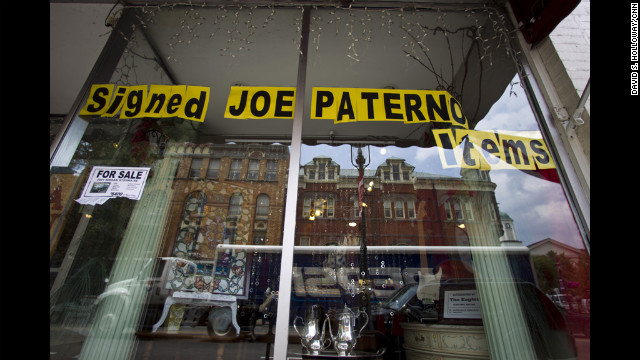
A business advertises Joe Paterno items within view of the courthouse where assistant coach Sandusky is on trial.
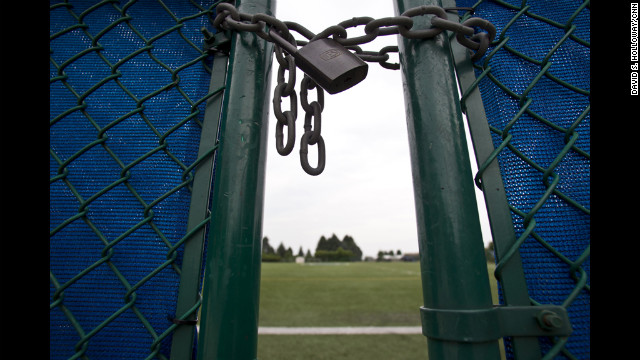
The gate to the practice football field is locked at the Mildred and Louis Lasch Football Building at Penn State University in State College, Pennsylvania
Mics and cameras surround the podium ouside the courthouse where Jerry Sandusky is on trial.
1
2
3
4
5
6
7
8
9
10
11
12
13
Photos: Sandusky trial coverage
Ex-Penn State defensive coordinator Jerry Sandusky was arrested in November 2011 on charges that he preyed on boys he met through The Second Mile charity. In June 2012, he was convicted of 45 counts involving 10 young victims, and in October, he was sentenced to 30 to 60 years in prison. In July 2012, the NCAA imposed sanctions against Penn State, including a $60 million fine, scholarship reductions, the vacating of 112 wins, five years' probation and a bowl ban for four years. Click through the gallery for other notable NCAA scandals.
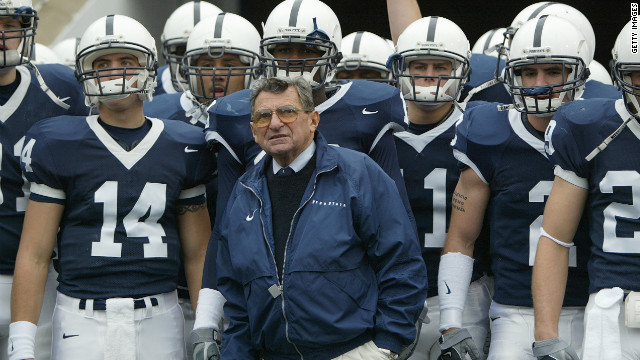
Penn State University head football coach Joe Paterno on the sidelines during a 2004 game. Paterno's legacy was tarnished in the wake of the Jerry Sandusky child abuse scandal. The fallout included NCAA sanctions in July 2012 that struck 111 of Paterno's 409 wins from the record book. The stripped victories stretched back to 1998 and removed Paterno's crown as winningest college football coach in history. He died of cancer in January.
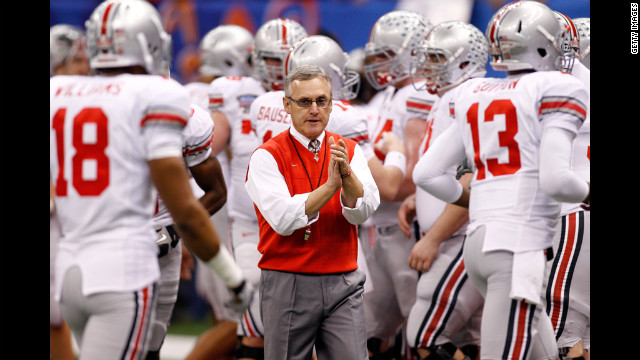
Head coach Jim Tressel with his Ohio State Buckeyes at the 2011 Sugar Bowl. Tressel admitted he knew several star players were trading memorabilia for cash and tattoos in violation of NCAA rules. The NCAA banned the Buckeyes from postseason play for the upcoming season, and OSU voluntarily vacated all 2010 wins. Tressel "resigned" in May 2011, a move OSU later deemed a retirement.
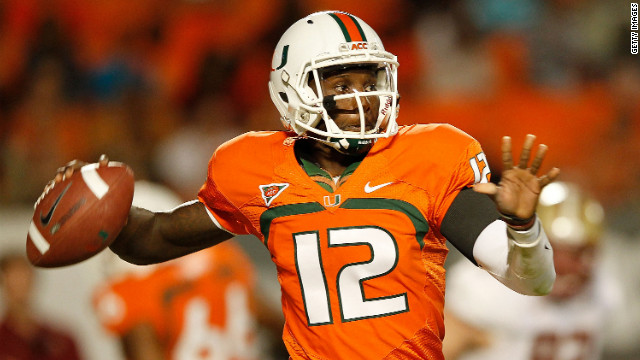
" border="0"/>University of Miami quarterback Jacory Harris throws a pass during a 2011game. Harris was one of 13 Hurricanes initially ruled ineligible after the NCAA began investigating allegations by Nevin Shapiro, an imprisoned former booster, that he for eight years provided 72 athletes with benefits that violated NCAA rules. Shapiro is incarcerated for running a $930 million Ponzi scheme. After Miami petitioned for the players' reinstatements, one player was vindicated, while the other 12, including Harris, were reinstated after serving suspensions and/or paying restitution. The investigation into the Shapiro scandal is ongoing.
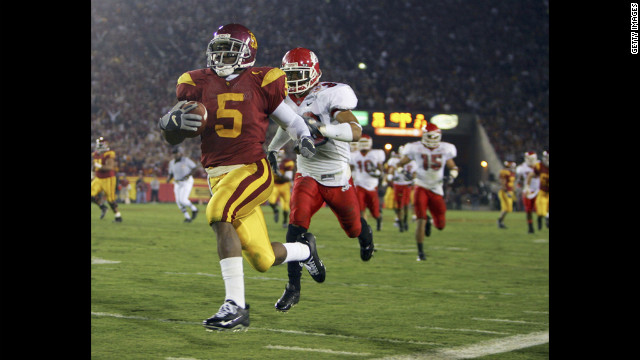
Reggie Bush of the University of Southern California carries the ball past Fresno State's Matt Davis in 2005. The NCAA announced sanctions in June 2010 against USC, finding that Bush and basketball star O.J. Mayo had received lavish gifts. Bush voluntarily forfeited his Heisman Trophy, while USC was given four years' probation, stripped of 30 scholarships and had to vacate 14 wins, including a national championship.
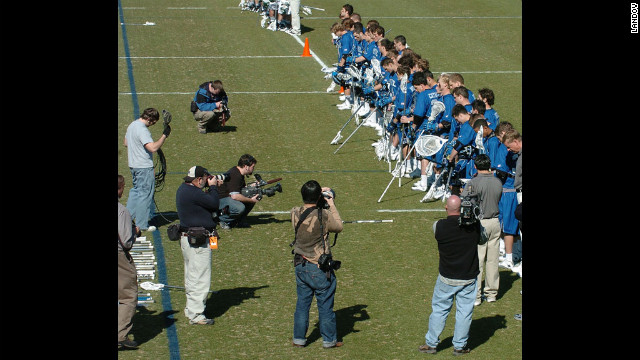
Members of the Duke men's lacrosse team listen to the national anthem at their season opener in 2007. In 2006, members of the team hired stripper Crystal Mangum for a party, and she accused three players of raping her. The scandal forced the cancellation of the men's lacrosse season that year and the resignation of team coach Mike Pressler. The allegations later proved to be false, and prosecutor Mike Nifong was disbarred for ethics violations.
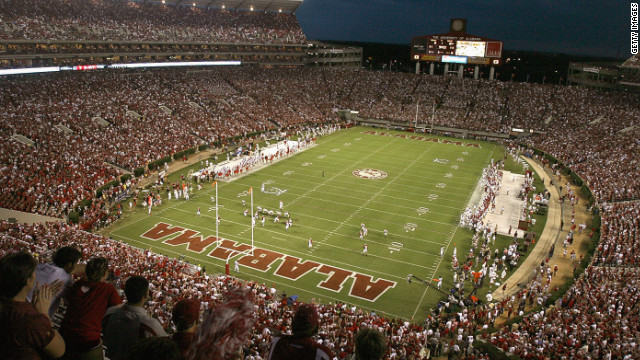
The NCAA has found the University of Alabama football program in violation of its rules at least three times in the last two decades. The most notable incident came in 2000 when a booster paid a high school coach to steer a recruit to the Crimson Tide. An investigation found numerous other violations, and Alabama was placed on five years' probation, among other sanctions. In 1995, the NCAA forced Alabama to vacate wins after it learned coaches were aware one of the school's All-Americans had secretly signed with an agent, and in 2009 the university was sanctioned for misuse of its textbook distribution program by 16 athletic programs, including football.
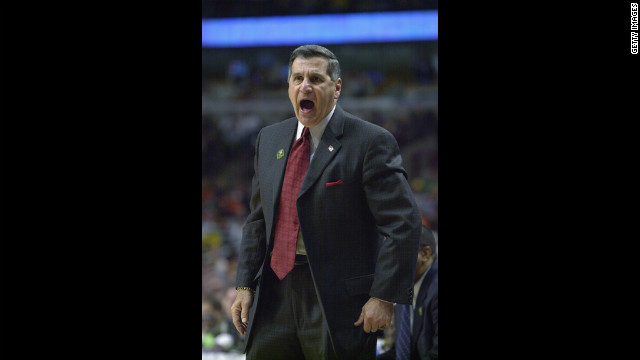
Jim Harrick Sr., then head coach of the University of Georgia Bulldogs, yells from the sidelines during the 2002 NCAA Division I men's basketball tournament. Harrick resigned as UGA's head basketball coach in 2003 after his son, Jim Harrick Jr., was accused of giving an A to three basketball players who didn't attend class and paying a phone bill for one of them. The NCAA punished UGA with four years' probation, and the school was forced to vacate 30 wins from 2001-2003.
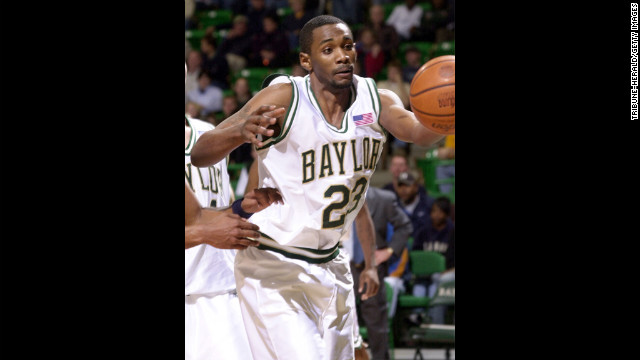
" border="0"/> Baylor University basketball player Carlton Dotson reaches for the ball against Montana State in a 2002 game. In June 2003, Baylor's Patrick Dennehy went missing. Dotson confessed to killing him and was sentenced to 35 years in prison. The NCAA later determined that Coach Dave Bliss had instructed his players to lie to investigators and tell them that Dennehy dealt drugs to cover up the coach paying thousands of dollars of Dennehy's tuition. The NCAA put the school on probation until June 2010. It also was banned from playing nonconference games for a season.
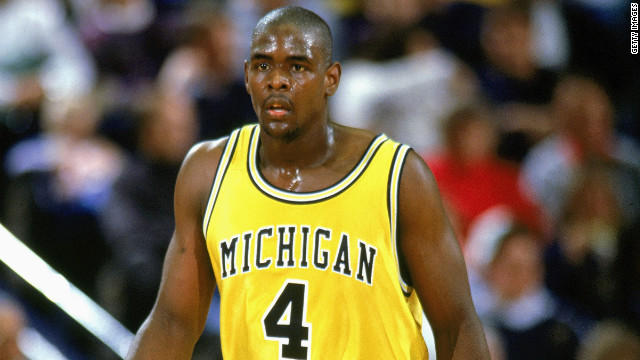
Chris Webber strolls upcourt during a home game in 1993. Webber pleaded guilty in 2003 to being paid by a University of Michigan booster to launder money from an illegal gambling operation. The NCAA put the program on four years' probation and banned the team from postseason play for the 2003-04 season. Charged with lying to federal investigators, Webber pleaded guilty to misdemeanor criminal contempt and paid a $100,000 fine.
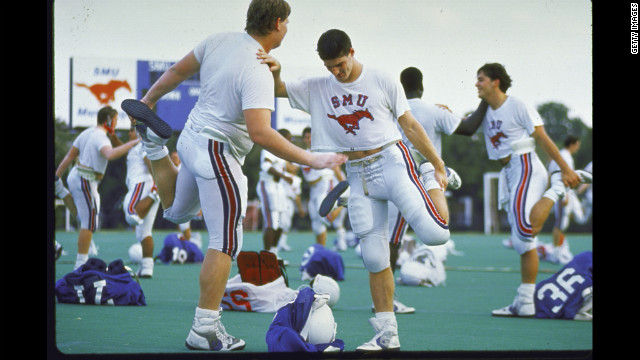
The Southern Methodist University football team warms up in 1988, two years after a scandal broke that SMU boosters had been giving football players thousands of dollars from a slush fund with university officials' knowledge. In what was the first and last time it gave the "death penalty" to a football program, the NCAA suspended SMU from playing its 1987 season and banned it from recruiting. The school also was not allowed to play at home in the 1988 season and lost dozens of scholarships.
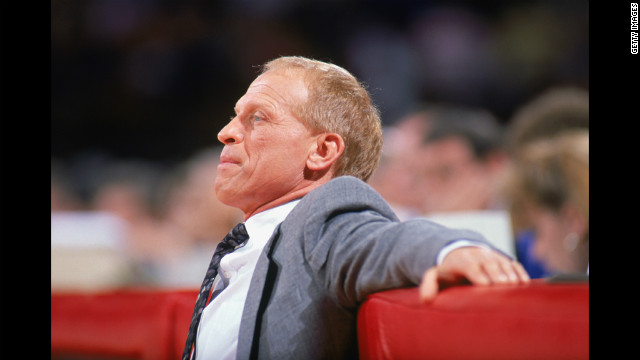
Bill Musselman watches court action during a 1990 NBA game as head coach of the Minnesota Timberwolves. In 1975, Musselman left as head coach of the University of Minnesota Golden Gophers. The NCAA later found 127 violations from his four-year tenure at the school, including direct payment to players for rent and transportation.
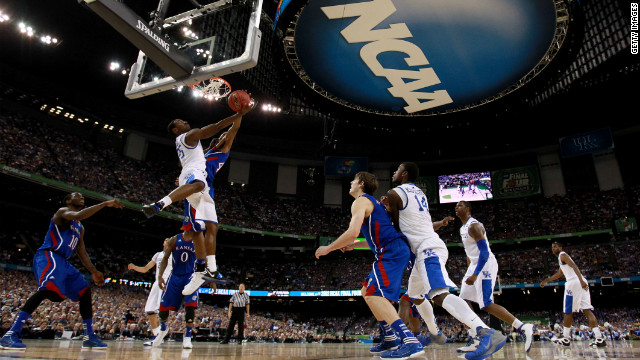
Kentucky celebrates the 2012 national championship in April. Sixty years earlier, the NCAA opened an investigation into the University of Kentucky Wildcats basketball program, following a national championship season in which three players had been arrested in a point-shaving scandal. The subsequent probe revealed that 10 players had received impermissible financial aid. The NCAA banned the school's entire athletic program from playing for a year -- in effect, marking the advent of the so-called "death penalty," even though the penalty wasn't given the nickname until the 1980s.
1
2
3
4
5
6
7
8
9
10
11
12
13
Notable NCAA scandals
A judge sentenced the 69-year-old Sandusky in October to at least 30 years in prison -- meaning he will likely spend the rest of his life behind bars.
He had faced a maximum of 400 years for dozens of charges stemming from his sexual abuse of 10 boys over a 15-year period. Sandusky was convicted in June 2012.
During the sentencing, Victim 5 told the court Sandusky's punishment "will never erase what he did to me."
"It will never make me whole," he said. "He must pay for his crimes, take into account the tears, the pain, the private anguish."
He added that he will never forget the image of Sandusky "forcing himself on me and forcing my hand on him."