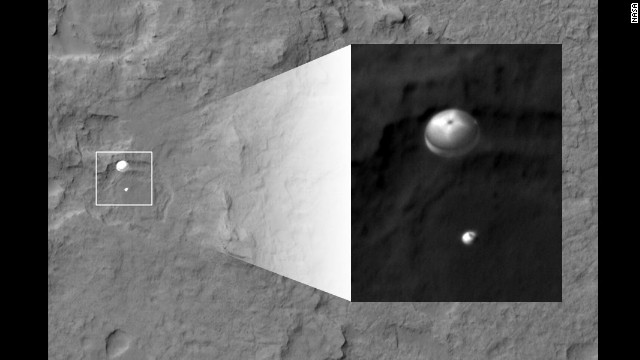
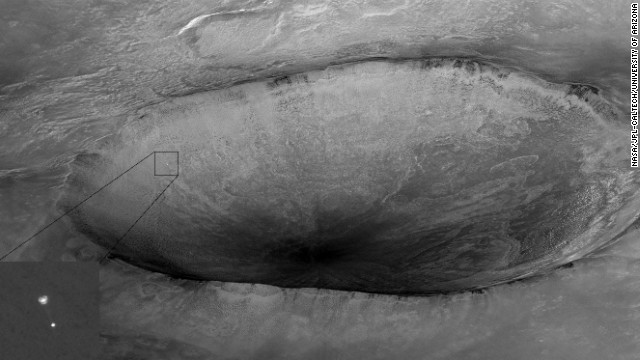
NASA's Curiosity rover and its parachute were spotted by NASA's Mars Reconnaissance Orbiter as Curiosity descended to the surface on Sunday. The rover landed early on August 6 (ET).
A camera on Curiosity snapped this image of the rover's heat shield falling away about two and a half minutes before landing.
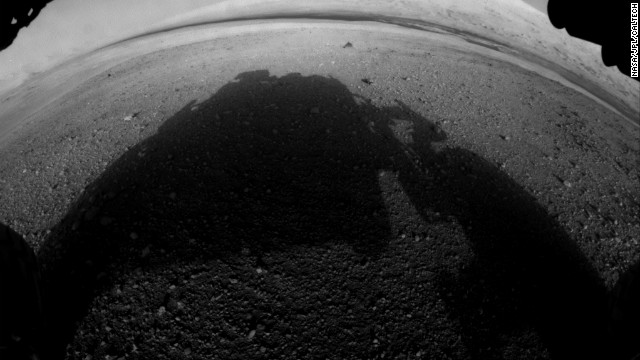
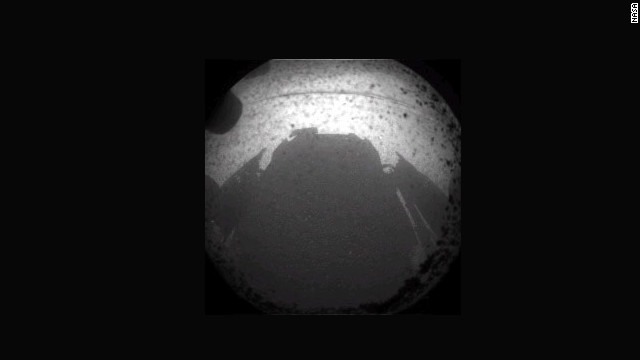
This is one of the first pictures taken by Curiosity after it landed. It shows the rover's shadow on the Martian soil.
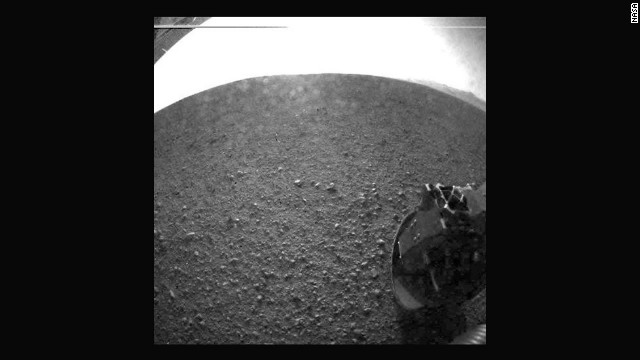
Another of the first images taken by the rover. The clear dust cover that protected the camera during landing has popped open. Part of the spring that released the dust cover can be seen at the bottom right, near the rover's wheel.
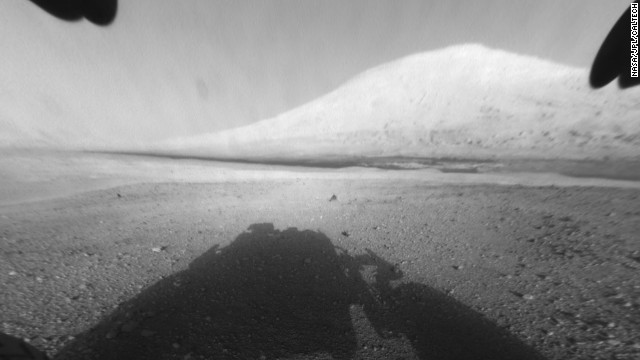
This image shows Curiosity's main science target, Mount Sharp. The rover's shadow can be seen in the foreground. The dark bands in the distances are dunes.
Another of the first images beamed back from NASA's Curiosity rover on August 6 is the shadow cast by the rover on the surface of Mars.
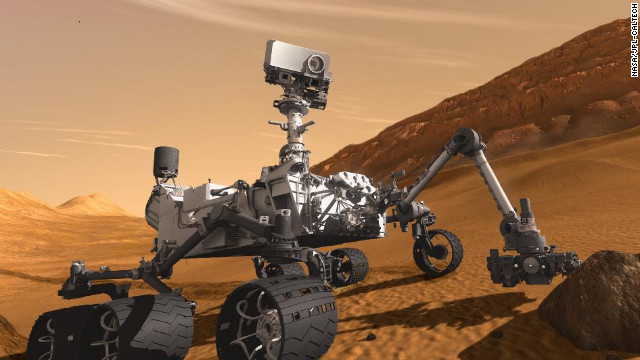
NASA's Mars Curiosity Rover, shown in this artist's rendering, touched down on the planet on August 6.
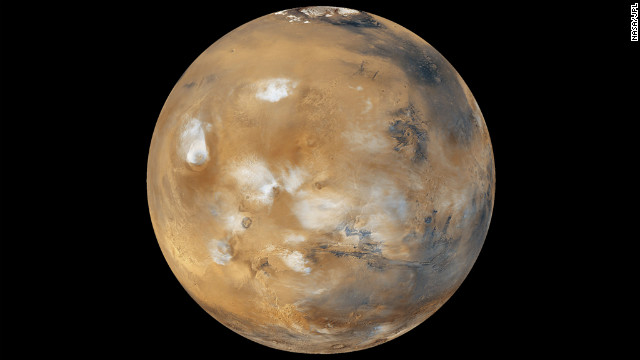
Water-ice clouds, polar ice and other geographic features can be seen in this full-disk image of Mars from 2011.
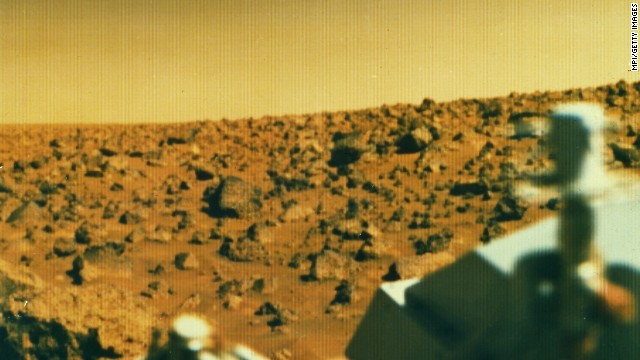
This image was captured in 1976 by Viking 2, one of two probes sent to investigate the surface of Mars for the first time. NASA's Viking landers blazed the trail for future missions to Mars.
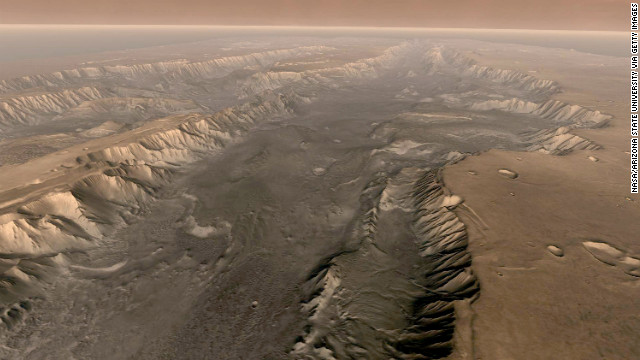
The Valles Marineris rift system on Mars is 10 times longer, five times deeper and 20 times wider than the Grand Canyon. This composite image was made aboard NASA's Mars Odyssey spacecraft, which launched in 2001.
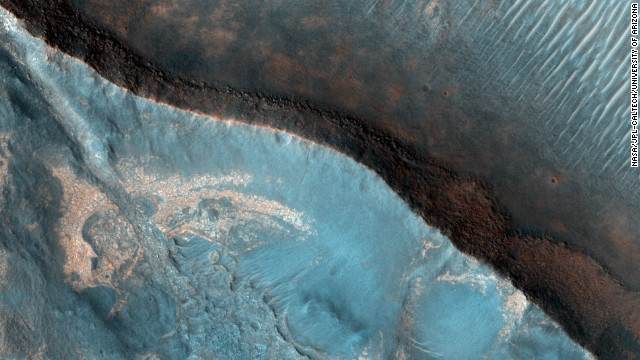
The Nili Fossae region of Mars is one of the largest exposures of clay minerals discovered by the OMEGA spectrometer on Mars Express Orbiter. This image was taken in 2007 as part of a campaign to examine more than two dozen potential landing sites for NASA's new Mars rover, Curiosity, also known as the NASA Mars Science Laboratory.
NASA's Mars Phoenix Lander descends to the surface of Mars in May 2008. Fewer than half of the Mars missions have made successful landings.
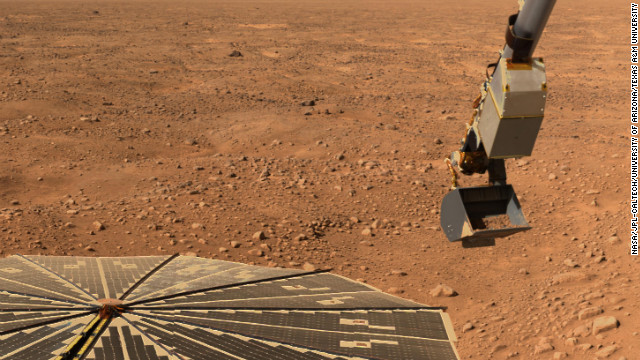
Phoenix's robotic arm scoops up a sample on June 10, 2008, the 16th Martian day after landing. The lander's solar panel is seen in the lower left.
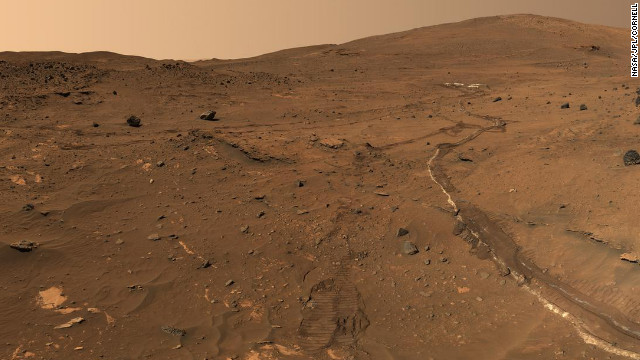
In 2006, NASA's Mars Exploration Rover Spirit captured a 360-degree view known as the McMurdo panorama. The images were taken at the time of year when Mars is farthest from the sun and dust storms are less frequent.
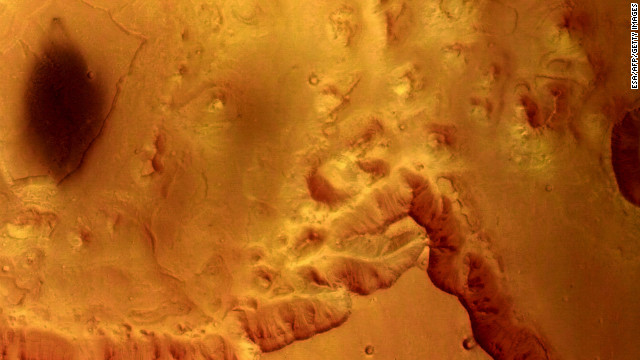
The European Space Agency's Mars Express captured this view of Valles Marineris in 2004. The area shows mesas and cliffs as well as features that indicate erosion from flowing water.
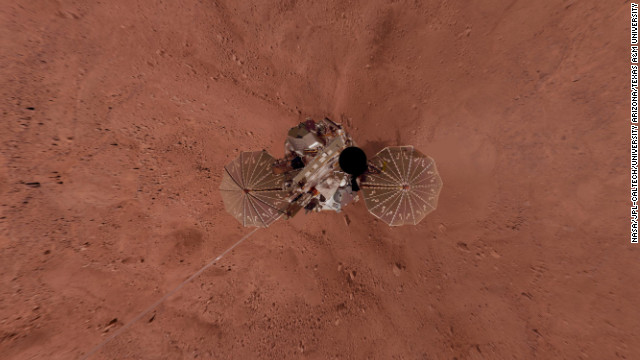
This view is a vertical projection that combines more than 500 exposures taken by Phoenix in 2008. The black circle on the spacecraft is where the camera itself is mounted.
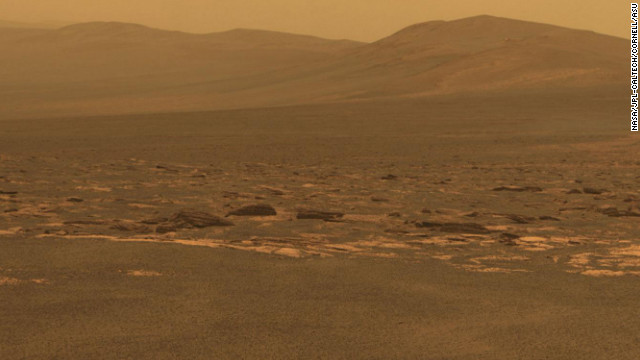
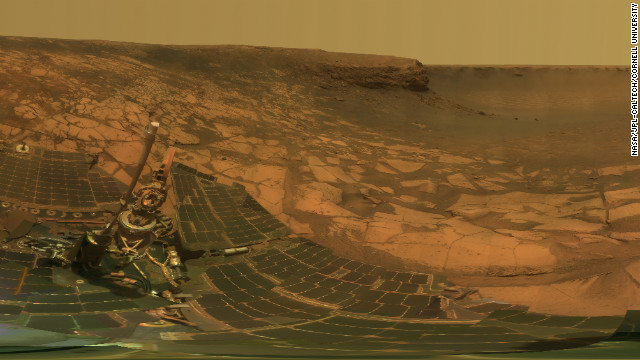
A portion of the west rim of the Endeavour crater sweeps southward in this view from NASA's Mars Exploration Rover Opportunity in 2011. The crater is 22 kilometers (13.7 miles) across.
A photo captured by NASA's Mars Global Surveyor in 2000 offers evidence that the planet may have been a land of lakes in its earliest period, with layers of Earth-like sedimentary rock that could harbor the fossils of any ancient Martian life.
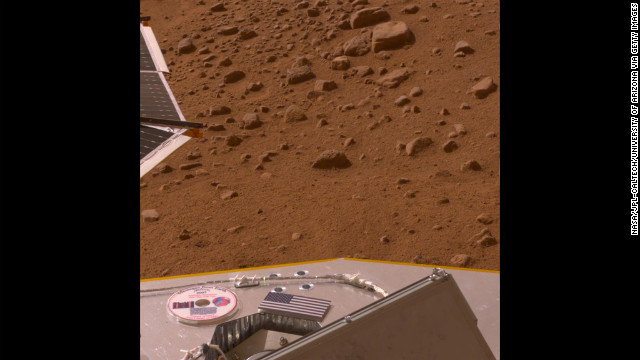
A U.S. flag and a DVD containing a message for future explorers of Mars, science fiction stories and art about the planet, and the names of 250,000 people sit on the deck of Phoenix in 2008.
A rock outcrop dubbed Longhorn and the sweeping plains of the Gusev crater are seen in a 2004 image taken by the Mars Exploration Rover Spirit.
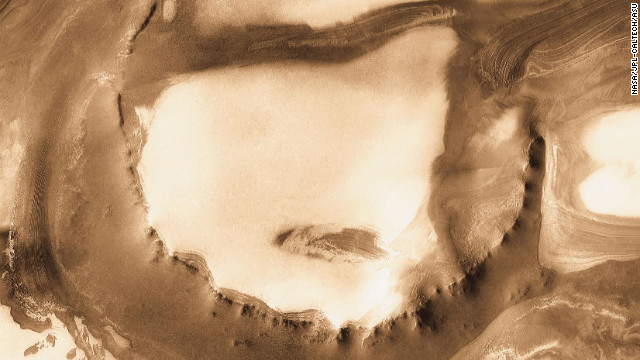
Although it is 45 kilometers (28 miles) wide, countless layers of ice and dust have all but buried the Udzha crater on Mars. The crater lies near the edge of the northern polar cap. This image was taken by NASA's Mars Odyssey Orbiter in 2010.
NASA's Opportunity examines rocks inside an alcove called Duck Bay in the western portion of the Victoria crater in 2007.
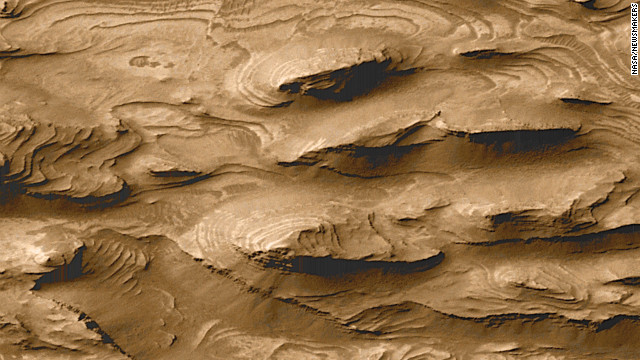
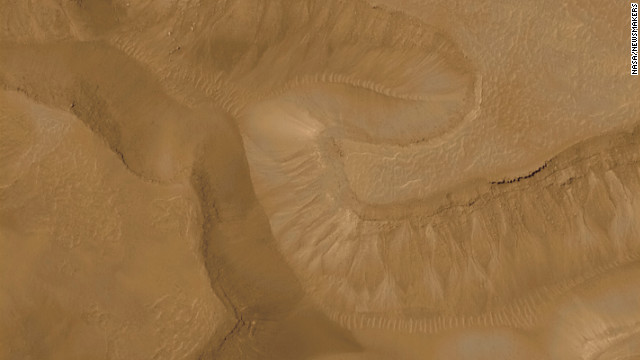
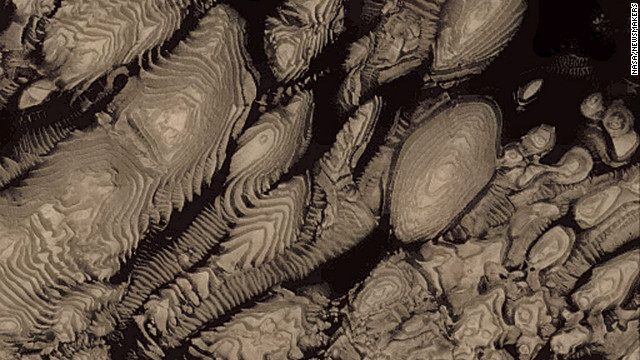
Pictured is a series of troughs and layered mesas in the Gorgonum Chaos region of Mars in 2008. This photo was taken by Mars Orbiter Camera on the Mars Global Surveyor.
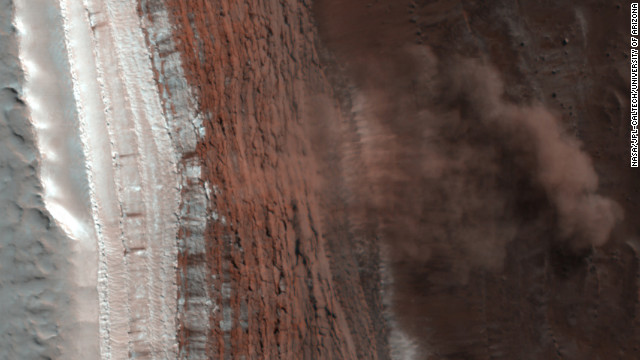
An image captured in 2008 by NASA's Mars Reconnaissance Orbiter shows at least four Martian avalanches, or debris falls, taking place. Material, likely including fine-grained ice and dust and possibly large blocks, detached from a towering cliff and cascaded to the gentler slopes below.
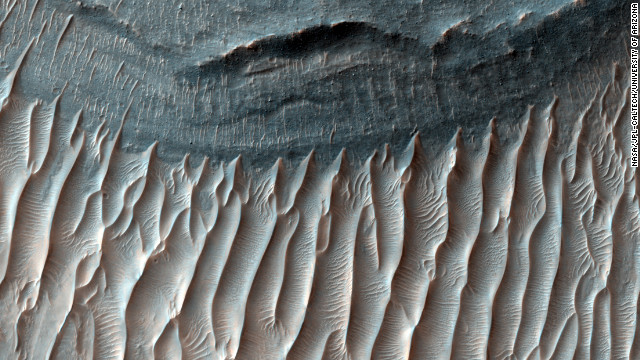
This 2008 image spans the floor of Ius Chasma's southern trench in the western region of Valles Marineris, the solar system's largest canyon. Ius Chasma is believed to have been shaped by a process called sapping, in which water seeped from the layers of the cliffs and evaporated before it reached the canyon floor.
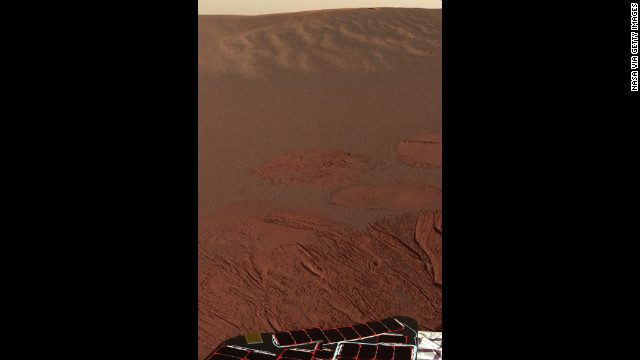
Pictured is the Martian landscape at Meridiani Planum, where the Mars Exploration Rover Opportunity successfully landed in 2004. This is one of the first images beamed back to Earth from the rover shortly after it touched down.
An image from the Mars Global Surveyor in 2000 shows potential evidence of massive sedimentary deposits in the western Arabia Terra impact crater on the surface of Mars.
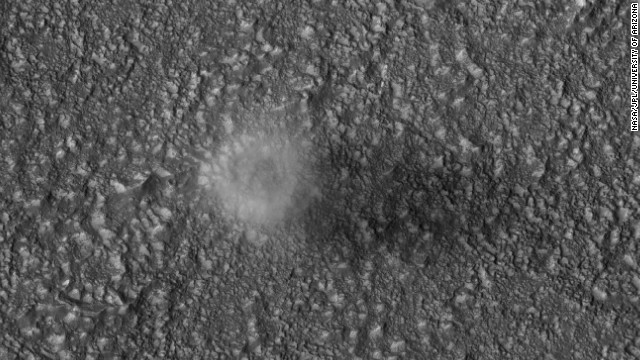
The Mars Reconnaissance Orbiter captures a dust devil blowing across the Martian surface east of the Hellas impact basin in 2007. Dust devils form when the temperature of the atmosphere near the ground is much warmer than that above. The diameter of this dust devil is about 200 meters (650 feet).
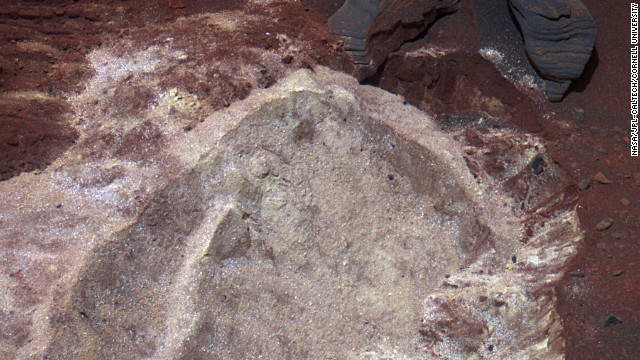
Soft soil is exposed when the wheels of NASA's Mars Exploration Rover Spirit dig into a patch of ground dubbed Troy in 2009.
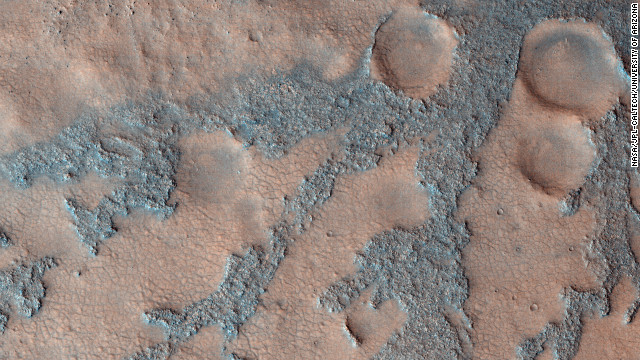
An image from NASA's Mars Reconnaissance Orbiter shows the floor of the Antoniadi Crater in 2009.
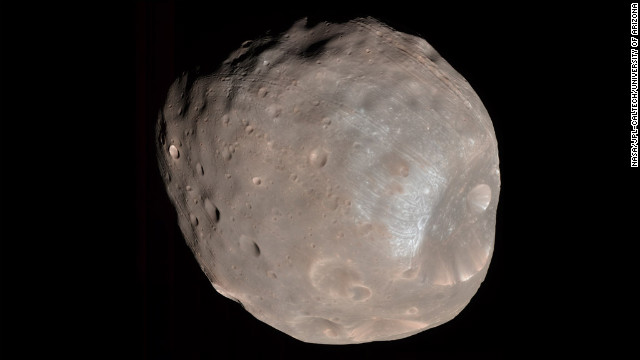
The larger of Mars' two moons, Phobos, is seen in 2008 from the Mars Reconnaissance Orbiter.
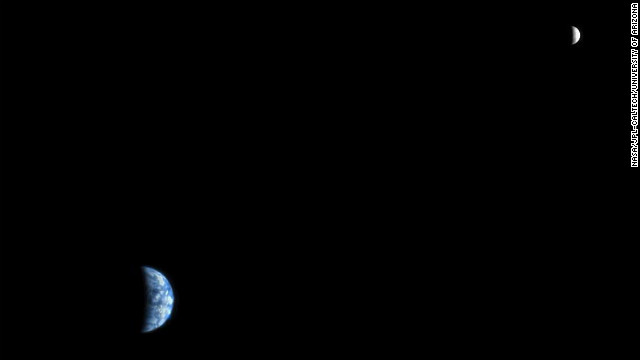
Earth and the moon are seen in 2007 from the Mars Reconnaissance Orbiter. At the time the image was taken, Earth was 142 million kilometers (88 million miles) from Mars.
1
2
3
4
5
6
7
8
9
10
11
12
13
14
15
16
17
18
19
20
21
22
23
24
25
26
27
28
29
30
31
32
- The images cover the last two and a half minutes of descent
- The $2.6 billion Curiosity made its dramatic arrival on Martian terrain Monday
- "The image sequence received so far indicates Curiosity had, as expected, a very exciting ride," NASA says
Follow @CNNLightYears on Twitter for updates on Curiosity.
(CNN) -- Images beamed to Earth show NASA's rover Curiosity had an "exiting ride" when it landed on the Red Planet, the space agency said Tuesday.
NASA obtained some 297 color, low-resolution images sent to Earth from its rover that landed on Mars early Monday.
The images cover the last two and a half minutes of descent.
"The image sequence received so far indicates Curiosity had, as expected, a very exciting ride to the surface," NASA said in a press statement.
"As dramatic as they are, there is real other-world importance to obtaining them. These images will help the mission scientists interpret the rover's surroundings, the rover drivers in planning for future drives across the surface, as well as assist engineers in their design of forthcoming landing systems for Mars or other worlds."
The images shows some of the "gyrations" Curiosity did while it was connected to a parachute. The images, which can be viewed on NASA's website, also show Curiosity kicking up dust from the surface of Mars as it lands
The $2.6 billion Curiosity made its dramatic arrival on Martian terrain Monday in a spectacle popularly known as the "seven minutes of terror."
This jaw-dropping landing process, involving a sky crane and the world's largest supersonic parachute, allowed the spacecraft carrying Curiosity to target the landing area that scientists had meticulously chosen.
The spacecraft had been traveling away from Earth since November 26 on a journey of about 352 million miles (567 million kilometers), according to NASA.
Curiosity, which will be controlled from the Jet Propulsion Laboratory, has a full suite of sophisticated tools for exploring Mars. They include 17 cameras, a laser that can survey the composition of rocks from a distance and instruments that can analyze samples from soil or rocks.
The aim of its work is "to assess whether Mars ever had an environment able to support small life forms," NASA said.
Curiosity is supposed to last for two years on Mars, but it may operate longer -- after all, Spirit and Opportunity, which arrived on Mars in 2004, were each only supposed to last 90 Martian days. Spirit stopped communicating with NASA in 2010 after getting stuck in sand, and Opportunity is still going.