- NEW: Annan says compromise is needed, and al-Assad must leave office
- U.N. Secretary-General Ban Ki-moon announced the move with "deep regret"
- Arab League Secretary-General Nabil El Araby and Ban are looking for a successor
- Annan's mandate expires at the end of the month
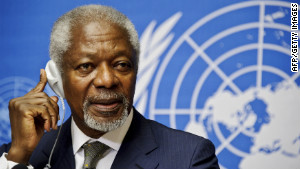
(CNN) -- Kofi Annan, whose initiative to forge peace in war-ravaged Syria failed to take hold, said he has resigned as the U.N. and Arab League joint special envoy because of "increasing militarization on the ground" and "the clear lack of unity" at the U.N. Security Council.
Annan said he told U.N. Secretary-General Ban Ki-moon and Arab League Secretary-General Nabil El Araby that he didn't want to renew his mandate when it expires August 31.
Syria state-run TV said the nation "expresses regret for the resignation," and Ban said he and El Araby are looking for a successor to take on the "crucial peacemaking effort."
In Geneva, Annan said he accepted the job despite its challenges, a task that some had dubbed "Mission Impossible." He said it was a "sacred duty" to bring about peace, end the killings and abuse of civilians, and set a course toward political change.
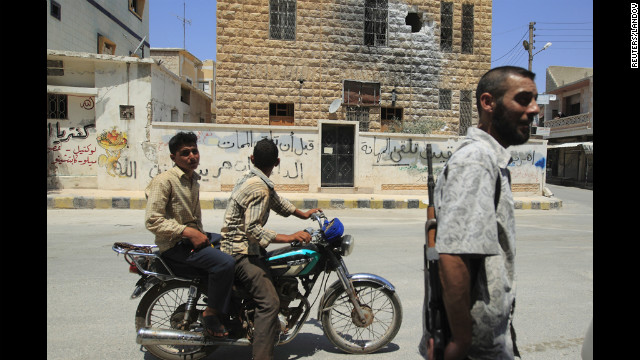
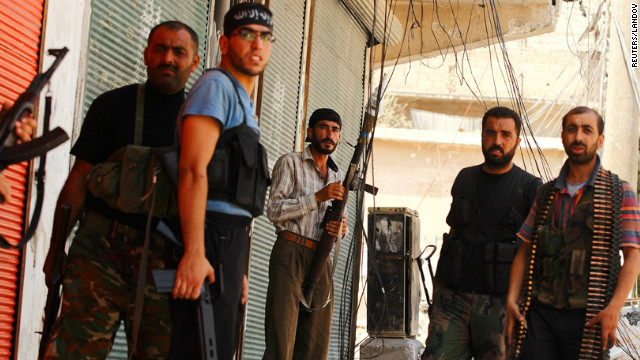
People and a member of the Free Syrian Army commute on Wednesday, August 1, past a building on the outskirts of Idlib that was hit by rocket fire Tuesday night by forces loyal to President Bashar al-Assad. Unrest spread across other volatile regions of the country as al-Assad's forces shelled targets and launched raids in and around Damascus, Homs, Daraa and Deir Ezzor.
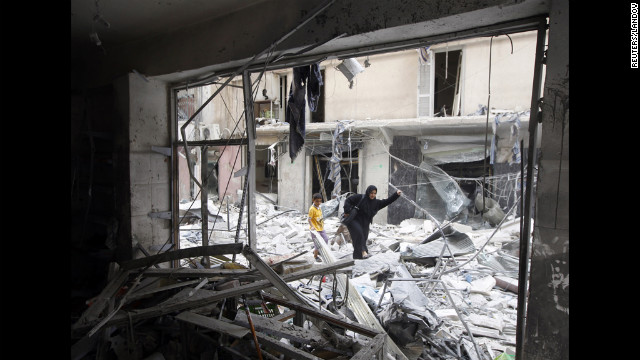
A woman and child on Wednesday walk through rubble of a building destroyed by shelling from forces loyal to Syrian President Bashar al-Assad in Aleppo.
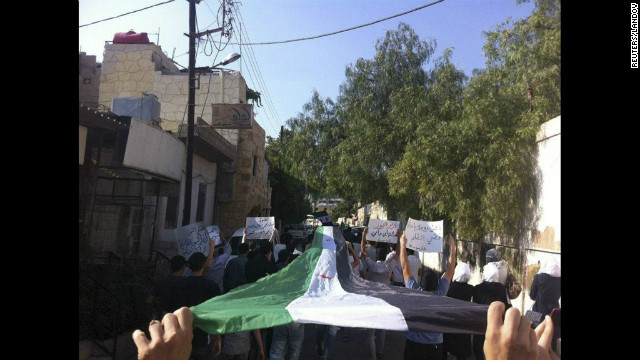
Demonstrators hold an opposition flag during a protest Wednesday against Syria's President Bashar al-Assad in Damascus.
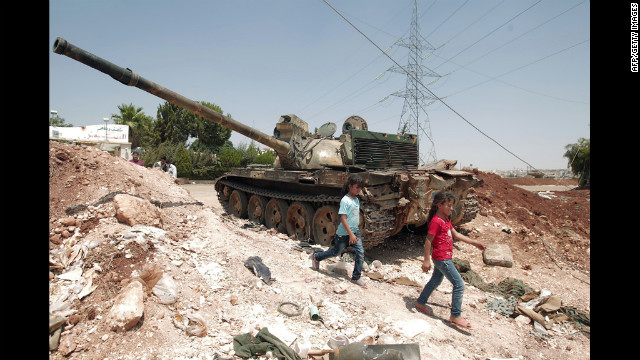
Syrian girls on Wednesday walk past a Syrian army tank captured two days earlier by rebel fighters at a checkpoint in the village of Anadan. The strategic checkpoint secures the rebel fighters free movement between the northern city of Aleppo and Turkey.
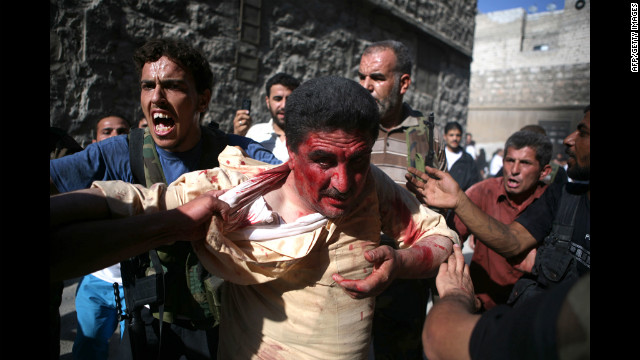
Rebel Free Syrian Army fighters capture a policeman who they allege is a "Shabiha" or pro-regime militiaman, on Tuesday, July 31, as the rebels overrun a police station in Aleppo.
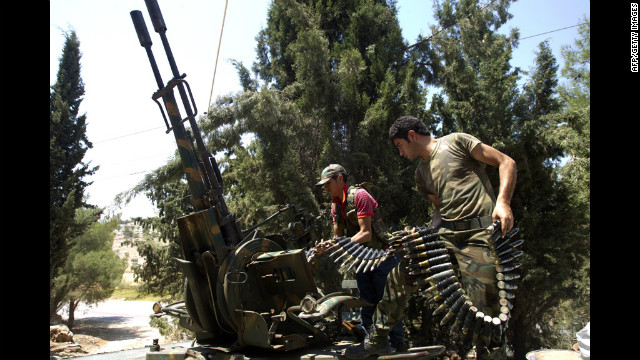
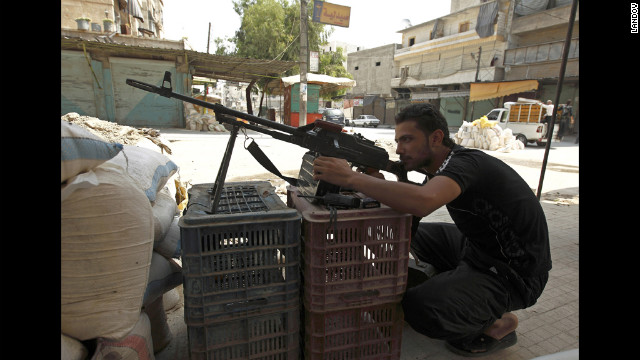
Rebel fighters load an anti-aircraft machine gun on an armored vehicle in Atareb, east of Syria's second-largest city, Aleppo, on Tuesday, July 31.
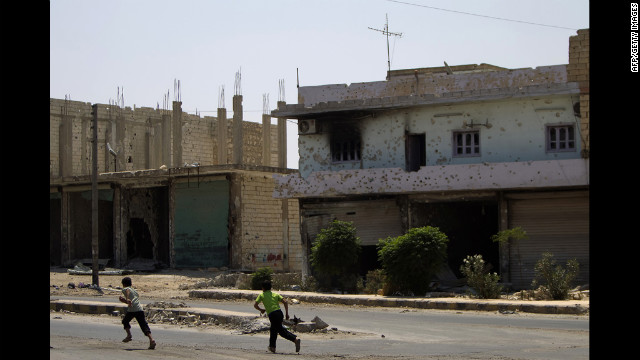
Syrian boys run near a building hit by bullets and fire in Atareb.
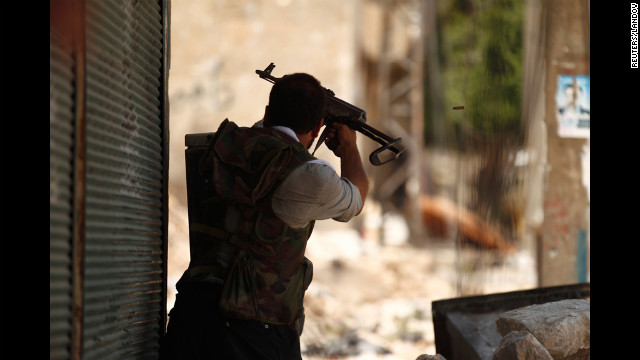
A member of the Free Syrian Army fires at forces loyal to President Bashar Al-Assad in a district of Aleppo called Salah Edinne on Tuesday.
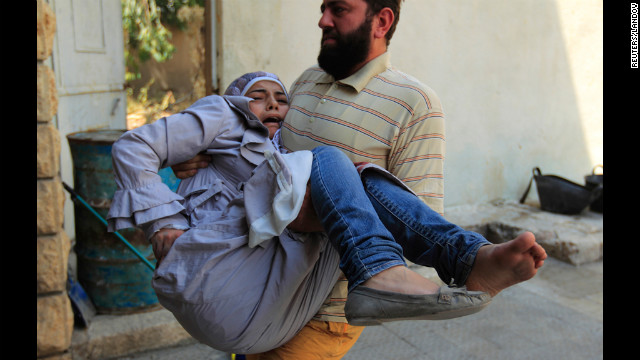
A member of the Free Syrian Army carries an injured civilian to safety in Aleppo's district of Salah Edinne on Tuesday.
Members of the Free Syrian Army learn that a tank belonging to forces loyal to President Bashar Al-Assad is heading to the area.
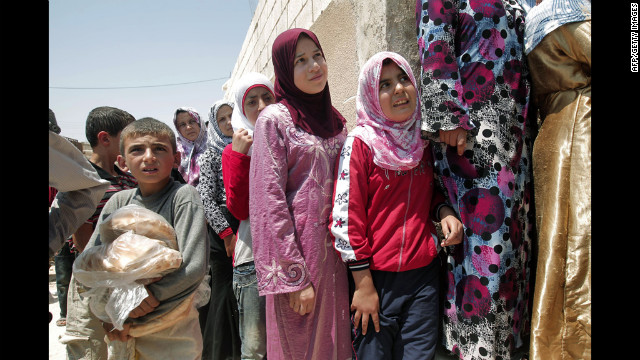
A Syrian boy carries bags of bread as people wait outside a bakery near Syria's second-largest city, Aleppo.
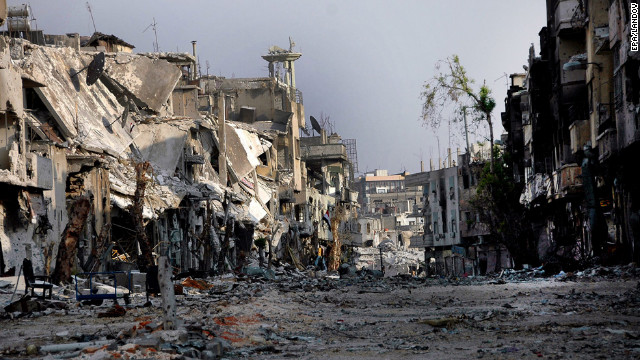
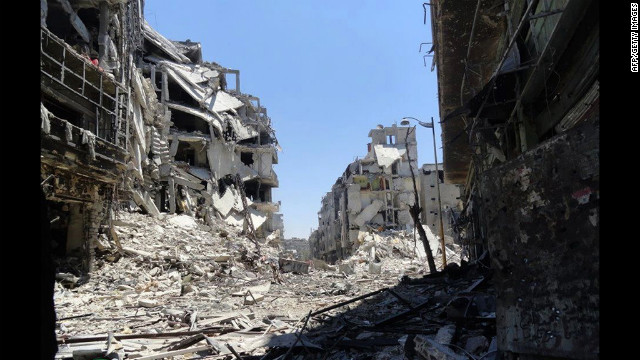
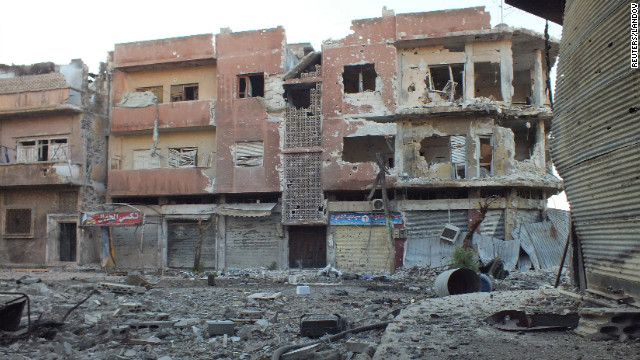
A photo released by Syrian Arab News Agency depicts damaged buildings in Homs on Monday, July 30.
A Free Syrian Army fighter takes position Sunday, July 29, in Aleppo as people flee shelling. Intense clashes have been under way for more than a week between the regime and rebels in Aleppo, Syria's commercial and cultural center.
Parts of Syria's largest city saw the fiercest clashes yet in the country's 16-month crisis on Saturday, July 28. About 200,000 people have fled fighting in Aleppo and surrounding areas in the past two days, a U.N. official says.
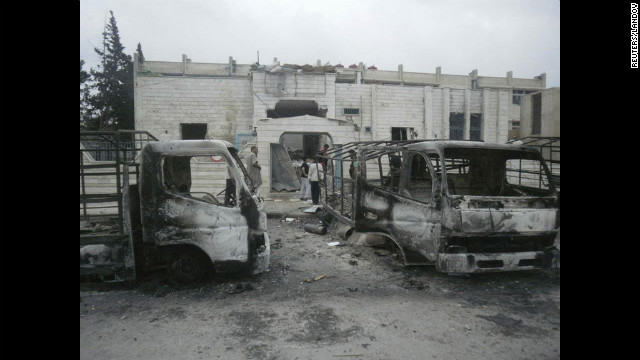
Fighting leaves vehicles damaged Saturday in the southwestern city of Daraa.
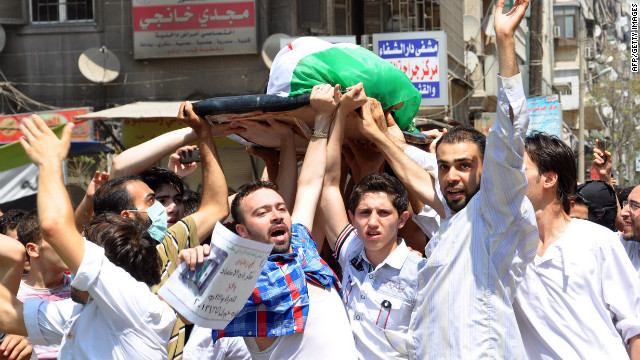
Syrians carry the body of a man allegedly killed in the bombardment of Sukari, southwest of Aleppo, by Syrian regime forces on July 27.
Destruction appears widespread in Homs on Friday, July 27, in a handout photo from the Syrian opposition Shaam News Network.
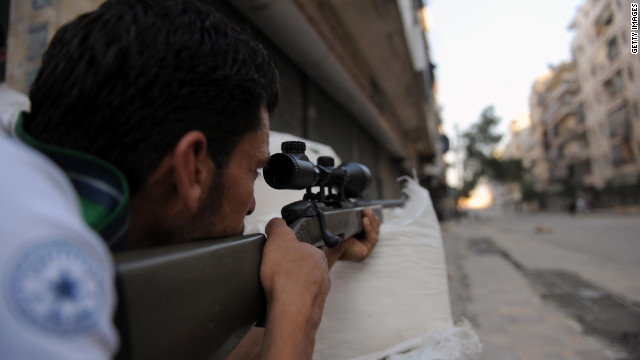
A Syrian opposition fighter takes aim during clashes with forces loyal to President Bashar al-Assad in Aleppo on Wednesday, July 25.
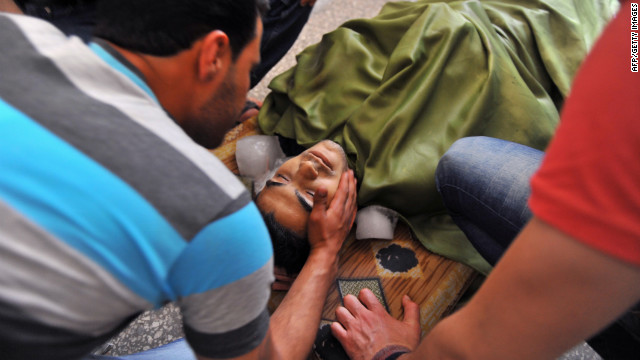
Family and friends mourn over the body of Usame Mircan, who they say was killed by a Syrian government sniper in Aleppo on Wednesday.
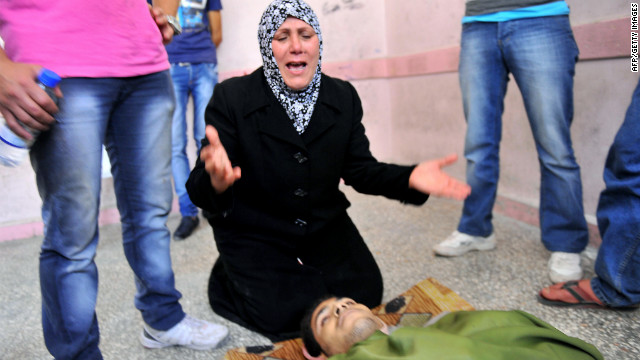
Usame Mircan's mother grieves after he was killed during fighting in Aleppo.
The bodies of men killed during clashes between Syrian rebel fighters and goverment forces lie on the Aleppo street on Thursday, July 26.
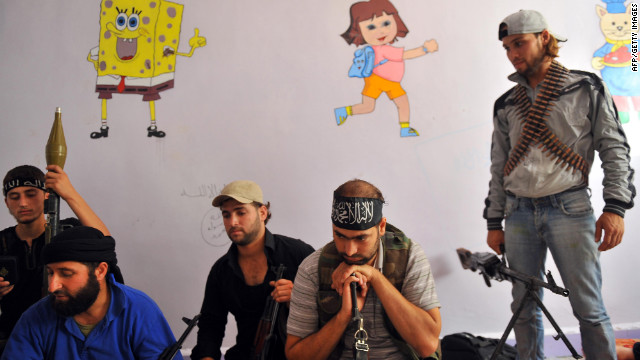
Fighters from the Syrian opposition rest at a former primary school in Aleppo on Wednesday.
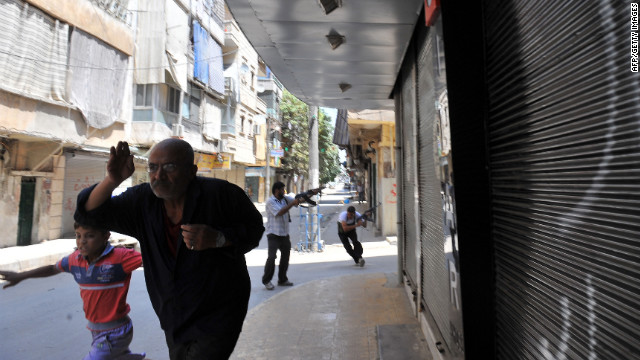
Residents take cover as fighters from the Syrian opposition clash with forces loyal to President Bashar al-Assad in Aleppo on Wednesday.
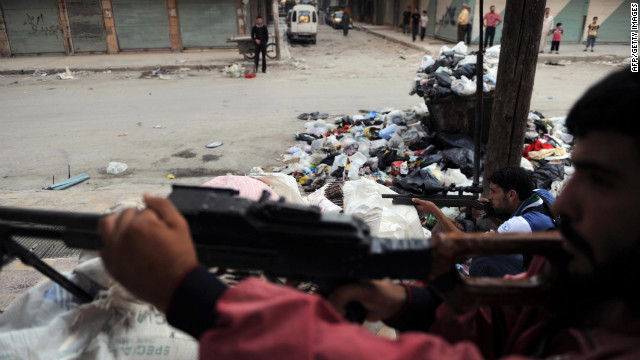
Syrian rebels guard a checkpoint in Aleppo on Wednesday.
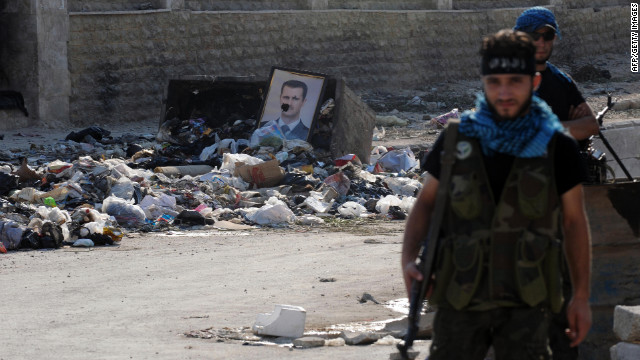
A damaged portrait of President Bashar al-Assad sits among piles of debris at a checkpoint manned by Syrian rebels in Aleppo on Wednesday.
Syrian rebels drive through Selehattin near Aleppo during clashes with government forces on Monday, July 23.
A Syrian rebel runs through the streets of Selehattin during an attack on a municipal building. The rebel Free Syrian Army says it is attempting to "liberate" several districts of Aleppo.
Syrian rebels work to find snipers during clashes Monday between the opposition and government forces in Selehattin.
Syrian rebels make their way down a street Monday in Selehattin near Aleppo. If they gain control of Aleppo, it would mark a pivotal point in the Syrian crisis.
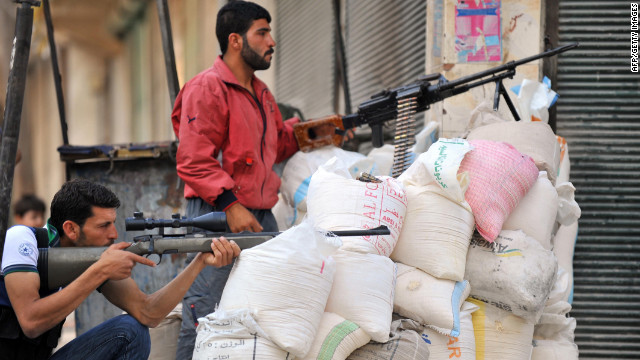
Syrian rebels take cover behind sandbags during fighting Monday at the entrance to the city of Selehattin.
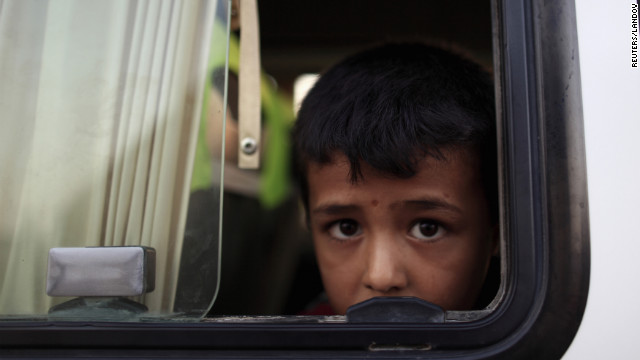
On Sunday, July 22, a Syrian refugee looks out from a bus as he arrives at a refugee camp in Turkey opposite the Syrian commercial crossing point Bab al-Hawa.
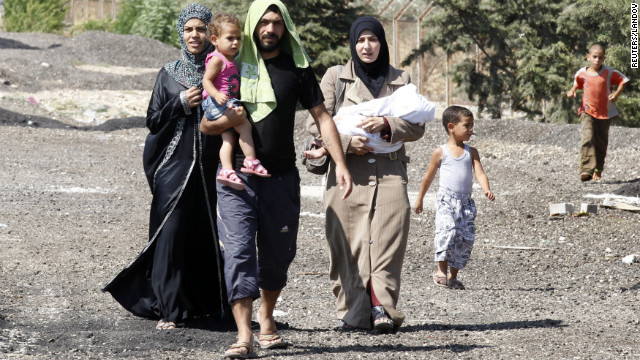
Syrian refugees flee from a refugee camp nicknamed "Container City" on the Turkish-Syrian border in Kilis province, southern Turkey, on Sunday.
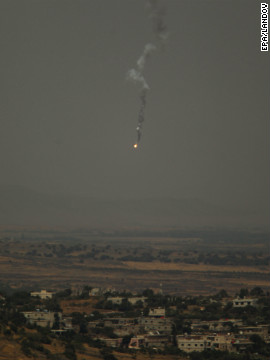
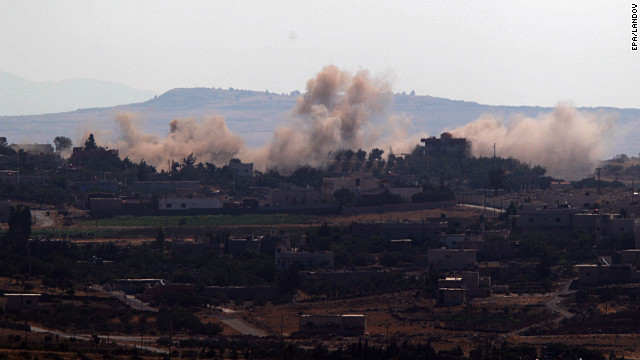
A mortar shell falls toward the Syrian village of Jbatha Al-khashab, about 45 kilometers (28 miles) south of Damascus. It's seen from the Israeli side of the border, in the Golan Heights.
Smoke from artillery shelling rises above Jbatha Al-khashab.
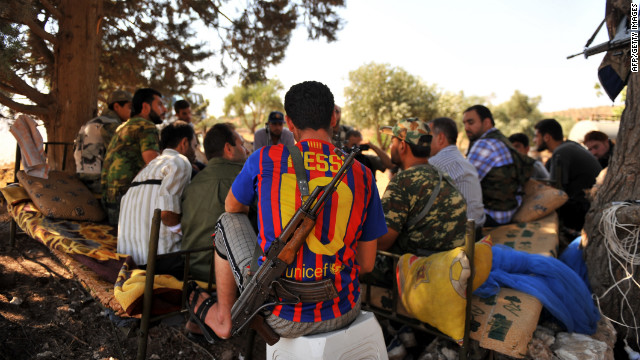
An armed Syrian rebel wearing the jersey of FC Barcelona rests with comrades near the northern city of Aleppo on Sunday. The rebel Free Syrian Army announced the start of the battle to "liberate" Aleppo, Syria's commercial hub and a traditional bastion of President Bashar al-Assad's regime.
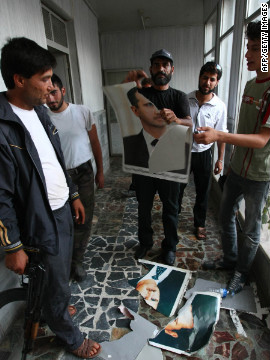
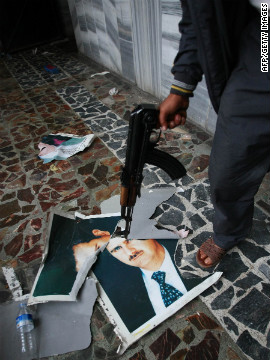
A Free Syrian Army soldier rips a portrait of President Bashar al-Assad at the Bab Al-Salam border crossing to Turkey on Sunday.
Dozens of Turkish truck drivers on Saturday, July 21, accused Free Syrian Army rebels of having burned and looted their lorries as they captured Syria's Bab al-Hawa post, near Aleppo, from government troops.
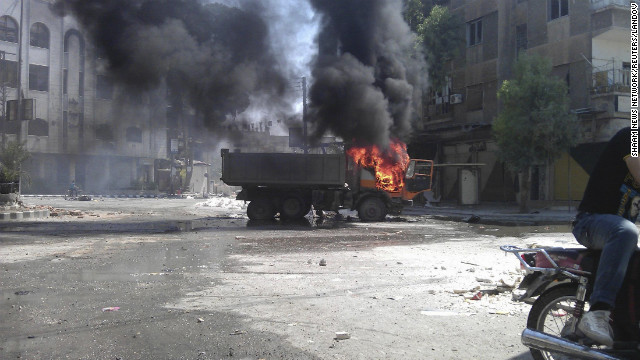
In this photo released by the Shaam News Network, a truck burns after shelling in the Erbeen suburb of Damascus on Saturday, July 21.
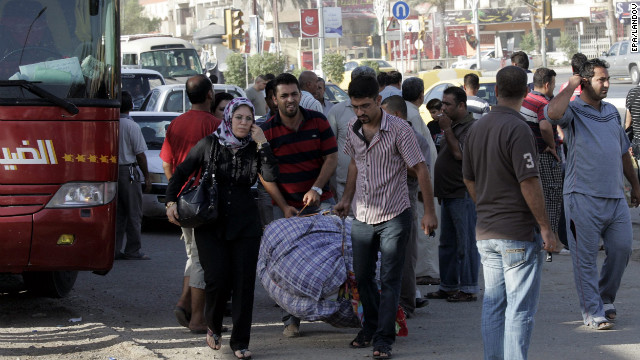
Refugees fleeing the violence in Syria arrive by bus in Baghdad, Iraq, on Saturday.
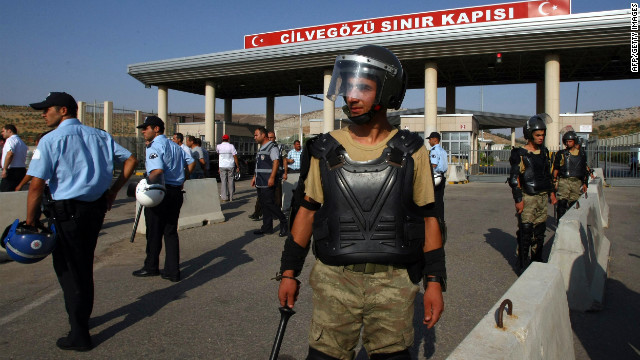
Turkish soldiers stand guard at the Cilvegozu border gate in Reyhanly that connects to Syria's Bab al-Hawa post. An estimated 120,000 people have fled Syria to Turkey, Iraq, Lebanon and Jordan.
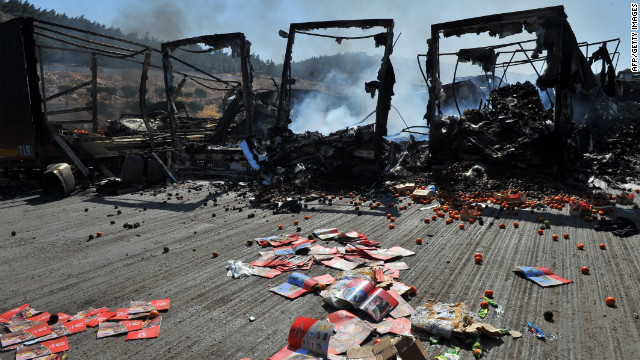
Burned-out trucks at the Bab al-Hawa Syrian border post with Turkey on Friday, July 20. Syrian rebels seized control of the post after a fierce battle with Syrian troops, an AFP photographer at the scene reported.
Syrian soldiers celebrate in the al-Midan area in Damascus on Friday. Syrian regime forces routed rebel fighters from the Damascus neighbourhood of Midan, Syrian state television reported, saying troops had "cleaned" the district of "terrorists."
Journalists are shown a dead body on a government tour of the al-Midan area in Damascus on Friday.
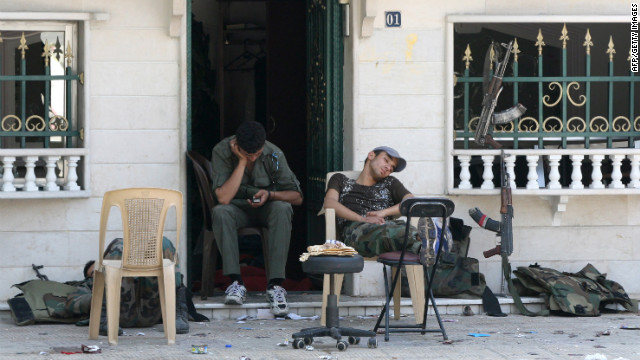
Members of Syria security forces rest in the al-Midan area in Damascus on Friday.
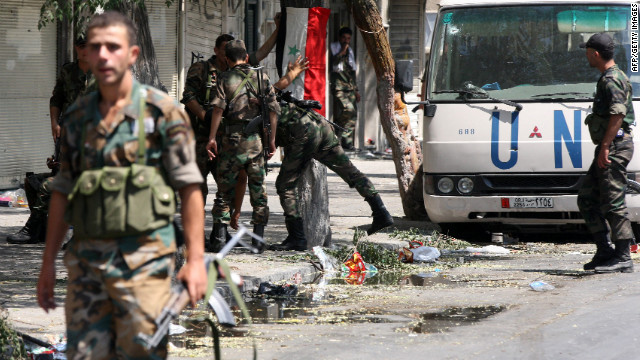
Syrian army soldiers hang their national flag in a partially destroyed neighborhood in the al-Midan area in Damascus.
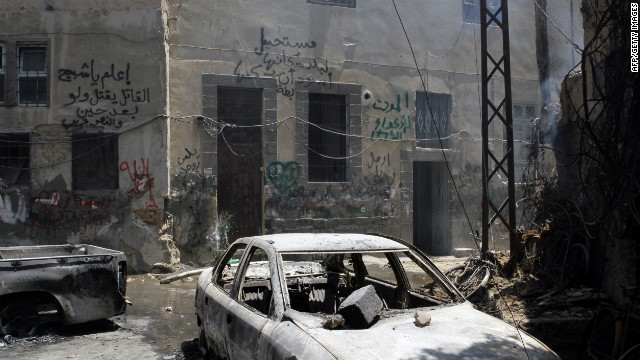
Smoke hangs in the air in a partially destroyed neighborhood in the al-Midan area in Damascus.
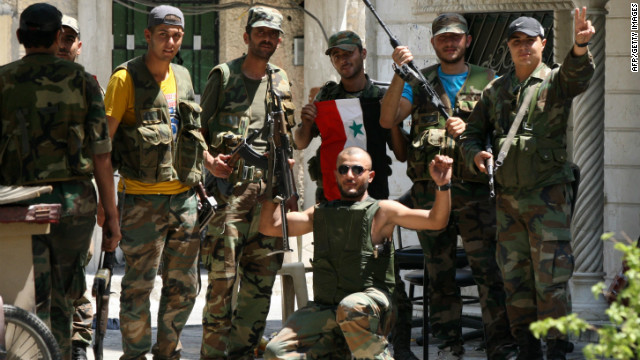
Members of Syria security forces pose for photographers in the al-Midan area in Damascus after driving out the rebel fighters.
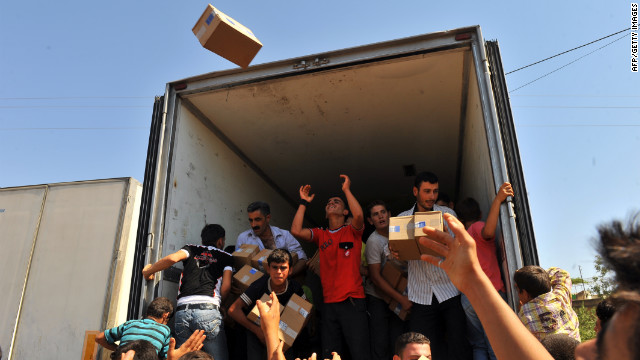
Syrian residents take goods from a truck that rebels captured at the Bab al-Hawa border crossing with Turkey on Friday.
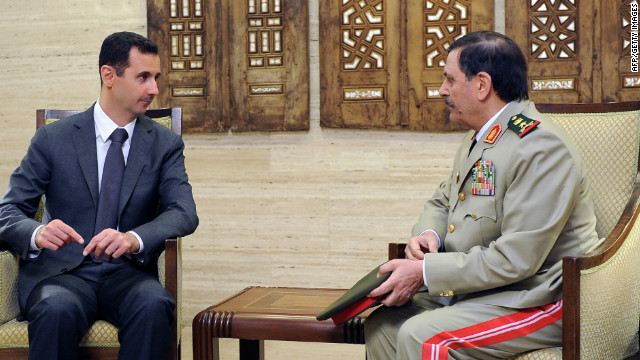
A picture released by the official Syrian Arab News Agency on July 19 shows Syrian General Fahd al-Freij meeting with President Bashar al-Assad in Damascus after his swearing-in ceremony as defense minister.
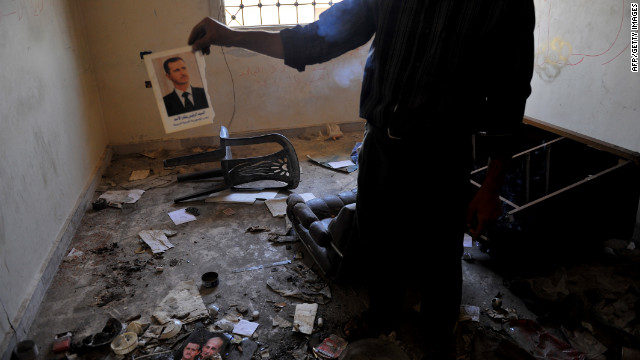
A man holds up a picture of President Bashar al-Assad at a former police station in Atareb after clashes between Syrian soldiers and Free Syrain Army near Aleppo on Thursday, July 19. Rebels seized control of border crossings with Iraq on Thursday, dealing a new blow to al-Assad, as China and Russia dismayed the West by blocking U.N. action against his regime.
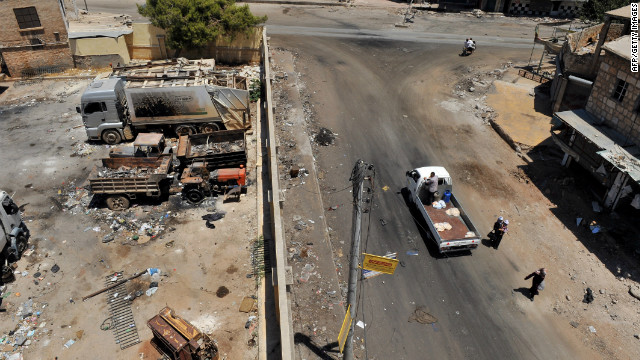
People walk along the street in Atareb amidst damage caused by clashed between Syrian soldiers and the Free Syrian Army.
A Syrian man checks the former police station of Syrian regime after a clash at Atareb on Thursday.
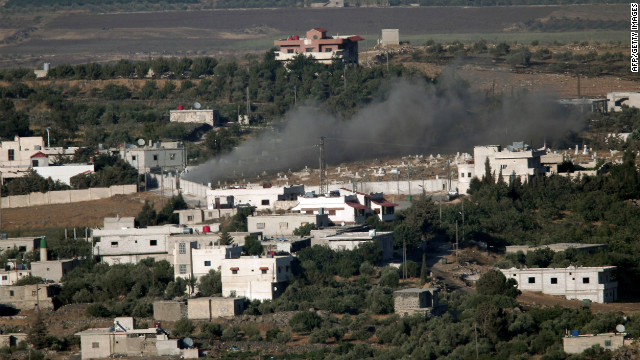
Smoke ascends from from alleged shelling of the Syrian village of Jebata al-Khashab as seen from the hill village of Buqaata in the Israeli-annexed Golan Heights on Thursday.
The death toll in Syria on July 12 reached 287, making it the bloodiest day in Syria since the uprising began. As it has done consistently, Syrian state television blamed "armed terrorist groups" for the killings.
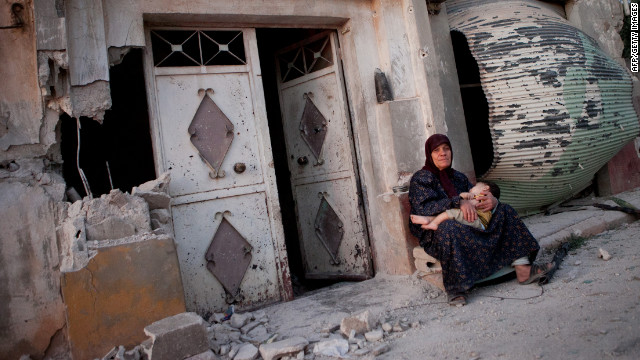
A Syrian woman sits with her grandson outside a damaged building after attacks in the Syrian village of Treimsa on July 13, 2012. More than 200 people were massacred in the town, according to activists.
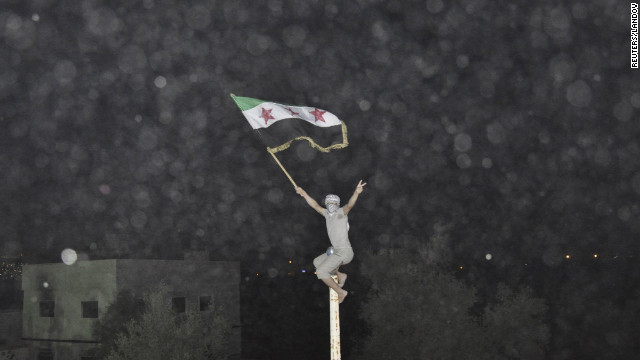
A Syrian demonstrator holds an opposition flag during a protest in Damascus on July 2, 2012. There have been increasing reports of violence in the Syrian capital.
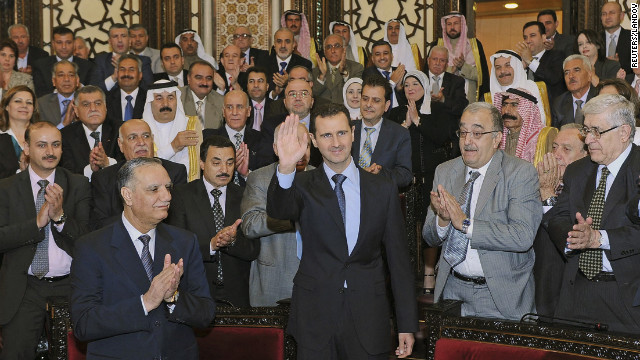
Syria's President Bashar al-Assad waves as he arrives for a speech to Syria's parliament in Damascus on June 3, 2012. The embattled president denied that government forces were behind the "outrageous" massacre in Houla.
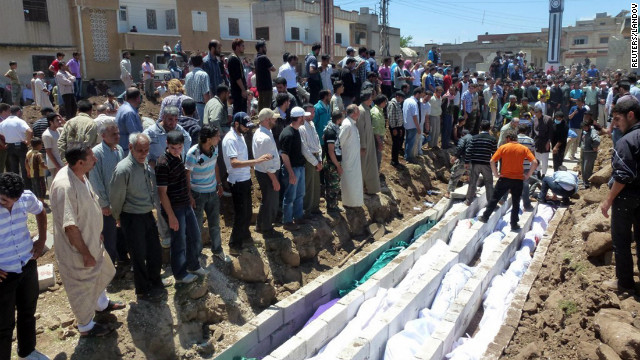
People gather at a mass burial on May 26, 2012 for victims reportedly killed during an artillery barrage from Syrian forces in Houla. The attack left at least 108 people dead, including nearly 50 children, according to the United Nations.
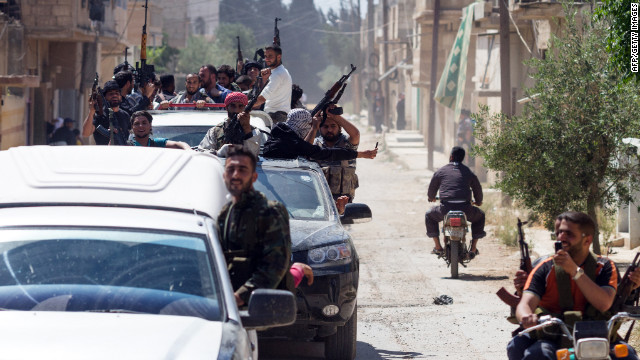
Members of the Free Syrian Army return to Qusayr on May 12, 2012 after an attack on Syrian regime forces in the village of Nizareer, near the Lebanese border in Homs.
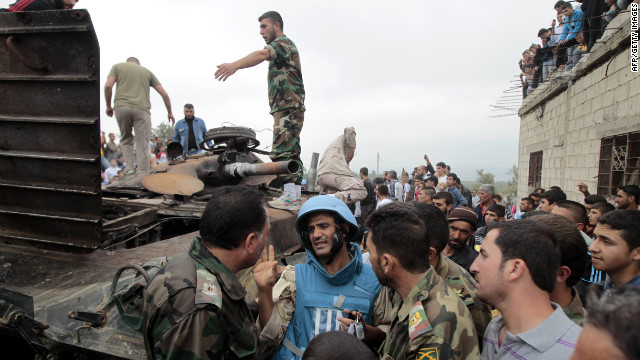
A U.N. observer speaks with Syrian rebels and civilians in the village of Azzara on May 4, 2012, days before the country's parlianemtary polls were held against a backdrop of unrest.
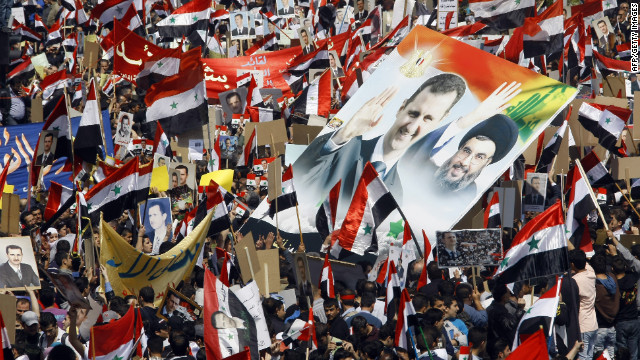
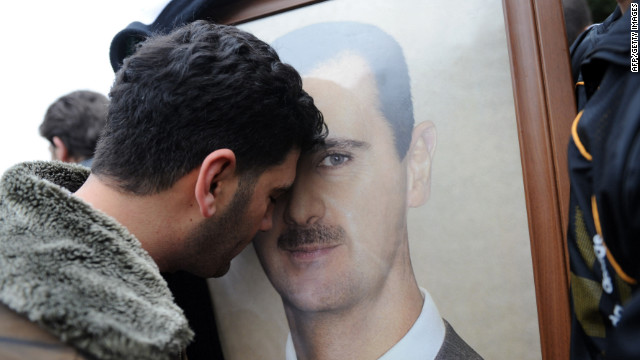
Thousands of Syrians wave their national flag and hold portraits of President Bashar al-Assad and Lebanon's Hezbollah chief Hassan Nasrallah, right, during a rally to show support for their leader on March 29, 2012 in Damascus.
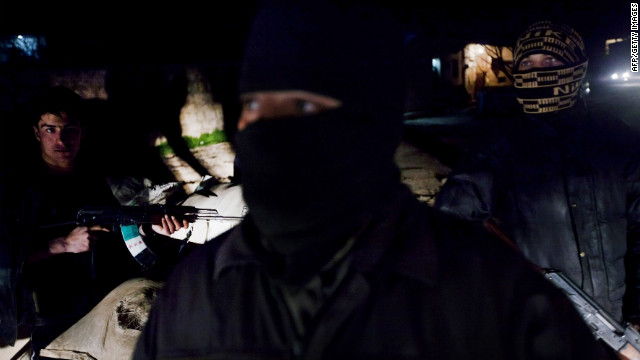
Syrian rebel fighters man a checkpoint leading into the town of Taftanaz in the rebel stronghold province of Idlib on March 20, 2012.
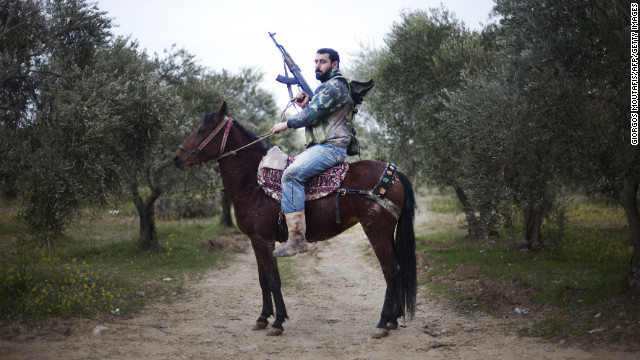
A Free Syrian Army rebel mounts his steed in the Al-Shatouria village near the Turkish border in northwestern Syria on March 16, 2012, a year after the uprising began. The Free Syrian Army is an armed opposition group made up largely of military defectors.
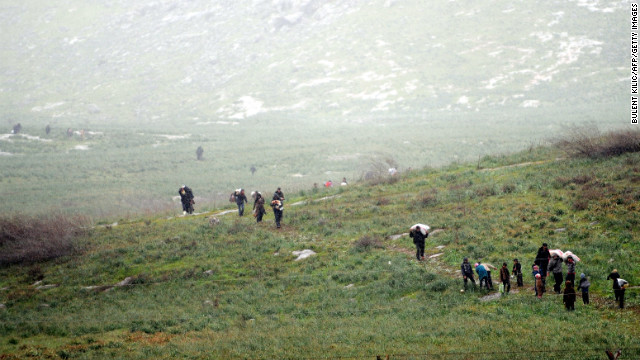
Syrian refugees walk across a field before crossing into Turkey on March 14, 2012. International mediator Kofi Annan called for an immediate halt to the killing of civilians in Syria as he arrived in Turkey for talks on the crisis.
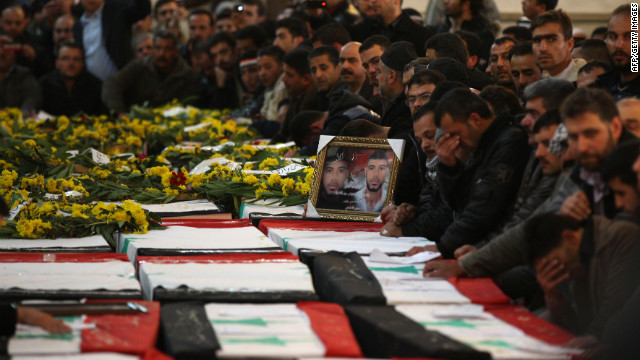
A day after the twin suicide bombings, Syrian mourners pray over the coffins of the 44 people killed during a mass funeral in Damascus.
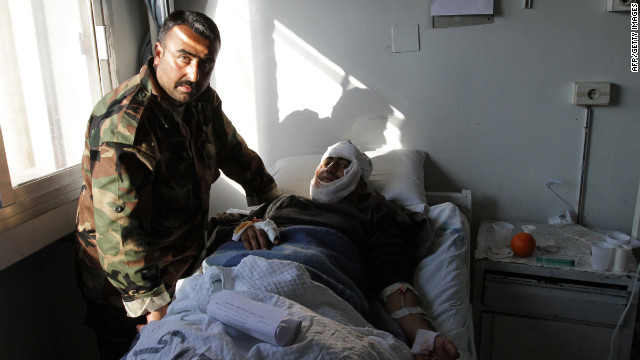
A Syrian man who was wounded in a suicide attack rests at a hospital in Damascus on December 23, 2011. Suicide bombers hit two security service bases in the Syrian capital, killing dozens of people.
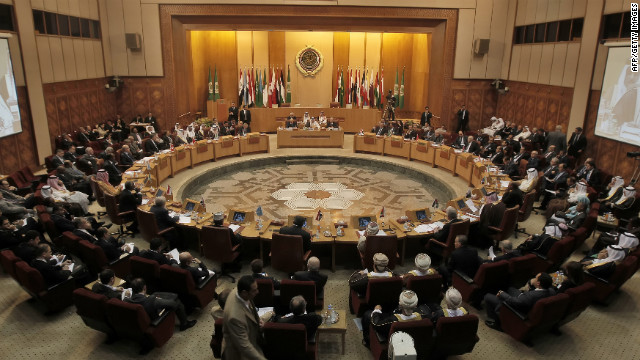
Arab foreign ministers attend an emergency meeting at the Arab League headquarters in Cairo on October 16, 2011, to discuss the crisis in Syria.
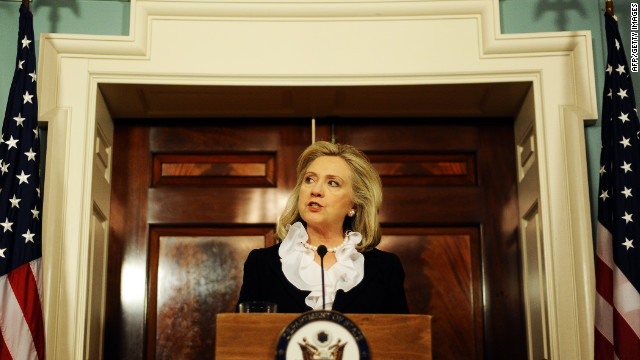
U.S. Secretary of State Hillary Clinton speaks to the media in Washington on August 18, 2011. Clinton said U.S. sanctions on Syrian oil "strike at the heart of the Syrian regime."
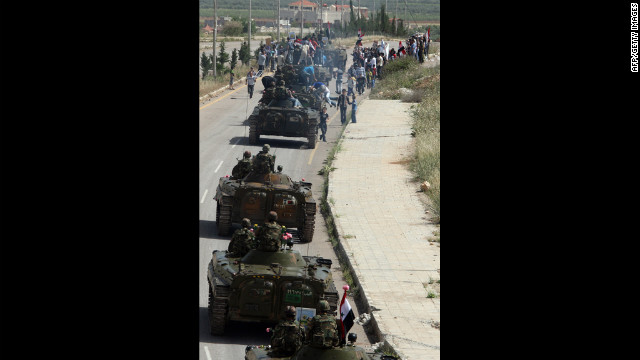
Syrian youths wave national flags while army troops drive out of Daraa on May 5, 2011. During a week-long military lockdown of the town, dozens of people were reportedly killed in what activists described as "indiscriminate" shelling on the city.
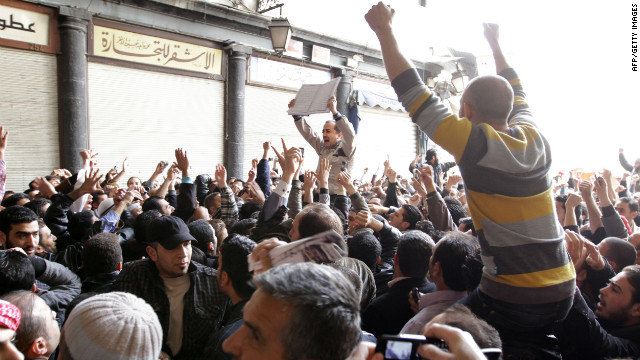
Syrians in Damascus protest in the street on March 25, 2011, after clashes with government forces in Daraa left several dead.
Supporters of Syrian President Bashar al-Assad rally on April 1 in Istanbul, Turkey, as delegates from dozens of countries gather to push for ways to end the deadly violence in Syria. The United Nations estimates more than 10,000 people have been killed since the beginning of the crisis in March 2011. The conflict is now being labeled a civil war by the International Committee of the Red Cross.
1
2
3
4
5
6
7
8
9
10
11
12
13
14
15
16
17
18
19
20
21
22
23
24
25
26
27
28
29
30
31
32
33
34
35
36
37
38
39
40
41
42
43
44
45
46
47
48
49
50
51
52
53
54
55
56
57
58
59
60
61
62
63
64
65
66
67
68
69
70
71
72
Photos: Showdown in Syria
"The severity of the humanitarian costs of the conflict, and the exceptional threats posed by this crisis to international peace and security, justified the attempts to secure a peaceful transition to a political settlement, however daunting the challenge. The increasing militarization on the ground and the clear lack of unity in the Security Council have fundamentally changed the circumstances for the effective exercise of my role," he said.
Obama authorized covert support for Syrian rebels, sources say
"Yet the bloodshed continues, most of all because of the Syrian government's intransigence and continuing refusal to implement the six-point plan, and also because of the escalating military campaign of the opposition, all of which is compounded by the disunity of the international community. At a time when we need -- when the Syrian people desperately need action, there continues to be finger-pointing and name-calling in the Security Council."
Annan, al-Assad meet over Syria crisis
Annan: All parties 'must cooperate'
Annan discusses latest action on Syria
The nearly 17-month-long Syrian crisis started when the regime brutally cracked down on peaceful protesters in March 2011 and morphed into a nationwide uprising.
Among the five permanent members of the council, Russia and China have persistently disagreed with tough action against the regime of President Bashar al-Assad that is favored by the United States, Britain and France.
The utter failure of world diplomacy and Syrian leaders to end the fighting has resulted in a humanitarian catastrophe. Opposition groups say that more than 20,000 people have died, thousands have been imprisoned by the regime and tens of thousands have been displaced from their homes.
U.S. boost humanitarian aid to Syria
The conflict is now internationally regarded as a civil war between an armed resistance movement and al-Assad's regime.
"Without serious, purposeful and united international pressure, including from the powers of the region, it is impossible for me, or anyone, to compel the Syrian government in the first place, and also the opposition, to take the steps necessary to begin a political process. You have to understand: As an envoy, I can't want peace more than the protagonists, more than the Security Council or the international community, for that matter," Annan said.
The appointment of the former secretary-general in February was supported by world powers and the Syrian government. After he took the post, he helped formulate a six-point peace plan for Syria that included a cease-fire. The United Nations established the U.N. Supervision Mission in Syria to monitor the efforts to forge the plan.
The plan called for establishing a cease-fire between al-Assad's government and the opposition, allowing humanitarian groups access to the population, releasing detainees and starting a political dialogue. It also called for government forces to withdraw from city centers.
Despite an initial and small drop in violence after his plan was announced, fighting raged nonstop. The terrain became so dangerous in Syria that U.N. monitors had to suspend their observation missions.
In an opinion piece published Thursday in the Financial Times, Annan said regional and international players have "clear common interests" in a "managed political transition."
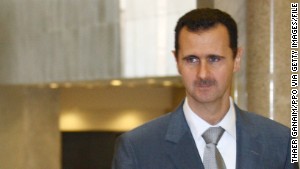
He said al-Assad "must leave office."
Read more:
From rocks to RPGs
Russia, China and Iran, friends of the Syrian regime, "must take concerted efforts to persuade Syria's leadership to change course and embrace a political transition, realizing the current government has lost all legitimacy," he said. The United States, Britain, France, Turkey Saudi Arabia and Qatar must press "the opposition to embrace a fully inclusive political process."
"None of this is possible, however, without genuine compromise on all sides," he wrote. "Syria can still be saved from the worst calamity. But this requires courage and leadership, most of all from the permanent members of the Security Council, including from Presidents Putin and Obama. Is ours an international community that will act in defense of the most vulnerable of our world, and make the necessary sacrifices to help? The coming weeks in Syria will tell."
The Annan initiative disappointed opposition groups.
Rafif Jouejati, English-language spokeswoman for the opposition Local Coordination Committees of Syria, said Annan's replacement "will be equally constrained by Assad's failure to adhere to any sort of plan, and the ongoing complicity of Russia, China and Iran in mass killings and exodus in Syria."
"The Annan resignation was expected, since his plans have failed. While this may cause discomfort for the U.N. and prove that it was unable to provide a solution for the Syrian people, it means nothing to the Syrian people. The revolution will continue until we achieve our goals of freedom, democracy and dignity.
"It is sad to watch the diplomatic process die in such indignity, but millions of Syrians had indicated that Assad had no intention of implementing any diplomatic or political solution to the current crisis in Syria," she said. "Annan's plan was fatally flawed for several reasons, chief among them that 300 unarmed observers under the near-constant supervision of regime monitors could not possibly have been effective in observing, enforcing or even reporting on a cease-fire, let alone the other tenets of the Annan Plan."
Read more: Syrian regime failed to protect civilians
Vitaly Churkin, Russian ambassador to the United Nations, said he hopes Annan uses the rest of the time on the job to be as effective as possible "under these very difficult circumstances."
"We understand that it is his decision. We regret that he chose to do so. We have supported very strongly Kofi Annan's efforts," he said. "I'm very encouraged that the secretary-general is already working on finding a successor for Kofi Annan who would be able to pick up this daunting task of putting an end to the crisis in Syria."
Ban, who was first to announce the move, praised Annan's "determined and courageous efforts" and said the news left him with "deep regret." He said that Annan worked within the mandate provided to him by the U.N. General Assembly and that he is "indebted to him and his team for all they have tried to achieve."
But Ban also said the government and the opposition have been determined "to rely on ever-increasing violence," and there have been "persistent divisions within the (U.N.) Security Council."
"Kofi Annan deserves our profound admiration for the selfless way in which he has put his formidable skills and prestige to this most difficult and potentially thankless of assignments," Ban said.
Annan had been secretary-general from 1996 to 2006 and was involved in other initiatives, including the mediation of the election dispute a few years ago in Kenya.
Ban said peace can come only if there's a "firm commitment to dialogue" among the players in Syria and international unity.
"Tragically, the spiral of violence in Syria is continuing. The hand extended to turn away from violence in favor of dialogue and diplomacy -- as spelled out in the six-point plan -- has not been taken, even though it still remains the best hope for the people of Syria."
Complete coverage of the stories unfolding in Syria
The CNN Library contributed to this report.