
- NEW: Francois Hollande says France has no intention of staying in Mali permanently
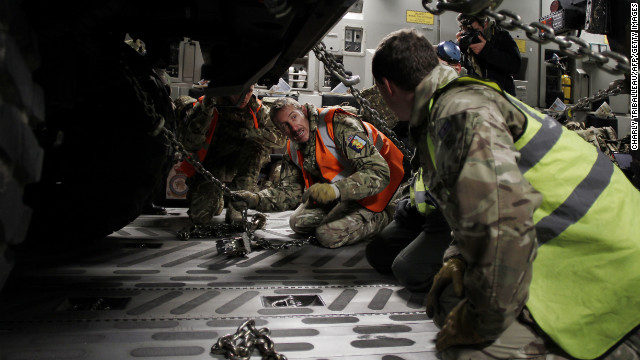
- France now has nearly 800 troops on the ground, the French Defense Ministry says
- Nigeria says it's sending 190 troops in the next 24 hours, with 700 more in coming days
- World and regional powers are concerned about the advance of Islamist militants
(CNN) -- France now has nearly 800 troops on Malian soil, the French Defense Ministry said Tuesday, as its forces seek to bolster the Malian military's efforts to wrest control from Islamist militants.
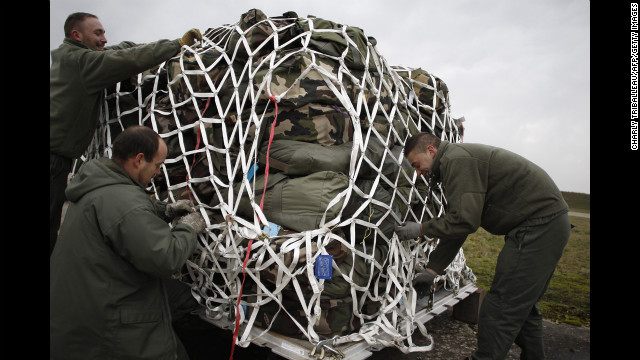
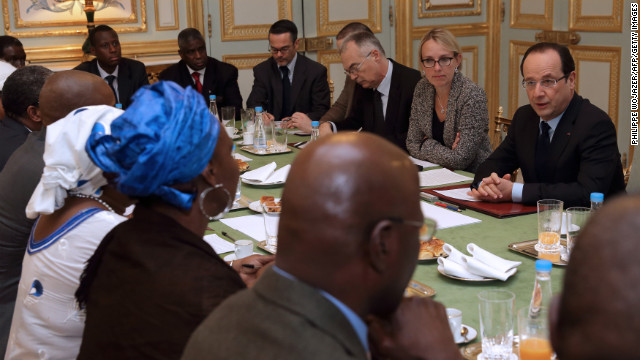
President Francois Hollande, speaking on a visit to the United Arab Emirates, said the number of French troops deployed would increase "so that France can make way as quickly as possible" for an African force.
Nearly 1,700 French troops will take part in the Mali offensive from French military bases across the region, the Defense Ministry said.
Read more: What's behind the instability in Mali?
Hollande said France had no intention of staying in Mali permanently but would do what was necessary until the African force was ready to take over.

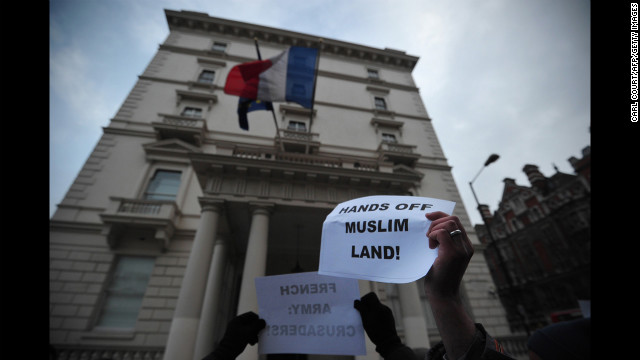
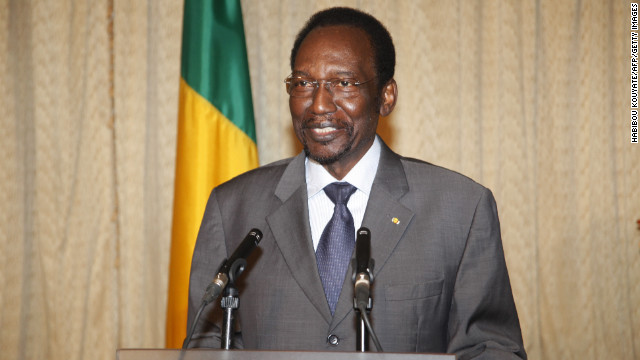
Mali military braces against Islamist insurgents
Mali military braces against Islamist insurgents
Mali military braces against Islamist insurgents
Mali military braces against Islamist insurgents
Mali military braces against Islamist insurgents
Mali military braces against Islamist insurgents
Mali military braces against Islamist insurgents
Mali military braces against Islamist insurgents
Mali military braces against Islamist insurgents
Mali military braces against Islamist insurgents
Mali military braces against Islamist insurgents
He said France had three aims: stopping the "terrorist aggression" from the north; securing the capital, Bamako, and safeguarding French nationals there; and enabling Mali to recover its territorial integrity.
He stressed that France was in Mali at the request of its government, with the support of its neighbors and world powers, and within the framework of international law.
Hollande also said France's intervention, which began Friday, was necessary to stop a rebel takeover of the capital.
"If we had not taken up our responsibility and if on Friday morning we had not acted with this intervention, where would Mali be today?" he asked.
New French airstrikes overnight "achieved their objective" in the area of Diabaly, a town seized by rebel forces Monday as they push south into government-held territory, Hollande said earlier while visiting an air base in Abu Dhabi.
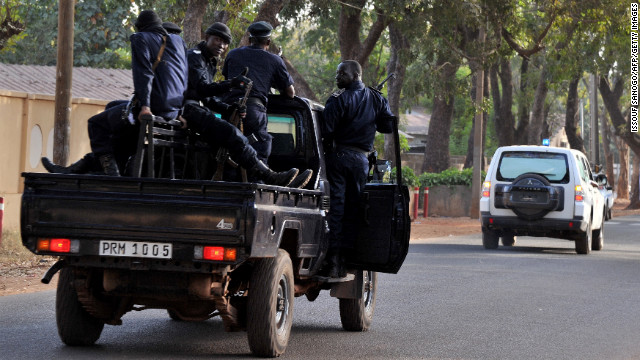
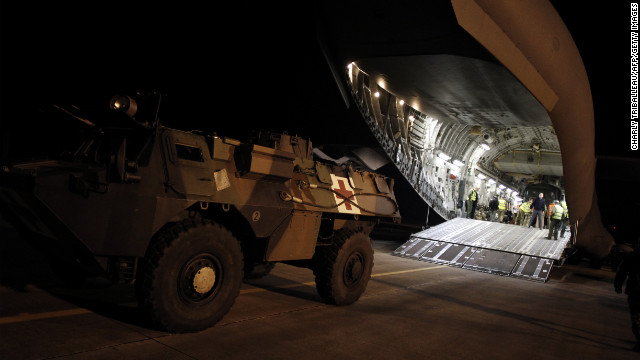
Forty French armored vehicles arrived in Bamako overnight from Ivory Coast, CNN affiliate BFM-TV reported.
French defense minister: Islamist rebels gaining ground in Mali
Defense chiefs from the members of the West African regional bloc ECOWAS were meeting Tuesday in Bamako to discuss military options, said a spokesman for the bloc, Sunny Ugoh.
Ministers will meet Friday to finalize plans that will then be presented to the heads of state Saturday in Ivory Coast, he said.
Leaders from a number of countries, including the United States, have said they'll send troops or provide logistical support for the fight against Islamist militants in the West African nation.
Col. Mohammed Yerima, a spokesman for the Nigerian army, told CNN that 190 of its soldiers would arrive in Mali within 24 hours.
In total, Nigeria will deploy 900 soldiers -- slightly more than a full battalion -- within the next 10 days, as part of a U.N.-mandated African force to fight the insurgents in Mali, he said.
Read more: Is this al Qaeda's 'last chance' for a country?
Niger, Burkina Faso, Togo, Senegal and Benin are also among the countries that have pledged to send troops, French Foreign Minister Laurent Fabius told reporters Monday.
Hollande said he had spoken to the leaders of Mauritania and Algeria, both of which have agreed to close their borders with Mali to prevent fleeing militants from seeking refuge. Morocco has also authorized French planes to fly over its territory, he said.
France also has wide support for its intervention within Europe, where countries including Britain, Denmark and Belgium have offered support, Hollande said.
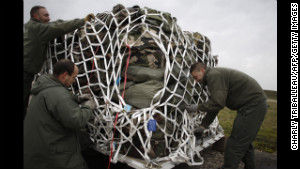
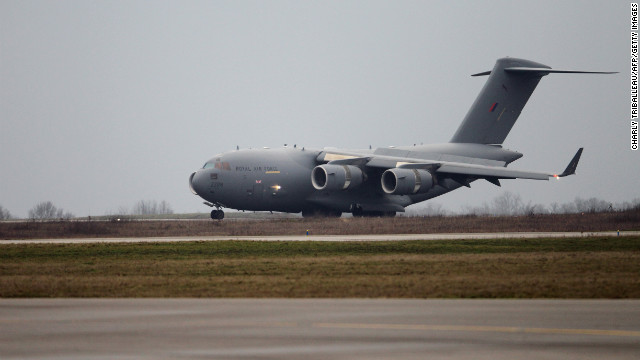
Two British military transport aircraft have been assigned to help with the French troop deployment, but no British forces will be in a combat role, the UK Foreign Office said.
A spokesman for Germany's Foreign Ministry said the country's leaders were considering offering medical, logistical and humanitarian aid to Mali.
The United Nations said preparations are under way for a U.N. multidisciplinary team to go to Bamako soon.
Read more: France aims to 'eradicate' terrorism in Mali
The United States has promised to help the French effort, U.S. Defense Secretary Leon Panetta said Monday. That assistance could include logistical and intelligence support.
"I commend France for taking the steps that it has. And what we have promised them is that we will work with them to cooperate with them and to provide whatever assistance we can to try to help them in that effort," he told reporters on his plane en route to Portugal.
The United States has shared intelligence from satellites and intercepted signals with the French, defense officials said Monday.
In addition, the Pentagon is considering sending refueling tankers so that French jets can fly longer, more sustained combat missions, according to the officials.
Drones "are under consideration," the defense officials said, though the military's stash of unmanned aerial vehicles is in heavy demand.
Both stressed that these would be surveillance drones and said there are no plans yet to deploy them.
U.S. State Department spokeswoman Victoria Nuland, meanwhile, said the United States is reviewing requests from the French, but no decisions have been made.
The United States, she said, is "not in the position to support the Malian military directly until we have democratic processes restored by way of an election in Mali."
France took the international lead in assisting Mali over the weekend, with military airstrikes targeting rebel training camps and other targets.
"Our assessment was that they (the rebels) were actually able to take Bamako. So we decided that what was at stake was the existence of the state of Mali, and beyond Mali was the stability of all West Africa," said Gerard Araud, French ambassador to the United Nations. "We had no other choice to launch this military intervention."
It was unclear Monday when France's role in the military offensive would end, and whether there could be consequences beyond Mali's borders.
Word of the rebel advance on Diabaly on Monday came as the U.N. Security Council met to discuss the conflict in Mali,where Islamist rebels have been seizing territory for months.
The U.N. Security Council last month authorized a one-year military peacekeeping mission in the country. Members of ECOWAS, the Economic Community of West African States, pledged thousands of troops, and the Security Council has urged other nations to contribute forces as well.
After Monday's meeting, the U.S. ambassador to the United Nations, Susan Rice, said there may be a need for a new Security Council resolution.
A French colony until 1960, Mali had military rulers for decades until its first democratic elections in 1992. It remained stable politically until March, when a group of soldiers toppled the government, saying it had not provided adequate support for them to fight ethnic Tuareg rebels in the country's largely desert north.
Tuareg rebels, who'd sought independence for decades, took advantage of the power vacuum and seized swaths of land. A power struggle then erupted in the north between the Tuaregs and local al Qaeda-linked radicals, who wound up in control of a large area as the Tuaregs retreated.
The United Nations says amputations, floggings and public executions -- like the July stoning of a couple who had reportedly had an affair -- have become common in areas controlled by radical Islamists. They applied a strict interpretation of Sharia law in banning music, smoking, drinking and watching sports on television, and damaged Timbuktu's historic tombs and shrines.
CNN's Antonia Mortensen contributed to this report.

