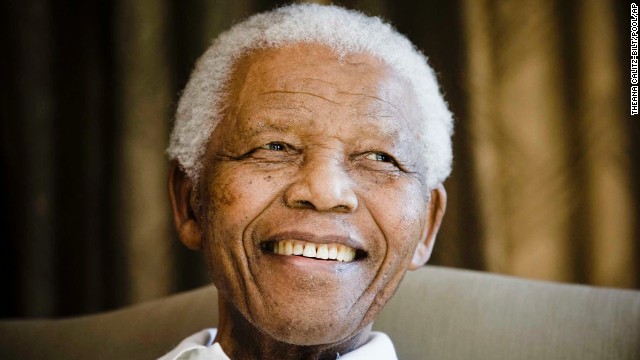
Nelson Mandela endured 27 years in prison before becoming South Africa's first president from 1994 to 1999.
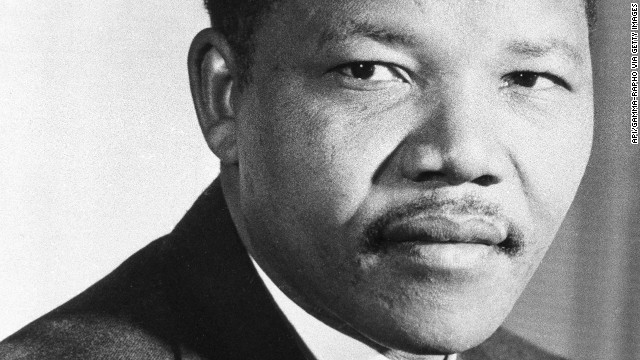
Mandela became president of the African National Congress Youth League in 1951.
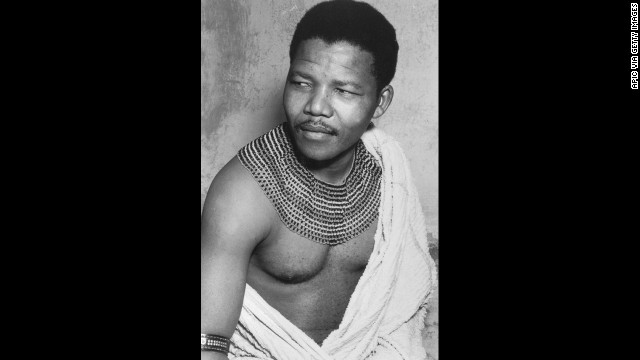
Mandela poses for a photo, circa 1950.
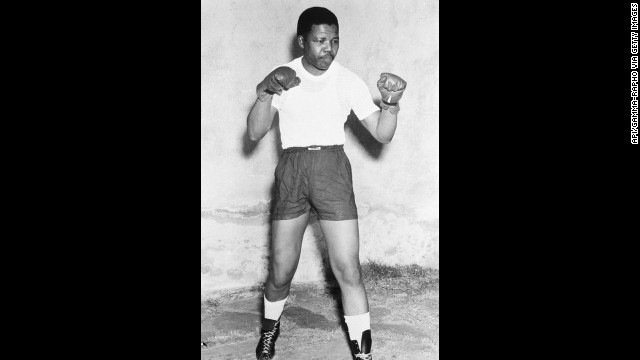
Mandela poses in boxing gloves in 1952.
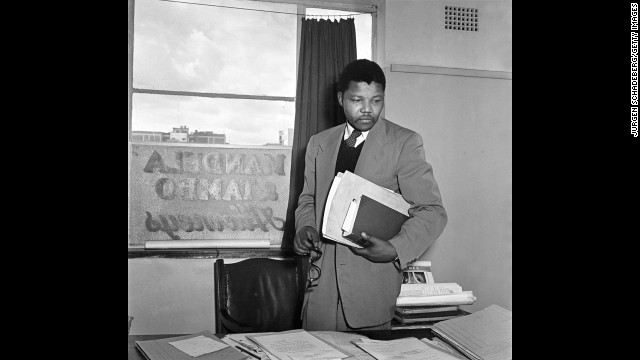
Mandela in the office of Mandela & Tambo, a law practice set up in Johannesburg by Mandela and Oliver Tambo to provide free or affordable legal representation to black South Africans.
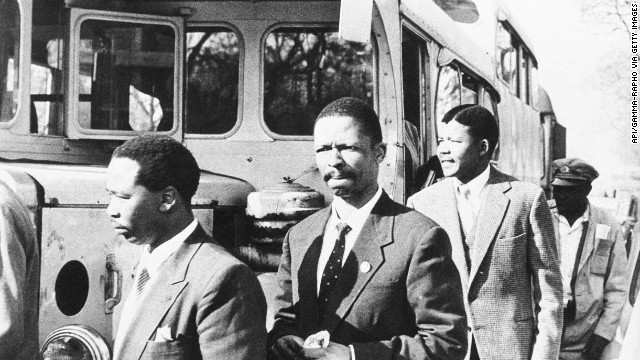
From left: Patrick Molaoa, Robert Resha and Mandela walk to the courtroom for their treason trial in Johannesburg.
Mandela married his second wife, social worker Winnie Madikizela, in 1958. At the time, he was an active member of the African National Congress and had begun his lifelong commitment to ending segregation in South Africa.
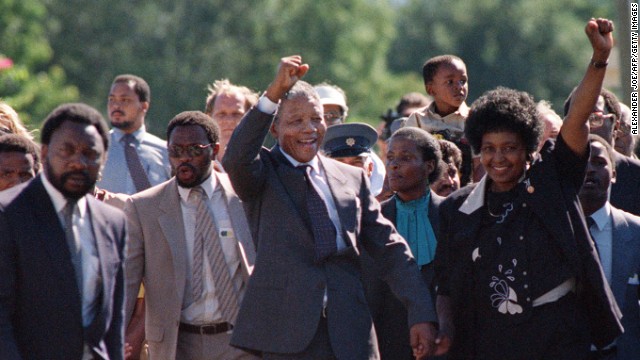
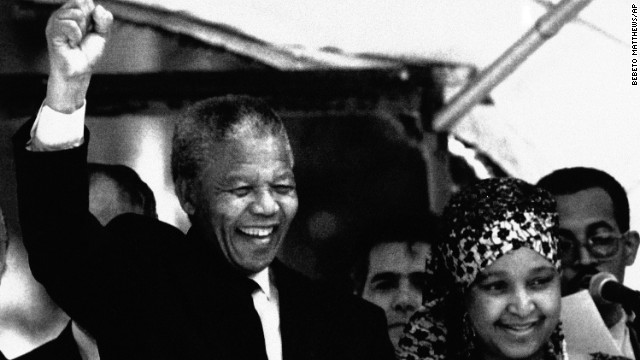
Nelson and Winnie Mandela raise their fists to salute a cheering crowd upon his 1990 release from Victor Verster Prison. He was still as upright and proud, he would say, as the day he walked into prison 27 years before.
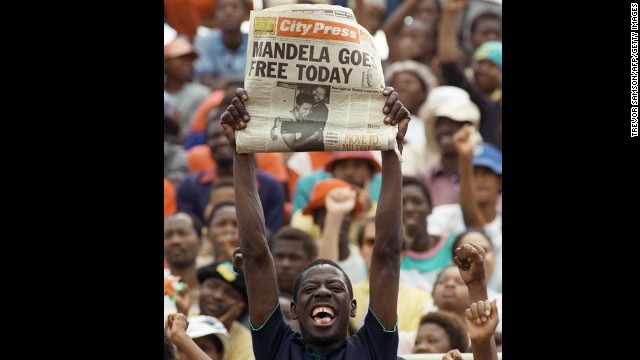
A jubilant South African holds up a newspaper announcing Mandela's release from prison at an ANC rally in Soweto on February 11, 1990. Two days later, more than 100,000 people attended a rally celebrating his release from jail.
Mandela and Zambian President Kenneth Kaunda arrive at an ANC rally on March 3, 1990, in Lusaka, Zambia. Mandela was elected president of the ANC the next year.
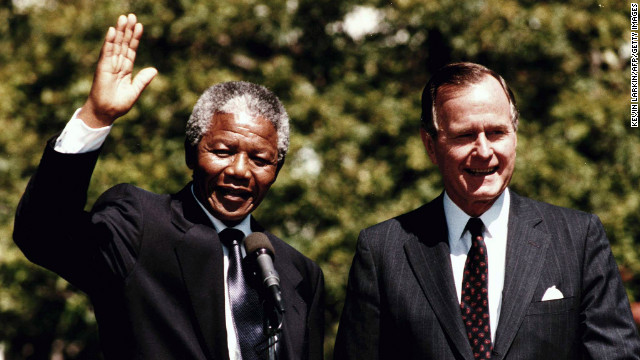
After his release in 1990, Mandela embarked on a world tour, meeting U.S. President George H.W. Bush at the White House in June.
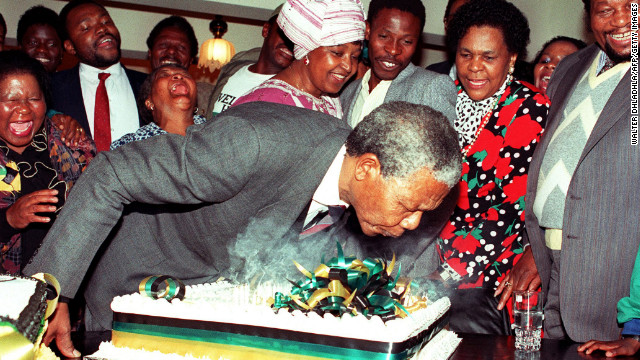
At his Soweto home on July 18, 1990, Mandela blows out the candles on his 72nd birthday cake. It was the first birthday he celebrated as a free man since the 1960s.
Mandela and his wife react to supporters during a visit to Brazil at the governor's palace in Rio De Janeiro, on August 1, 1991.
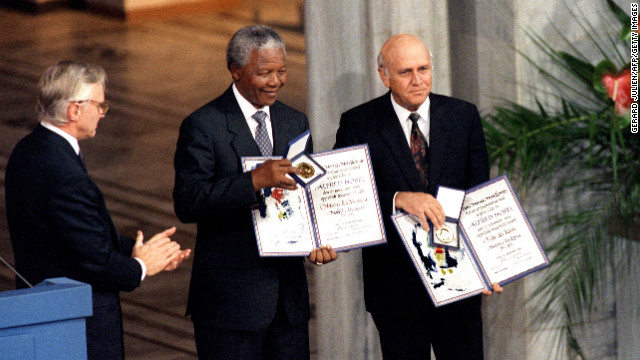
South African President Frederik de Klerk, right, and Mandela shared a Nobel Peace Prize in 1993 for their work to secure a peaceful transition from apartheid rule.
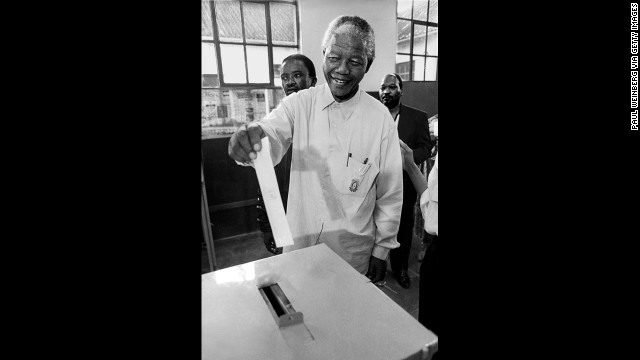
Mandela votes for the first time in his life on March 26, 1994.
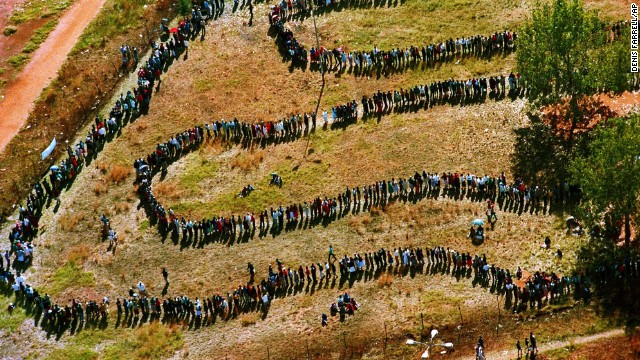
On April 27, 1994, a long line of people snake toward a polling station in the black township of Soweto outside of Johannesburg in the nation's first all-race elections.
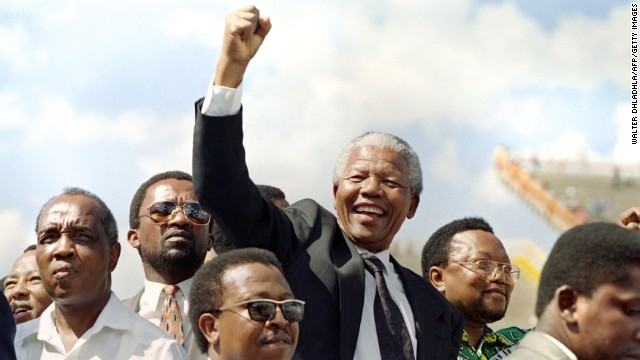
Mandela in Mmabatho for an election rally on March 15, 1994.
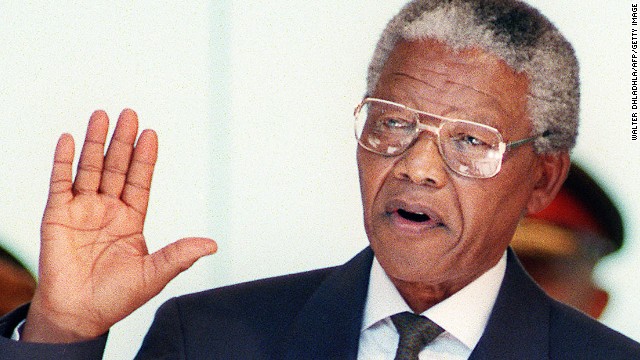
Mandela was elected president in the first open election in South African history on April 29, 1994. He's pictured here taking the oath at his inauguration in May, becoming the nation's first black president.
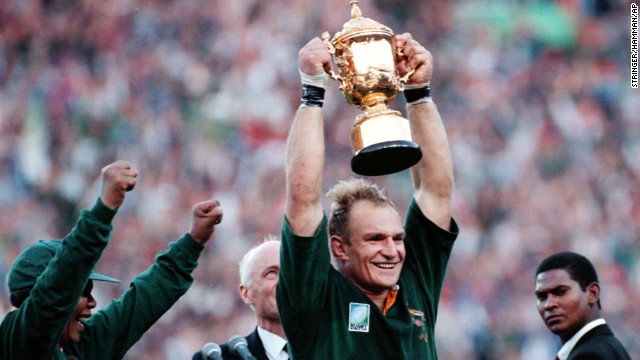
Mandela, left, cheers as Springbok Rugby captain Francois Pienaar holds the Webb Ellis trophy high after winning the World Cup Rugby Championship in Johannesburg on June 24, 1995.
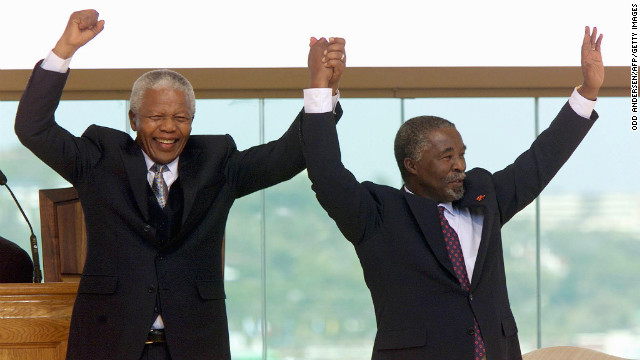
After one term as president, Mandela stepped down. Thabo Mvuyelwa Mbeki, at right, was sworn in as his replacement in June 1999.
Mandela sits outside his former prison cell on Robben Island on November 28, 2003, ahead of his AIDS benefit concert at Green Point Stadium in Cape Town. He was sent to the infamous prison five miles off the coast of South Africa, where he spent 18 of his 27 years behind bars.
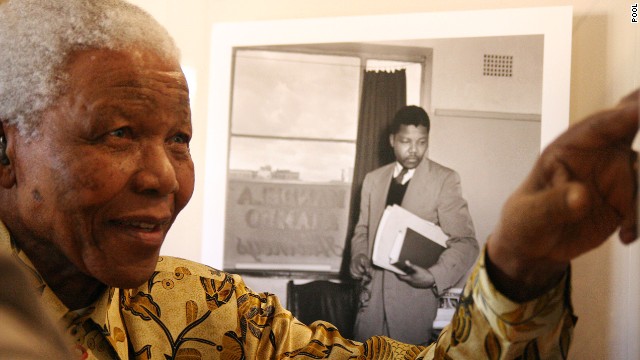
Mandela shows something to a group of international journalists visiting the Nelson Mandela Foundation in Johannesburg in May 2004.
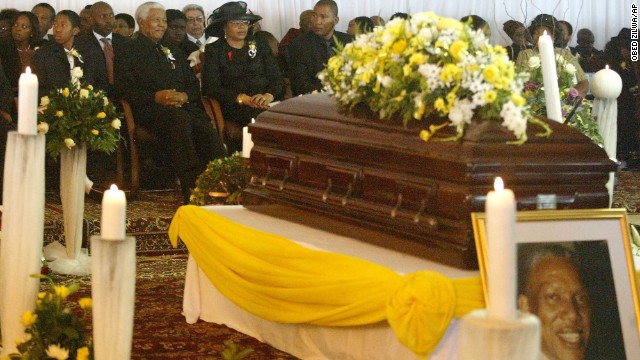
Mandela sits with his wife, Graca Machel, and his grandchildren at his son's funeral on January 15, 2005. He disclosed that his son, Makgatho Lewanika Mandela, had died of AIDS and said the disease should be given publicity so people would stop viewing it as extraordinary.
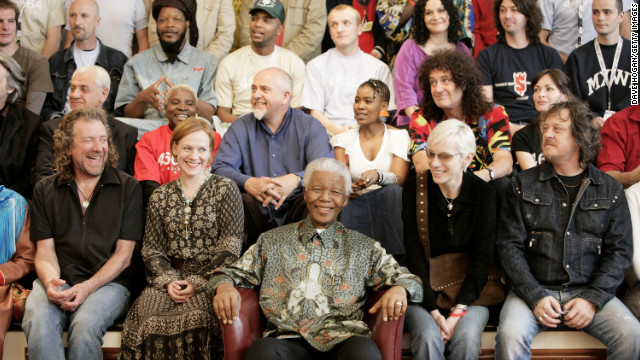
The "46664 Arctic" benefit concert was held in Tromso, Norway, on June 11, 2005. 46664 was Mandela's identification number in prison. Here, artists who performed at the event surround him.
Mandela attends an HIV/AIDs concert in Johannesburg on February 17, 2005.
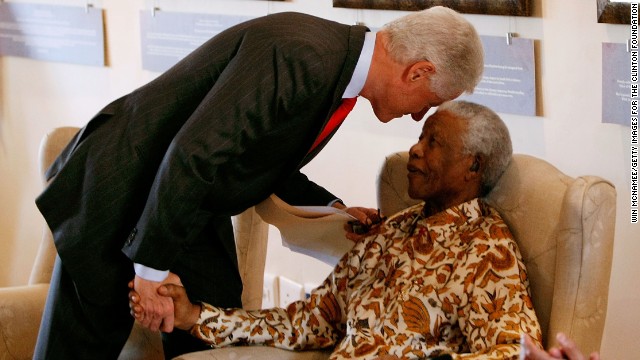
Former U.S. President Bill Clinton leans down to whisper to former South African President Nelson Mandela during a visit to the Nelson Mandela Foundation on July 19, 2007, in Johannesburg.
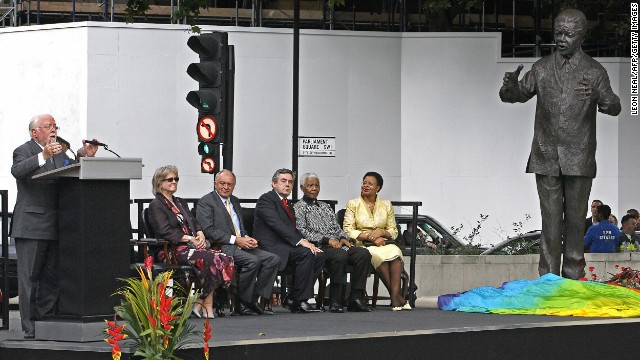
A bronze statue of Mandela was unveiled in Parliament Square in London on August 29, 2007. The 9-foot statue faces the Houses of Parliament.
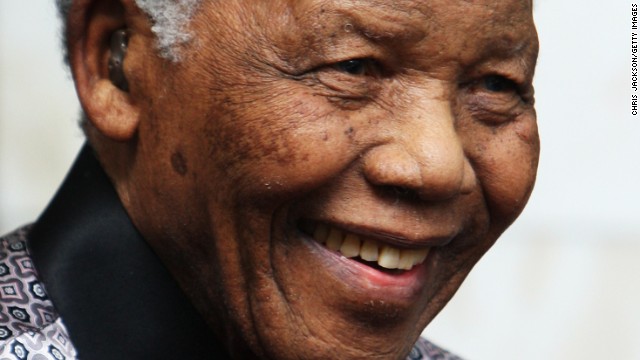
Mandela leaves the InterContinental Hotel after a photoshoot with celebrity photographer Terry O'Neil on June 26, 2008, in London.
Mandela meets in 2009 with international children as part of his 46664 Foundation.
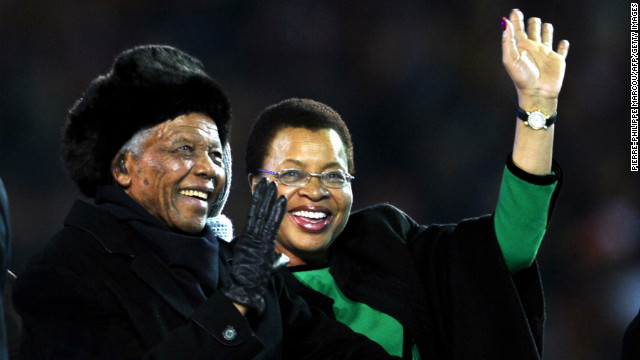
Nelson Mandela and his third wife, Graca Machel, arrive at the 2010 World Cup before the final match between Netherlands and Spain on July 11, 2010, at Soccer City Stadium in Soweto.
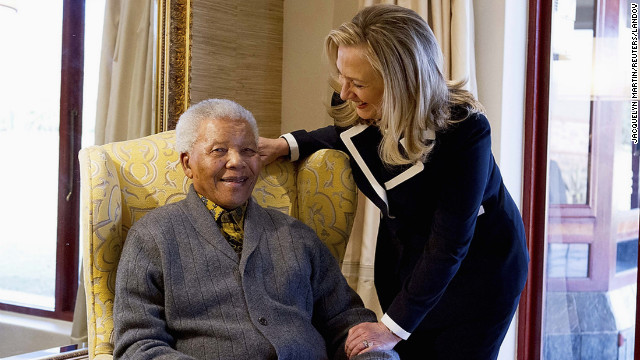
Then-U.S. Secretary of State Hillary Clinton meets with Mandela at his home in Qunu, South Africa, on August 6, 2012.
1
2
3
4
5
6
7
8
9
10
11
12
13
14
15
16
17
18
19
20
21
22
23
24
25
26
27
28
29
30
31
- Mandela has been hospitalized since June 8 for a recurring lung infection
- Crowds sing "where is Mandela" outside his hospital
- Government spokesman says his condition remains unchanged
Pretoria, South Africa (CNN) -- After hours of vigils and secret family meetings, South Africans awoke to another day of unease Wednesday as ailing anti-apartheid icon Nelson Mandela remained hospitalized in critical condition.
"Former President Nelson Mandela's condition remains unchanged in hospital and doctors continue to do their best to ensure his recovery, well-being and comfort," the government said in a statement late Tuesday night.
Well-wishers outside his Pretoria hospital hung balloons and signs of support on bulletin boards. The hospital wall was plastered with messages as crowds hovering nearby sang "where is Mandela."
Mandela has been hospitalized since June 8 for a recurring lung infection, and authorities have described his condition as critical in the last few days.
"We need you!," one sign read. "We love you tata, get well soon!" said another, referring to Mandela by the Xhosa word for father.
Considered the founding father of South Africa's democracy, Mandela became an international figure while enduring 27 years in prison for fighting against apartheid, the country's system of racial segregation.
He was elected the nation's first black president in 1994, four years after he was freed from prison.
"He is our hero. He is my mentor, my father. He is everything to me," said Kuda Nyahumzvi, 36. "But when it is his time, we wish his soul could just rest. He spent so long in jail and struggling."
Even as he has faded from the spotlight, he remains popular and is considered a hero of democracy worldwide.
As South Africans steeled themselves for the worst, the family turned to prayer.
Relatives met in his boyhood home of Qunu while an archbishop led his family in prayer Tuesday, calling for "a quiet night and a peaceful, perfect, end" for the former president.
Archbishop Thabo Makgoba joined the family at the hospital where the anti-apartheid icon remains in critical condition, the South African Press Association reported.
"Fill them with your holy courage and the gift of trusting faith, and take away their fears so that they may dare to face their grief," he said, according to
a copy of the prayer posted on the bishop's website.
"And uphold all of us with your steadfast love so that we may be filled with gratitude for all the good that he has done for us and for our nation, and may honor his legacy through our lives."
Mandela turns 95 in July.
CNN's Faith Karimi wrote and contributed from Atlanta. CNN's Brent Swails, Matt Smith and Catherine E. Shoichet contributed to this report.