
- NEW: Handover a "hard-fought milestone," British defense minister says
- Are the Afghan troops up the to task?
- There are fears the country could revert back to civil war
(CNN) -- Afghan forces formally took over security responsibilities for their violence-plagued country from NATO-led troops on Tuesday, marking a key transition in the long and costly war.
"You are the sons and guardians of this country, and it is your responsibility to protect it," Afghan President Hamid Karzai told his troops at a handover ceremony in Kabul. "I wish a long-term peace in Afghanistan."
The head of NATO said Afghans are now in charge.
"The main effort of our forces is shifting from combat to support. We will continue to help Afghan troops in operations, if needed, but we will no longer plan, execute or lead these operations," NATO secretary-general Anders Fogh Rasmussen said at the ceremony.
"By the end of 2014, our combat mission will be completed," Rasmussen said.

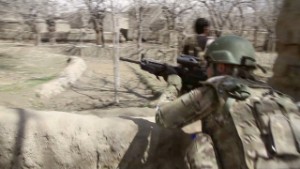

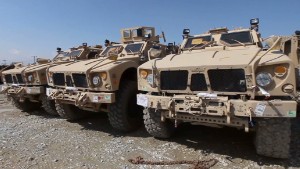
With the handover, U.S. and coalition forces move into a backup role and let Afghan National Security Forces -- long questioned for their preparedness and commitment -- handle the combat in the restive nation.
British Defense Minister Philip Hammond called the handover a "hard-fought milestone."
"Afghanistan will continue to face challenges as it builds toward becoming a secure and stable state," he said. "The Afghanistan our combat forces leave at the end of 2014 will not be perfect, but will be able to stand independently and will never again provide a haven for terrorists to attack the West."
During his State of the Union address in January, President Barack Obama said, of the approximately 66,000 U.S. troops in Afghanistan, more than half -- 34,000 -- will come home in the next year and the country's war in Afghanistan would be over by the end of 2014.
The Taliban regime in Afghanistan was sheltering al Qaeda when the terror network launched attacks against the United States on September 11, 2001. The next month, the United States cranked up military operations that led to the toppling of the Taliban government.
Ever since, international forces have been fighting radical Islamic militants in Afghanistan and neighboring Pakistan.
What does this news mean for Afghanistan and the United States? Here are some key questions that will be asked in the coming months:
1. Are the Afghan troops up to the task?
There are certainly doubts.
A Pentagon review in December found that only one of 23 Afghan army brigades was capable of functioning on its own.
Meanwhile, literacy rates are low, desertion rates are high, and many deserters have joined the insurgency. There also have been a troubling number of